
When evaluating Btcdo Exchange, a crypto trading platform that promises fast settlement and low fees. Also known as Btcdo, it targets both retail and institutional traders looking for cost‑effective swaps, the first question most users ask is how the platform balances price competitiveness with safety. The platform operates as a crypto exchange, offering spot, futures, and staking services across 150+ assets. To keep funds safe, Btcdo relies on multi‑factor authentication, cold‑wallet storage, and quarterly penetration tests. These choices show that Btcdo Exchange review encompasses fee structures, security protocols, and liquidity depth, while also demanding users understand the trade‑off between lower fees and the need for robust personal security habits.
The exchange’s fee model follows a maker‑taker framework where makers pay 0.08% and takers 0.12%, a rate that undercuts many legacy platforms. This model enables high‑volume traders to keep costs down, but it also requires sufficient market depth to avoid slippage. Liquidity is bolstered by partnerships with liquidity providers such as Loop Finance, which feeds order books for less‑traded pairs. Because liquidity pools are shared across multiple platforms, Btcdo can quote tighter spreads while still maintaining order‑book integrity. A related risk is the reliance on external providers; a disruption at a partner can lead to temporary thin markets, so traders should monitor depth charts during volatile periods. Security measures extend beyond MFA: the exchange employs hardware security modules (HSM) for key management, and all withdrawals trigger an on‑chain audit trail. These layers reduce the odds of a successful breach, yet users remain responsible for safeguarding API keys and avoiding phishing sites that mimic Btcdo’s branding.
Beyond fees and security, the platform offers a suite of DeFi tools that connect users to yield farms, staking pools, and synthetic assets. By integrating a built‑in wallet, Btcdo eliminates the need for third‑party extensions, streamlining the onboarding process for newcomers. The UI is built on React, delivering real‑time price feeds and customizable dashboards, which enhances the trading experience for both beginners and seasoned investors. However, the rapid rollout of new features sometimes outpaces documentation, so users should test small positions when exploring novel products. In short, this collection of articles below will walk you through how to set up a wallet, compare fee tiers, evaluate security reports, and assess liquidity before you commit capital. Armed with that knowledge, you can decide whether Btcdo fits your trading style or if another venue better matches your risk tolerance.
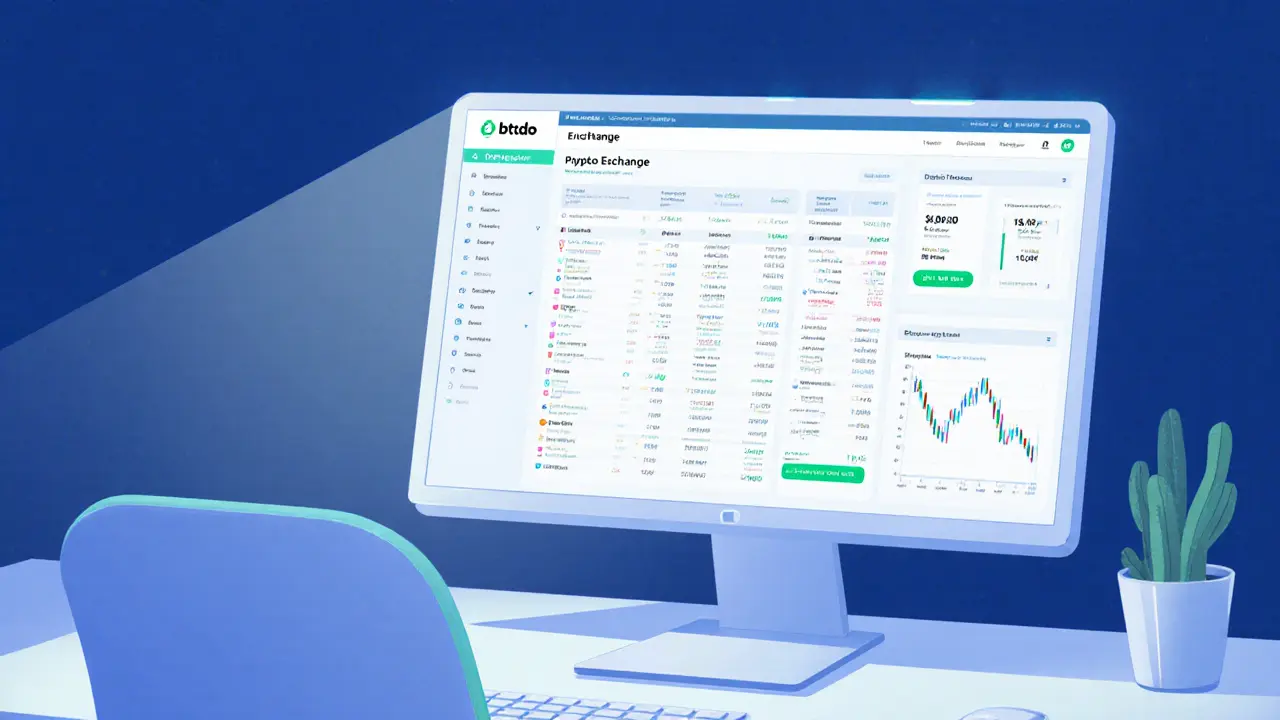
A detailed 2025 review of Btcdo Exchange covering fees, security, regulatory status, user experience, and how it stacks up against major crypto platforms.
Tycho Bramwell | Oct, 17 2025 Read More