
When you hear crypto compliance, the set of rules and legal standards that cryptocurrency projects and exchanges must follow to operate legally. Also known as blockchain regulation, it's not about slowing things down—it's about making sure the system doesn't collapse under fraud, scams, or bad actors. If you're buying tokens, staking crypto, or even just chasing an airdrop, you're already in the middle of this system. And if you don't understand it, you're flying blind.
Crypto compliance isn't one rule—it's a web of rules. The SEC blockchain, the U.S. Securities and Exchange Commission's approach to classifying digital assets as securities or utility tokens decides whether a token is a bet on profit (a security) or a tool for access (a utility). That’s why projects like utility tokens and tokenized securities get treated so differently. One might be legal in Zug, Switzerland, under their DLT Act Switzerland, a law that gives legal standing to blockchain-based assets and smart contracts, but banned outright in Norway because of energy rules. And then there’s the crypto exchange security, the practices exchanges use to protect user funds and meet anti-money laundering requirements—something Catalyx and EXNCE failed at, costing users millions.
Compliance isn’t just for big firms. It affects you every time you hear about a new airdrop. If a project skips KYC, hides its team, or promises returns without disclosure, it’s not a gift—it’s a red flag. The 2CRZ and RBT airdrops vanished because they never followed basic transparency rules. Meanwhile, projects that play by the rules—like those in Zug or those using tokenized securities to unlock real-world assets—build trust, attract users, and survive market crashes.
Regulation isn’t the enemy of crypto. It’s the guardrail. Without it, you get Myanmar scams, CFOs stealing $14 million, and ghost tokens with $0 volume. With it, you get stablecoin payments that cut cross-border fees, decentralized exchanges that actually work, and legal frameworks that let innovation thrive. The posts below show you exactly how this plays out—in real cases, real failures, and real winners. You’ll see which exchanges got it right, which tokens crossed the line, and how to spot the difference before you invest.
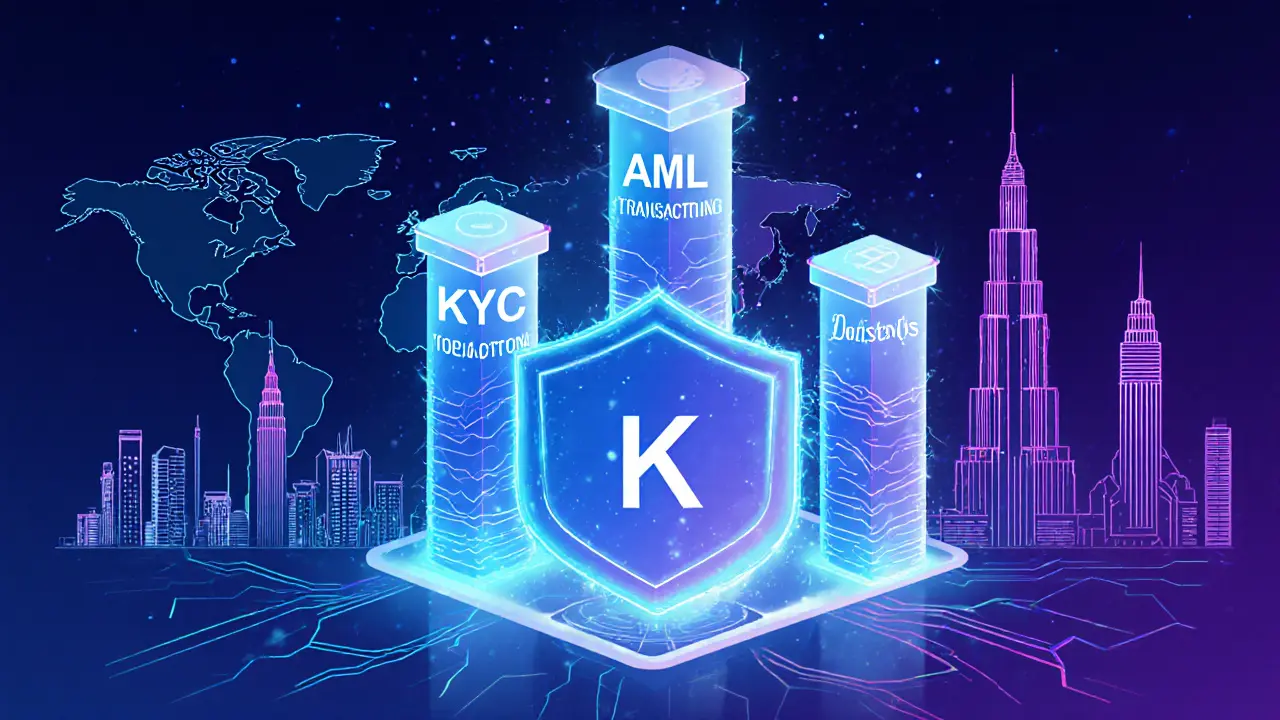
Crypto companies in 2025 need robust compliance programs to meet global regulations like MiCA and the Crypto Travel Rule. Learn how KYC, AML, and transaction monitoring work, what they cost, and how to avoid costly mistakes.
Tycho Bramwell | Nov, 27 2025 Read More