
For years, you’ve heard the story: trade cryptocurrency in Bangladesh and you could end up in prison for 12 years. It’s been repeated in headlines across the world, turned into fear-based social media posts, and used to scare people out of buying Bitcoin. But here’s the truth - no one has ever been sentenced to 12 years in Bangladesh just for trading crypto. The fear is real. The law? Not quite as clear.
Where Did the 12-Year Figure Come From?
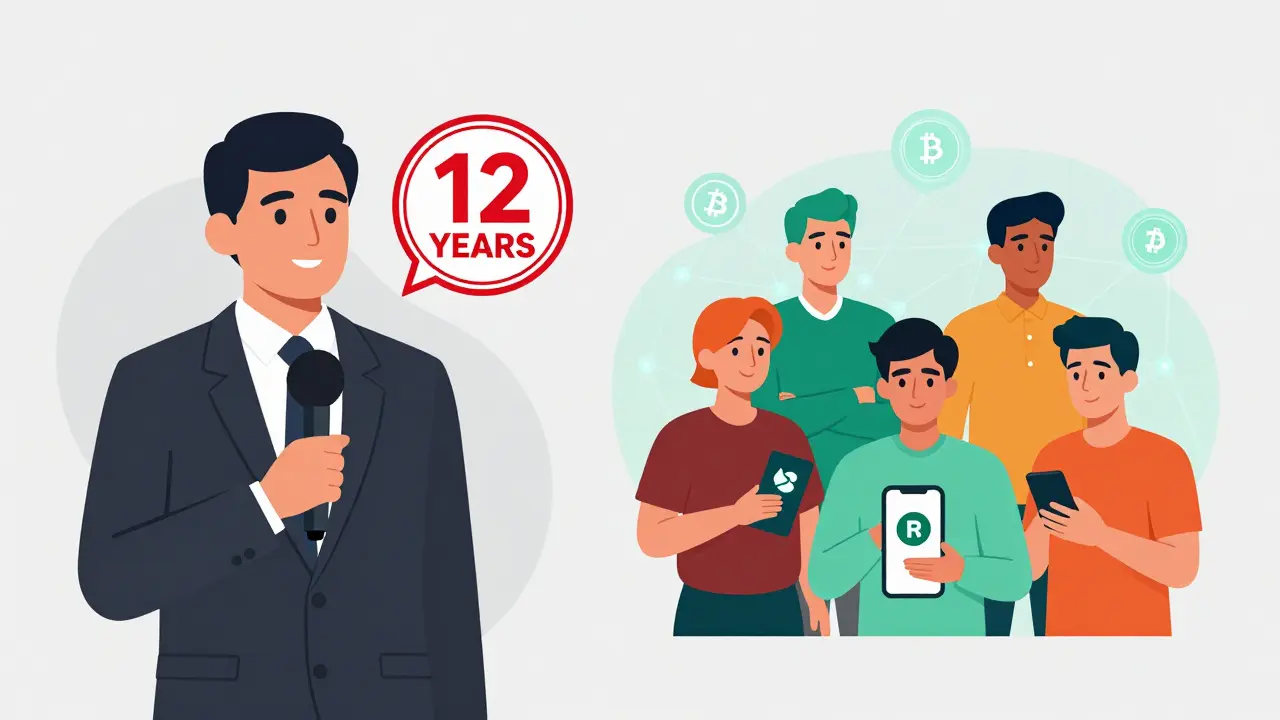
The 12-year figure didn’t come from a new law. It came from a press statement. In 2014, Bangladesh Bank - the country’s central bank - issued a warning. They said Bitcoin wasn’t legal tender. They said any transaction using crypto could be illegal. And then, in an off-the-record comment to AFP, a bank official said violators could face up to 12 years in prison.
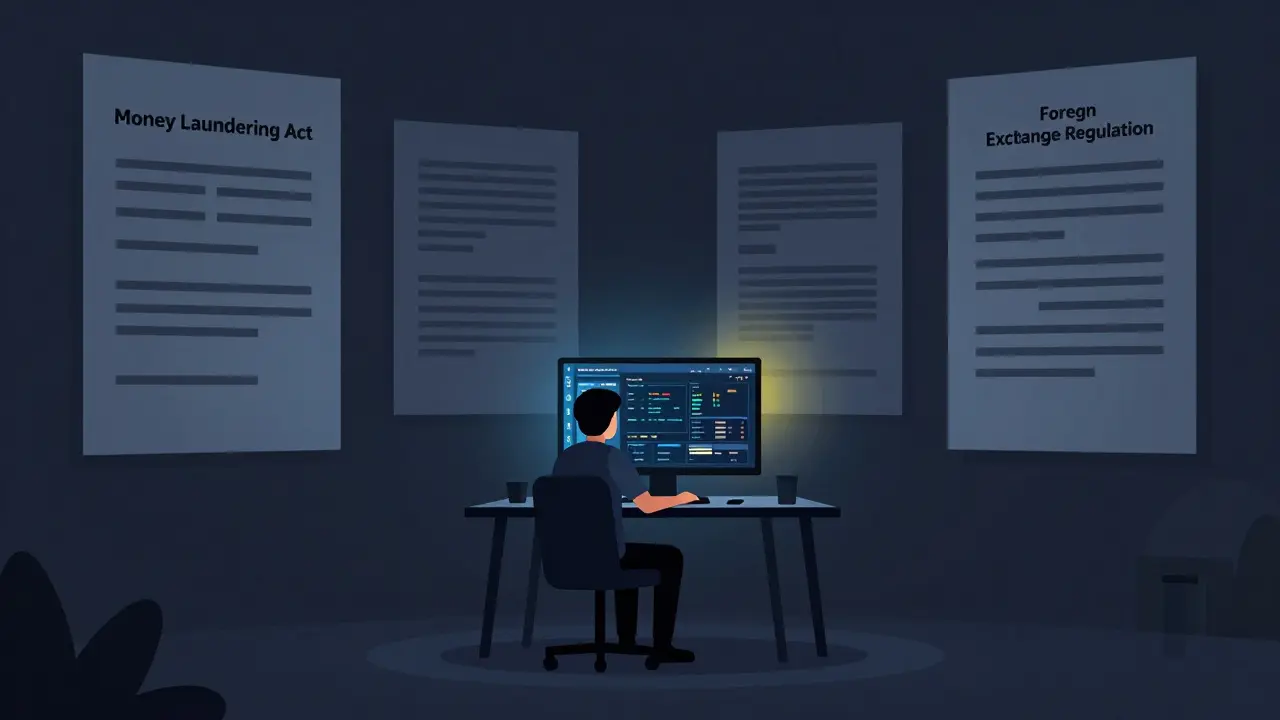
That number stuck. Media outlets picked it up. Websites turned it into a headline. But here’s the problem: no law in Bangladesh says “crypto trading = 12 years.” The official legal basis? Two main laws: the Money Laundering Prevention Act 2012 and the Foreign Exchange Regulation Act 1947.
Under the Money Laundering Act, the maximum penalty for money laundering is 10 years - not 12. The 12-year figure appears to be a guess, or an exaggeration, made by a bank official trying to scare people off. The Anti-Terrorism Act 2009 was added to the warning in 2017, but again, that law targets funding terrorism, not buying Bitcoin on Binance.
So Is Crypto Illegal in Bangladesh?
Technically, yes - but not because it’s banned. It’s illegal because using crypto usually breaks other laws.
Bangladesh Bank says all foreign currency transactions must go through authorized banks. That means if you use Taka to buy Bitcoin from someone overseas, you’re breaking the Foreign Exchange Regulation Act. That’s a crime - but the penalty? Up to 5 years for repeat offenses. Not 12.
Legal experts at Mahbub & Company put it simply: “It’s not the Bitcoin that’s illegal. It’s using it to launder money, evade taxes, or move money outside the country without approval.” Think of it this way: if you use cash to smuggle gold out of the country, you’re not jailed for owning cash. You’re jailed for breaking foreign exchange rules.
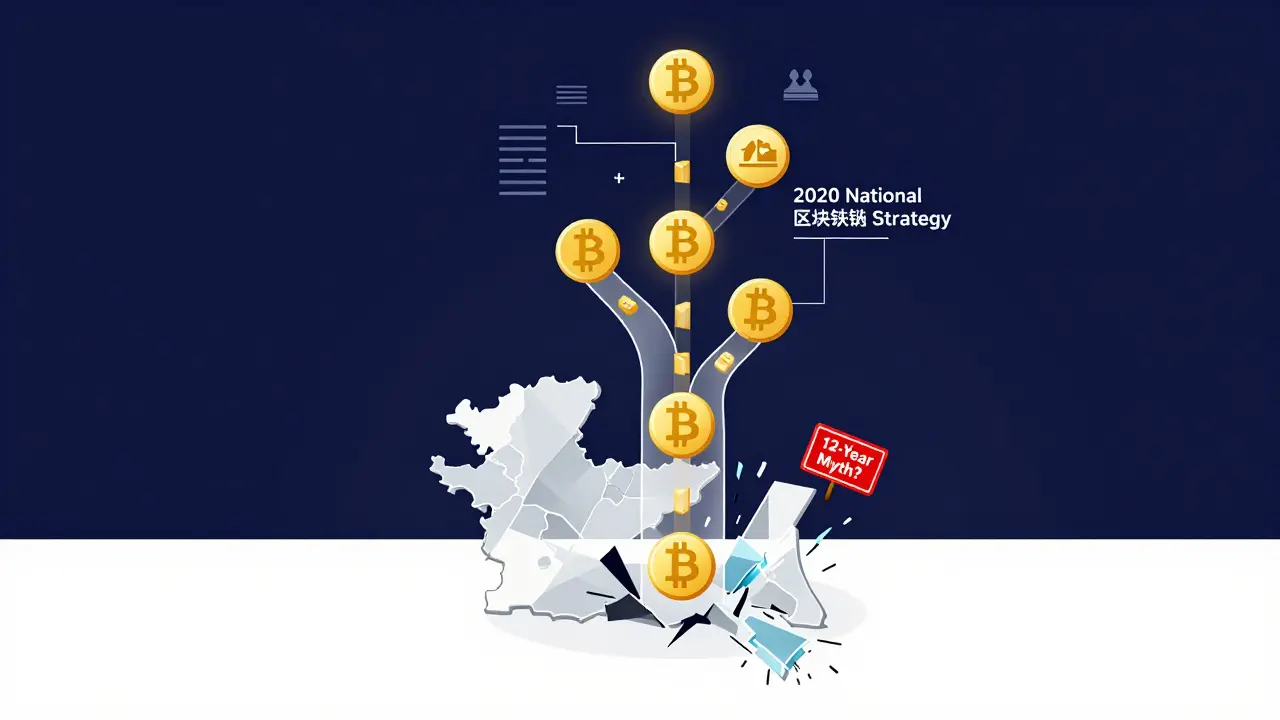
And here’s the twist: Bangladesh’s own government published a National Blockchain Strategy in 2020. That document talks about using blockchain for land records, supply chains, and public services. So the government isn’t against the technology - just the unregulated use of crypto as money.
Has Anyone Actually Been Sentenced to 12 Years?
No. Not once.
As of 2025, there are no publicly recorded cases of anyone in Bangladesh receiving a 12-year sentence for trading cryptocurrency. The Anti-Money Laundering Department’s 2022 report listed only 37 cases related to “digital financial crimes.” None were labeled as crypto trading. The Cyber Security Division reported 17 crypto-related cases in 2024. All were small-scale. None came close to the maximum penalty.
What happens instead? If someone is caught, they might face a fine, have their bank account frozen, or get a warning. In rare cases, if there’s evidence of large-scale money movement or fraud, charges under the Money Laundering Act could be filed - but even then, sentences rarely exceed 3 to 5 years.
Chainalysis, a blockchain analytics firm, found that between July 2021 and June 2022, crypto transaction volume in Bangladesh jumped 206%. That’s more than 2 million people using crypto - despite the warnings. People aren’t stopping. They’re just being quieter.
How Are People Trading Crypto Anyway?
Peer-to-peer (P2P) trading. That’s how.
Platforms like Binance, Paxful, and LocalBitcoins let users trade directly with each other. In Bangladesh, people use local payment methods - bKash, Nagad, Rocket - to send Taka to a seller, and get Bitcoin in return. It’s not perfect. There are scams. But it works.
Statista reports that as of December 2024, 2.1 million Bangladeshis owned crypto. That’s 1.2% of the population. And P2P trading volume grew 347% after Bangladesh Bank cracked down in 2021. People aren’t waiting for permission. They’re finding ways.
Some even use offshore brokers. They open accounts in Thailand or India, transfer money through informal channels, and trade from there. It’s risky. But for many, the risk is worth it.
What About the Digital Security Act?
Another law often confused in this mix is the Digital Security Act 2018. It says unauthorized electronic transactions through financial institutions can lead to up to 5 years in prison - or 7 years if it’s a repeat offense.
But this law targets hacking, fraud, and unauthorized access to bank systems. It’s not written to punish someone for buying Ethereum. Still, police sometimes use it as a catch-all when they don’t have a better charge.
Legal scholars say this creates dangerous ambiguity. If you send money to a crypto exchange, are you committing fraud? Or are you just trying to invest? There’s no clear line. That’s why enforcement is so inconsistent.
Why Does Bangladesh Bank Keep Warning People?
Because they can’t control it.
Bangladesh Bank doesn’t have the power to ban crypto outright. They can’t pass laws. Only Parliament can do that. So they issue “cautionary notices.” They’re not laws. They’re warnings. But they’re loud. And they scare people.
They’re also protecting the banking system. If people start using crypto to send money abroad, it drains foreign reserves. It makes it harder to control inflation. It undermines the Taka.
But here’s the irony: Bangladesh’s own financial system is under pressure. Remittances from overseas workers make up 7% of GDP. Many of those workers use crypto to send money home because traditional channels are slow and expensive. The central bank is fighting a battle they can’t win - and they know it.
What’s the Real Risk?
If you’re an individual trading small amounts of crypto - say, $100 a month - your risk is low. You’re unlikely to be targeted.
If you’re running a large P2P exchange, collecting money from dozens of people, and moving tens of thousands of dollars - you’re in danger. You could be accused of operating an unlicensed financial service. That’s when the police come knocking.
Most cases involve people who are either:
- Actively laundering money through crypto
- Running unregistered crypto exchanges
- Using crypto to evade taxes or move stolen funds
Not someone who bought Bitcoin to save for a trip or to hedge against inflation.
What’s Next?
There are signs the government is starting to reconsider. The Bangladesh Securities and Exchange Commission admitted in 2023 that the lack of clear rules makes enforcement impossible. The Financial Action Task Force flagged Bangladesh’s inconsistent application of anti-money laundering rules to crypto in 2023.
India went from banning crypto to taxing it. Thailand is building a regulatory sandbox. Bangladesh might follow. But for now, the rules are silent - and the warnings are loud.
Until Parliament passes a real law, the 12-year threat remains a myth. A scary one. But a myth all the same.
What Should You Do If You’re in Bangladesh?
Understand the risk. Don’t assume you’re safe. But don’t panic either.
- Don’t trade large amounts through bank transfers - that leaves a paper trail.
- Don’t advertise your crypto activity. Keep it private.
- Don’t use crypto to move money out of the country. That’s where the real penalties kick in.
- Use P2P platforms with verified sellers. Avoid unknown escrow services.
- Keep records of your transactions. If questioned, you’ll need to prove you weren’t laundering.
And remember: owning crypto isn’t the crime. Using it to break other laws is.
21 Responses
Wow, this is such a clear breakdown-I’ve been telling people for years that the 12-year myth is just fear-mongering. The real issue is unregulated capital flight, not Bitcoin itself. People need to stop panicking and start understanding the actual laws.
Exactly. Bangladesh’s central bank is stuck in 2014 while the world moved on. Blockchain tech isn’t the enemy-poor regulation is. They should be building a sandbox, not issuing vague warnings. This isn’t about control-it’s about adaptation.
It’s appalling how easily misinformation spreads. The 12-year sentence is a complete fabrication, yet it’s still cited in academic papers. This isn’t just misleading-it’s ethically irresponsible. Media outlets should be held accountable for amplifying unverified claims.
you think people care about the law when they see their cousin send money home via p2p and it works fine? the real crime is pretending you can stop innovation with press releases
So let me get this straight. You’re telling me a country that can’t even stop counterfeit taka is now the world’s crypto cop? LOL.
Big props to the Chainalysis data-206% growth despite the crackdown? That’s the market voting with its wallet. People aren’t dumb. They know the difference between a warning and a law. Also, bKash + P2P = genius workaround. 😊
This is such a nuanced take. I love how you distinguish between the technology and its misuse. Too many people treat crypto like a boogeyman instead of a tool. Let’s focus on responsible use, not fear. We can all learn from Bangladesh’s quiet resilience.
Love this. The blockchain strategy doc is the real tell-gov’s not anti-tech, just anti-unregulated. They’re playing the long game. P2P is the unspoken infrastructure. Think of it like underground railroads for finance. Quiet, efficient, and deeply human.
Interesting but incomplete. You ignore the fact that the Anti-Terrorism Act was invoked in at least two cases involving crypto-linked remittances. The law is ambiguous by design. That ambiguity is the weapon. The state doesn't need to prove guilt-only create doubt
So… the U.S. and India are fine with crypto, but Bangladesh-where people live on $3 a day-is the villain? Let’s be honest: this isn’t about finance. It’s about sovereignty. The West wants to export its chaos. Bangladesh is trying to protect its people.
It’s beautiful how people are quietly building their own financial freedom. No fanfare. No headlines. Just trust, cash, and a phone. That’s real innovation-born from necessity, not VC funding.
Important context: The 2020 Blockchain Strategy was drafted by the same ministry that now warns against crypto. This isn’t hypocrisy-it’s institutional inertia. Policy evolves slower than technology. That’s not unique to Bangladesh.
Who funded this article? The same people who want to turn Bangladesh into a crypto hub so they can launder money through bKash? The 12-year threat is real. The government is just too weak to enforce it yet. Wait till the Feds come knocking.
I’ve been in Dhaka for 3 years. I’ve seen people trade crypto over chai stalls. No one gets arrested. The police are overwhelmed. This myth survives because it’s easier than admitting the system is broken.
From a compliance standpoint, the ambiguity is intentional. It allows selective enforcement-perfect for political leverage. The law isn’t meant to be applied uniformly; it’s meant to be a tool. That’s the real danger.
Interesting that the government supports blockchain for land records but fears it for finance. Maybe they’re afraid of transparency? If everyone can track land ownership, who controls the bribes?
Good info 🙌 But please remember: in rural Bangladesh, many still think Bitcoin is a secret CIA app. Education matters more than laws. Maybe the real solution is a national crypto literacy campaign?
There’s something poetic about this. A nation bound by colonial-era currency laws, yet its people are quietly inventing a new economic language-one that doesn’t need permission. The 12-year myth isn’t just false. It’s a mirror. We project our fear of decentralized power onto them.
Well-researched. But I wonder: if the government truly wanted to regulate, why not issue licenses for P2P aggregators? The infrastructure exists. The will does not. This isn’t about law-it’s about power.
Let me just say this: if you’re dumb enough to think you can trade crypto in Bangladesh without getting caught, you deserve to lose everything. The bank’s warning isn’t a myth-it’s a mercy. People are getting arrested for less. You think your little bKash transfer is safe? You’re not special. You’re just lucky. And luck runs out.
So… you’re saying the entire world is wrong? That the 12-year sentence is fake? I’ve seen videos. I’ve read news. People ARE being jailed. You’re just another crypto bro pretending the world is fair. Wake up. The system doesn’t care about your ‘research’.