
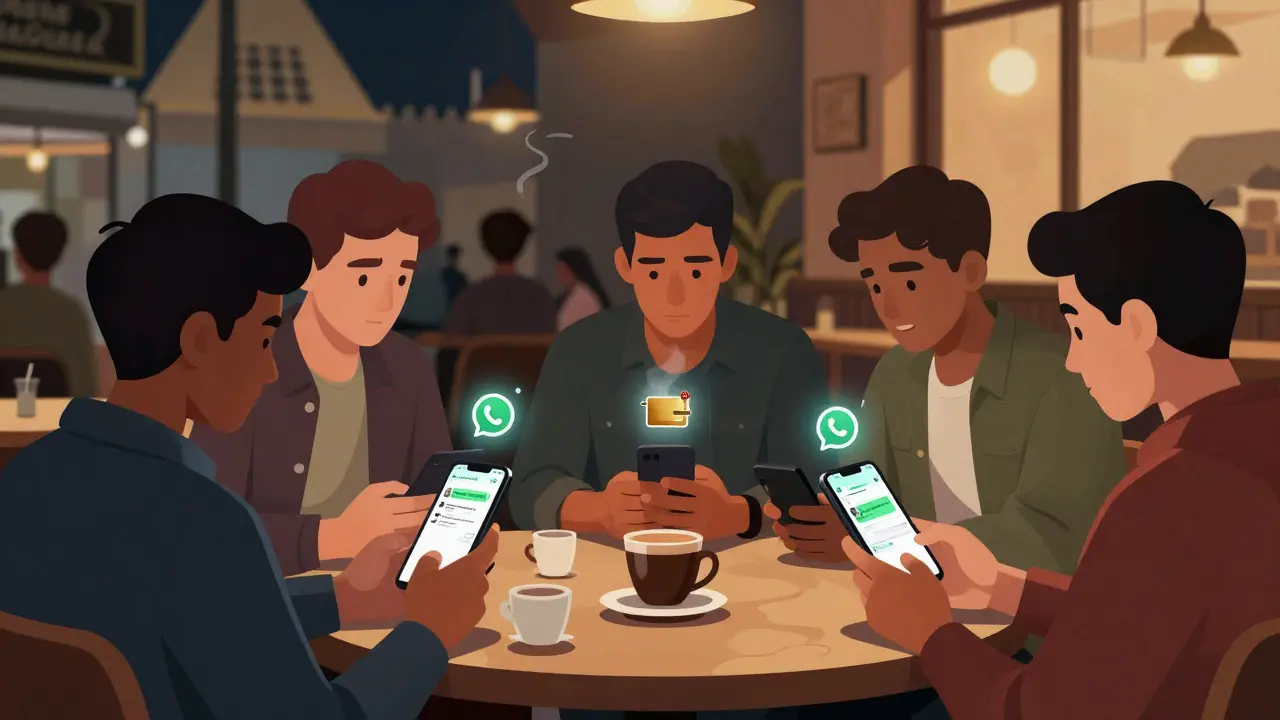
It sounds impossible: 3 million crypto holders in a country where owning Bitcoin or Ethereum is illegal. Yet, whispers of this number keep popping up in forums, Telegram groups, and local news outlets. The truth? No one knows for sure. But what we do know is this: Egypt has one of the strictest crypto bans in the world-and people are still buying, holding, and trading anyway.
How Egypt Banned Crypto-And Why
In 2020, Egypt’s Central Bank of Egypt (CBE) dropped a legal bomb. Under Law No. 194, Article 206, it became illegal for anyone-individuals, banks, or businesses-to issue, trade, promote, or operate any platform involving cryptocurrencies. No exceptions. No gray areas. Just a flat-out ban. The reasons were clear to regulators. Cryptocurrencies are volatile. They’re anonymous. They don’t answer to any government. And in a country where the Egyptian pound has been shaky for years, officials feared crypto could destabilize the entire financial system. They worried about scams, money laundering, and people losing life savings to pump-and-dump schemes. The penalties? Harsh. Violators face prison time and fines between EGP 1 million and EGP 10 million ($32,000 to $320,000 USD). That’s not a slap on the wrist. That’s a career-ending, life-altering punishment. And yet, people are still doing it.Why People Keep Buying Crypto in Egypt
To understand why crypto is still alive in Egypt, you have to understand the economy. Inflation hit 35% in 2024. The Egyptian pound lost over 50% of its value against the dollar since 2022. Salaries haven’t kept up. Savings evaporate in banks. People are desperate. Crypto isn’t about getting rich overnight for most Egyptians. It’s about survival. Bitcoin becomes a digital savings account. USDT (Tether) becomes a way to protect money from devaluation. Peer-to-peer trading on platforms like Paxful and LocalBitcoins is the new underground banking system. You won’t find crypto ATMs in Cairo. You won’t see Coinbase ads on TV. But you’ll find young men in coffee shops in Alexandria using WhatsApp to send USDT to friends in Turkey, then cashing out in person. You’ll find women in Upper Egypt trading crypto for gold, groceries, or medical supplies. It’s not glamorous. It’s not legal. But it’s real.The 3 Million Claim-Fact or Fiction?
The number “3 million crypto holders” doesn’t come from any official report. The Central Bank of Egypt doesn’t track it. No credible research group has published it. Even the IMF hasn’t confirmed it. But here’s what we can infer: Egypt has a population of over 110 million. About 60% are under 30. Over 70% have smartphones. Internet penetration is growing fast. And according to a 2024 Chainalysis report, Egypt ranked #7 globally in crypto adoption by transaction volume-even though it banned it. If you look at P2P trading volumes on platforms like Paxful, Egypt consistently ranks among the top 5 countries in the world for peer-to-peer Bitcoin trades. In 2024, Egyptians traded over $1.2 billion worth of crypto via P2P channels. That’s not a trickle. That’s a flood. So while “3 million” might be an estimate, it’s not baseless. If 3% of Egypt’s population is actively trading or holding crypto, that’s over 3 million people. And given how widespread the activity is, that number might even be low.
How It Works: The Underground System
There’s no app. No exchange. No bank integration. Just people. Here’s how it works:- You buy USDT from someone in a Facebook group using mobile money (Fawry or Vodafone Cash).
- You store it in a Trust Wallet or MetaMask-no registration required.
- You send it to a friend in Dubai who cashes it out for you in cash.
- You use that cash to pay rent, buy food, or send money home.
What the Government Is Doing About It
The Egyptian government isn’t sitting still. In late 2024, reports surfaced that the CBE was drafting new legislation to allow licensed crypto firms to operate under strict supervision. That’s a huge shift-from total ban to controlled permission. Why? Because enforcement is failing. You can’t stop people from using WhatsApp. You can’t shut down every Telegram channel. You can’t arrest 3 million people. The government’s real fear isn’t crypto itself. It’s losing control over money. If people stop using the pound, the central bank’s power crumbles. So they’re trying to get ahead of the curve-by regulating, not banning. But until that law passes, crypto remains illegal. And the crackdowns are real. In 2024, Egyptian authorities shut down 12 P2P trading hubs in Cairo and Alexandria. They froze bank accounts linked to crypto transfers. They arrested at least 87 people for “illegal financial activity.”
What This Means for the Future
Egypt’s crypto story isn’t about defiance. It’s about necessity. Countries like Nigeria, Vietnam, and Argentina saw crypto adoption rise because of economic stress. Egypt is no different. The ban didn’t kill crypto-it pushed it underground. And underground movements are harder to kill than open ones. The real question isn’t whether 3 million people hold crypto in Egypt. It’s whether the government will keep fighting a losing battle-or finally admit that the future of money is already here. If Egypt legalizes crypto under strict rules, it could become a financial hub for North Africa. If it doesn’t, it risks becoming a black market economy with no oversight-where scams thrive, and ordinary people pay the price.What’s Next?
The next 12 months will be critical. If the new licensing law passes, Egypt could become the first Arab country to embrace crypto legally. If it doesn’t, the underground market will keep growing-and so will the risks. For now, crypto in Egypt exists in a strange space: illegal, widespread, and utterly unavoidable. The numbers might be fuzzy. But the reality? It’s clear.Is it really illegal to own crypto in Egypt?
Yes. Under Central Bank of Egypt Law No. 194 of 2020, it’s illegal for individuals and institutions to buy, sell, trade, or hold cryptocurrencies. The law bans all crypto-related activities without explicit approval from the CBE. Violations can lead to prison time and fines up to EGP 10 million ($320,000 USD).
How are people still buying crypto if it’s banned?
People use peer-to-peer (P2P) platforms like Paxful and LocalBitcoins, trading via mobile money apps like Vodafone Cash or Fawry. They use WhatsApp, Telegram, and Facebook groups to connect. Transactions are cash-based or done through trusted intermediaries. No bank involvement means no official trace.
Why is crypto popular in Egypt despite the ban?
Egypt’s economy has been unstable. The Egyptian pound lost over half its value since 2022. Inflation hit 35% in 2024. Crypto, especially USDT, offers a way to preserve value, send money abroad, and avoid bank failures. For many, it’s not speculation-it’s survival.
Has the government tried to stop crypto trading?
Yes. In 2024, authorities shut down 12 P2P trading hubs, froze hundreds of bank accounts linked to crypto, and arrested at least 87 people. They also monitor social media and mobile payment platforms for suspicious activity. But enforcement is inconsistent due to the decentralized nature of crypto.
Will Egypt ever legalize crypto?
Possibly. In late 2024, reports confirmed the Central Bank of Egypt was drafting legislation to issue licenses to crypto companies under strict regulation. This suggests a shift from outright ban to controlled access. No timeline has been announced, but the move signals recognition that prohibition isn’t working.
How does Egypt’s crypto ban compare to other countries?
Egypt is one of only nine countries with a total crypto ban, alongside China, Algeria, Bangladesh, and North Macedonia. Most countries have moved toward regulation-like the U.S. or EU-allowing crypto with oversight. Egypt’s approach is among the strictest globally, but its enforcement challenges are similar to those in Nigeria and Vietnam, where crypto use remains high despite legal gray zones.
Can you get in trouble for just holding crypto in Egypt?
Yes. The law doesn’t distinguish between holding and trading. Simply possessing crypto assets without CBE approval is considered a violation. Authorities have targeted wallet addresses linked to large transfers. Even holding USDT in a digital wallet could lead to investigation if traced.
Is there any data on how many Egyptians hold crypto?
No official data exists. The Central Bank of Egypt does not track crypto ownership. However, Chainalysis ranked Egypt #7 globally for crypto adoption by transaction volume in 2024. P2P trading volumes exceeded $1.2 billion that year, suggesting millions of active users. The "3 million" figure is an estimate based on trading patterns, not a census.
31 Responses
This is honestly one of the most real things I've read all week. People aren't doing crypto because it's trendy-they're doing it because their savings are evaporating. I know folks in Nigeria who do the same thing with USDT. It's not about getting rich. It's about not starving. 🙌
3 million? Please. That number is made up by some crypto bros who think every guy with a smartphone is a Bitcoin miner. The real number is probably under 200k. And half of them are scammers trying to cash out before the crackdown gets worse.
You think this is wild? Wait until you realize the CBE is secretly working with Chinese blockchain firms to build a state-controlled digital currency. This 'ban' isn't about protecting citizens-it's about preparing for a full surveillance state where every transaction is tracked. The real crypto revolution? It’s not peer-to-peer. It’s the government letting people think they’re free while they’re actually building the cage.
Crypto in Egypt isn't a rebellion. It's a funeral march for the Egyptian pound. People aren't buying Bitcoin-they're burying their dignity in digital wallets, hoping the blockchain will outlive the central bank. It's tragic. It's beautiful. It's the last gasp of a society that refused to adapt until it had no choice left.
So what? They're breaking the law. If you can't handle inflation, don't turn to illegal tech. Get a second job. Move. Stop romanticizing crime.
I mean, I get the desperation, but this is why people think crypto is a scam. If you’re trading USDT over WhatsApp because your country’s economy is a dumpster fire, you’re not innovating-you’re just gambling with your life savings. And someone’s always gonna get burned.
I live in the U.S. and I still don’t get how people trust crypto. Like, I get that the pound is crashing, but why not just use cash? Or barter? Or wait for the government to fix things? I feel like people are just running from a problem instead of facing it. But I guess when you’re hungry, you don’t care about theory.
Fascinating. The convergence of macroeconomic collapse with decentralized finance is a textbook case of emergent resilience. One cannot help but observe that the Egyptian populace, through informal peer-to-peer networks, has effectively engineered a parallel financial architecture-devoid of institutional oversight, yet functionally superior in utility. The state’s inability to suppress this organic innovation speaks volumes about the fragility of top-down monetary control. 🌍✨
LMAO they think they’re slick with WhatsApp and Trust Wallet? Nah. The CBE has a backdoor in every major wallet app. They’re logging every transaction. They’re not trying to stop crypto-they’re building a database to arrest everyone later. It’s a trap. And everyone’s walking right into it like it’s a free concert.
I’ve worked with fintech teams in Cairo. The P2P networks are way more organized than people think. There are local ‘crypto liaisons’-usually young guys with a phone and a WhatsApp group-who handle settlements, verify identities, and even offer basic training. It’s not chaos. It’s community-led finance. And honestly? It’s working better than the banks.
I used to think crypto was just for speculators. But after reading this, I see it differently. It’s not about flipping coins. It’s about dignity. When your salary is worth half what it was last year, and your kids need medicine, you don’t wait for permission. You act. And that’s not illegal-that’s human.
Let’s be real-the ‘3 million’ number is a meme. Chainalysis data shows transaction volume, not unique users. One guy could be trading 50 times a day. Also, USDT isn’t magic-it’s just a token backed by a company that’s been fined for fraud. You’re trading one unregulated asset for another. Congrats, you’ve just moved your risk from the pound to Tether’s balance sheet. Smart.
This is why I love the Global South. They don’t wait for permission to innovate. While the West debates regulations, Egyptians are building a new financial system with WhatsApp and a phone charger. It’s messy. It’s raw. It’s beautiful. And honestly? It’s more honest than Wall Street’s algorithmic gambling.
Lmao imagine being so broke you’re trading crypto on FB groups. At least in the US we have Coinbase and FDIC. You guys are playing Russian roulette with your life savings. Enjoy the prison time.
I have a cousin in Alexandria. She told me she uses crypto to pay for her mom’s diabetes meds. Said if she didn’t, she’d have to sell her wedding ring. I cried. This isn’t about tech. It’s about love. And no law should stand in the way of that.
The fact that you’re celebrating this as some kind of revolution is embarrassing. This isn’t innovation-it’s desperation. And desperation doesn’t build systems. It builds pyramids of debt and scams. Wait till the first mass arrest happens and you’ll see how fast these ‘3 million’ vanish.
This is all a CIA psyop. The U.S. wants Egypt to adopt crypto so they can track every transaction through blockchain analytics and then use that data to destabilize the government. The CBE’s ‘draft law’? A trap. They’re letting people get comfortable with crypto so they can freeze all assets later. It’s brilliant. And terrifying.
I just feel so sad for them. Like, imagine being so desperate you have to hide your money like it’s contraband. It’s not about Bitcoin. It’s about how broken everything is. And honestly? We’re all just one inflation spike away from this.
Of course it’s 3 million. Everyone knows the real number is closer to 10 million. The CBE is lying. They’re hiding the fact that half the country’s youth are using crypto. And the other half? They’re just waiting for the crash so they can buy land cheap. This isn’t a ban. It’s a market manipulation.
I’ve been studying economic collapse patterns for years. Egypt is textbook. When a currency dies, people don’t panic-they adapt. They find workarounds. Crypto is just the latest tool. And honestly? It’s the most elegant one yet. The government doesn’t understand this. They think they’re fighting technology. They’re not. They’re fighting human ingenuity.
They think they’re rebels? Nah. They’re pawns. The same elites who created this economic mess are the ones quietly funding the P2P networks. They want chaos. They want people to distrust the state so they can sell them ‘secure’ crypto services later. This isn’t freedom. It’s a pyramid scheme with better branding.
3 million no way
I’ve seen this in rural India too. People use crypto to send money home because banks are too slow and expensive. It’s not illegal there-but it’s just as underground. The real story isn’t Egypt. It’s that the whole world is quietly moving away from banks. And governments are too slow to catch up.
I just want to say thank you to everyone in Egypt who’s keeping this alive. You’re not breaking the law-you’re keeping hope alive. I don’t know how you do it, but you’re teaching the world what real resilience looks like. Stay strong.
You call this freedom? It’s a death trap. Every transaction leaves a trace. Every WhatsApp message is logged. Every phone number is linked to a bank account. The government already has your data. You’re not hiding. You’re just waiting for the hammer to drop. And when it does? You’ll be the one begging for mercy.
3 million? That’s like saying 3 million people in the U.S. are secretly using dial-up. It’s not happening. The real number is 100k max. Everyone else is just repeating a meme because they want crypto to be bigger than it is.
The CBE’s crackdowns are a joke. They shut down 12 hubs? In a country of 110 million? That’s like shutting down 12 Starbucks in New York and calling it a victory. The real underground is decentralized-no hubs, no names, no records. They’re not fighting crypto. They’re fighting ghosts.
To the people in Egypt reading this-I see you. You’re not alone. I’ve been there. I’ve traded crypto to pay for my sister’s surgery. I know what it’s like to choose between food and the law. You’re not a criminal. You’re a caregiver. A provider. A survivor. Keep going. The world is watching. And we’re rooting for you.
Aww, this made me tear up. Thank you for saying that. I’ve been silent about this because I didn’t want to sound naive. But you’re right. We’re not just talking about money. We’re talking about people who refuse to give up.
The real story? The CBE’s draft law isn’t about legalization. It’s about creating a state-run crypto system where every wallet is KYC’d and taxed. They’re not letting you win. They’re letting you think you won so they can tax you 40% and track your every move. This isn’t freedom. It’s a bait-and-switch.
I’ll say it again: transaction volume ≠ users. You can’t have 3 million unique holders if 70% of the trades are from 500 wallets. Chainalysis data shows 80% of Egypt’s volume comes from repeat traders. That’s not adoption. That’s market manipulation. Someone’s pumping.