
Afghanistan Basic Needs Cost Calculator
Basic Needs Calculator
Calculate how much money you need for survival in Afghanistan based on the current economic situation
Important: The Afghan afghani has lost 97% of its value since the Taliban takeover. The US dollar is the de facto currency for survival.
Crypto Value Comparison
How your needs translate to cryptocurrency
Current USD Value:
$0.00
(Based on 1 USD = 100 AFN)
USDT Equivalent:
0.00 USDT
(USDT is pegged 1:1 to USD)
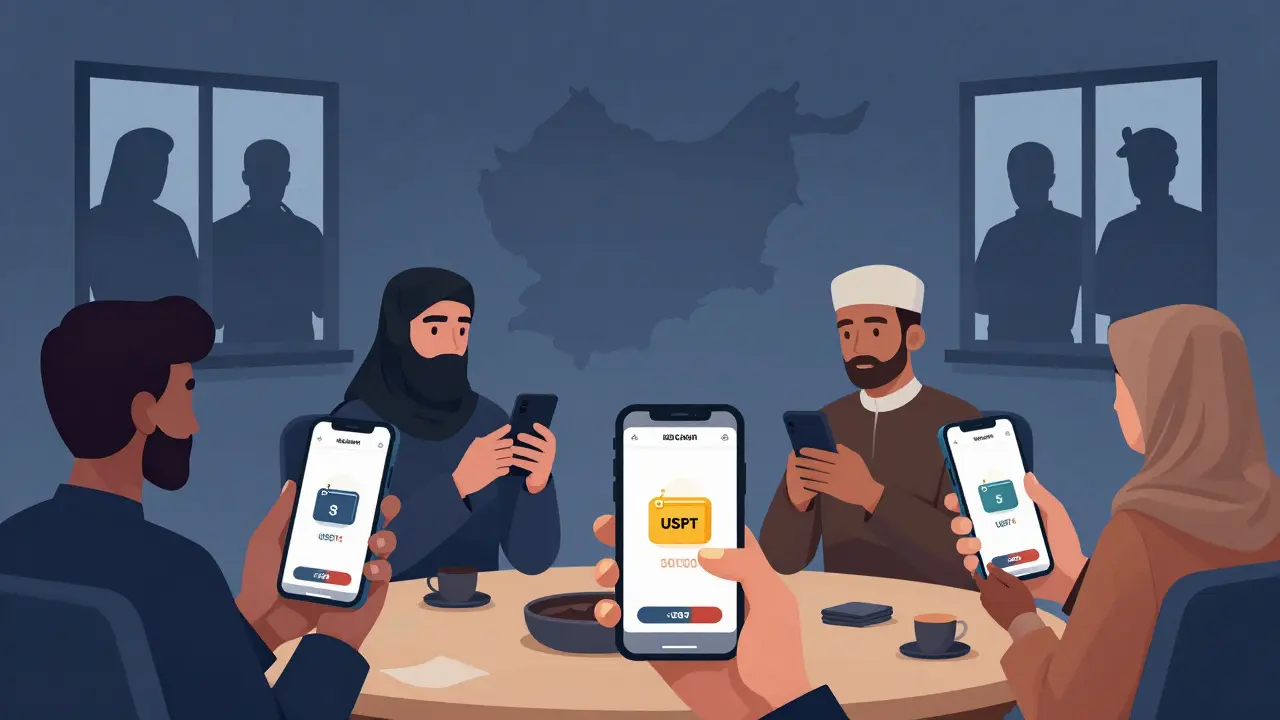
Crypto is essential in Afghanistan: With 97% of Afghans below poverty line, crypto is the only way to receive international remittances and store value.
Before 2022, Afghanistan was one of the fastest-growing crypto markets in the world. People were buying Bitcoin and USDT not because they were speculators, but because they had no other choice. Banks had collapsed. Foreign aid vanished. Salaries stopped. And with the Taliban’s return to power, the country’s entire financial system froze overnight. So Afghans turned to crypto-not as a luxury, but as a lifeline.
The Ban That Changed Everything
In August 2022, the Taliban government issued a blanket ban on all cryptocurrency activity. Trading, mining, holding, sending-everything became illegal. No exceptions. No gray areas. The official reason? It violated Sharia law. Crypto, they said, was haram-forbidden-because it had no real value behind it and encouraged gambling. That decision didn’t come out of nowhere. It was a direct response to the surge in crypto use that followed their takeover in August 2021. When the U.S. and allies froze Afghanistan’s $9 billion in foreign reserves, the economy went into freefall. The Afghan afghani crashed. Inflation hit 40%. People couldn’t pay for food, medicine, or rent. And with banks closed or untrustworthy, crypto became the only way to receive money from family abroad, buy essentials, or even pay for internet access. By early 2022, Afghanistan ranked 20th globally in crypto adoption, according to Chainalysis. That’s more than Germany, Canada, and Australia. And it wasn’t just tech-savvy urbanites. Farmers, shopkeepers, teachers, and even women in conservative households were using peer-to-peer apps to send and receive crypto. USDT, a stablecoin pegged to the U.S. dollar, became the unofficial currency of survival. Then came the ban.How the Ban Was Enforced
The Taliban didn’t just make a statement-they went after people. Authorities raided homes, shut down internet cafes, and arrested traders. Some were held for weeks without charge. Others were fined or forced to sign pledges never to use crypto again. The government claimed it was protecting citizens from fraud and financial instability. But the real goal was control. Crypto is decentralized. It doesn’t need banks. It doesn’t need permission. It can’t be taxed. It can’t be tracked easily. And for a regime that relies on strict control over money and movement, that’s a threat. The crackdown worked-at least on paper. Monthly crypto transaction volumes in Afghanistan dropped from over $10 million in mid-2021 to just $80,000 by November 2022. Exchanges shut down. Local traders disappeared. The visible market vanished. But here’s the thing: crypto didn’t die. It went underground.The Underground Market Keeps Running
Despite the ban, crypto is still moving. It’s just harder to see. People now trade through encrypted messaging apps like Telegram and WhatsApp. They meet in person in parks or private homes to swap cash for crypto. A trader might hand over 50,000 Afghanis in cash, and the buyer sends them 500 USDT via a peer-to-peer wallet. No bank. No paperwork. No trace. This isn’t just about convenience. It’s about survival. With 97% of Afghans living below the poverty line, according to the United Nations, people need a way to store value. The afghani is worthless. Banks won’t let you withdraw. Foreign remittances from the diaspora-once a lifeline-are now blocked by sanctions. Crypto fills that gap. Bitcoin and USDT are the only things that hold value across borders. And unlike cash, which can be seized at checkpoints, crypto can be hidden in a phone or a paper wallet. No one can take it from you unless they have your password. Even with unreliable internet and frequent power outages, people find ways. Solar chargers. Offline wallets. Community hotspots. The technology is primitive, but the need is urgent.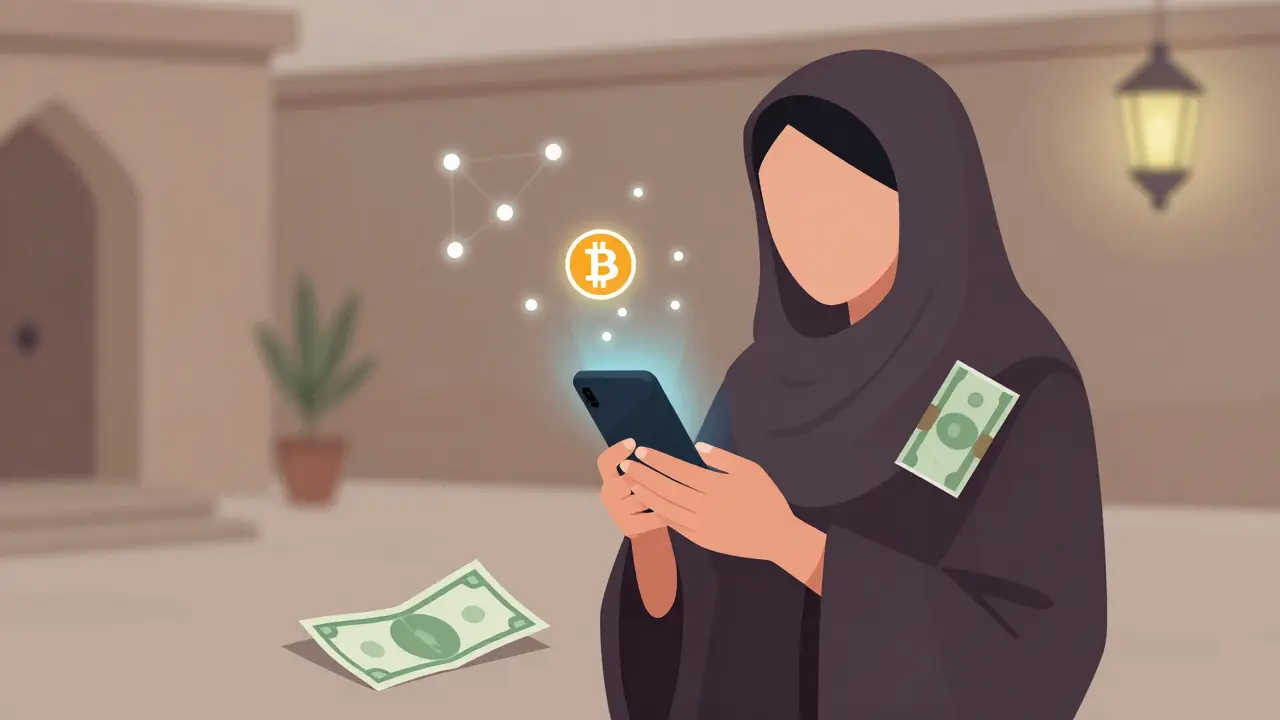
Women Are Using Crypto to Survive
One of the most powerful stories behind Afghanistan’s crypto underground is the role it plays for women. Under Taliban rule, women are banned from universities, most jobs, and public spaces without a male guardian. They can’t open bank accounts. They can’t own property. And they’re often cut off from family money sent from abroad. But crypto doesn’t care who you are. Roya Mahboob, a tech entrepreneur and human rights advocate, started teaching Afghan women how to use Bitcoin through underground networks. Her group, the Digital Citizen Fund, gives women phones, solar chargers, and simple instructions on how to receive and hold crypto. For many, it’s the first time they’ve had control over their own money. “Crypto gives them a hope of financial freedom,” Mahboob said in interviews. “It doesn’t ask for your ID. It doesn’t ask if you’re married. It just works.” Women now use crypto to pay for medicine, send money to sisters in other cities, or buy food without asking permission. Some even run small online businesses-selling embroidery or tutoring-paid in USDT. It’s not legal. But it’s the only thing keeping them alive.A Global Outlier
Afghanistan is now one of only nine countries in the world that still bans Bitcoin outright. And it’s the most recent. Countries like Morocco, Tunisia, and Nigeria lifted their crypto bans in recent years. Even China, which once cracked down hard, now allows blockchain research and is testing its own digital currency. Iraq, Egypt, and Algeria still ban crypto-but even there, trading continues quietly. Afghanistan stands alone in how strictly it enforces the ban. Other countries turn a blind eye. The Taliban don’t. They arrest people. They shut down internet access. They punish entire families. But this isolation is growing. The rest of the world is moving toward regulation, not prohibition. The IMF and World Bank now recognize crypto’s role in financial inclusion. Central banks are launching digital currencies. Even conservative governments are learning to coexist with blockchain. Afghanistan isn’t just behind the curve-it’s on the wrong side of history.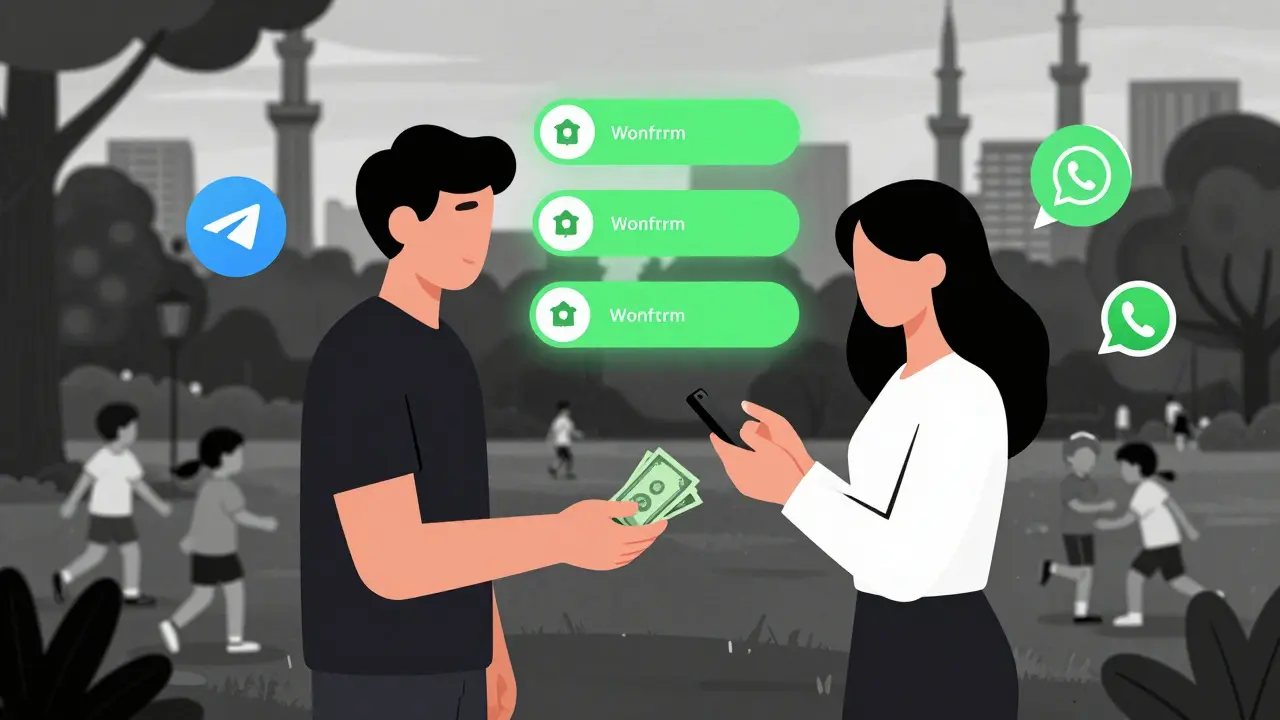
17 Responses
This is why I don't trust crypto. It's just digital magic money that lets bad actors hide their stuff. The Taliban were right to shut it down. People need structure, not chaos. 😒
It's heartbreaking to think about women in Afghanistan using crypto just to buy medicine or send money to their sisters. No one should have to risk arrest just to survive. This isn't about ideology-it's about human dignity.
The fact that Afghanistan ranks higher in crypto adoption than Germany speaks less to innovation and more to institutional collapse. A nation that can't manage its own currency shouldn't be surprised when it turns to speculative nonsense.
The imposition of Sharia law as justification for the ban is a convenient rhetorical shield. The real issue is the Taliban's pathological need for absolute control over economic mobility. Crypto represents autonomy. Autonomy threatens totalitarianism. The rest is performative theology.
LMAO the Taliban think they can stop blockchain? Bro they're running on dial-up while the rest of the world is on 5G. This is like trying to ban water because it's wet. They're not enforcing a law-they're fighting gravity.
I bet this whole crypto thing is just a CIA psyop to destabilize the region. You think people just randomly start using Bitcoin? Nah. Someone programmed this. The U.S. knew the economy would crash and pushed crypto as a Trojan horse. It’s all connected.
I saw this guy on the street last week giving someone cash for USDT in a park and I just stood there like what the f is this world now
The resilience of ordinary people in Afghanistan is astonishing. Technology doesn't care about borders or regimes. When survival is at stake, innovation follows.
I mean, sure, crypto is a lifeline, but think about the long-term implications. If you're using USDT to pay for food, what happens when the peg breaks? Or when the U.S. dollar collapses? Or when the Chinese government decides to sanction every wallet that touches Afghanistan? You're not building a system-you're building a house of cards on a fault line. And now you're telling me women are trusting their entire financial future to a phone app? That's not empowerment-that's desperation dressed up as tech. And don't get me started on the fact that solar chargers are now a form of financial infrastructure. We're not talking about innovation. We're talking about a civilization holding its breath.
What’s happening in Afghanistan isn’t just about crypto-it’s about who gets to be human in a world that’s forgotten them. Women using Bitcoin to pay for insulin? That’s not a loophole. That’s a revolution. And if the Taliban think they can silence it by cutting internet, they haven’t met the mothers of Kabul yet.
Crypto adoption metrics are meaningless without institutional context. Afghanistan’s ranking is a symptom of failure, not progress.
The Taliban’s ban is a classic case of authority mistaking control for stability. You can outlaw a tool, but you can’t outlaw need. Crypto isn’t the problem-it’s the mirror. It reflects a system that failed its people so completely that digital money became the only moral currency left. This isn’t about religion. It’s about power. And power always fears what it can’t see, tax, or touch. The real heresy isn’t Bitcoin. It’s the idea that people can survive without permission.
P2P DEXs + offline wallet protocols are the only viable path forward. The Taliban's enforcement is inefficient due to lack of blockchain analytics infrastructure.
I just feel so bad for those women. Like... how do you even sleep at night knowing this is happening?
bro the fact that people are using solar chargers to keep their crypto alive is like the most beautiful and tragic thing ive ever seen like theyre literally powering hope with sunlight
People say crypto is survival, but it’s also enabling a black market that funds everything from smuggling to terror. You can’t romanticize lawbreaking just because it’s convenient.
This is why I believe in tech. Not because it's perfect, but because it doesn't ask who you are before it helps you.