
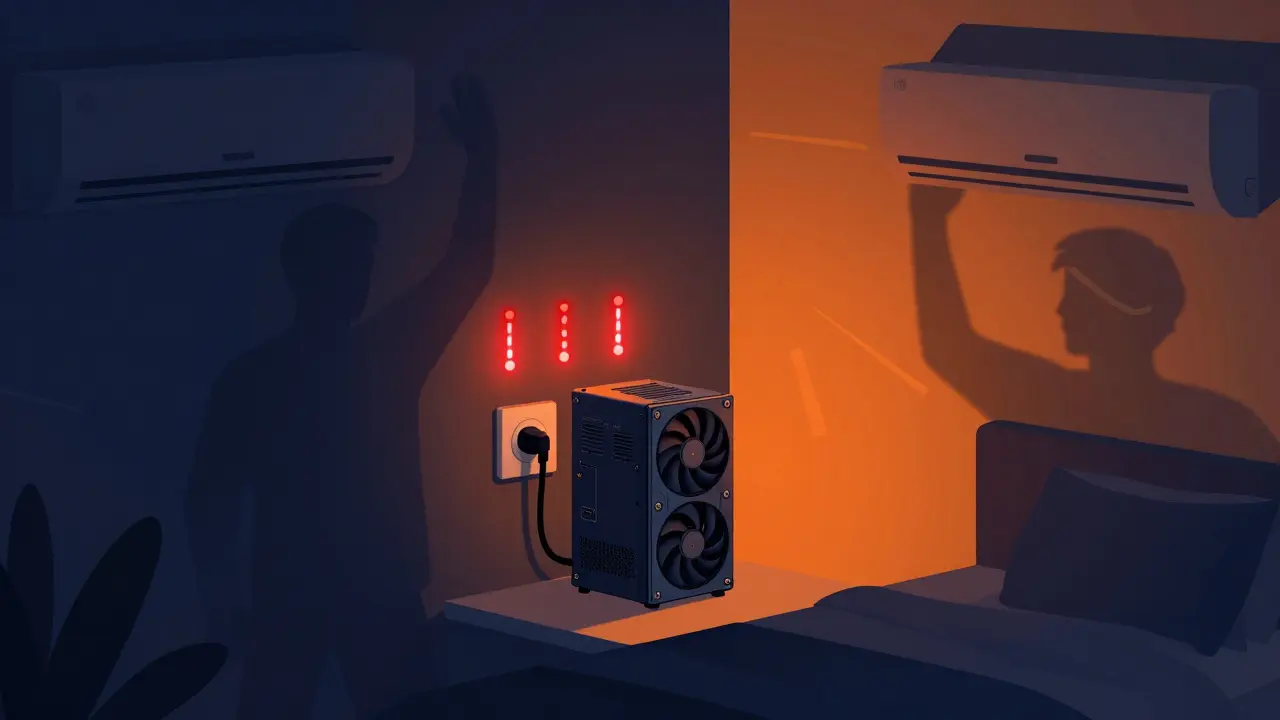
Algeria didn’t just restrict cryptocurrency mining-it made it a crime. On July 24, 2025, Law No. 25-10 went into effect, turning every Bitcoin miner, Ethereum rig owner, or even someone holding crypto in their wallet into a potential lawbreaker. The government didn’t just shut down large operations. It banned cryptocurrency mining in all forms, from a single GPU in a bedroom to industrial-scale farms. And the reason? Energy. Not just fear of fraud or financial chaos-real, measurable strain on a grid already at breaking point.
Why Algeria Couldn’t Afford Crypto Miners
Algeria’s electricity grid runs on a tight rope. During summer, when temperatures hit 40°C and air conditioners roar, the grid hits 95-100% capacity. That’s not a glitch. That’s the norm. In 2024, authorities detected unauthorized mining operations sucking up 15-20 megawatts of power-enough to light up a small city. That’s 1.5% of the entire national grid during peak hours, all used to churn out digital coins. The math is brutal. Mining one Bitcoin consumes about 1,500 kWh. That’s the same amount of electricity 30 Algerian households use in a month. And here’s the kicker: Algerians pay just $0.035 per kWh for electricity. That’s less than a quarter of the global average. For miners, it was a free ride. The government subsidized their profits while families struggled with blackouts. It wasn’t just about fairness. It was about survival. When SONELGAZ, the state power company, saw power spikes in industrial zones that didn’t match any known business, they traced it back to mining rigs. In Oran, a university student lost seven mining rigs after a surprise inspection. In Algiers, a small business owner was fined 800,000 dinars ($6,150) for running a 12-rig setup. The government didn’t want to negotiate. They wanted it gone.The Ban Isn’t Just About Mining
Law No. 25-10 doesn’t stop at mining. It criminalizes everything: buying, selling, holding, promoting-even talking about crypto in a way that might encourage others. The law defines crypto-assets as “property, income, funds or financial assets,” no matter how you use them. That means if you bought Ethereum in 2023 and still have it in your wallet? You’re breaking the law. If you posted a YouTube video explaining how mining works? You could face jail. Penalties are harsh. First-time offenders get two months to a year in prison and fines between 200,000 and 1,000,000 DZD. Repeat offenders? Double the sentence. Equipment gets seized. No warning. No grace period. The law gives authorities the right to raid homes, offices, and warehouses based on abnormal power usage patterns-anything 30-50% above normal for a similar-sized space becomes grounds for suspicion. Even VPNs are banned. That’s how people used to access crypto exchanges. Now, if you’re caught using one to bypass the ban, you’re adding another charge to your list. The government didn’t just block websites. They blocked the tools people used to get around them.How Algeria Compares to the Rest of the Region
While Algeria locked the door, its neighbors opened windows. The UAE, Saudi Arabia, and Bahrain built full regulatory systems. The UAE’s Virtual Assets Regulatory Authority approved 157 crypto licenses by mid-2025. Dubai processed $2.1 billion in crypto transactions in just one quarter. Tunisia lets you mine legally if you register. Morocco fines people, but doesn’t jail them. Algeria is the only country in the region that bans holding crypto outright. Egypt only bans trading through banks. China banned mining in 2021 but still allows blockchain tech. Algeria banned both. Even Egypt’s penalties are lighter-no jail for holding crypto. Algeria’s law treats you like a drug dealer. This isn’t just about energy. It’s about control. Algeria’s government doesn’t want citizens to have financial options outside the state system. Crypto represents independence. And independence, in this context, is seen as a threat.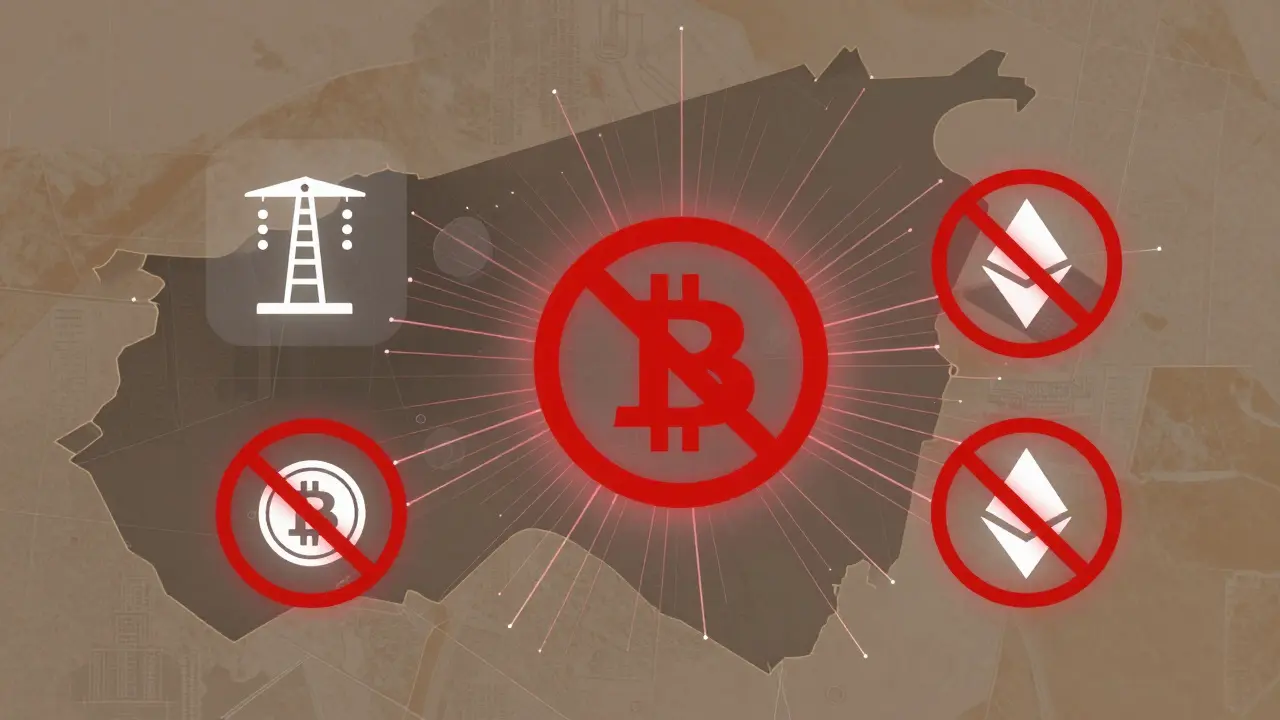
The Human Cost
For Algerians who mined crypto, it wasn’t a hobby. It was income. On Reddit, a user named DZCryptoMiner described shutting down a 12-rig setup that brought in $350 a month-enough to cover rent for a family in a country where the average monthly wage is around $400. That money didn’t go to luxury. It went to medicine, school supplies, groceries. Students who built mining rigs as side projects lost their equipment. Freelancers who earned crypto for remote work suddenly had assets they couldn’t touch. One man in Constantine told El Watan he’d been paid in Bitcoin for translating documents for a German company. He couldn’t cash out. He couldn’t even delete the wallet without risking a search. The ban also created a chilling effect in education. Professors at Algiers University now avoid mentioning blockchain in class. A lecturer who taught a module on decentralized ledgers was called in for questioning. The law doesn’t define “promotion,” so no one knows where the line is.What’s the Real Impact?
The government spent $9.2 million in 2025 just to enforce the ban. That’s money for cyber units, surveillance tools, raids, and legal cases. Meanwhile, Algeria lost its most tech-savvy talent. Between 2023 and 2025, 37% of Algerian blockchain developers left for Tunisia, Morocco, or Europe, according to LinkedIn data analyzed by Startup Researcher. The country’s crypto adoption rank dropped from 87th to 112th globally. The IMF acknowledged the energy concerns but questioned the approach. “A targeted regulation of mining operations-limiting power use, requiring renewable sources-could have preserved innovation while protecting the grid,” they wrote in their July 2025 report. But Algeria chose total elimination. Experts like Dr. Leila Bencharif at Algiers University point out the irony: Algeria has 22 gigawatts of untapped solar potential. A regulated mining operation powered by solar panels in the Sahara could have turned an energy problem into an economic asset. Instead, they shut it down.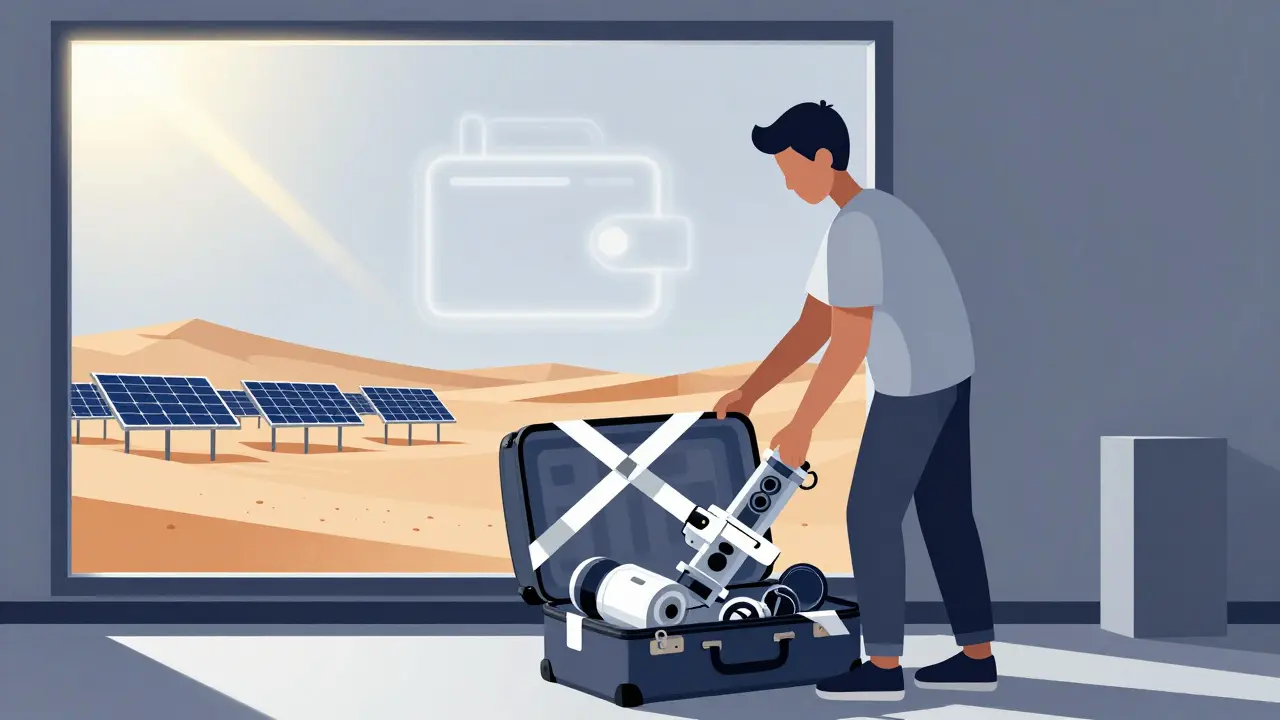
22 Responses
The Algerian government's move is a textbook case of regulatory overreach disguised as energy policy. Cryptocurrency mining, even at scale, represents a marginal load compared to industrial subsidies and state-owned oil infrastructure inefficiencies. The 15-20 MW figure? That’s less than 0.2% of total installed capacity. They’re conflating decentralization with destabilization. The real issue isn’t power consumption-it’s the state’s inability to monetize its own energy surplus or incentivize renewable integration. The ban isn’t about electricity-it’s about maintaining monopolistic control over financial flows. Blockchain’s immutable ledger could’ve been used to audit public energy distribution. Instead, they chose obfuscation.
OH MY GOD. I JUST CRIED. I mean, imagine being a student in Algiers who built a rig from spare parts to pay for textbooks-and now they’re coming for your hardware like it’s contraband? That’s not policy, that’s cruelty wrapped in a power grid crisis. And the worst part? They’re throwing away solar potential in the Sahara like it’s dust. This isn’t a ban-it’s a betrayal of the next generation. I’m so angry I can’t even type properly. Someone please tell me this isn’t real.
Typical third-world authoritarianism. If you can’t control your own people, ban their tools. Crypto isn’t the problem-Algeria’s economy is. They’d rather jail kids than fix their broken grid. Meanwhile, the UAE is building crypto cities and Algeria’s stuck in the 1970s. This is why their youth leave. This isn’t energy policy. It’s ideological cowardice. And if you think banning VPNs helps, you’re delusional.
While I acknowledge the legitimate strain on Algeria’s electrical infrastructure, the legislative response appears, in a strictly normative sense, to be profoundly disproportionate. The criminalization of mere possession-regardless of utility or intent-constitutes a de facto expropriation of private property without due process. Furthermore, the conflation of mining with speculative trading, and the subsequent prohibition of discourse regarding blockchain technology, raises significant concerns vis-à-vis intellectual freedom. One cannot help but note the irony: a nation rich in solar potential elects to extinguish innovation rather than harness it.
There’s a quiet tragedy here that no one’s talking about: this isn’t just about electricity. It’s about dignity. For so many Algerians, crypto wasn’t a get-rich-quick scheme-it was a lifeline. A way to feed their kids when the state couldn’t. A way to be paid for work the global economy recognized, even if their own government didn’t. The law doesn’t just seize rigs-it seizes hope. And the worst part? It’s not even effective. People will still trade. They’ll just do it in shadows, with no safety net. We keep calling these bans ‘crackdowns.’ But really, they’re just grief dressed up as policy.
Okay I just want to say that I think this is so sad but also kind of understandable? Like, imagine if your whole city kept having blackouts because some guy in his basement was running 12 GPUs 24/7? I get it. I really do. But the part that breaks my heart is that the people who were trying to survive with it are the ones getting punished. And now they’re scared to even talk about it? That’s the real loss. Not the rigs. Not the coins. The silence.
algeria really said 'no crypto' but also 'no vpn'?? like... what even is this? 😭 i mean i get the power thing but banning talking about it?? that’s next level. my cousin is in algeria and she’s been trying to cash out her btc for months and now she’s just... frozen. like literally. no one knows what to do. this is wild. 🤯
Algeria’s energy grid is under immense pressure, and mining operations were indeed consuming disproportionate resources during peak hours. The government’s response, while extreme, was reactive to a real and escalating crisis. The real failure lies in the lack of prior engagement with the tech community. Had regulators partnered with miners to deploy solar-powered rigs in the Sahara, they could have turned a liability into an exportable energy service. Instead, they chose suppression over innovation. The human cost is tragic, but the technical misstep was the absence of a transition plan.
There’s a philosophical paradox here: the state claims to protect its citizens from financial chaos, yet it denies them the tools to escape economic stagnation. Crypto, for all its volatility, offered autonomy. The ban doesn’t eliminate risk-it transfers it from the market to the state. And the state, as we’ve seen, is far less transparent, far less accountable. In banning crypto, Algeria didn’t protect its people. It made them dependent. And dependency, in the long run, is the most dangerous form of instability.
They banned mining because the grid was overloaded? Cool. Then why not cap usage? Why not tax the miners? Why jail people? This is just power play. They’re scared of decentralized money because it doesn’t need them. And they’d rather burn the whole house down than let someone else light a candle.
Algeria did the right thing. No crypto. No excuses. If you can’t manage your own grid, don’t let outsiders drain it. This isn’t about freedom. It’s about survival. And we don’t let thieves run our power plants.
While the intent behind the energy conservation measures is laudable, the legal architecture of Law No. 25-10 exhibits a concerning lack of proportionality. The criminalization of possession-without distinction between intent, scale, or utility-violates fundamental principles of administrative law. Moreover, the prohibition of discourse regarding blockchain technology creates a chilling effect on academic inquiry and technological literacy. A more sophisticated approach would have involved dynamic load management, tiered energy pricing for high-consumption users, or incentivizing renewable-powered mining. Instead, the state has chosen total prohibition, effectively forfeiting its role as an enabler of innovation.
I just want to hug every person in Algeria who lost their rig. I know it’s not just hardware-it’s dreams. It’s hope. It’s the chance to be part of something bigger than your country’s broken system. And now? They’re told to forget it. But I won’t forget. And I hope you won’t either. We’re still here. We still see you. And one day, when the lights come back on-fully, fairly, sustainably-they’ll realize they didn’t crush the future. They just delayed it.
imagine being so scared of tech that you ban words about it 😭 like... what even is this? my friend in algeria just deleted her wallet bc she was scared the cops would show up. its not just money its like... her whole side hustle. she used to get paid in btc for translating. now she just... doesnt talk. this is so heavy.
algeria’s problem isn’t crypto. it’s that they have 22gw of solar and still can’t power their cities. if they’d let miners use solar farms, they’d have been the first african crypto hub. instead they chose fear. sad.
bro this law is wild. they banned talking about crypto? like... if i say 'bitcoin' in algeria now do i go to jail? 😂 also why are they still mining gold but not crypto? that makes zero sense. also my cousin said they found a miner with 4 rigs in his garage and took his fridge too. like what even is this?
The Algerian government’s approach reflects a broader global tension between centralized control and decentralized innovation. While the energy crisis is undeniable, the legal response lacks nuance. The criminalization of possession and discourse indicates a failure of policy design rather than a failure of technology. A more effective strategy would involve establishing a regulatory sandbox for renewable-powered mining, implementing dynamic electricity pricing, and engaging the private sector in infrastructure modernization. Prohibition, while politically expedient, is technologically and economically unsustainable.
THEY BANNED VPNs TOO???!?!? That’s the most unhinged part. You can’t even use a tool to access the internet freely? That’s not energy policy-that’s digital dictatorship. And the fact that they’re now pushing people into traditional mining? Like, ‘here’s a shovel, go dig’? That’s not progress. That’s regression. Algeria’s future is in the sun, not in the dirt. They’re literally choosing coal over solar. 😤
Algeria didn’t ban crypto because it was dangerous. They banned it because it was democratic. For the first time, ordinary people had a way to bypass the state’s financial chokehold. That’s scarier than a blackout. So they took the rigs, the wallets, the words-and now they’re pretending the problem was electricity. The real power grid? It’s in the hands of the people. And they just tried to pull the plug.
So they banned crypto… but still let state-owned oil companies waste 30% of their energy? Yeah. Makes total sense. 🙃 At least the miners were using electricity. The government’s just using it to keep the lights on… for their own power trips.
This is obviously a Western psyop. Crypto is a tool of globalist elites trying to destabilize sovereign nations. Algeria saw through it. They’re protecting their people from invisible financial colonization. The IMF? They’re just another branch of Wall Street. And the solar farms? A distraction. Real sovereignty means saying no. Even when it’s hard. Even when it’s unpopular. Algeria is the only country brave enough to say it.
That last comment… it’s not about crypto. It’s about fear. The state doesn’t fear energy shortages. It fears people having alternatives. When you can earn, save, and transact without the state’s permission, you stop needing it. And that’s the real threat. Not the electricity bill.