
Remember the days when opening a crypto account felt like defusing a bomb? You had to jump through hoops, wait for endless verifications, and hope your funds wouldn’t vanish into the digital ether. That was 2018. Today, the landscape is different, but trust remains the scarcest resource in cryptocurrency. If you are looking at Alterdice, you are likely weighing a platform that promises simplicity against giants like Binance or Coinbase. But does this Singapore-based exchange still hold up in 2026?
I’ve spent years tracking how these platforms evolve. Alterdice launched with a clear mission: make trading accessible without sacrificing security. They aren’t trying to be the biggest; they’re trying to be the most reliable for everyday traders. In this review, we’ll cut through the marketing fluff. We’ll look at their actual fees, their security track record, and whether their feature set matches what you need today.
The Quick Verdict: Who Is Alterdice For?
Before we dig into the details, let’s get straight to the point. Alterdice is not designed for high-frequency algorithmic traders who need nanosecond execution speeds. It is also not an option if you live in the United States-the platform explicitly excludes US investors due to regulatory complexities.
However, if you are a retail trader based in Asia, Europe, or other supported regions who wants a clean interface, strong cold storage security, and straightforward access to major cryptocurrencies like Bitcoin and Ethereum, Alterdice is a solid contender. It sits comfortably in the mid-tier category. You won’t find the deepest liquidity pools here, but you will find a stable, user-friendly environment that doesn’t overwhelm you with unnecessary complexity.
Is Alterdice safe to use in 2026?
Yes, Alterdice maintains a strong security posture. They store 98% of customer funds in offline cold storage, offer mandatory two-factor authentication (2FA), and have automatic DDoS protection. There have been no major reported security breaches since its launch in 2018.
Can US citizens trade on Alterdice?
No. Alterdice currently excludes investors from the United States due to specific regulatory requirements and compliance structures.
What are the trading fees on Alterdice?
Trading fees on Alterdice have a maximum ceiling of 0.2%. The exact rate may vary slightly based on your trading activity levels, but it remains competitive compared to many major exchanges.
Does Alterdice support mobile trading?
Yes, Alterdice offers dedicated applications for iPhone, iPad, and Android devices, as well as desktop support for Windows, Mac, and Linux.
How much trading volume does Alterdice handle?
As of late 2021, Alterdice recorded a 24-hour trading volume of approximately USD 51 million. While this indicates moderate activity suitable for most retail trades, it is lower than top-tier global exchanges.
Security First: How Your Money Is Protected
In crypto, security isn’t a feature; it’s the foundation. If you don’t trust the vault, you don’t care about the fancy charts. Alterdice understands this. Since launching in October 2018, they have built their infrastructure around one core principle: keep assets offline.
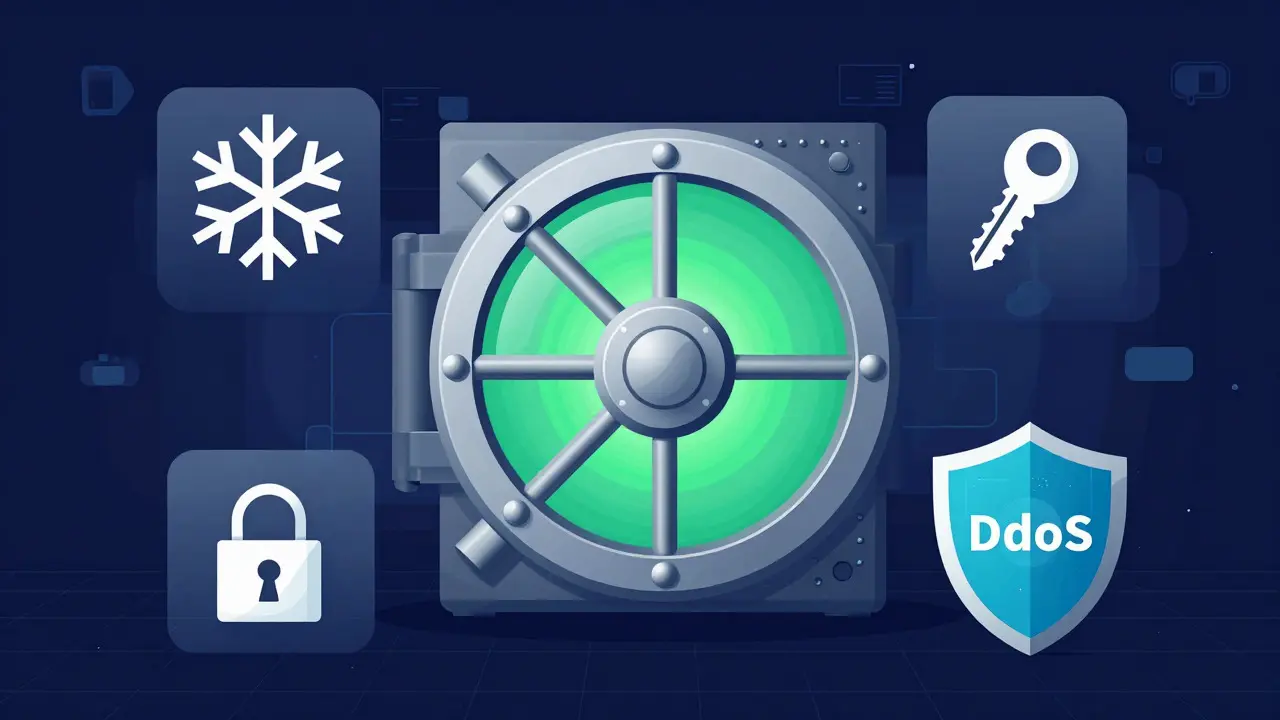
Here is how they break down their security stack:
- Cold Storage Dominance: 98% of all customer funds are stored in cold wallets. These are hardware devices disconnected from the internet, making them nearly immune to remote hacking attempts. Only a small fraction of funds remains in hot wallets to facilitate immediate withdrawals.
- Two-Factor Authentication (2FA): This is mandatory for all users. Whether you use Google Authenticator or SMS verification, your account has an extra layer of defense beyond just a password.
- DDoS Protection: Distributed Denial of Service attacks can take exchanges offline during critical market moves. Alterdice employs automatic DDoS protection to ensure uptime even under heavy traffic loads.
- Daily Backups: System data is backed up daily. This ensures that in the unlikely event of a technical failure, transaction histories and balances can be restored accurately.
For context, compare this to some smaller offshore exchanges that might only offer basic SSL encryption. Alterdice’s approach aligns more closely with institutional standards. However, remember that no system is 100% hack-proof. The best security combines platform measures with your own hygiene-never share your seed phrases and enable every available security toggle.
Fees and Costs: What Will It Actually Cost You?
Let’s talk money. Hidden fees are the silent killer of crypto profits. Alterdice keeps things transparent, which is refreshing. Their fee structure is designed to be predictable.
| Fee Type | Cost | Notes |
|---|---|---|
| Trading Fees | Up to 0.2% | Based on trading volume/activity. Competitive for retail traders. |
| Deposit Fees | Free | All supported assets can be deposited without charge. |
| Withdrawal Fees | Minimal | Varies by coin network costs, but generally kept low. |
A 0.2% ceiling is quite reasonable. For comparison, some major exchanges charge between 0.1% and 0.5% depending on your VIP tier. If you are a casual trader moving thousands rather than millions, you likely won’t notice a huge difference. But for active day traders, that 0.1% variance adds up over hundreds of trades. Alterdice’s model favors consistency over aggressive discounting for whales.
User Experience: Simple Doesn't Mean Basic
Many new traders quit within the first month because the interface looks like a cockpit from a fighter jet. Too many buttons, too many colors, too much noise. Alterdice takes a different approach. They market themselves as "the easiest way to trade, buy and sell digital currencies."
Does it deliver? Yes. The dashboard is clean. You see your portfolio balance clearly. The order book is visible but not intrusive. Charting tools are sophisticated enough for technical analysis-supporting indicators like RSI, MACD, and Bollinger Bands-but they don’t clutter the screen unless you ask for them.
They also offer customizable price alerts. This is crucial for swing traders who can’t stare at screens all day. Set a target for Bitcoin or Ethereum, and get notified when it hits. Position management tools are comprehensive, allowing you to set stop-losses and take-profits easily.
Platform availability is another strong suit. You aren’t locked into a browser. Alterdice provides native apps for:
- iPhone and iPad (iOS)
- Android smartphones and tablets
- Windows, Mac, and Linux desktops
This cross-platform consistency means your settings and preferences sync seamlessly. You can start a trade on your laptop and monitor it on your phone while commuting.
Liquidity and Trading Volume
Here is where we need to manage expectations. Liquidity refers to how quickly you can buy or sell an asset without causing its price to move significantly. High liquidity is essential for large orders.
Alterdice is a mid-tier exchange. In December 2021, their 24-hour trading volume hit USD 51 million. To put that in perspective, Binance handles billions daily. So, if you are trying to dump $10 million worth of XRP in seconds, Alterdice might not be the right place. You could slip the price.
But for the average retail trader moving $100, $1,000, or even $10,000, this volume is perfectly adequate. The order books are deep enough for standard market and limit orders. You won’t experience significant slippage on normal trades. The growth from USD 40 million in 2019 to USD 51 million in 2021 shows steady, sustainable adoption rather than volatile spikes.
Supported Cryptocurrencies
You won’t find every obscure meme coin on Alterdice. They focus on quality over quantity. The platform supports major blue-chip assets and established altcoins. Here is what you can typically expect to trade:
- Bitcoin (BTC)
- Ethereum (ETH)
- XRP
- Binance Coin (BNB)
- Zcash (ZEC)
- Litecoin (LTC)
- Various other altcoins with strong fundamentals
If you are hunting for the latest presale token or a newly launched DeFi project, you might need to look elsewhere. But for building a diversified portfolio of proven assets, the selection is robust.
Integrations and Ecosystem
Modern trading isn’t isolated. You want your exchange to talk to your tax software, your portfolio trackers, and your analytics tools. Alterdice has done a commendable job integrating with the broader crypto ecosystem.
They connect with major platforms including:
- Tax Reporting: CoinLedger, Koinly
- Market Data: CoinGecko, CoinMarketCap, Live Coin Watch
- Portfolio Tracking: WorldCoinIndex, CryptoCompare
- Other Exchanges/Networks: Bitstamp, Coinbase, Kraken, Algorand, PolyNetwork
Why does this matter? Imagine end-of-year tax season. Instead of manually downloading CSV files and guessing transaction types, you can link Alterdice directly to CoinLedger or Koinly. These tools automatically categorize your trades for capital gains calculations. This saves hours of headache and potential errors.
Customer Support and Education
When things go wrong-and they sometimes do-you need help. Alterdice offers multiple channels:
- 24/7 live representative availability
- Business hours support for complex issues
- Comprehensive online documentation
More importantly, they invest in education. Crypto is confusing. Terms like "gas fees," "slippage," and "order book depth" mean nothing to beginners. Alterdice addresses this with webinars, live online training sessions, and even in-person training opportunities. This educational commitment helps reduce user error, which is often the biggest risk factor in trading.
Regulatory Status and Geographic Restrictions
Alterdice is headquartered in Singapore. This is strategic. Singapore has progressive, clear regulations for cryptocurrency businesses, providing a stable legal framework. The Monetary Authority of Singapore (MAS) oversees digital payment token services, ensuring a level of accountability.
However, this regulatory clarity comes with a trade-off. To maintain compliance and avoid the heavy burden of US securities laws, Alterdice excludes US investors. If you are reading this from New York or California, you will likely be blocked during registration. For everyone else, the Singapore base offers peace of mind regarding operational legitimacy.
Alternatives to Consider
No single exchange is perfect. Depending on your needs, you might want to compare Alterdice with other options:
- Kraken: Better for advanced traders needing margin trading and higher liquidity. Also accepts US customers.
- Coinbase: Best for absolute beginners in the US/Europe, though fees can be higher.
- Binance: Offers the widest range of coins and highest volume, but faces ongoing regulatory scrutiny globally.
If you prioritize simplicity, security, and a clean interface over having every possible coin listed, Alterdice holds its ground well against these giants.
Final Thoughts
Alterdice isn’t trying to revolutionize finance. It’s trying to execute it reliably. In an industry prone to hype and collapse, that reliability is valuable. With 98% cold storage, reasonable fees, and a user-friendly interface across all devices, it serves its target audience well.
Just know your limits. If you need deep liquidity for massive trades or access to the newest speculative tokens, look elsewhere. But for steady, secure trading of major cryptocurrencies outside the US, Alterdice remains a trustworthy choice in 2026.
18 Responses
Oh, wonderful. Another exchange that pretends to be safe while quietly hoarding your data like a digital dragon. You people are so naive if you think 'cold storage' means anything when the backend is likely riddled with backdoors for regulators or worse, corporate greed. It’s pathetic how we just hand over our financial sovereignty because an app looks pretty.
The sheer audacity of calling this 'secure' in 2026 is laughable. Mandatory 2FA? Please. That is the bare minimum standard since 2014. To present it as a feature is insulting to anyone who actually understands cybersecurity hygiene. They are milking retail traders for fees under the guise of 'simplicity,' which is really just code for 'we stripped away all the advanced tools you might need.' Disgraceful.
Look, I get the skepticism, but let's not throw the baby out with the bathwater. The 98% cold storage stat is actually quite robust compared to some of the sketchier offshore platforms floating around. If you're not moving millions, the liquidity isn't a dealbreaker. It's about finding a middle ground where you don't have to fight the UI every time you want to check your ETH balance. Sometimes simple is just... simple. And that has value in a noisy market.
Singapore base means MAS oversight which means they are already compromised by state interests. Cold storage is a myth when the hot wallet keys are managed by insiders who can drain funds during a 'maintenance window'. 0.2% fee is a tax on ignorance. Wake up sheeple. The volume numbers are inflated by wash trading algorithms designed to lure in retail liquidity before the rug pull. Always use a hardware wallet and never leave assets on any CEX ever.
I tried it last week 🤷♂️
UI is clean enough I guess. No crashes yet. But why would I trust them with my life savings? 😬
Just keep small amounts there for trading. Rest in Ledger.
You know, there is something beautiful about a platform that doesn't try to be everything to everyone. In a world obsessed with complexity, Alterdice offers a sanctuary of clarity. It reminds me of the old days of local markets, where trust was built on reliability rather than hype. For those of us outside the US, it feels like a respectful partnership rather than a predatory extraction. Let's appreciate the nuance here.
I've been watching the crypto space from the sidelines for years, mostly because it looked like a chaotic mess of neon charts and screaming men. This review makes it sound almost... manageable? Like a quiet library instead of a rock concert. If the interface is truly as clean as described, maybe I'll peek in. But only if the security holds up. I'm easily spooked by things that promise too much too fast.
why do we even bother with exchanges when the whole system is a ponzi scheme dressed up in blockchain jargon. alterdice is just another node in the surveillance grid. your data is being sold to advertisers while you sleep. wake up. the matrix is feeding you false hope through these 'user-friendly' interfaces. control your own keys or lose your soul.
honestly i find the whole debate about US restrictions hilarious. like yes obviously they excluded the most litigious population on earth. smart move. but the real question is whether their tech stack can handle the next bull run without melting down. i've seen too many 'secure' platforms vanish overnight. also typos in their docs are a red flag imo.
Hey folks! 👋 Just wanted to chime in from the UK side of things. I've been using Alterdice for a few months now and honestly, the mobile app experience is top-notch. 📱✨ It syncs perfectly with my desktop setup, which is great for when I'm commuting. The support team was actually helpful when I had a weird withdrawal issue last month. Not perfect, but solid vibes overall! 🚀
It is imperative to note that the fee structure, while competitive, must be weighed against the opportunity cost of limited liquidity. Furthermore, the exclusion of US citizens is a significant regulatory hurdle that cannot be overlooked. However, for the European demographic, the platform presents a viable alternative to the more volatile giants. One must remain vigilant regarding security protocols at all times.
moral decay is evident in the pursuit of quick gains through such platforms. alterdice offers a veneer of respectability but underneath lies the same speculative frenzy that destroys lives. we should focus on tangible assets not digital ghosts. yet if one must participate choose wisely and bear the weight of your choices.
hey guys no big drama here just thought id share that the tax integration with koinly works pretty well. saved me a headache last april. not saying its perfect but better than manual csv imports. cheers!
Oh, look at you all getting worked up over a mid-tier exchange! 😂🎭 Is it revolutionary? No. Is it safe? Apparently. Should you put your entire net worth in it? Don't be ridiculous! 🙄 Use it for what it is: a tool. A slightly cleaner, less stressful tool than some others. Now go forth and trade responsibly, or don't, I'm just the observer with the emoji keyboard! 🤷♂️💸
i signed up yesterday and the verifcation was super fast unlike binance which took forever. love the speed. gonna try trading some eth soon. fingers crossed it doesnt crash lol.
why is everyone so positive. its just another scam waiting to happen. i lost money on three other exchanges. dont trust these guys. they will steal ur coins. stay away.
Typical foreign exchange nonsense!! Why should Americans care about a Singaporean platform anyway? Our SEC protects us best! This is clearly an attempt to siphon global liquidity away from our superior domestic markets. Un-American! We need to boycott these offshore entities and bring crypto home where it belongs! #AmericaFirst #CryptoPatriotism
Great read! I think for beginners, the educational resources mentioned are a huge plus. It's easy to feel overwhelmed, so having webinars and guides helps build confidence. Keep learning and stay safe out there! 💪