
Waiting for an airdrop announcement can feel like staring at a loading bar that never moves. You see the buzz on X (formerly Twitter), hear whispers in Discord channels, and wonder if you missed the boat. If you are looking into the ART Campaign by Around Network, you are likely asking three specific questions: Is it real? What do I need to do? And when does the money hit my wallet? Since detailed public documentation for this specific campaign is still emerging, this guide breaks down what we know about Around Network, how typical airdrops of this nature work, and exactly where to look for verified information so you don't fall for a scam. We will cover the eligibility criteria, the risks involved, and the practical steps to secure your potential allocation.
What is Around Network and the ART Token?
Around Network operates within the broader ecosystem of decentralized infrastructure projects. While not yet as household-known as giants like Ethereum or Solana, it positions itself as a solution for specific utility needs in the Web3 space. The project's native asset, referred to as the ART token, serves as the primary medium of exchange and reward mechanism within their platform. The "ART Campaign" is essentially the project's method of distributing these tokens to early adopters and active users. In the crypto world, this is standard practice. Projects use airdrops to bootstrap liquidity, build a community, and ensure that the token has broad ownership rather than being concentrated in the hands of a few venture capital firms. For Around Network, the goal is likely to incentivize users to interact with their specific protocols or platforms before the token officially launches on major exchanges.
How the ART Airdrop Process Works
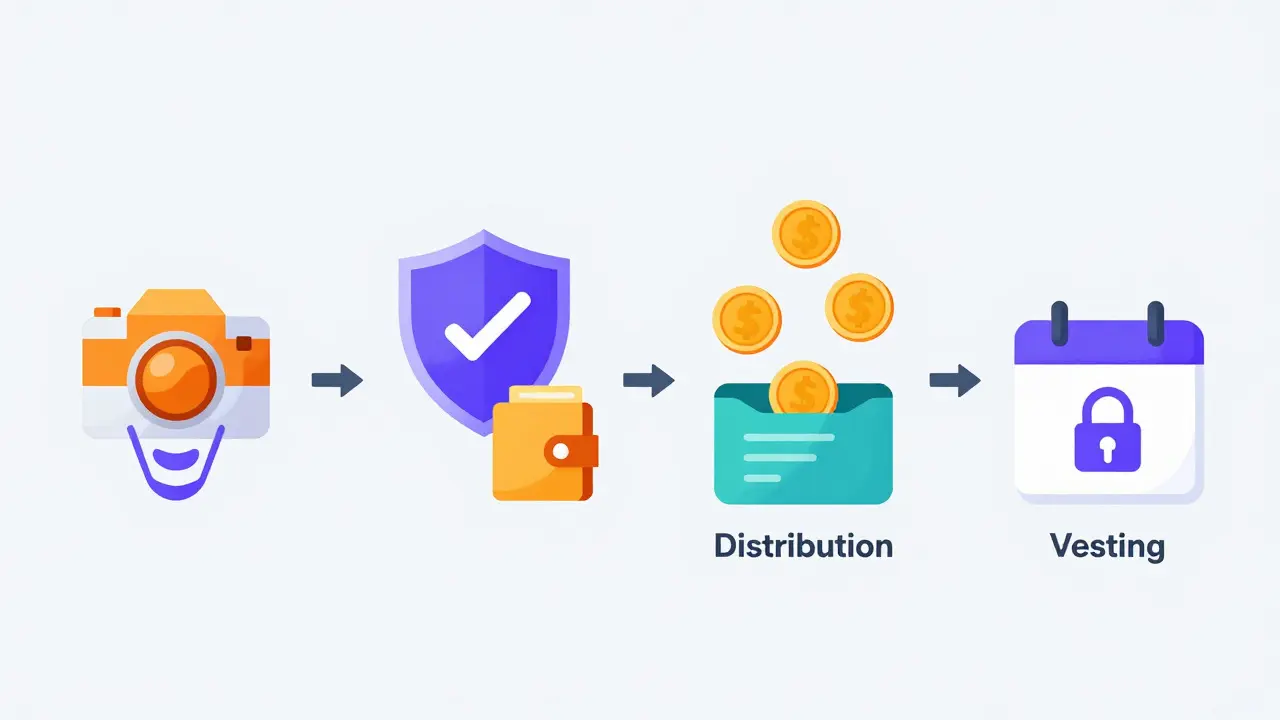
Most modern airdrops follow a predictable lifecycle. Understanding this helps you manage expectations and avoid missing key deadlines. The process typically unfolds in four stages:
- Snapshots: The team takes a snapshot of the blockchain to identify who was using their testnet or mainnet during a specific period. This is the most critical step. If you weren't active during the snapshot window, you might not be eligible.
- Verification: Users often need to connect their wallets to a claim portal. This verifies that the address holding the assets is still controlled by the original user.
- Distribution: Tokens are sent directly to eligible wallets. This can happen all at once or in tranches over several weeks.
- Vesting: Many airdrops include vesting schedules. This means you might receive 100% of your tokens immediately, or you might unlock them monthly over six to twelve months.
For the ART Campaign specifically, keep an eye on whether there are task-based requirements. Some projects require users to complete quests on platforms like Galxe or Zealy, such as following social media accounts or joining Telegram groups. Others rely purely on on-chain activity, meaning you just had to hold or trade on their network.
Eligibility Criteria: Who Gets the Drop?
Not everyone who hears about the campaign will get tokens. Eligibility usually hinges on a few factors. First, consider your wallet history. Did you interact with Around Network's dApps? Did you bridge assets to their chain? These actions create a permanent record on the blockchain that the project team can verify. Second, check for exclusions. Many projects exclude "whales"-addresses holding more than a certain percentage of the total supply-to prevent centralization. They also often exclude known Sybil farmers, which are multiple wallets created by one person to farm extra rewards. To stay safe, use a dedicated wallet for airdrop farming. Do not mix your main savings with your airdrop hunting activities. This keeps your risk profile manageable and makes it easier to track your allocations.
Where to Find Verified Information
The biggest risk with any airdrop is misinformation. Fake websites pop up daily, promising huge drops but stealing your seed phrase. Here is how to find the truth:
- Official Socials: Follow Around Network on X (Twitter) and Mirror. Look for blue checkmarks or verified badges. Official announcements will link to a specific domain (usually .io, .xyz, or .network).
- DeFiLlama: Check the DeFiLlama airdrops page. It tracks confirmed and rumored airdrops with high accuracy. If Around Network is listed here, the details are generally reliable.
- Token Unlocks: Sites like CryptoRank or TokenUnlocks provide data on token distributions. If you see a large supply allocated to "Ecosystem" or "Community," that confirms the airdrop exists.
Avoid clicking links from random tweets. Always type the official website URL manually into your browser. If a site asks for your seed phrase, it is almost certainly a scam. Legitimate airdrops only ask for your wallet address and a signature approval.
Risks and Pitfalls to Avoid
While airdrops can be profitable, they come with hidden costs. The first is gas fees. If you are claiming on a Layer 2 network, gas might be negligible. But if it involves bridging or interacting with a mainnet, transaction costs can eat into your profits. Calculate the break-even point: if your estimated airdrop value is $50 and gas costs $40, is it worth it?
The second risk is tax implications. In many jurisdictions, receiving an airdrop is considered taxable income at fair market value on the day you receive it. Keep records of the date and the price of the ART token at that moment. Tools like CoinTracker or Koinly can help automate this later. Finally, watch out for rug pulls. If the team locks up too much of their own supply, or if the token has no clear utility beyond speculation, the price may crash shortly after launch. Diversify your holdings. Don't put all your eggs in one basket, even if the airdrop looks generous.
Step-by-Step Guide to Securing Your Allocation
If you believe you are eligible, here is your action plan:
- Check Your Wallets: Go through your transaction history. Identify any interactions with Around Network contracts. Note the dates.
- Monitor Announcements: Set alerts for the official X account. Look for keywords like "Snapshot," "Claim Window," or "TGE Date" (Token Generation Event).
- Prepare a Fresh Wallet: Create a new wallet specifically for the claim. Fund it with a small amount of the required gas token (e.g., ETH, MATIC, or SOL, depending on the chain).
- Verify the Link: Before connecting, cross-check the URL on DeFiLlama or the official social channel. Ensure there are no typos.
- Approve Carefully: When prompted to sign a transaction, read the details. Does it ask for unlimited approval? Try to set a specific limit if possible. Use tools like Etherscan to check token approvals after signing.
FAQ
Is the Around Network ART airdrop confirmed?
As of mid-2026, the campaign is widely discussed in the community, but always verify via the official project channels. Check DeFiLlama for the latest status update to confirm if the snapshot has occurred and when claims open.
Do I need to buy anything to qualify for the ART drop?
Usually, no purchase is required. Qualification is based on past on-chain activity, such as trading, staking, or bridging on the Around Network platform. However, you will need a small amount of gas tokens to pay for transaction fees when claiming.
What happens if I miss the claim window?
If you miss the initial window, tokens may revert to the project treasury or be redistributed in a later round. Some projects offer a secondary claim period for latecomers, but this is not guaranteed. Act quickly once the official date is announced.
Can I claim the airdrop in a different wallet?
Yes, provided you control the private keys or seed phrase for the eligible wallet. You can transfer tokens to another wallet after claiming, but make sure to pay attention to network fees and compatibility.
Are there any taxes on the ART airdrop?
In many countries, yes. The IRS and other tax authorities often treat airdrops as ordinary income at the time of receipt. Consult a local tax professional to understand your specific liability and reporting requirements.