
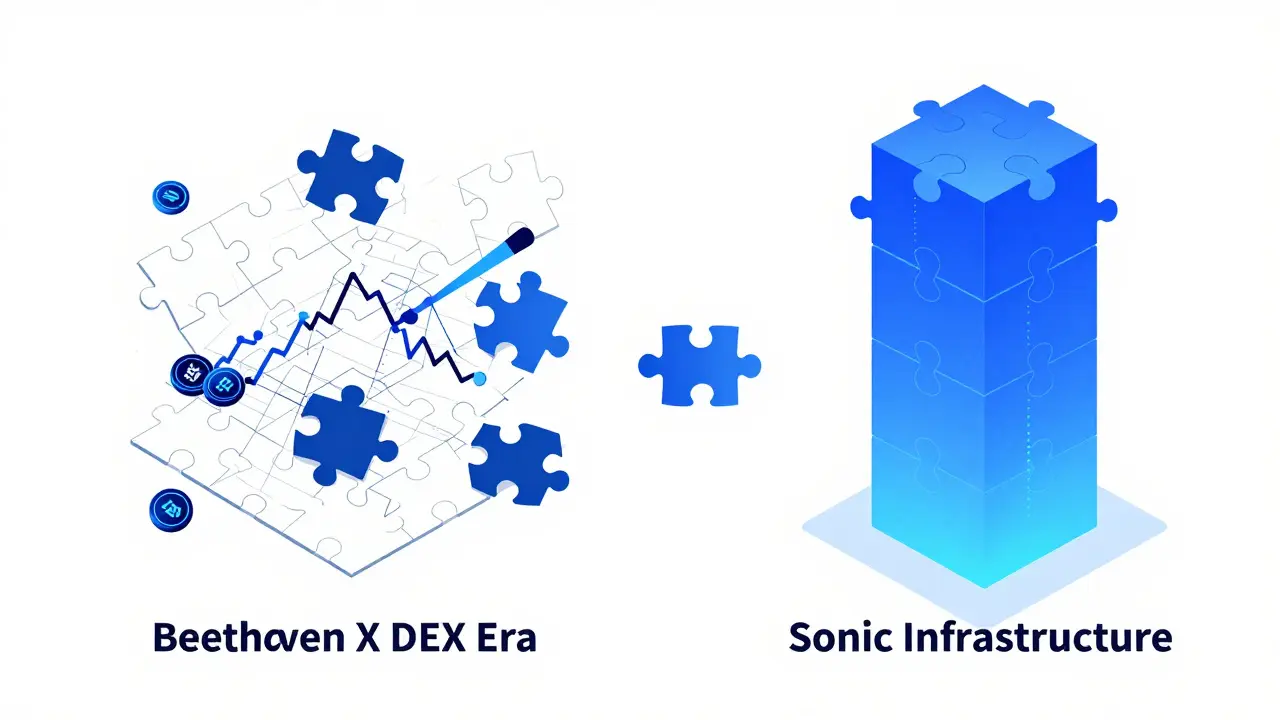
Remember when Beethoven X was the go-to decentralized exchange for Fantom users? If you’ve been in the crypto space since 2021, you probably do. But here is the thing: the platform you remember doesn’t really exist anymore. In late 2024, everything changed. The Fantom network rebranded to Sonic, and Beethoven X pivoted hard from being a standard DEX to becoming the core infrastructure provider for this new ecosystem. Today, it operates under the name BEETS.
If you are looking at your portfolio or trying to navigate the Sonic chain right now, you might be confused. Is Beethoven X still a place where you swap tokens? Or is it something else entirely? This review cuts through the noise to explain exactly what happened, what the platform does today, and whether it makes sense for your strategy in 2026.
The Great Pivot: From DEX to Core Infrastructure
To understand where Beethoven X stands today, we have to look at how it started. Launched in 2021 as a "friendly fork" of the Balancer V2 protocol, Beethoven X was designed to bring advanced automated market maker (AMM) features to the Fantom Opera network. At its peak, it offered weighted pools and concentrated liquidity, leveraging Fantom’s high-speed Lachesis consensus mechanism. We’re talking about near 1-second finality and transaction fees that hovered around $0.01.
But then came the shift. As the Fantom Foundation transitioned into the Sonic ecosystem, Beethoven X didn’t just move over; it transformed. According to data from CoinGecko in October 2024, the platform stopped focusing primarily on swapping and started focusing on staking and liquidity provision. The brand became BEETS. The goal shifted from capturing trading volume to securing the Sonic network itself.
This means if you log in expecting a Uniswap-like experience with thousands of pairs, you will be disappointed. Instead, you are interacting with the backbone of Sonic’s liquid staking economy. This pivot addressed previous liquidity challenges by creating a flywheel effect: users stake assets, earn rewards, and deploy those rewards back into DeFi applications seamlessly.
What You Can Actually Do on BEETS Now
So, what does this mean for you as a user? The functionality has narrowed but deepened. Here is the breakdown of what the platform currently offers:
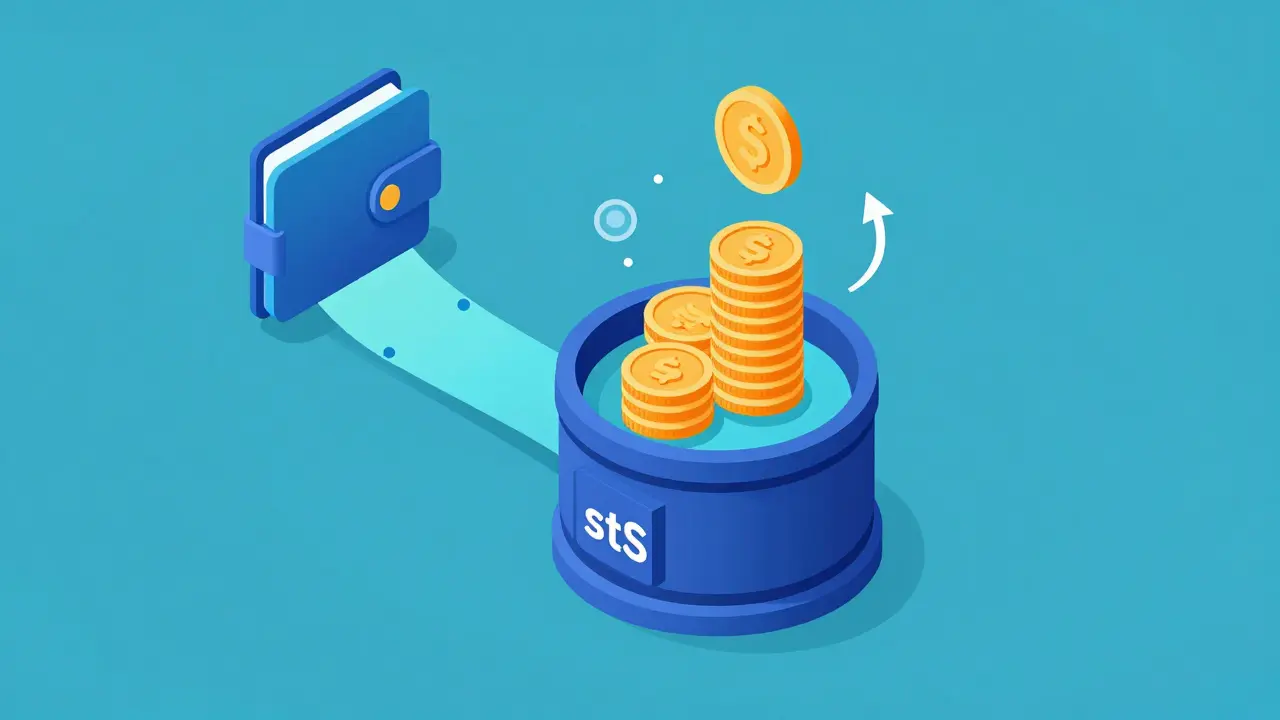
- Liquid Staking: This is the main event. You can stake S tokens (Sonic’s native currency) to receive stS (staked Sonic). This stS token acts as a receipt for your stake, allowing you to use your capital elsewhere in DeFi while still earning staking rewards.
- Auto-Compounding Yields: Unlike traditional staking where you manually claim rewards, BEETS automates this process. As of late 2024, the average APY for stS sat around 8.7%, with auto-compounding boosting effective yields by an additional 1.2% to 1.8%.
- Specialized Yield Pools: You can provide liquidity in specialized pools, such as the partnership with Origin Protocol involving wrapped Origin Sonic (wOS) and stS. These pools offer higher potential returns but come with impermanent loss risks typical of any AMM.
- Cross-Chain Liquidity: With version 2.1 launched in October 2024, BEETS introduced pools connecting Sonic with Ethereum and Arbitrum. This allows for more complex arbitrage and yield strategies across chains.
The interface has simplified significantly. Most users report they can connect their wallet, stake tokens, and deploy them into a yield pool in under 20 minutes. However, the learning curve remains moderate. You need to understand what liquid staking is and how smart contracts interact with your wallet.
Performance and Costs: The Numbers Don't Lie
Let’s talk performance. One of the biggest selling points of the Sonic ecosystem (formerly Fantom) is speed and cost. Because BEETS runs on this infrastructure, you benefit from:
- Negligible Gas Fees: Most operations cost fractions of a cent. Even during peak congestion hours (typically 14:00-18:00 UTC), adjusting gas fees slightly above default levels resolves most issues without breaking the bank.
- Sub-Second Finality: Transactions confirm almost instantly. No more waiting minutes for swaps to settle.
- Bid-Ask Spreads: The average spread sits at 0.677%. While not the tightest in the industry, it is competitive for a niche-focused platform.
However, volume tells a different story. Beethoven X/BEETS ranks in the 43rd percentile for DEX trading volume. Its 24-hour volume hovers around $1.24 million. Compare that to giants like PancakeSwap, which regularly sees hundreds of millions in daily volume. This lower volume means less liquidity depth. For large trades, slippage can become an issue. Historical data shows average order book depth of roughly $28,500, compared to $142,000 on competitors like SushiSwap.
| Feature | BEETS (Sonic) | Uniswap (Ethereum) | PancakeSwap (BNB Chain) |
|---|---|---|---|
| Primary Focus | Liquid Staking & Yield | General Token Swapping | General Trading & Farming |
| Token Selection | ~29 Coins | 1,200+ Tokens | Thousands of Tokens |
| Avg. Transaction Cost | < $0.01 | $1 - $20+ | $0.05 - $0.50 |
| Market Share (DEX) | Low (<1%) | High (~57% on ETH) | High (Top 3 Global) |
| Best For | Sonic Ecosystem Yield | Ethereum Liquidity | High Volume Trading |
User Experience and Community Support
When you are dealing with decentralized finance, support isn’t always immediate. BEETS relies heavily on community resources. The official Discord server has over 4,000 active members, with technical questions typically answered within 45 minutes during business hours. That’s actually pretty good for a DeFi project.
Documentation is rated around 3.8 out of 5 by users. The guides for basic staking are clear, but troubleshooting advanced smart contract interactions can be tricky. If you are using a wallet other than MetaMask, you might encounter occasional interaction errors. Stick to well-known wallets like MetaMask or WalletConnect to minimize friction.
User feedback on Reddit and other forums highlights the convenience of auto-compounding. One user noted, "No more manually claiming rewards every week." However, historical reviews from the Fantom era cited frequent slippage on larger trades due to shallow liquidity. While the pivot to staking has mitigated some trading-related complaints, the limited token selection (only 29 coins) remains a pain point for traders wanting variety.

Risks and Considerations Before You Stake
No investment is risk-free, and BEETS is no exception. Here is what you need to watch out for:
- Smart Contract Risk: Like all DeFi platforms, your funds are held in smart contracts. While audits are conducted, vulnerabilities can exist. Always verify contract addresses yourself.
- Liquidity Depth: If you plan to make large withdrawals or trades, check the pool depth first. Slippage can eat into your profits quickly.
- Regulatory Uncertainty: Liquid staking derivatives are under scrutiny globally. The SEC’s guidance in late 2024 suggested increased oversight. While BEETS is non-custodial, regulatory changes could impact the broader ecosystem.
- Ecosystem Dependency: BEETS’ success is tied directly to Sonic’s adoption. If Sonic fails to reach its target of 500,000 daily active users by late 2025, demand for stS and BEETS governance rights could stagnate.
The BEETS token itself has seen modest growth. From January 2024 to October 2024, the price moved from $0.0195 to $0.0196-a mere 0.5% increase despite a broader market rally. This suggests that while the utility is strong, speculative interest in the governance token remains low compared to major altcoins.
Who Should Use BEETS?
BEETS is not for everyone. If you are a day trader looking for quick flips on obscure memecoins, this isn’t your platform. The token selection is too limited, and the volume is too low.
However, if you are a long-term holder of Sonic (S) tokens who wants to put your idle assets to work, BEETS is one of the best options available. The integration of staking and DeFi yield creates a powerful compounding engine. It is also ideal for developers building on Sonic who need reliable liquidity infrastructure.
For beginners, the simplified UI makes it accessible, but you should still educate yourself on liquid staking before depositing significant capital. Start small. Test the waters. Connect your wallet, stake a small amount, and see how the auto-compounding works in practice.
Is Beethoven X the same as BEETS?
Yes, essentially. Beethoven X was the original name of the decentralized exchange on the Fantom network. Following the rebranding of Fantom to Sonic in late 2024, the platform evolved into BEETS, shifting its focus from general token swapping to liquid staking and core infrastructure services for the Sonic ecosystem.
What is the minimum amount to stake on BEETS?
There is no strict minimum set by the protocol, but practical limits apply based on gas fees and pool entry thresholds. Generally, you can start with very small amounts of Sonic (S) tokens, but ensure you leave enough in your wallet to cover transaction costs, even though they are minimal on the Sonic network.
How safe is my money on BEETS?
Your funds are secured by smart contracts on the Sonic blockchain. While the platform undergoes regular audits, all DeFi investments carry smart contract risk. Additionally, as a non-custodial platform, there is no insurance fund like you would find on centralized exchanges. You are responsible for managing your own private keys and security practices.
Can I withdraw my staked Sonic anytime?
Yes, because BEETS uses liquid staking, you receive stS tokens in return for your stake. You can trade or redeem these stS tokens for Sonic (S) at any time, subject to current market rates and liquidity conditions in the pools. There is no lock-up period enforced by the staking mechanism itself.
Why did Beethoven X change its focus?
The platform struggled with liquidity depth and competition from larger DEXs like Uniswap and SushiSwap. By pivoting to become the core liquid staking provider for the Sonic ecosystem, BEETS created a unique value proposition that leverages its position as critical infrastructure, ensuring steady usage and revenue from staking rewards rather than volatile trading fees.