
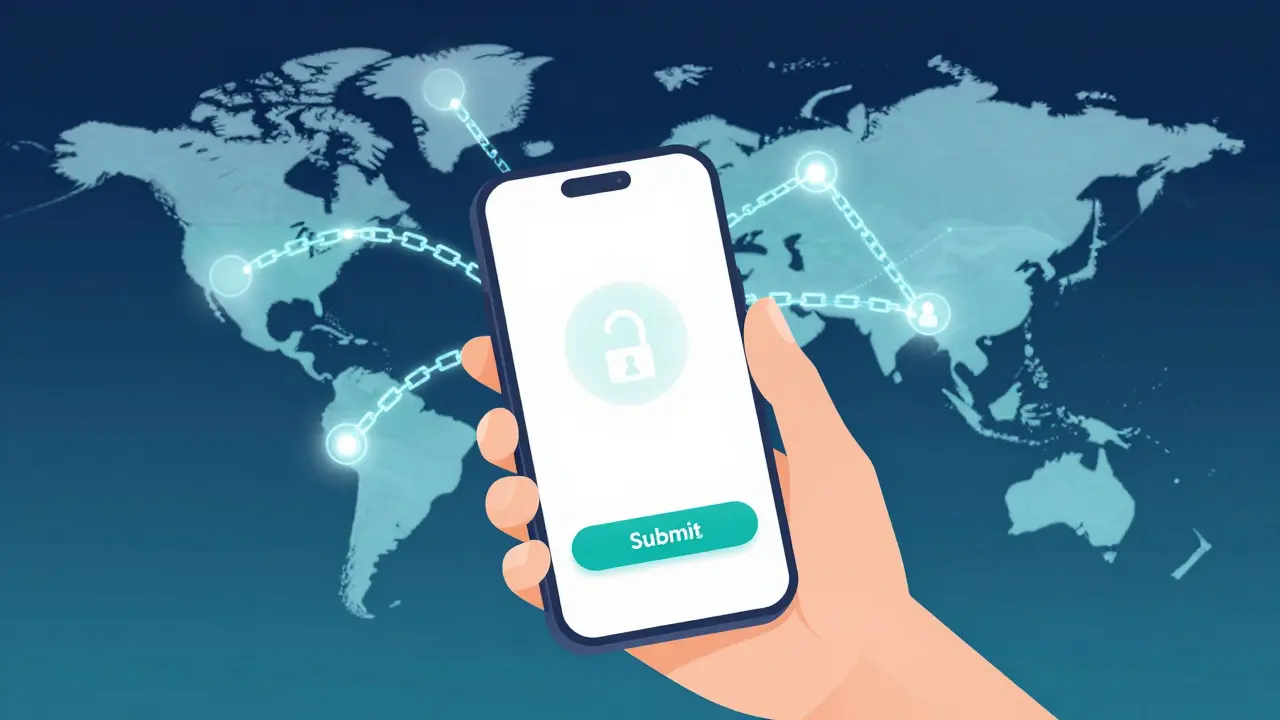
Imagine casting your vote from your phone while traveling overseas. You hit 'submit,' and within seconds, you can check a public ledger to confirm your ballot was recorded exactly as you intended. No waiting for days to hear if the count was accurate. No wondering if a server somewhere got hacked. This is the promise of blockchain voting, a system that aims to replace opaque ballot boxes with mathematically verifiable records.
For decades, we have trusted centralized authorities to count our votes. We assume the machines work, the workers are honest, and the servers are secure. But trust is fragile. When scandals break or results are disputed, that trust evaporates. Blockchain technology offers a different approach: don't trust the authority; verify the code. By leveraging cryptographic immutability and decentralized consensus, these systems create an environment where every step of the electoral process is visible, auditable, and resistant to tampering.
The Architecture of Unbreakable Trust
To understand why blockchain voting is considered more transparent than traditional methods, you need to look at how it handles data. In a standard electronic voting system, votes are sent to a central server. If someone hacks that server, they can change the results without anyone knowing until it’s too late. It’s a single point of failure.
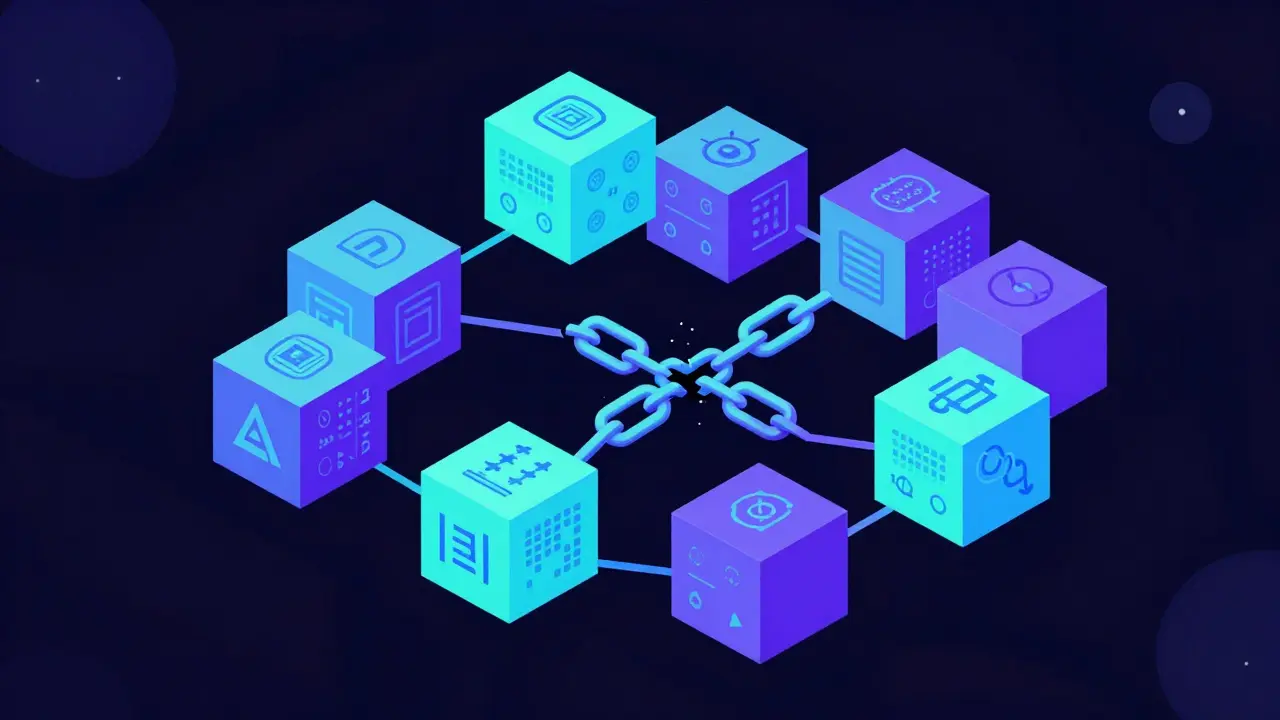
Blockchain technology changes this dynamic completely. Instead of one server, thousands of computers (nodes) around the world hold identical copies of the voting record. Each vote is grouped into a "block" and linked to the previous block using cryptographic hashing. Think of it like a digital chain link. If someone tries to alter a vote in an earlier block, the hash changes. That change breaks the link to the next block, which breaks the link to the one after that. The entire network instantly sees the discrepancy and rejects the tampered data.
This process relies on consensus mechanisms like Proof of Work or Proof of Stake. These algorithms require the majority of nodes to agree that a new block is valid before it is added to the chain. It is not enough for one hacker to control one computer; they would need to control more than half of the entire global network simultaneously. For a national election, that is practically impossible.
- Decentralization: No single entity controls the database, eliminating insider threats.
- Immutability: Once a vote is recorded, it cannot be deleted or altered.
- Transparency: Anyone can view the transaction history to verify the integrity of the count.
Auditability: Verifying Without Compromising Privacy
Transparency is good, but auditability is essential. An auditable system allows independent parties-candidates, media outlets, and citizens-to verify that the final result matches the individual votes cast. In traditional systems, audits often involve manually recounting paper ballots, which is slow, expensive, and prone to human error.
In a blockchain system, auditability is built-in and continuous. Because the ledger is public, you can perform a real-time audit. However, there is a major catch: voter privacy. If everyone can see the ledger, can’t they see who voted for whom? That would violate the secret ballot principle and open voters up to coercion or retaliation.
This is where pseudonymous credential systems come in. Instead of attaching your name to your vote, the system assigns you a randomized ID. This ID proves you are a registered voter eligible to cast one ballot, but it does not reveal your identity. Your vote is linked to this anonymous ID, not your social security number or name.
You get a "receipt"-a cryptographic proof-that your specific vote was included in the tally. You can check the public ledger to see that your receipt exists and that the total count includes your choice. Meanwhile, no one else can trace that receipt back to you. This balance allows for full transparency of the *process* and the *result*, while keeping the *voter's choice* private.
Smart Contracts: Automating Election Rules
Human error is a significant risk in elections. Misconfigured machines, miscounted ballots, and ambiguous rules can lead to disputes. Blockchain voting minimizes these risks by using smart contracts.
A smart contract is a self-executing piece of code stored on the blockchain. It contains the rules of the election. For example, the code might specify:
- Voting opens at 6:00 AM local time.
- Voting closes at 8:00 PM local time.
- Each unique ID can only submit one vote.
- Invalid votes (e.g., selecting two candidates for one seat) are automatically rejected.
When the voting period ends, the smart contract automatically tallies the valid votes and publishes the result. There is no room for interpretation or manipulation by election officials. The code runs exactly as written. If there is a bug in the code, that is a serious issue, but the code itself is also public and can be audited by experts before the election takes place.
Real-World Tests: Lessons from West Virginia
This isn’t just theoretical. Several jurisdictions have tested blockchain voting to see if it holds up under real-world conditions. One notable example is the state of West Virginia, which became the first U.S. state to allow internet voting via blockchain in its primary elections.
The pilot program targeted military members and citizens living abroad who traditionally face significant barriers to voting, such as long wait times for mail-in ballots. Voters used a mobile app that required biometric verification-like a thumbprint scan-to prove their identity. Once verified, they could cast their vote securely.
The results were mixed but informative. On the positive side, the system worked. Votes were transmitted, recorded on the blockchain, and counted accurately. It proved that remote, secure voting is technically feasible. However, participation was low. Many voters were hesitant to use a new technology for something as critical as an election. Security experts also raised concerns about the vulnerability of the voter's device (the smartphone) rather than the blockchain itself. If a user's phone has malware, the blockchain can't protect the vote before it is even submitted.
Comparison: Traditional vs. Blockchain Voting
| Feature | Traditional Centralized Voting | Blockchain Voting |
|---|---|---|
| Data Storage | Centralized servers or physical boxes | Distributed across thousands of nodes |
| Audit Process | Manual recounts, sample checks | Real-time, cryptographic verification |
| Tamper Resistance | Relies on physical security and trust | Mathematically secured via hashing |
| Result Speed | Hours to days | Near instant unofficial results |
| Accessibility | Requires physical presence or mail | Accessible via any internet-connected device |
| Cost Structure | High operational costs (staff, transport) | High upfront development, lower operational costs |
Challenges and Limitations
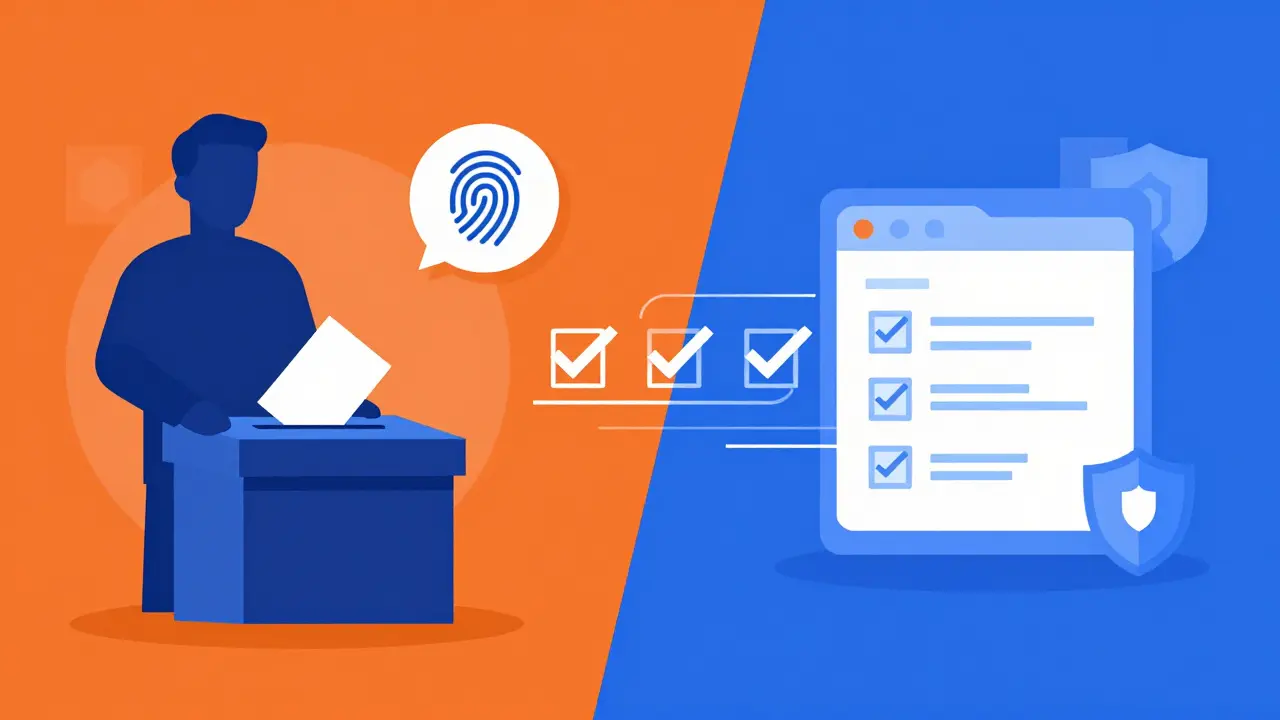
Despite the advantages, blockchain voting is not a silver bullet. There are significant hurdles that must be addressed before widespread adoption can occur.
Scalability is a major technical challenge. Current blockchain networks can struggle to handle the massive volume of transactions required during a peak voting window. If millions of people try to vote at once, the network could slow down or become expensive to use due to transaction fees. Solutions like layer-2 protocols are being developed to address this, but they add complexity.
Digital Divide is another concern. Blockchain voting requires reliable internet access and a compatible device. This could disenfranchise elderly voters, low-income communities, or those in rural areas with poor connectivity. A democratic system must be accessible to all, not just the tech-savvy.
User Experience is critical. If the interface is confusing, users may make mistakes. Unlike a paper ballot where you can ask a poll worker for help, online voting is solitary. Clear, intuitive design is essential to prevent accidental invalid votes.
End-to-End Security remains difficult. While the blockchain itself is secure, the endpoints-the voter's device and the election authority's infrastructure-are vulnerable. Malware on a voter's phone could change their selection before it reaches the blockchain. Ensuring the integrity of the entire chain, from the voter's finger to the ledger, is complex.
The Future of Democratic Participation
The potential impact of blockchain voting extends beyond just counting votes more efficiently. It could fundamentally change how citizens engage with democracy. By making the process transparent and verifiable, it could restore trust in electoral outcomes. Citizens who can personally verify that their vote was counted correctly are more likely to accept the result, even if their preferred candidate loses.
Furthermore, it could increase turnout. Removing the friction of traveling to a polling station or waiting for mail-in ballots to arrive could encourage more people to participate, particularly younger generations and expatriates. As the technology matures and addresses current limitations in scalability and accessibility, blockchain voting may transition from a niche pilot program to a mainstream component of modern democracies.
However, this transition must be gradual and cautious. Pilot programs should continue to test the technology under various conditions. Independent security audits must be mandatory. And most importantly, the focus must remain on protecting voter privacy and ensuring equal access for all citizens. Technology should serve democracy, not dictate it.
Is blockchain voting truly anonymous?
Blockchain voting uses pseudonymity rather than true anonymity. Your vote is linked to a randomized ID, not your personal name. This allows the system to verify that you are eligible to vote and haven't voted twice, while preventing others from linking your vote back to your identity. However, if the randomization key is compromised, privacy could be at risk.
Can blockchain voting be hacked?
The blockchain ledger itself is extremely difficult to hack due to its decentralized nature and cryptographic security. However, the surrounding infrastructure, such as voter devices and authentication servers, can still be vulnerable to malware or phishing attacks. Security is only as strong as its weakest link.
How does blockchain voting ensure one person, one vote?
Voters are assigned unique, cryptographically signed credentials during registration. The smart contract governing the election tracks these credentials and rejects any attempt to submit more than one vote per ID. Biometric verification, such as fingerprint or facial recognition, is often used to bind the digital ID to the physical person.
What happened in the West Virginia blockchain voting pilot?
West Virginia conducted a successful pilot allowing overseas and military voters to vote via a blockchain-based mobile app. The system verified identities using biometrics and recorded votes on a distributed ledger. While technically successful, voter turnout was low, highlighting challenges in user adoption and trust.
Why is auditability important in voting?
Auditability ensures that the final election result accurately reflects the votes cast. It allows independent observers to verify the integrity of the process, detect errors or fraud, and build public confidence in the outcome. Without auditability, voters must rely solely on trust in the election officials.