
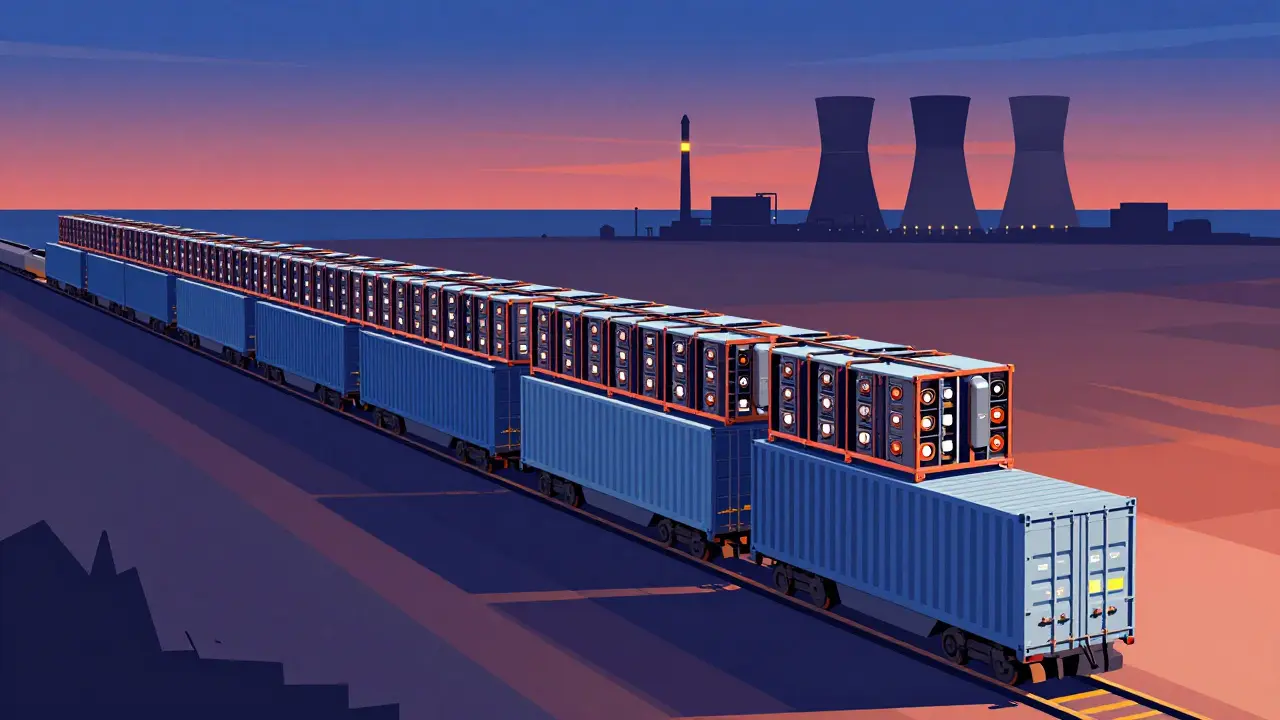
When China cracked down on Bitcoin mining in 2021, the entire industry shook. Overnight, thousands of mining rigs-some worth millions-had to pack up and move. This wasn’t just a policy change. It was a forced evacuation of the world’s largest Bitcoin mining hub. By mid-2021, China went from controlling 75.5% of global Bitcoin mining power to under 50%. That’s the biggest infrastructure shift in crypto history. So where did all those miners go?
Why did China ban Bitcoin mining?
It wasn’t about Bitcoin itself. It was about power. China’s government had been trying to cut energy waste and hit carbon neutrality goals by 2060. Bitcoin mining, especially in coal-heavy provinces like Inner Mongolia, was guzzling electricity. One mining farm in Inner Mongolia was using as much power as a small city. When local officials started shutting down operations in early 2021, it was a warning. By June, the central government made it official: no more mining. Banks were ordered to cut off services. Miners got 30 days to shut down or face fines, seizures, or worse. The move stunned the world. China had been the undisputed king of mining for years. But miners didn’t just disappear. They packed up their ASIC machines-those boxy, humming rigs that solve Bitcoin’s math puzzles-and started moving. They didn’t need factories or offices. Just power, internet, and a place to plug in.Kazakhstan: The unexpected winner
Kazakhstan didn’t even make the top 10 in mining power before 2021. By April 2021, it jumped to 8.2% of global hashrate. That’s a six-fold increase in less than a year. Why? Because it had what miners needed: cheap electricity, mostly from coal, and a government that didn’t ask too many questions. Miners flooded into Kazakhstan’s industrial zones near Almaty and Nur-Sultan. Entire mining farms arrived in shipping containers. Some operators even set up camp in old Soviet-era power plants. The country’s grid, already overloaded from industrial use, got a massive new demand. Electricity prices didn’t spike because Kazakhstan had surplus coal and gas. It was perfect timing. By October 2021, Kazakhstan briefly overtook China as the world’s second-largest mining hub-right after the U.S. But the boom didn’t last. By 2023, the government started cracking down. They raised electricity rates for miners, cut off power during winter shortages, and even blocked crypto mining hardware imports. Still, Kazakhstan remains a major player. It’s not the king anymore, but it’s still one of the top five.Texas: The U.S. mining capital
While Kazakhstan was busy with coal, Texas went all-in on renewables. The state’s deregulated power market let miners negotiate rates directly with energy providers. Some struck deals to buy surplus wind and solar power at night-when demand drops and prices plunge. That’s how some Texas miners cut their electricity bills to less than $0.02 per kWh. Texas didn’t just attract miners. It attracted investors. Companies like Riot Platforms and Marathon Digital built massive campuses in places like Abilene and Fort Worth. These aren’t backyard operations. They’re data centers the size of football fields, each with thousands of ASICs running 24/7. By 2025, Texas alone accounted for nearly half of all Bitcoin mining in the U.S. That’s about 2.6 gigawatts of power-enough to run 2 million homes. And here’s the twist: miners actually helped stabilize the grid. When wind speeds dropped and power dipped, mining farms could pause operations in seconds. That gave grid operators breathing room during blackouts. Texas didn’t just welcome miners. It learned to work with them.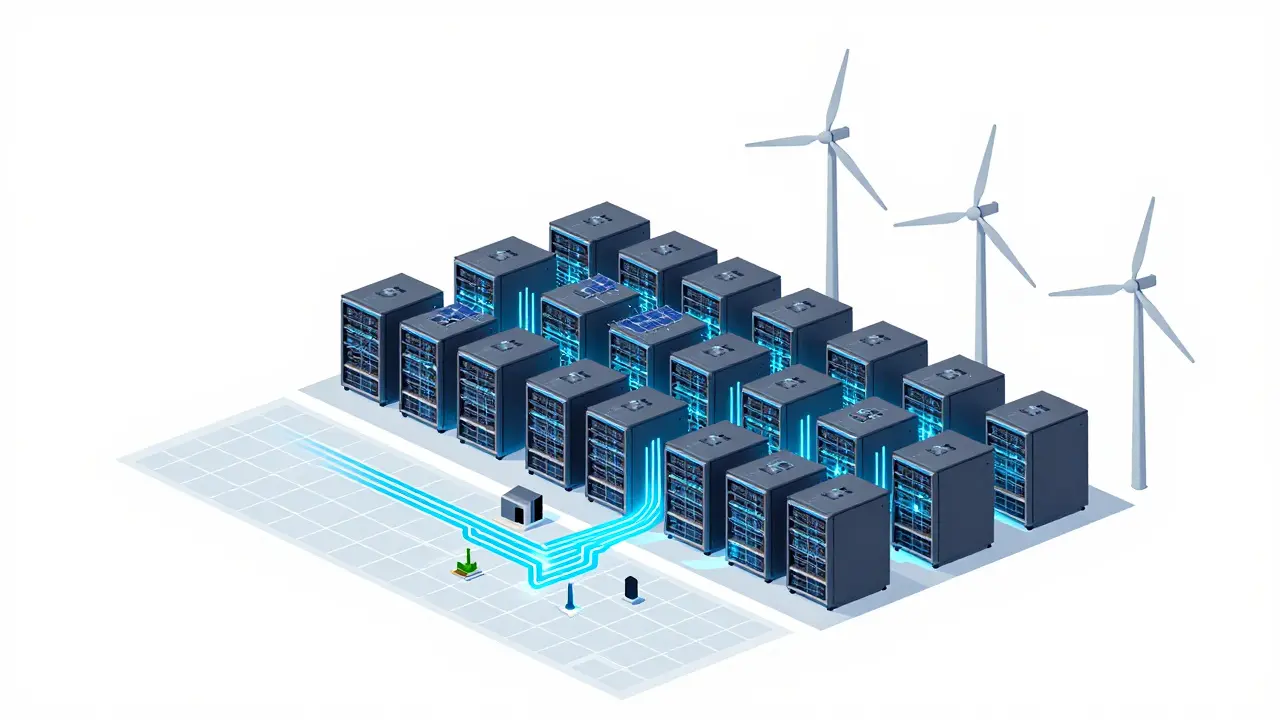
Other key destinations
Not everyone went to Kazakhstan or Texas. Miners scattered across the globe, looking for the best mix of cheap power and low risk.- United States (other states): Georgia, Washington, and North Carolina saw smaller but steady growth. These states offered tax incentives and access to hydropower.
- Russia: Mining surged in Siberia, where cheap natural gas and cold weather helped cool rigs. But sanctions and internet censorship made it harder to connect to global networks.
- Iran: The government even subsidized mining to earn foreign crypto. With low electricity costs and state support, Iran briefly hit 4.6% of global hashrate.
- Canada: Quebec and Ontario attracted miners with clean hydroelectric power. But high taxes and strict regulations slowed growth.
- Paraguay: A quiet contender. Its massive Itaipu Dam produces more electricity than the country uses. Miners started showing up to buy the surplus. One farm there runs entirely on renewable hydro.
What happened to the old Chinese mining farms?
Most of them are gone. Some were auctioned off by the government. Others were sold for scrap. A few lucky operators managed to move their rigs before the deadline. But many lost everything. The machines themselves-ASICs-are expensive but not indestructible. Moving them across borders meant risk: customs delays, damage, or outright seizure. The ones that made it? They’re still running. But now, they’re spread out. No single country controls more than 15% of the network. That’s a win for Bitcoin’s decentralization. Before 2021, if China had cut power for a week, the whole network could’ve stalled. Now? Even if Texas shuts down or Kazakhstan goes dark, the network keeps going.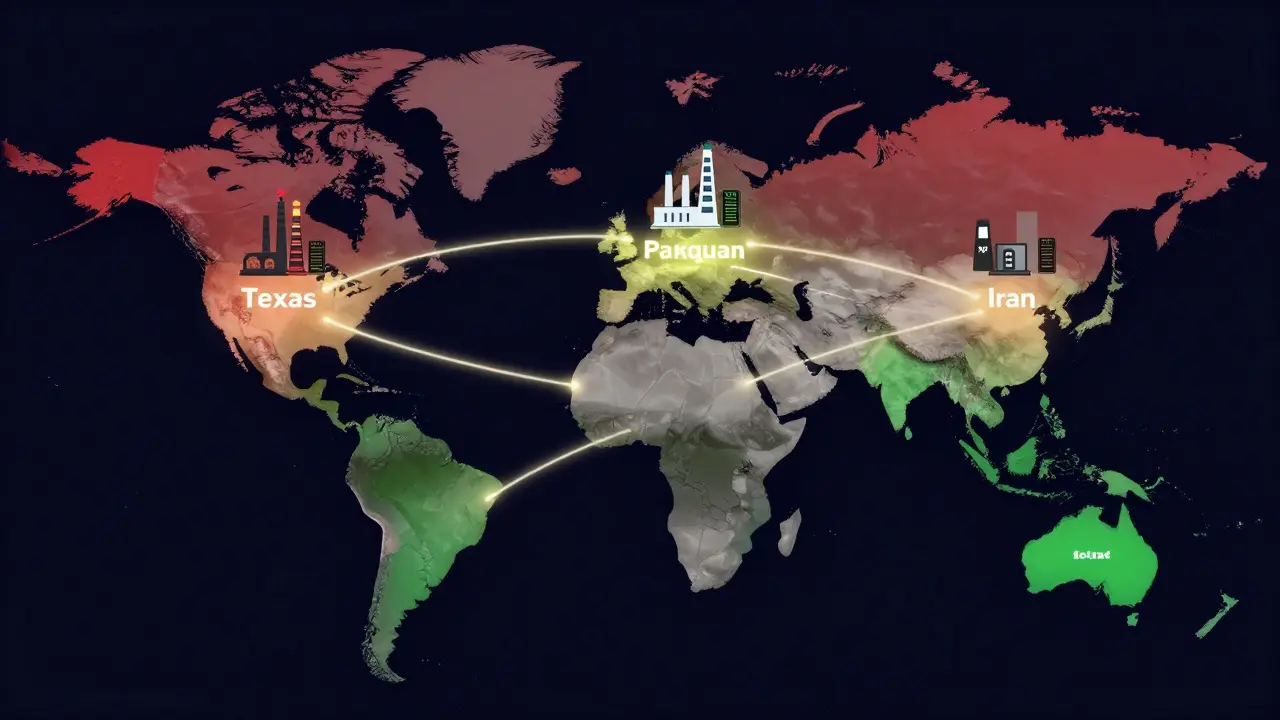
Did the exodus change Bitcoin?
Yes. And not just in location. The migration proved Bitcoin mining is not tied to any country. It’s a global, mobile industry. Miners don’t care about borders-they care about price per kilowatt. That’s why the network became more resilient. It also made mining more competitive. In China, miners could afford to run old, inefficient machines because electricity was subsidized. Now, only the most efficient operations survive. That’s pushing innovation. Newer ASICs use 30% less power than 2020 models. It also changed how governments see crypto. Texas didn’t ban mining. It embraced it. Canada and Germany started studying how to use mining to absorb renewable energy surpluses. Even the IMF wrote a report in 2024 calling the exodus a "natural market correction" that improved Bitcoin’s infrastructure.What’s next?
The mining landscape keeps shifting. Kazakhstan’s restrictions are tightening. Texas is seeing more regulation as power demand grows. New players are emerging: Saudi Arabia is building mining hubs near solar farms. The UAE is offering tax-free zones for crypto operators. Even Ukraine, despite the war, has seen a rise in mining using nuclear and wind power. One thing’s clear: Bitcoin mining isn’t going back to China. The government has made it clear: no mining. Ever. But the miners? They’re still mining. Just somewhere else.Did China completely stop Bitcoin mining?
Yes. In 2021, the Chinese government banned all cryptocurrency mining operations nationwide. Mining farms were shut down, equipment was seized, and banks were ordered to cut off financial services to miners. While a few underground operations may still exist, they’re rare and risky. China no longer plays any significant role in global Bitcoin mining.
Why did miners choose Kazakhstan over other countries?
Kazakhstan offered cheap electricity, mostly from coal, and minimal regulation. Its existing power infrastructure could handle sudden spikes in demand. Unlike Western countries, it didn’t require environmental permits or tax registrations. For miners looking to move fast, it was the easiest option-until the government started raising rates and restricting imports in 2023.
How much power does Bitcoin mining use today?
As of early 2026, Bitcoin mining consumes about 120 terawatt-hours (TWh) per year-roughly the same as the entire country of Argentina. The U.S. now accounts for about 35% of that, followed by Kazakhstan at 12%, Russia at 9%, and Iran at 7%. China’s share has dropped below 1%.
Can Bitcoin mining help renewable energy grids?
Yes. In places like Texas and Quebec, miners use surplus wind and hydro power that would otherwise go to waste. They can quickly turn off during peak demand, helping stabilize the grid. Some energy providers now offer special rates to miners who agree to reduce usage during outages. This turns mining from a power drain into a flexible load.
Are ASIC miners easy to move?
Extremely. Each ASIC miner is about the size of a small printer and weighs under 20 kg. They’re designed to be plugged in and turned on. No complex setup. Miners often move them in shipping containers by truck, train, or plane. Entire farms-hundreds of rigs-have been relocated across continents in under 60 days.
16 Responses
Honestly, the way miners just packed up and moved like it was a road trip is wild. No paperwork, no permits, just plug and play. Bitcoin’s real power isn’t in the code-it’s in how it moves beyond borders. 🌍
Texas miners are the unsung heroes of grid stability. They don’t just use surplus power-they make it useful. 🤝⚡
Kazakhstan? More like Kazakhstan-2.0. They thought they were getting rich, then got slapped with power cuts and import bans. Classic.
This isn’t just relocation-it’s evolution. Miners are now leaner, meaner, and way more efficient. The old days of coal-fueled rigs? Gone. The future’s in renewables, and the network’s stronger for it. Let’s go!
people still think china was the only one with mining? lol. u forget russia had whole cities running rigs under the snow. and iran? they were mining while their gov was on fire. power out? no problem. just unplug and wait. bitcoin don’t care.
The decentralization outcome is the real win. Before 2021, one blackout could’ve crippled the network. Now? Even if half the mining hubs go dark, the chain keeps ticking. That’s resilience engineered by chaos.
Let’s be real-this wasn’t a migration. It was a corporate bloodbath. The small-time miners got crushed. Only the ones with capital, legal teams, and shipping logistics survived. The rest? Left with rusted ASICs and debt. This isn’t freedom. It’s capitalism with a side of collateral damage.
I’ve always admired how Bitcoin adapts. It doesn’t fight governments-it outmaneuvers them. The fact that miners found niches in Paraguay’s hydro dams and Texas’s wind surplus proves this isn’t just a currency. It’s a living system.
The real story here is not where they went, but why they stayed. Miners didn’t move for politics. They moved for kilowatts. And that’s beautiful. It means Bitcoin’s heartbeat is now tied to energy, not borders.
The Chinese crackdown wasn’t just a policy-it was a seismic event in economic history. Imagine if every factory in Silicon Valley suddenly vanished overnight and reappeared across three continents. That’s what happened here. The global infrastructure of digital finance was rewritten in 90 days. And yet, the network didn’t blink. That’s not luck. That’s systemic genius. The miners didn’t flee-they evolved. They became more distributed, more efficient, more resilient. This isn’t a loss for decentralization-it’s its ultimate validation. The fact that Texas now runs on surplus wind, that Paraguay uses hydro waste, that Kazakhstan’s grid bent but didn’t break-these aren’t accidents. They’re emergent properties of a system that refuses to be contained. The governments didn’t win. The market did. And Bitcoin? It’s never been stronger.
Y’all sleeping on Paraguay?! That dam is a goldmine (literally). One farm runs 24/7 on power no one else wants. It’s like nature’s gift to crypto. And the best part? No one’s taxing it. No one’s regulating it. Just pure, clean, surplus energy turning into digital gold. 🌊💸
The energy arbitrage paradigm shift is non-trivial. Miners are now acting as demand-side load balancers within deregulated grids, effectively serving as virtual batteries with zero storage overhead. The economic externality of utilizing stranded renewable assets has transformed mining from an energy sink into a grid-stabilizing instrumentality. This represents a structural realignment in energy economics, not merely a geographical redistribution of computational load.
Let me be clear: this entire narrative is a Western propaganda tool. Kazakhstan? A puppet state. Texas? A corporate sandbox. The real story? China didn’t ban mining-it restructured it. The rigs didn’t leave. They were absorbed into state-controlled energy projects. The ‘exodus’? A myth. The truth? Bitcoin mining never left China. It just went underground… and got a new name: ‘data center optimization’.
So let me get this straight-China bans mining, and suddenly Texas becomes the new Bitcoin capital? Please. We’re importing energy waste from other countries and calling it ‘renewable innovation’. Meanwhile, real Americans are paying higher bills because miners are hoovering up power. This isn’t progress. It’s exploitation dressed up as innovation.
Wait… so you’re telling me the entire world moved Bitcoin mining because China said no? 😏 What if… the real reason is that the Fed, the IMF, and the Big Tech oligarchs *wanted* mining decentralized? So they could control it better from the outside? Coincidence? Or a masterstroke? 🤔
The beauty of Bitcoin mining is that it doesn’t need permission. It only needs power. And power is everywhere. The exodus didn’t break the system-it exposed its true nature: a global, fluid, energy-seeking organism. Borders are just lines on a map. Electricity doesn’t care.