
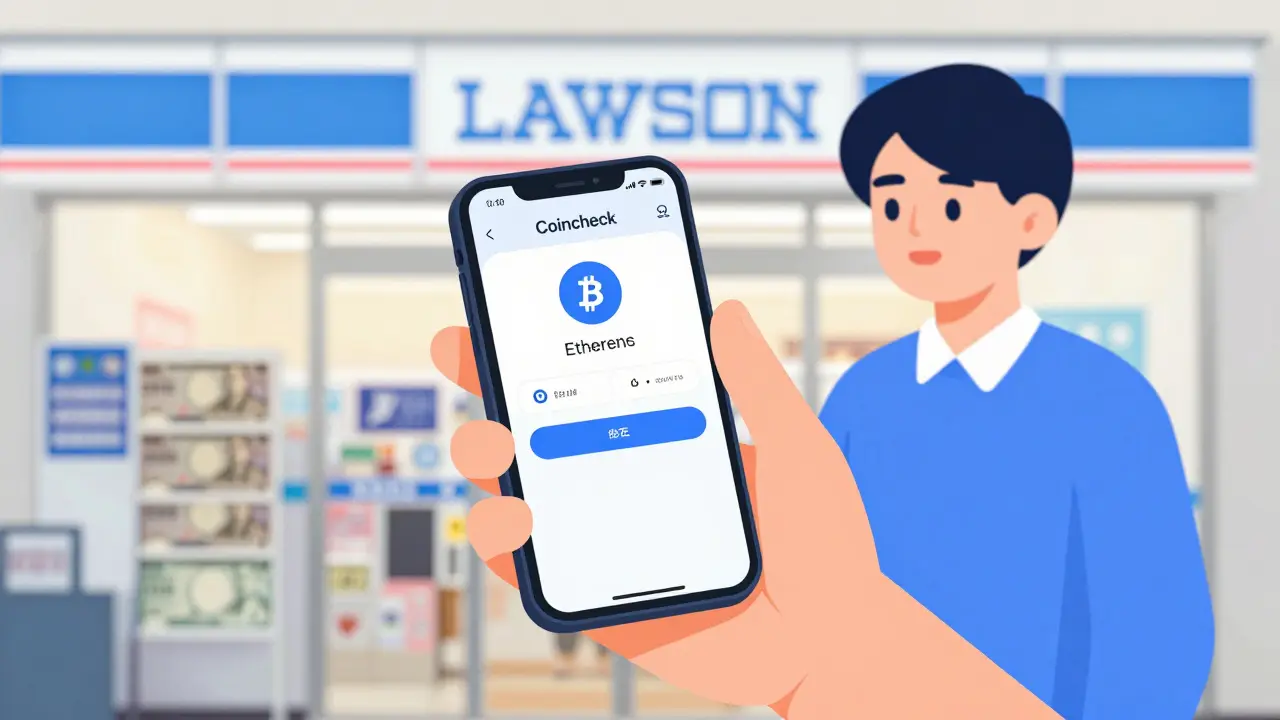
If you're looking at Coincheck as a place to buy crypto, you need to know one thing upfront: this isn't Binance or Kraken. Coincheck was built for Japanese residents - not global traders. It’s not that the platform is broken. In fact, it’s one of the most regulated and secure exchanges in Japan. But if you don’t speak Japanese or aren’t living there, you’re going to struggle.
What Coincheck Actually Is
Coincheck started in 2014 and became Japan’s third-largest crypto exchange after a massive hack in 2018 stole $530 million in NEM tokens. That disaster should’ve killed it. Instead, it got bought by Monex Group - a major Japanese financial firm - and rebuilt from the ground up. By 2025, it’s fully licensed by Japan’s Financial Services Agency (FSA), listed on NASDAQ, and offers one of the few regulated NFT marketplaces in the country.
It’s not trying to be everything. Coincheck doesn’t offer futures, margin trading, or complex order types. No limit orders beyond basic buy/sell. No advanced charting tools. No API access for bots. It’s designed for people who want to buy Bitcoin, Ethereum, or SHIBA INU with yen, hold it, and maybe stake it later. Simple. Safe. Local.
What You Can Trade
Coincheck supports around 30 cryptocurrencies - a tiny fraction compared to global exchanges that list 300+. But here’s the catch: it’s not about quantity. It’s about what matters in Japan.
- Bitcoin (BTC)
- Ethereum (ETH)
- Ripple (XRP)
- Litecoin (LTC)
- Bitcoin Cash (BCH)
- Polygon (MATIC)
- SHIBA INU (SHIB)
- ApeCoin (APE)
- USDT, USDC
You won’t find obscure altcoins like Bonk or Floki here. But you will find the coins most Japanese investors actually use. The platform added staking for Ethereum in 2025, offering 70% of rewards to users (with Coincheck taking 30%). It also launched crypto lending at up to 5% APY, and its NFT marketplace lets users buy and sell Japanese-themed digital art - something no other exchange in Japan does.
Fees: Almost Nothing (If You’re in Japan)
This is where Coincheck shines - if you’re local.
Depositing JPY via bank transfer or convenience store? Zero fees. Withdrawing JPY? Also zero. No hidden charges. No surprise commissions.
Cryptocurrency deposits and withdrawals? They vary by coin. For example:
- BTC withdrawal: 0.0005 BTC
- ETH withdrawal: 0.005 ETH
- XRP withdrawal: 0.1 XRP
There’s no fixed fee schedule. You have to check each coin’s page. Trading fees are 0.3% per transaction - standard for spot exchanges. No maker-taker split. No discounts for high-volume traders.
But here’s the kicker: if you’re outside Japan, you can’t deposit JPY. The only fiat option available internationally is USD - and even then, you can’t use local banks. You’d need to send crypto from another exchange first. That makes Coincheck useless as a primary entry point for non-Japanese users.
Security: One of the Best in Japan
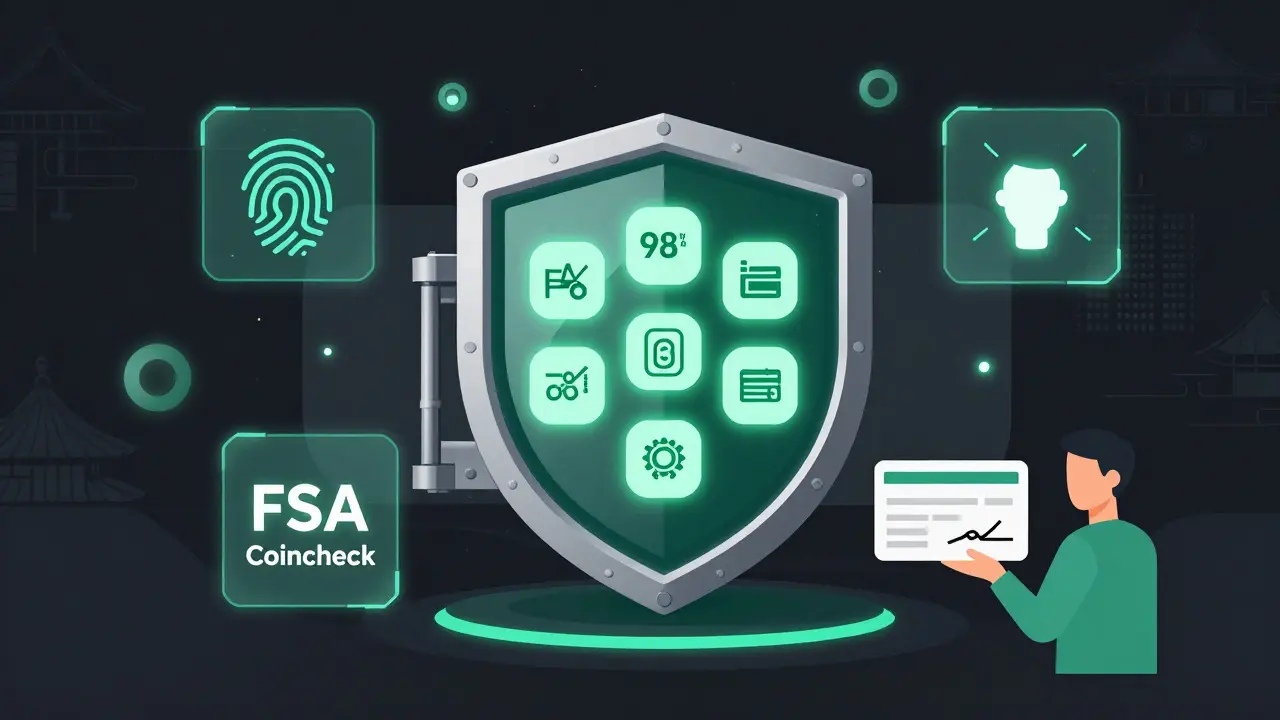
After the 2018 hack, Coincheck didn’t just patch things up - it rebuilt its entire security model. Today, it uses:
- Two-factor authentication (2FA) via authenticator apps
- SSL client certificates
- Biometric login (fingerprint/face ID) on mobile
- Automatic logout after 10 minutes of inactivity
- Cold storage for 98% of user funds
- Identity verification with photo ID and selfie holding ID + date
It’s one of the few exchanges that requires you to submit a photo of yourself holding your government ID with today’s date written on paper. That’s not paranoia - it’s compliance with Japan’s strict anti-money laundering laws.
And because it’s regulated by the FSA, Coincheck is legally required to keep customer assets separate from company funds. That means even if Monex went bankrupt, your crypto wouldn’t be touched. That level of protection doesn’t exist on most offshore exchanges.
Interface & Mobile App: Simple, But Language-Bound
The website and app are clean. No clutter. No confusing tabs. You open it, tap “Buy,” pick your coin, enter your amount, and confirm. It’s perfect for someone who’s never traded before.
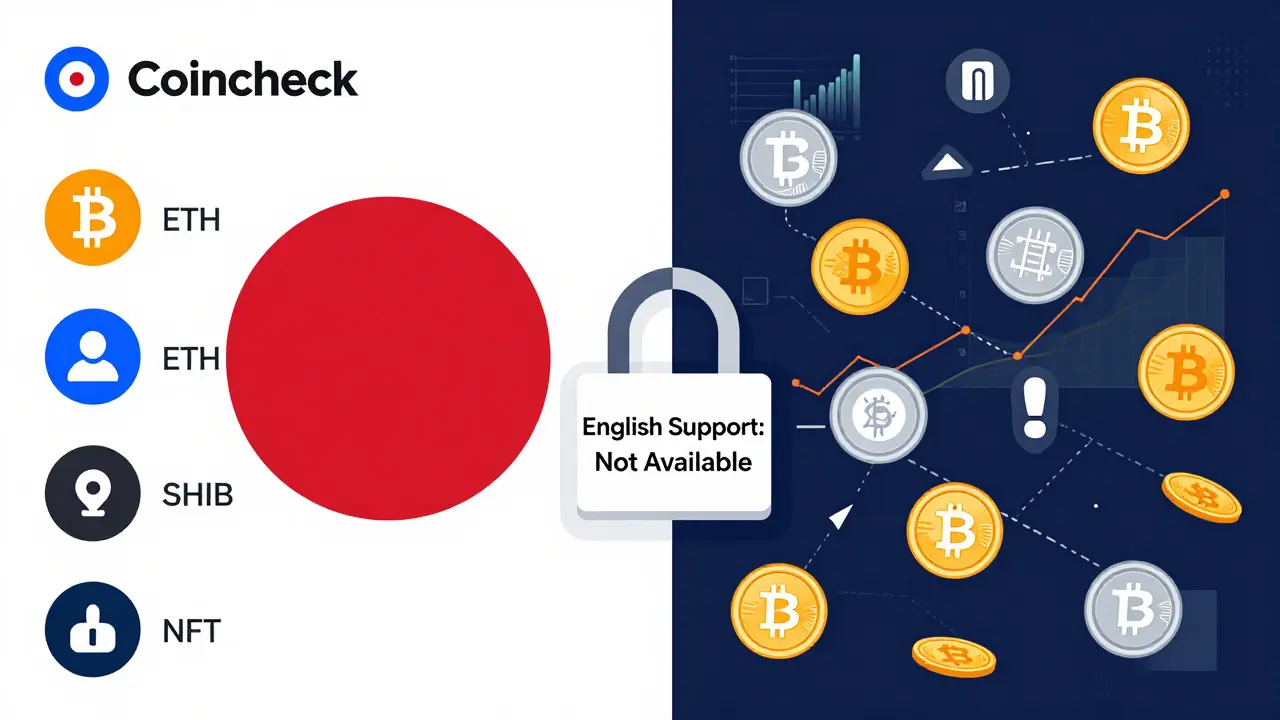
But here’s the problem: the entire interface is in Japanese by default. Yes, there’s an English toggle. Yes, there are Chinese and Indonesian options. But most menus, help guides, error messages, and customer support content remain in Japanese.
Try to contact support in English? You’ll get an automated reply in Japanese. Try to reset your 2FA? The instructions are in Japanese. Try to find out how to withdraw to a non-Japanese wallet? The documentation doesn’t exist in English.
One Reddit user from Canada wrote: “I spent 3 hours trying to withdraw ETH. The app said ‘transaction failed.’ No reason. No English support. I gave up.”
That’s not a bug - it’s by design. Coincheck doesn’t want international users. It wants Japanese ones.
Customer Support: Slow, Limited, and Language-Blocked
Coincheck offers email, phone, and ticket-based support. No live chat. No 24/7 help. Response times vary from 24 hours to over a week.
Trustpilot ratings as of late 2025 sit at 1.8 out of 5. REVIEWS.io gives it 2.8 out of 5 - slightly better, but still low. The top complaints? “Couldn’t get help in English.” “Took 10 days to verify my ID.” “App keeps crashing.”
Japanese users report smoother experiences - especially with JPY deposits via Lawson or FamilyMart convenience stores. That’s a huge advantage if you live there. But if you don’t? You’re on your own.
Who Is Coincheck Actually For?
Let’s cut through the noise.
Coincheck is ideal if:
- You live in Japan
- You want to buy crypto with yen using bank transfers or convenience stores
- You’re a beginner and don’t need advanced trading tools
- You value regulatory safety over feature richness
- You’re interested in staking ETH or using Japan’s only FSA-approved NFT marketplace
Avoid Coincheck if:
- You’re outside Japan
- You need support in English, Spanish, or any language besides Japanese
- You want to trade futures, use leverage, or automate trades
- You need more than 30 coins
- You’re looking for a global exchange with low fees and wide fiat options
How It Compares to Other Exchanges
| Feature | Coincheck | Binance | Kraken |
|---|---|---|---|
| Regulated in Japan | Yes (FSA licensed) | No | No |
| Fiat Currencies | JPY, USD | 40+ (USD, EUR, GBP, etc.) | 20+ (USD, EUR, CAD, etc.) |
| Number of Coins | ~30 | 350+ | 200+ |
| Trading Types | Spot only | Spot, futures, margin, options | Spot, futures, margin |
| Mobile App Quality | Good (for Japanese users) | Excellent | Excellent |
| Language Support | Primarily Japanese | 15+ languages | 10+ languages |
| Customer Support | Email/phone, slow, Japanese-only | 24/7 live chat, multilingual | 24/7 email, decent response |
| Withdrawal Fees | Varies by coin, zero JPY fees | Low, fixed | Low, transparent |
Bottom line: Coincheck isn’t trying to compete globally. It’s trying to be the safest, easiest way for Japanese people to get into crypto. For them, it works. For everyone else? It’s a dead end.
What’s Next for Coincheck?
As of early 2026, Coincheck plans to add five more cryptocurrencies and roll out limited English support for core functions like deposits and withdrawals. But don’t expect a full English overhaul. Monex Group has said publicly that international expansion isn’t a priority.
The real story is what’s happening inside Japan: more people are using Coincheck for staking, NFTs, and Web3 projects through its “Coincheck Gas” feature. It’s becoming a gateway to Japan’s growing blockchain ecosystem - not just trading.
But if you’re outside Japan? Stick with exchanges that actually speak your language. Coincheck isn’t broken. It’s just not built for you.
Is Coincheck safe to use in 2026?
Yes, Coincheck is one of the safest crypto exchanges in Japan. It’s licensed by the Financial Services Agency (FSA), uses cold storage for 98% of funds, and requires strict identity verification. After the 2018 hack, it completely rebuilt its security systems. It’s safer than most offshore exchanges - but only if you’re using it as intended: from within Japan.
Can I use Coincheck if I live outside Japan?
Technically yes, but practically no. You can create an account and deposit USD, but you can’t deposit JPY from abroad. The website and app are mostly in Japanese. Customer support doesn’t respond properly to English inquiries. Many users report being locked out of their accounts because they couldn’t complete verification without Japanese language help. Unless you’re fluent in Japanese or living in Japan, avoid Coincheck.
Does Coincheck have a mobile app?
Yes, Coincheck has iOS and Android apps. They’re well-designed and include biometric login, account monitoring, and push notifications. But they’re only truly usable if you read Japanese. Key features like deposit limits, withdrawal approvals, and error messages appear in Japanese. The app works great for locals - but it’s nearly useless for non-Japanese speakers.
What are the fees on Coincheck?
Trading fees are 0.3% per transaction. Depositing or withdrawing JPY is completely free. Cryptocurrency withdrawal fees vary by coin - for example, Bitcoin costs 0.0005 BTC, Ethereum costs 0.005 ETH. There’s no flat fee structure. Always check the fee page for each coin before sending. No hidden fees, but no transparency either.
Can I stake crypto on Coincheck?
Yes. As of 2025, Coincheck offers staking for Ethereum (ETH). You earn 70% of the staking rewards - Coincheck keeps 30%. It also offers crypto lending at up to 5% APY depending on the asset and term. These features are only available to users who complete full identity verification and are based in Japan.
Why does Coincheck have such low Trustpilot ratings?
Most low ratings come from international users who couldn’t get help in English, had trouble with verification, or found the interface confusing. Japanese users generally rate it higher because the service works as designed for them. The platform wasn’t built for global customers, so the low scores reflect a mismatch between user expectations and platform design - not necessarily poor quality.
26 Responses
I tried to use Coincheck from Canada and it was a nightmare. The app kept crashing, and when I finally got my ID verified, they sent me a Japanese error message saying my withdrawal failed. No English support. No explanation. I spent three days trying to figure out what went wrong. This isn't a platform for non-Japanese users. It's a walled garden with a locked gate and no key. Don't waste your time.
If you're outside Japan and still trying to use Coincheck, you're not just naive-you're actively making life harder for yourself. This isn't a 'regional quirk.' It's a deliberate exclusionary design. The FSA license doesn't make it safe for you. It makes it safe for Japanese citizens. Stop pretending global crypto is one big happy family.
Hey, I get it. You're frustrated. But let's not throw the baby out with the bathwater. Coincheck isn't perfect, but for Japanese users, it's a game-changer. Zero JPY fees? FSA-regulated? NFT marketplace? That's huge. If you're not in Japan, sure, use Binance or Kraken. But don't act like the platform is broken. It's just built for a different audience. Maybe one day they'll expand. Until then, respect the design.
I read this whole thing and honestly? I'm impressed. Most crypto reviews just scream 'BUY BITCOIN' or 'AVOID THIS SCAM.' This was balanced. Realistic. It didn't try to force Coincheck into a global mold. It said: 'This works here, not there.' And that's rare. The fact that they rebuilt after the hack? That's resilience. The staking rewards? That's generosity. I'm not using it, but I respect it.
They say 'not built for you' but then they list USD as a deposit option. That's not a feature-it's a trap. It's like putting a sign that says 'Welcome' in 15 languages but then locking the door and handing out keys only to people who speak the local dialect. This isn't exclusion. It's psychological manipulation. They want you to think you can join, then make you quit out of exhaustion.
I’ve lived in Japan for 8 years. Coincheck is the only exchange I trust. The 2FA with selfie-ID? Annoying? Yes. Necessary? Absolutely. The Japanese government doesn’t mess around. And honestly? The fact that they don’t cater to global users is refreshing. We don’t need another Binance clone. We need a clean, compliant, local platform. If you can’t handle the language barrier, that’s your problem-not theirs.
Coincheck is not a trading platform for global investors it is a regulated financial instrument for Japanese residents and that is exactly what it was designed to be and that is why it works so well for them and why it fails for everyone else because it was never meant to be anything else
I hate how people romanticize this. 'Oh, it's so secure!' Yeah, because it's a government-backed monopoly with zero competition. If you're not Japanese, you're being actively excluded. And the 'NFT marketplace'? It's just a bunch of anime art. This isn't innovation. It's isolation. And the fact that people defend it like it's some moral victory? That's the real problem with crypto.
The article makes a critical point that most reviews ignore: Coincheck’s security model is a direct response to systemic failure. The 2018 hack wasn’t just a technical flaw-it exposed a regulatory vacuum. Their rebuild wasn’t about marketing. It was about survival. And yes, the language barrier is brutal. But that’s not negligence. It’s compliance. Japan’s AML laws require native-language documentation. If you want global access, use an exchange that ignores regulations. Coincheck chose responsibility.
I’ve used Coincheck for a year. Only because I’m married to a Japanese citizen. The app is simple. The fees are low. The support? Nonexistent for English. But I don’t care. I don’t trade. I just hold. It’s like a savings account with crypto. I don’t need charts or futures. I just want to know my money is safe. And it is.
LMAO they're using blockchain for NFTs but still require a selfie with your ID written on paper? 🤡 This isn't Web3. This is 2008 banking with crypto labels. The FSA is just the new FBI. They're tracking you. The 'staking rewards'? Probably just printing new tokens. I bet the 'cold storage' is just a server in Tokyo with a sticky note that says 'DO NOT TOUCH'. 🚨 #CryptoIsScam
Let me tell you something about Coincheck. It is not about being Japanese or not. It is about power. The FSA controls the narrative. Monex owns it. The government owns Monex. And who owns the government? The banks. And who owns the banks? The same people who own the global financial system. Coincheck is not a platform. It is a gateway into a closed-loop system where your crypto is only 'safe' because it is monitored, controlled, and taxed. You think you're investing? You're being absorbed.
The article says Coincheck is 'one of the most regulated and secure exchanges in Japan.' That’s not a compliment. That’s a warning. Regulation doesn’t mean safety. It means control. The fact that they require a photo of you holding your ID with today’s date? That’s not security. That’s surveillance. And if you’re outside Japan? You’re not just locked out-you’re being actively excluded from a system that was never meant to include you. This isn’t crypto. It’s digital feudalism.
I’m not a trader. I just want to buy ETH and hold it. Coincheck does that. Simple. No drama. No confusing menus. My mom uses it. She’s 68. She doesn’t speak English. But she speaks Japanese. And she can use it. That’s the point. Not everyone wants to be a day trader. Some of us just want to own a piece of the future without getting scammed. Coincheck gives that to Japanese people. And honestly? That’s worth something.
It’s funny how people treat Coincheck like it’s broken. It’s not broken. It’s purpose-built. Like a Swiss watch. You don’t use a Swiss watch to hammer nails. You don’t use Coincheck to trade Solana futures. You use it to buy Bitcoin with yen and sleep at night. The fact that you can’t use it as a global exchange isn’t a flaw. It’s a feature. The platform knows its job. The users just don’t.
I’ve been on 12 crypto platforms. Coincheck is the only one that made me feel like I was being watched. Not in a creepy way-in a 'they’re actually paying attention' way. The ID verification? Took 11 days. But when I got in, the interface was flawless. No ads. No pop-ups. No 'BUY NOW' banners. Just clean, quiet, compliant. It’s like a library for crypto. Quiet. Serious. No hype. And for that? I’ll put up with the Japanese interface.
I used to think Coincheck was a joke. Then I found out they’re the only exchange in Japan that lets you deposit cash at FamilyMart. That’s not convenience. That’s cultural integration. You think crypto is about decentralization? It’s not. It’s about access. And for millions of Japanese people who don’t have banks, don’t have credit cards, and don’t speak English? Coincheck is the only bridge. The language barrier? It’s not a bug. It’s a shield. Protecting them from predators like me.
The regulatory architecture here is actually elegant. FSA licensing mandates segregation of client assets, cold storage, and biometric KYC. That’s not just compliance-it’s fiduciary design. The lack of API and futures? That’s intentional risk mitigation. This isn’t a trading floor. It’s a custodial vault with a UI. And the language barrier? It’s not exclusion-it’s jurisdictional integrity. You can’t have global access without global liability. Coincheck chose liability reduction. Smart.
I tried to withdraw ETH from Coincheck and the app said 'transaction failed.' I spent 2 hours looking for help. Then I found a Reddit thread in Japanese. Used Google Translate. Turns out I had to enable 'withdrawal confirmation' in settings. Which was labeled '出金確認'... which I didn’t know meant 'withdrawal confirmation.' This isn't user-friendly. It's a language maze. But if you're Japanese? It's smooth. So I guess it's not broken. It's just... not for me.
They say 'Coincheck is safe.' But safe for whom? The government? The banks? The FSA? Not for me. If they’re requiring a selfie with your ID and today’s date? That’s not security. That’s digital fingerprinting. And the fact they don’t support English? That’s not localization. That’s gatekeeping. This isn’t crypto. It’s a state-sponsored savings account with a blockchain sticker.
I’m from India. I used Coincheck once. Just to see. The app crashed. The support email went unanswered. But I didn’t care. Because I saw what it was built for. Not to make money. Not to trade. But to give ordinary Japanese people a way to hold crypto without fear. That’s rare. Most platforms want you to trade. Coincheck wants you to hold. And honestly? Maybe that’s the future.
Coincheck is basically a Japanese version of a bank that decided to dabble in crypto. It’s not revolutionary. It’s not even innovative. It’s just... safe. And boring. And that’s why it works. The NFT marketplace? Cute. The staking? Decent. But the real win? The fact that you can deposit cash at a 7-Eleven. That’s not tech. That’s culture. And maybe that’s what crypto needs more of-less global, more local.
The FSA license is a legal fiction. It doesn’t protect you. It protects Monex. The cold storage? Probably just a server in a basement with a sign that says 'Do Not Touch.' The 'staking rewards'? They’re not paying you. They’re just delaying the inevitable. And the language barrier? That’s not oversight. That’s exploitation. They want your money. But they don’t want you to understand what you’re doing. Classic.
I’m 72. I don’t know what blockchain is. But I know yen. And I know that Coincheck lets me buy Bitcoin with cash at the corner store. My grandson helped me set it up. We didn’t need English. We didn’t need charts. We just needed to know it was safe. And it is. Simple.
I just found out my account was frozen because I tried to withdraw to a Canadian wallet. They said 'unverified destination.' No explanation. No appeal. Just silence. I’m done. This isn’t finance. It’s a cult with a website.
That’s heartbreaking. But it’s also exactly why they do it. If they allowed international withdrawals without heavy oversight, they’d be exposed to money laundering risks. They’re not trying to punish you. They’re trying to protect the system. It’s frustrating. But it’s not malicious. It’s structural.