
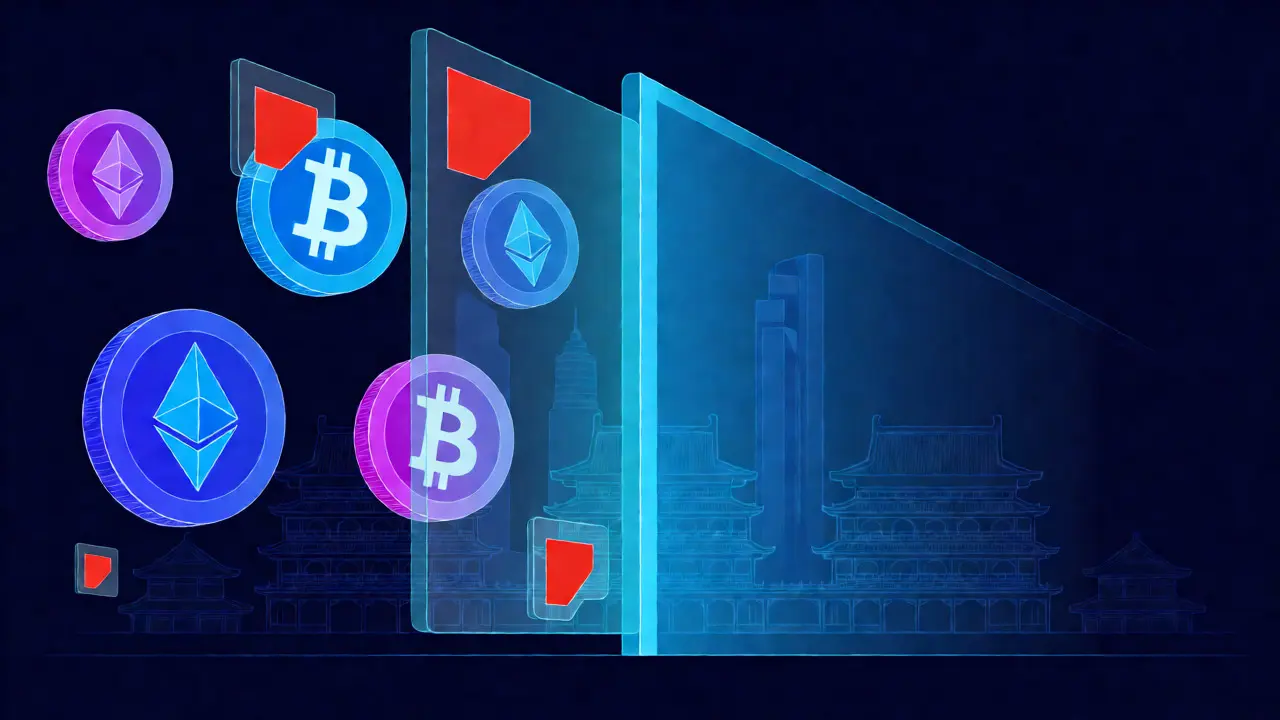
Imagine waking up to find that the world's largest cryptocurrency market has simply vanished. No more trading on your favorite app, no more easy conversions from Yuan to Bitcoin. That’s not a hypothetical scenario for people in China; it’s been their reality since 2017. If you’ve ever wondered what crypto exchanges are banned in China, the short answer is: practically all of them. But the story is far more nuanced than a simple "no." It involves a complex web of technical blocks, legal risks, and a state-backed alternative that aims to replace decentralized money entirely.
China’s stance on digital assets isn’t just about banning a few platforms. It’s a strategic move to maintain financial control. While you might think the ban was lifted recently due to some confusing news headlines, the core restrictions remain firmly in place as of late 2026. Let’s break down exactly which exchanges are off-limits, why the government pulled the plug, and what Chinese users are actually doing instead.
The Big Ban: What Actually Happened?
To understand the current landscape, we have to look back at two major regulatory earthquakes. The first hit in September 2017, when the People's Bank of China (PBOC) declared Initial Coin Offerings (ICOs) illegal and ordered domestic exchanges to shut down. This forced giants like Huobi and OKX to move their operations offshore. They didn't disappear; they just moved their servers and headquarters to places like Singapore or the Seychelles, hoping to still serve Chinese customers remotely.
Then came the hammer in May 2021. The State Council explicitly stated that mining and trading of virtual currencies would be cracked down on. By September 2021, the PBOC issued a notice declaring all cryptocurrency-related business activities illegal financial activities. This wasn't just about domestic players anymore. It targeted foreign exchanges serving Chinese residents. Suddenly, using a VPN to trade on Binance became a legal gray area that could quickly turn red if you were caught moving significant capital out of the country.
People's Bank of China (PBOC) is the central bank of the People's Republic of China, responsible for monetary policy and financial regulation. Its directives form the backbone of China's strict anti-crypto framework, prioritizing financial stability over decentralized innovation.
Which Crypto Exchanges Are Specifically Blocked?
There isn't a single static list of "banned" names because the ban applies to the activity, not just specific URLs. However, any centralized exchange (CEX) that facilitates fiat-to-crypto trading for Chinese nationals is effectively banned. Here is how the major players fit into this picture:
- Binance: Once the go-to platform for Chinese traders, Binance officially withdrew from mainland China in 2021. While you can still access the site via IP changes, using Chinese ID documents (KYC) to register new accounts is restricted. Existing accounts face potential freezes if suspicious activity is detected.
- Coinbase: Coinbase never had a formal presence in China, but its services are blocked by the Great Firewall. Chinese users cannot easily link local bank accounts or Alipay/WeChat Pay to fund Coinbase accounts without third-party intermediaries.
- Kraken and Bitstamp: These US-based exchanges are inaccessible through standard Chinese internet connections. Attempts to bypass the firewall often result in slow speeds or connection drops, making active trading difficult.
- OKX and Huobi (HTX): These originated in China but rebranded and relocated. They technically operate outside Chinese jurisdiction now, but the Chinese government actively discourages citizens from using them. Many users report issues with withdrawal limits or account suspensions when large sums are involved.
The key takeaway? It’s not just about whether the website loads. It’s about whether you can legally deposit RMB and withdraw profits without triggering a capital flight investigation.
| Exchange | Access Status | Risk Level for Chinese Users | Primary Workaround |
|---|---|---|---|
| Binance | Blocked by Firewall | High | Offshore accounts + VPN |
| Coinbase | Inaccessible | Medium | P2P transfers only |
| OKX | Restricted Service | High | Global entity registration |
| Huobi (HTX) | Restricted Service | High | OTC desks |
| Local CEXs | Shut Down | N/A | Migrated to DEXs |
How Does China Enforce the Ban?
You might wonder, "If I use a VPN, does the government really know?" Yes, they likely do. Enforcement in China is sophisticated and multi-layered. It’s not just about blocking websites; it’s about cutting off the money flow.
First, there’s the Great Firewall of China is a system of internet censorship and surveillance tools used by the Chinese government to regulate online content. It uses Deep Packet Inspection (DPI) to identify and block traffic to known crypto exchange domains and APIs. Second, banks are strictly prohibited from facilitating crypto transactions. If your bank sees a transfer to a known crypto payment processor, they may freeze your account pending an explanation.
Third, there’s the social credit and KYC angle. When you sign up for a global exchange, you upload your passport. Chinese authorities share data with international bodies under various compliance frameworks. If you’re flagged as a high-risk trader, your ability to move money through official channels diminishes. This forces many users into the shadows.

The Rise of the Underground Market
Just because something is banned doesn’t mean it stops happening. In fact, the ban created a massive parallel economy. Since centralized exchanges are risky, Chinese users have migrated to two main alternatives:
- Peer-to-Peer (P2P) Trading: Platforms like Paxful or localized Telegram groups allow users to trade directly. One person sends WeChat Pay or Alipay funds to another, who then releases Bitcoin from their wallet. This avoids the banking system’s direct involvement in crypto transactions, though it carries counterparty risk.
- Decentralized Exchanges (DEXs): Using wallets like MetaMask or Trust Wallet, users trade on Uniswap or PancakeSwap. Because these run on blockchain smart contracts, there’s no central company to ban. You don’t need KYC to swap tokens, although bridging funds from the centralized world to the decentralized one remains a hurdle.
This underground activity keeps liquidity alive. Reports suggest that OTC (Over-The-Counter) desks in cities like Shenzhen and Shanghai still handle millions of dollars in daily volume, often settling trades in stablecoins like USDT rather than volatile Bitcoin.
The Government’s Alternative: e-CNY
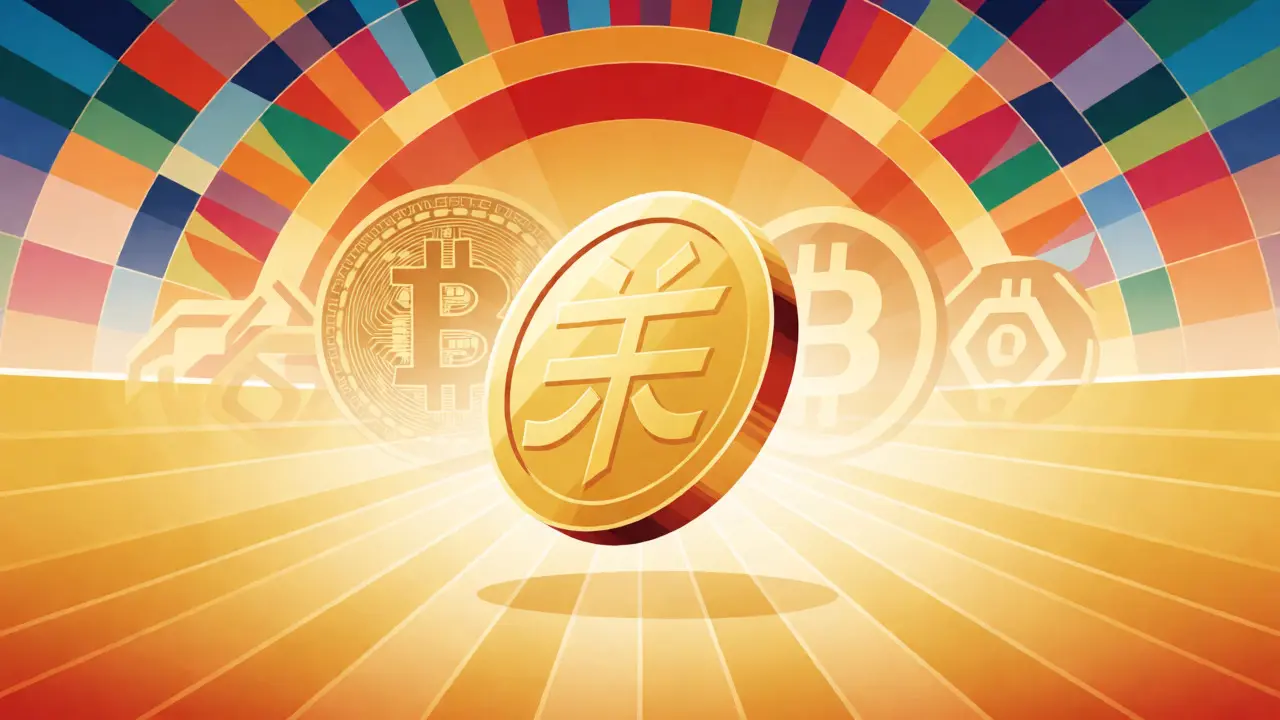
Why did China ban private crypto? Partly to promote its own digital currency. The e-CNY is China's central bank digital currency (CBDC), designed to digitize the Renminbi while maintaining state control over monetary policy. Unlike Bitcoin, which is decentralized, e-CNY is fully controlled by the PBOC.
Beijing views decentralized cryptocurrencies as threats to financial sovereignty. They enable capital flight-money leaving the country-and reduce the effectiveness of monetary policy. The e-CNY solves both problems. It offers the convenience of digital payments but keeps every transaction traceable and within the national ledger. For the average Chinese citizen, the message is clear: use the digital yuan for payments, and leave speculative crypto trading to those willing to take legal risks.
What About the 2025 Rumors?
If you’ve been scrolling through Twitter or Reddit, you might have seen posts claiming China made holding Bitcoin illegal in 2025. Don’t panic. Fact-checkers confirmed these were recycled reports from the 2021 crackdown. As of 2026, there is no law stating that owning Bitcoin in a private wallet is a crime. The illegality lies in business activities: mining, exchanging, and facilitating trades.
However, the line is blurry. If you buy Bitcoin and hold it, you’re generally safe. If you sell it for profit and try to deposit that cash into your bank, you might face questions about the source of funds. This ambiguity creates a chilling effect, keeping casual investors away while hard-core enthusiasts navigate the loopholes.
Key Takeaways for Investors
If you’re interacting with the Chinese market or considering where to host your crypto infrastructure, keep these points in mind:
- No Centralized Haven: There is no friendly CEX inside mainland China. All major trading happens offshore or peer-to-peer.
- Banking is the Bottleneck: The biggest risk isn’t losing your coins; it’s having your bank account frozen for suspected illegal fundraising.
- Stablecoins Rule: USDT (Tether) is the de facto currency for OTC trades in China, not BTC or ETH.
- Regulatory Stance is Firm: Despite occasional whispers of softening, the PBOC remains committed to the e-CNY and suppressing decentralized finance.
China’s experiment shows that governments can indeed suppress public crypto markets, but they struggle to eliminate the underlying demand. For now, the ban stands, pushing innovation into the shadows and driving the adoption of state-controlled digital money.
Is Bitcoin completely illegal in China?
No, owning Bitcoin is not illegal. However, cryptocurrency-related business activities, such as operating an exchange, mining, or facilitating ICOs, are illegal. Individuals can hold Bitcoin, but converting it to fiat currency through official banking channels is difficult and risky.
Can Chinese citizens still use Binance?
Technically, yes, but with significant hurdles. Binance withdrew from mainland China, so users must access it via VPN. New registrations with Chinese IDs are often restricted, and existing accounts may face withdrawal limits or freezes if large capital movements are detected.
What is the difference between e-CNY and Bitcoin?
e-CNY is a Central Bank Digital Currency (CBDC) issued and controlled by the People's Bank of China. It is centralized and traceable. Bitcoin is a decentralized cryptocurrency with no central authority, offering anonymity and censorship resistance, which conflicts with China's financial control goals.
Why did China ban crypto mining?
China banned mining primarily for energy consumption reasons and financial control. Mining consumes vast amounts of electricity, often from coal-fired plants, contradicting carbon neutrality goals. Additionally, mining facilitated unregulated capital flows and made monetary policy harder to manage.
Are there any crypto exchanges allowed in China?
No centralized cryptocurrency exchanges are licensed to operate within mainland China. All trading occurs either through offshore platforms accessed via VPN, decentralized exchanges (DEXs), or peer-to-peer (P2P) networks that operate outside traditional regulatory oversight.