

Imagine waking up to find your bank account frozen because you bought Bitcoin. For traders living in countries with strict crypto restrictions, this isn't a nightmare scenario-it's daily reality. Whether you are dealing with total bans like those in China or heavy penalties in Vietnam and Bangladesh, staying put can mean losing access to your assets, facing fines, or even risking prison time.
The good news? You don't have to stay. A growing number of jurisdictions are actively courting cryptocurrency professionals, offering clear regulations, tax benefits, and residency pathways. This guide breaks down exactly how to legally migrate from a restricted country to a crypto-friendly hub, ensuring you keep your wealth and your freedom.
Understanding the Crypto Ban Landscape
Before packing your bags, you need to know where you stand. Not all restrictions are created equal. Some countries ban mining, others ban payments, and some ban holding altogether. Understanding the severity helps you plan your exit without triggering alarms.
China remains the gold standard for prohibition. Since 2019, they have banned transactions, financial institution involvement, and mining operations entirely. If you are operating out of China, your window for legal exit is narrow and requires careful planning to avoid capital controls.
Other nations have specific pain points:
- Turkey: Banned crypto as a payment method in April 2021 after inflation drove citizens to use Bitcoin as a hedge. Holding is technically gray but using it for commerce is illegal.
- Vietnam: The State Bank prohibits using Bitcoin as a payment method. Fines range from 150 million VND ($6,592) to 200 million VND ($8,790). While not always criminalized for simple holding, business operations are risky.
- Bangladesh: Perhaps the most dangerous. Trading is illegal under the Money Laundering Prevention Act. Violators face years in prison. If you are here, speed is essential.
- Total Bans: Qatar, Egypt, Algeria, Morocco, Nepal, and Tunisia also maintain comprehensive prohibitions on various aspects of crypto activity.
If you live in one of these zones, your primary goal is "clean exit." This means documenting your assets clearly before leaving so that when you arrive in a new country, you can prove the source of funds without raising red flags about money laundering.
Top Destinations for Crypto Traders
Not every country welcomes crypto traders with open arms. You want places with regulatory clarity, banking access, and favorable tax laws. Here are the top contenders for 2026.
| Country | Key Benefit | Tax Situation | Visa Pathway |
|---|---|---|---|
| Dubai (UAE) | Global crypto hub with clear regulation by VARA | 0% Personal Income Tax | Golden Visa for investors/blockchain experts |
| Malta | "Blockchain Island" status; recognizes crypto as asset | No Capital Gains Tax on long-term holdings | Residency by Investment / Citizenship Program |
| Australia | Strong legal framework via ASIC; progressive policies | Crypto taxed as property; CGT discounts available | Business Innovation and Investment Visa |
| Bermuda | Digital Asset Business Act (DABA); regulated by BMA | Favorable tax policies for businesses | Employment Permit / Business Owner routes |
| Panama | No capital gains tax on crypto; strategic LatAm location | Territorial tax system (foreign income often exempt) | Friendly Investor Program |
Dubai has emerged as the leader. The Virtual Assets Regulatory Authority (VARA) provides clear guidelines, meaning you aren't guessing if your trading bot is legal. The Golden Visa program specifically targets blockchain entrepreneurs, offering a 10-year residence permit if you meet investment or expertise criteria.
Malta offers a different angle. It recognizes cryptocurrencies as a unit of account or store of value. Crucially, there is no Capital Gains Tax on long-term gains if the crypto is held as an investment rather than traded day-to-day. However, be careful: if you trade frequently, it may be classified as business income, taxed at 35%. With proper structuring, however, effective rates can drop significantly.
Tax Optimization: Keeping More of Your Profits
Moving countries isn't just about legality; it's about efficiency. Leaving a high-tax or restrictive jurisdiction for a tax-neutral one can save you hundreds of thousands of dollars annually.
Malaysia is a hidden gem for individual traders. Because Malaysian authorities do not view cryptocurrencies as capital assets or legal tender, transactions are generally tax-free for individuals. The catch? This applies only if your trading is not "regular or repetitive" to the point of being a business. If you are a casual holder or occasional trader, Malaysia is paradise. If you are a full-time quant trader, you might trigger business income rules.
In contrast, Panama operates on a territorial tax system. This means income generated outside of Panama is often not taxed. Since crypto markets are global, many traders structure their entities so that their "business" happens offshore, allowing them to enjoy Panama's lack of capital gains tax on crypto transactions.
Always consult a tax advisor specializing in international digital assets. Rules change fast. For example, the Central African Republic made Bitcoin legal tender in 2022 but repealed it in 2023. Volatility is part of the game.

Legal Migration Pathways: How to Move
You cannot just buy a plane ticket and claim residency. Most countries require proof of funds, a clean criminal record, and a legitimate reason for entry. Here are the most common legal pathways for crypto professionals.
- Investor Visas: Programs like the UAE Golden Visa or Malta's Residency by Investment require significant capital commitment. In Dubai, investing in a local real estate property or setting up a free zone company can qualify you. These visas offer stability and long-term residency.
- Digital Nomad Visas: Countries like Estonia, Portugal, and Croatia offer visas for remote workers. If you trade independently and don't need to register a local entity immediately, this is a lower-cost entry point. You must prove a minimum monthly income, which crypto profits can satisfy if properly documented.
- Entrepreneur/Startup Visas: If you are launching a crypto project, DeFi protocol, or exchange, countries like Australia and Singapore offer visas for founders. You need a viable business plan and often seed funding. This path is harder but grants deeper integration into the local economy.
- Residency by Citizenship: Malta and Caribbean nations offer citizenship programs. These are expensive (often $500k+) but provide passport power, allowing you to travel and conduct business globally without visa hurdles.
For most traders, the Digital Nomad route is the fastest way to test the waters, followed by transitioning to an Investor Visa once established.
The Exit Checklist: Preparing for Departure
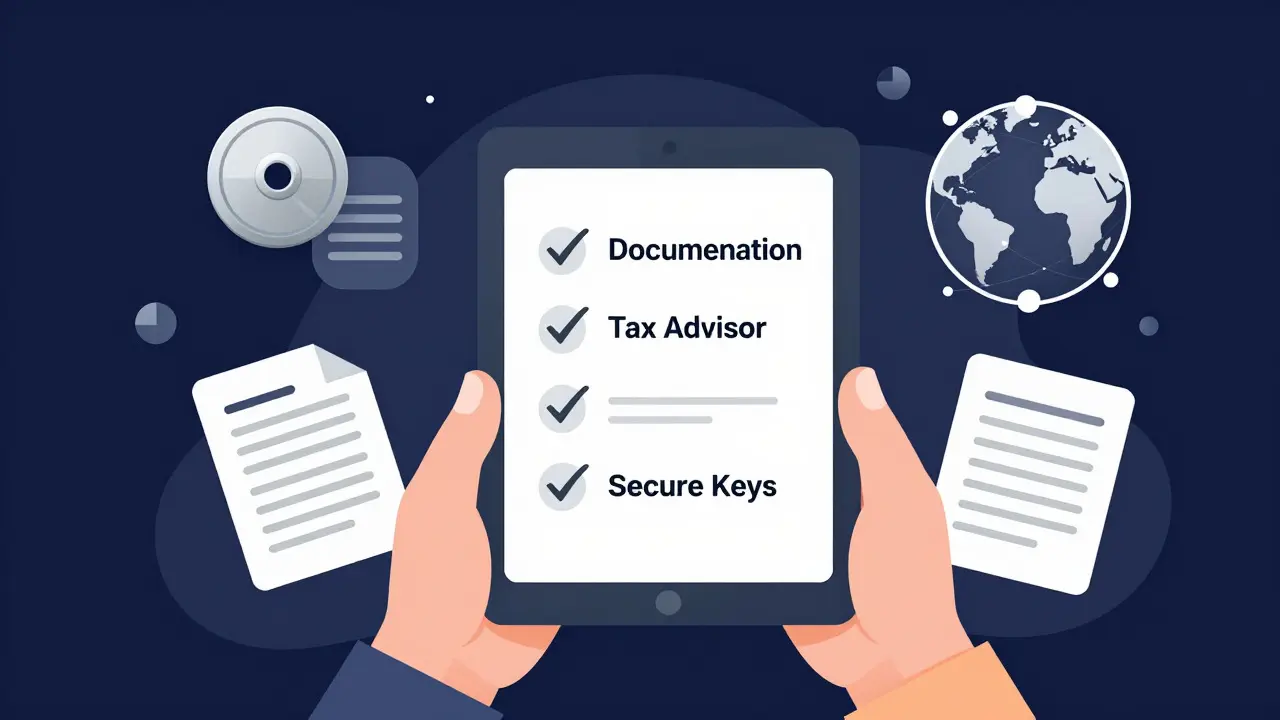
Leaving a restricted country poorly can haunt you later. Banks in your new home will ask for "source of funds." If you left your old country with messy records, you might get de-banked in your new one. Follow this checklist:
- Document Everything: Keep screenshots of trades, wallet addresses, and transaction histories going back several years. Use tools like Koinly or CoinTracker to generate audit-ready reports.
- Pay Exit Taxes: Some countries impose an "exit tax" if you renounce residency while holding significant assets. Check if your home country charges this. Paying it cleanly proves your funds are legitimate.
- Establish Banking Early: Open a bank account in your destination country *before* you move if possible. Crypto-related businesses often struggle with KYC (Know Your Customer) checks. Having a relationship manager who knows you helps.
- Hire Local Experts: Don't DIY immigration. Hire an immigration attorney in the target country and a tax advisor familiar with cross-border crypto flows. The cost ($5k-$20k) is negligible compared to the risk of deportation or asset seizure.
- Secure Your Keys: Ensure your hardware wallets and seed phrases are physically with you. Do not mail them. Consider multi-signature setups where keys are split between you and a trusted custodian in the new jurisdiction.
Real-World Challenges and Pitfalls
Migration is not seamless. Based on user experiences from crypto communities and relocation forums, here are the most common hurdles:
Banking Friction: Even in crypto-friendly countries, traditional banks can be wary. They may freeze accounts if they see large transfers labeled vaguely as "crypto." Always use clear descriptions like "Personal Savings Transfer" or "Business Revenue" and back it up with invoices or tax returns.
Regulatory Whiplash: Policies change. A country that is friendly today might tighten rules tomorrow due to political pressure. Diversify your presence. Don't put all your eggs in one basket. Maintain residencies in two different jurisdictions if possible.
Cultural Integration: Moving is hard. Language barriers, healthcare systems, and social isolation are real issues. Research the lifestyle thoroughly. Dubai is luxurious but hot and transient. Malta is beautiful but small. Australia is spacious but far from Europe. Choose based on life goals, not just tax rates.
Timeline and Costs
Plan for a process lasting 6 to 24 months. Rushing leads to mistakes.
- Months 1-3: Consultation with lawyers and tax advisors. Select target jurisdiction. Gather documentation.
- Months 4-9: Apply for visas. Set up corporate structures if needed. Begin transferring assets slowly to avoid triggering anti-money laundering alerts.
- Months 10-18: Relocate physically. Establish banking relationships. Register for local taxes. Integrate into the community.
Costs vary wildly. A Digital Nomad visa might cost $1,000 in fees. An Investor Visa in Dubai could require $275,000+ in real estate investment. Citizenship programs in Malta start around €650,000. Budget accordingly.
Final Thoughts on Crypto Migration
Exiting a crypto-restricted country is a strategic move, not just a vacation. It requires patience, precision, and professional help. By choosing the right destination, optimizing your tax position, and maintaining impeccable records, you can secure your financial future and trade with peace of mind.
The world is becoming more connected, and capital flows freely. But remember: legality is your best shield. Stay compliant, stay informed, and never underestimate the power of a good lawyer.
Can I be prosecuted in my home country for trading crypto after moving?
Generally, no, provided you complied with laws *while* you were resident. Most countries enforce laws territorially. If you paid any applicable exit taxes and didn't commit fraud, moving abroad usually protects you from future prosecution for past legal activities. However, if you evaded taxes or laundered money while still a citizen/resident, extradition risks exist. Always pay your dues before leaving.
Which country is the safest for crypto traders in 2026?
The United Arab Emirates (specifically Dubai) is currently considered the safest due to its robust VARA regulation, zero personal income tax, and political stability. Malta and Bermuda are also strong contenders with established legal frameworks. Safety depends on both regulatory clarity and political stability.
Do I need to give up my citizenship to move to a crypto-friendly country?
No. Most residency-by-investment or investor visa programs allow you to retain your original citizenship. Only specific "Citizenship by Investment" programs (like those in Malta or Caribbean nations) offer a second passport, but they rarely require you to renounce your first. Dual citizenship is widely accepted.
How much does it cost to relocate as a crypto trader?
Costs range from $5,000 for basic legal advice and visa applications to over $500,000 for premium residency or citizenship programs. Include costs for flight, temporary housing, and setting up local banking. High-net-worth individuals often spend $50,000-$100,000 on comprehensive advisory services to ensure smooth transition.
Is Malaysia really tax-free for crypto?
Yes, for individual investors whose trading is not deemed a business. The Malaysian Inland Revenue Board does not classify crypto as a capital asset, so gains are not subject to Capital Gains Tax. However, if you trade frequently and professionally, it may be classified as business income, which is taxable. Documentation is key to proving your status.