

Imagine earning nearly five times the interest on your savings compared to a traditional bank account, without ever filling out a credit application or visiting a branch. That is the promise of Decentralized Finance (DeFi), which is a financial system built on blockchain technology that operates without central intermediaries like banks. As of mid-2026, this ecosystem has matured significantly from its chaotic early days. With over $152 billion locked in protocols and millions of users actively participating, DeFi is no longer just for tech enthusiasts. It is a functional alternative to traditional banking for lending, borrowing, and trading.
However, this freedom comes with a steep price tag: responsibility. When you remove the middleman, you also remove the safety net. There is no customer service hotline to call if you send funds to the wrong address, and there is no FDIC insurance if a platform gets hacked. Understanding the real benefits and the very real risks is the only way to participate safely. Let’s break down what DeFi actually offers in 2026, where the traps are, and how to navigate them without losing your shirt.
The Core Benefits: Why People Are Moving to DeFi
The primary driver behind DeFi adoption is simple economics. Traditional finance relies on layers of intermediaries-banks, clearinghouses, brokers-all of whom take a cut. DeFi replaces these layers with code. This shift creates several tangible advantages for the average user.
Higher Yields and Lower Fees
In traditional banking, savings accounts often pay negligible interest, sometimes below inflation. In contrast, DeFi lending protocols like Aave and Compound offer significantly higher returns. For example, stablecoin pools on Aave have delivered around 4.8% APY recently, compared to the 0.5-1.2% average seen in traditional US savings accounts. Transaction fees are also lower; while centralized exchanges charge withdrawal fees and spread costs, decentralized exchanges (DEXs) like Uniswap typically charge a flat 0.3% fee per trade. For frequent traders, these savings add up quickly.
Global Accessibility and Permissionless Access
You don’t need a credit score, a social security number, or even an ID to use most DeFi platforms. You just need an internet connection and a cryptocurrency wallet. This opens financial services to billions of people who are unbanked or underbanked in traditional systems. Whether you are in Wellington, New Zealand, or a rural village in Southeast Asia, the access is identical. This democratization allows anyone to lend, borrow, or trade assets instantly, 24/7, without waiting for business hours.
Transparency and Self-Custody
Every transaction on a DeFi platform is recorded on a public blockchain ledger. You can verify exactly how much collateral backs a loan or how many tokens are in a liquidity pool. Unlike banks, which operate as black boxes, DeFi is open-source. Furthermore, you maintain custody of your assets until the moment you interact with a protocol. Your keys, your coins. No third party can freeze your account arbitrarily, provided you follow the rules of the smart contract.
| Feature | Traditional Finance (TradFi) | Decentralized Finance (DeFi) |
|---|---|---|
| Interest Rates (Savings) | 0.5% - 1.2% APY | 3.0% - 8.0%+ APY (variable) |
| Transaction Speed | 1-3 Business Days | 15-30 Seconds |
| Fees | 2% - 5% (hidden + explicit) | 0.3% - 1.5% (transparent) |
| Access Requirements | ID, Credit Check, KYC | Internet, Crypto Wallet |
| Custody | Bank holds assets | User holds assets (Self-Custody) |
| Insurance | FDIC/SIPC Covered | Rarely Insured (User Risk) |
The Hidden Risks: Where Things Go Wrong
If DeFi were perfect, everyone would move their money there today. The reality is far more complex. The same features that provide benefits also introduce unique vulnerabilities. Ignoring these risks is the fastest way to lose capital.
Smart Contract Vulnerabilities
DeFi platforms run on smart contracts-self-executing code deployed on blockchains like Ethereum. If this code contains bugs, hackers can exploit them. In 2024 alone, over $3.2 billion was lost to exploits across various protocols. While major platforms like Aave and MakerDAO undergo rigorous audits, smaller or newer projects may not. Once funds are drained by a hack, they are gone forever. There is no chargeback process.
Impermanent Loss and Market Volatility
If you provide liquidity to a decentralized exchange (like Uniswap), you face "impermanent loss." This occurs when the price of your deposited tokens changes relative to each other. If one token spikes in value, the automated market maker will sell it for the other, leaving you with less value than if you had simply held the tokens in your wallet. During volatile markets, this loss can range from 4.7% to 8.2%. It is called "impermanent" because it disappears if prices revert, but if you withdraw during a divergence, the loss becomes permanent.
Regulatory Uncertainty
The regulatory landscape for DeFi is shifting rapidly. In late 2025, the EU implemented MiCA regulations, classifying certain DeFi activities as requiring licensing. In the US, proposed legislation like the DeFi Regulatory Advancement Act aims to apply securities laws to these platforms. This creates a risk that platforms could be forced to shut down in specific jurisdictions, potentially locking users out of their funds or devaluing governance tokens.
User Error and Phishing
A significant portion of losses in DeFi comes from user error. Clicking a phishing link, approving a malicious contract, or sending funds to the wrong address results in irreversible loss. In 2025, reports of fake staking sites mimicking popular protocols surged. Without a support team to reverse transactions, the burden of security falls entirely on you.

How DeFi Actually Works: The Mechanics
To understand the risks, you need to understand the machinery. DeFi isn't magic; it's engineering. Here is how the core components function.
Liquidity Pools
Instead of order books used in traditional stock markets, DEXs use liquidity pools. Users deposit pairs of tokens (e.g., ETH and USDC) into a smart contract. Traders swap against this pool, paying a small fee that goes to the liquidity providers. This ensures there is always someone to buy or sell from, providing continuous liquidity.
Overcollateralization
In traditional loans, banks check your income and credit history. In DeFi, algorithms check your collateral. To borrow $1,000 worth of stablecoins, you might need to lock up $1,500 worth of Ethereum. This overcollateralization (typically 125% to 200%) protects the lender. If the value of your collateral drops too low, the smart contract automatically liquidates your position to repay the loan. This prevents bad debt but exposes borrowers to liquidation risk during market crashes.
Layer 1 and Layer 2 Networks
Most DeFi started on Ethereum, which remains the dominant network holding about 58.7% of Total Value Locked (TVL). However, high gas fees on Ethereum led to the rise of alternative chains. Solana, Polygon, and Avalanche now handle significant volume due to lower costs and faster speeds. By 2026, cross-chain bridges allow assets to move between these networks, though this introduces bridge security risks.
Safety First: Practical Steps to Protect Yourself
You don't have to be a programmer to use DeFi safely, but you do need to be disciplined. Here is a checklist for minimizing risk in 2026.
- Use Hardware Wallets: Never connect a hot wallet (like MetaMask on your phone) with large amounts of capital to new or untrusted sites. Use hardware wallets like Ledger or Trezor. Adoption of these devices increased by 47% year-over-year in 2025 for good reason-they keep your private keys offline.
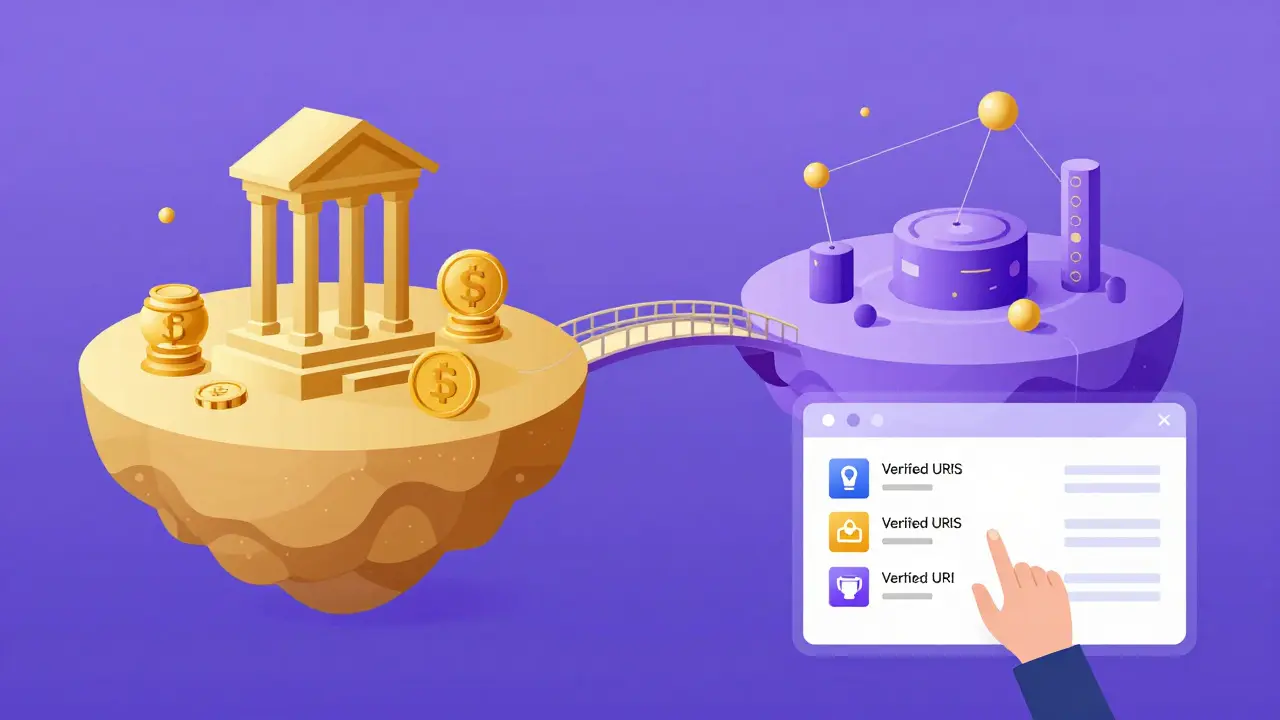
- Verify URLs and Contracts: Phishing is rampant. Always bookmark official DeFi dashboard URLs. Before interacting with a contract, check its address on Etherscan or the official project documentation. Fake domains look incredibly similar to real ones.
- Start Small: Treat your first few interactions as tuition fees. Start with small amounts to learn the interface and gas dynamics. Learn how to revoke approvals for tokens you no longer use.
- Diversify Protocols: Don't put all your eggs in one basket. Spread your assets across established, audited protocols like Aave, Compound, and Uniswap. Avoid new, unaudited projects promising unrealistic yields (anything above 20% APY should raise immediate red flags).
- Understand Gas Fees: Network congestion can spike transaction costs. On Ethereum, fees can jump from $2 to $50+ during peak times. Use tools like GasNow to find optimal times to transact, or consider using Layer 2 solutions like Arbitrum or Optimism for lower costs.
The Future Outlook: What to Expect in 2026 and Beyond
The DeFi space is evolving from a wild west experiment into a structured industry. The upcoming Ethereum Cancun-Deneb upgrade, expected in early 2026, promises to reduce transaction costs by up to 90% through proto-danksharding. This will make micro-transactions and complex DeFi strategies viable for everyday users.
We are also seeing the beginning of TradFi integration. Major institutions are experimenting with hybrid models that combine DeFi's efficiency with traditional compliance. While this brings legitimacy, it also means stricter oversight. The debate over global standards continues, with organizations like the World Economic Forum pushing for interoperability protocols.
For the individual user, the key takeaway is this: DeFi is powerful but unforgiving. It rewards knowledge and punishes negligence. As the technology matures, the barriers to entry will lower, but the fundamental principle remains-you are your own bank. Take that responsibility seriously.
Is DeFi safe for beginners?
DeFi carries higher risks than traditional banking due to smart contract vulnerabilities and lack of insurance. Beginners should start with small amounts, use well-established protocols like Aave or Uniswap, and never invest money they cannot afford to lose. Education is critical before committing significant capital.
What happens if a DeFi platform gets hacked?
If a smart contract is exploited, funds are typically lost permanently. Unlike banks, there is no insurance or recourse. Some platforms have emergency pause mechanisms or insurance funds, but coverage is rare and limited. Always verify that a protocol has undergone multiple independent audits.
Do I need to pay taxes on DeFi earnings?
Yes, in most jurisdictions, earnings from DeFi (such as yield farming rewards, staking interest, or trading profits) are taxable events. You must track your cost basis and report gains. Consult a local tax professional familiar with cryptocurrency regulations in your country.
What is impermanent loss?
Impermanent loss is a temporary reduction in value experienced by liquidity providers when the price of deposited tokens changes relative to each other. It occurs because the automated market maker rebalances the pool. The loss becomes permanent only if you withdraw your liquidity while the price divergence exists.
Which DeFi platform is the best for lending?
As of 2026, Aave and Compound are considered the most secure and reliable lending protocols due to their long track records, extensive audits, and high total value locked. They offer competitive APYs for stablecoins and major cryptocurrencies. Always compare current rates on aggregators before depositing.