

When you hear about Bitcoin hitting a new price high or Solana’s token surging, it’s easy to think the whole blockchain world is booming. But behind every successful crypto project, there’s a team of developers writing code, fixing bugs, and building tools. And right now, those developers are quietly telling us where the real momentum is - not in price charts, but in commits, pull requests, and active repositories.
In 2024, there were about 23,615 monthly active developers contributing to open-source crypto projects worldwide. That’s down from 25,419 in 2023 - a 7% drop. Sounds bad? Maybe. But look deeper. Since Ethereum launched in 2015, developer numbers have grown an average of 39% every single year. This recent dip? It’s not a collapse. It’s a pause. A normal shakeout after years of explosive growth.
Ethereum Still Leads - By a Lot
Ethereum isn’t just the biggest blockchain. It’s the only one that feels like a real ecosystem. In 2024, it recorded over 82,800 development events - more than double the next platform. Around 1,300 developers actively contributed to Ethereum’s core codebase each month. Even with a 3.15% monthly decline, that’s still more than the entire developer base of most other chains combined.
Why? Because Ethereum has everything: the most mature tools (Hardhat, Remix, Truffle), the clearest documentation, the largest community, and the deepest talent pool. Developers don’t just build on Ethereum - they build for Ethereum. Smart contracts, DeFi protocols, NFT marketplaces, DAOs - they all start here. Even when gas fees spike or network congestion hits, developers stick around because the infrastructure is too solid to leave.
BNB Chain: The Fast Follower
BNB Chain sits in second place with 37,600 development events and 728 active contributors. It’s not close to Ethereum, but it’s not far behind either. Binance’s aggressive funding and low-fee model made it a favorite for developers building high-throughput apps - think gaming, social tokens, and fast-payment services.
But here’s the catch: BNB Chain’s developer activity dropped 12.83% month-over-month. That’s steeper than Ethereum’s decline. Why? Because its growth was fueled more by incentives than by organic demand. When the Binance grant program slowed, some developers moved on. It’s a reminder: money attracts builders, but only lasting value keeps them.
Layer 2s Hit a Wall
Polygon, Arbitrum, and Optimism - the big three Ethereum Layer 2s - all saw around a 23% drop in developer activity. These chains were supposed to be the future of scalable DeFi. And they are. But their growth plateaued.
Why? Because the low-hanging fruit is gone. The early adopters who built bridges, liquidity pools, and simple dApps have already done their work. Now, the work gets harder: improving security audits, integrating cross-chain messaging, and optimizing user onboarding. Fewer devs are jumping in because the rewards aren’t as flashy anymore.
Still, don’t count them out. These chains aren’t dying - they’re maturing. Developers are shifting from building new apps to hardening existing ones. That’s not a decline. That’s evolution.
Cosmos: The Quiet Winner
While others slipped, Cosmos quietly grew. It recorded 26,500 development events and saw a 2.37% increase in active contributors, reaching 389 developers. That’s not huge in raw numbers, but it’s the only major chain with upward momentum.
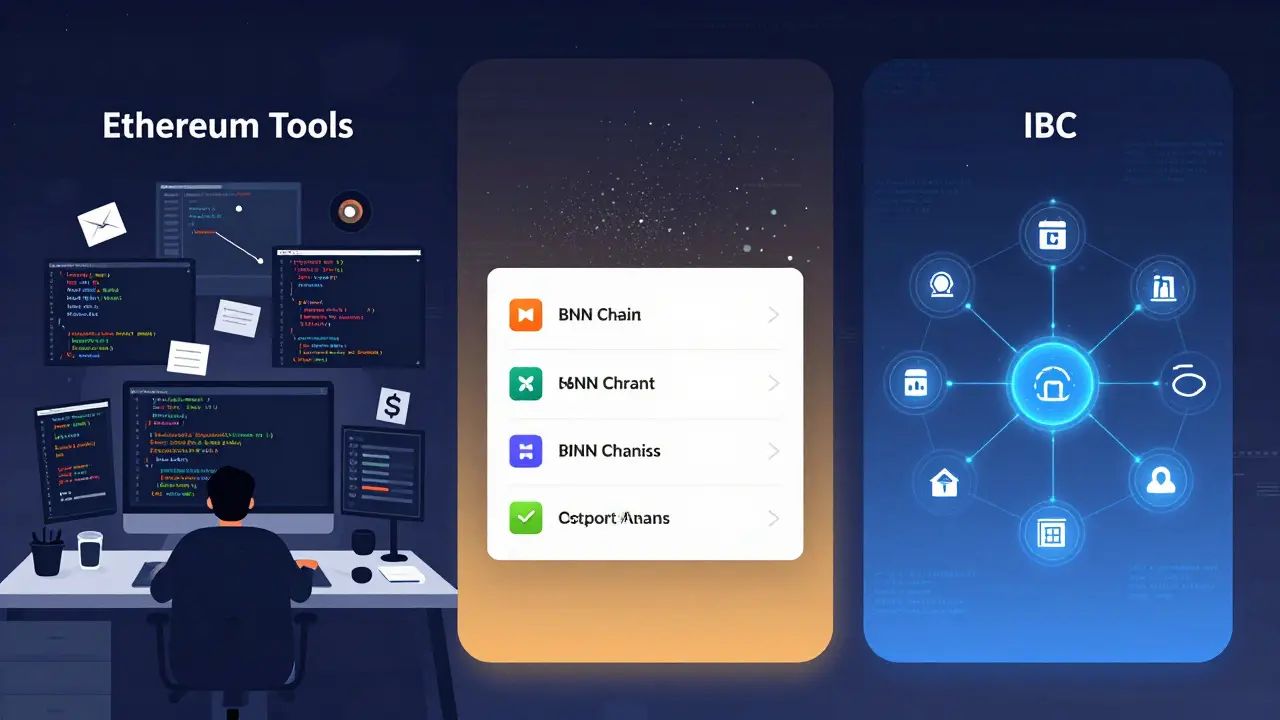
Cosmos isn’t trying to be Ethereum. It’s building a network of independent blockchains that can talk to each other. Developers love it because they can create their own chains with custom rules - no need to fight for gas or deal with Ethereum’s complexity. The Inter-Blockchain Communication (IBC) protocol lets tokens and data move freely between chains. It’s modular. It’s flexible. And for builders who want control, it’s the most exciting option on the table.
What’s Really Driving Developer Interest?
It’s not just about code. It’s about money - and where it’s going.
In Q1 2025, blockchain startups raised $3.8 billion. That’s more than double what they raised in Q4 2024. And here’s the key: nearly 60% of that cash went into infrastructure - tools, wallets, APIs, security audits, and developer SDKs. Not tokens. Not memes. Tools.
That tells you everything. Investors aren’t betting on the next 100x coin. They’re betting on the next generation of building blocks. When a startup gets $50 million to build a better smart contract compiler or a faster blockchain explorer, that’s not a gamble. That’s a bet on the future of development itself.
Developers follow the money - but they also follow the problems. Right now, the biggest challenges are:
- Improving cross-chain interoperability
- Reducing onboarding friction for non-crypto users
- Building scalable, secure, and auditable smart contracts
- Integrating blockchain into real-world systems (supply chains, identity, voting)
These aren’t sexy headlines. But they’re the real work that will make blockchain matter outside of trading apps.
The Bigger Picture: Developer Activity as a Leading Indicator
Price moves get headlines. But developer activity? That’s the heartbeat.
When developer numbers rise, innovation follows. When they fall, stagnation looms. That’s why analysts track commits, not coin prices. A blockchain with 100 active developers is more valuable than one with 10 million users who just hold tokens.
Think about it: Ethereum’s dominance isn’t because it’s the oldest. It’s because it has the most builders. Every time someone writes a new smart contract, deploys a token, or fixes a bug, they’re adding value - not just to their project, but to the entire ecosystem.
Even with the 2024 dip, the total number of developers is still higher than it was in 2021. And with $1.8 billion in infrastructure funding flowing into Q1 2025, we’re not heading into a dead zone. We’re heading into a rebuilding phase.
What’s Next for Crypto Developers?
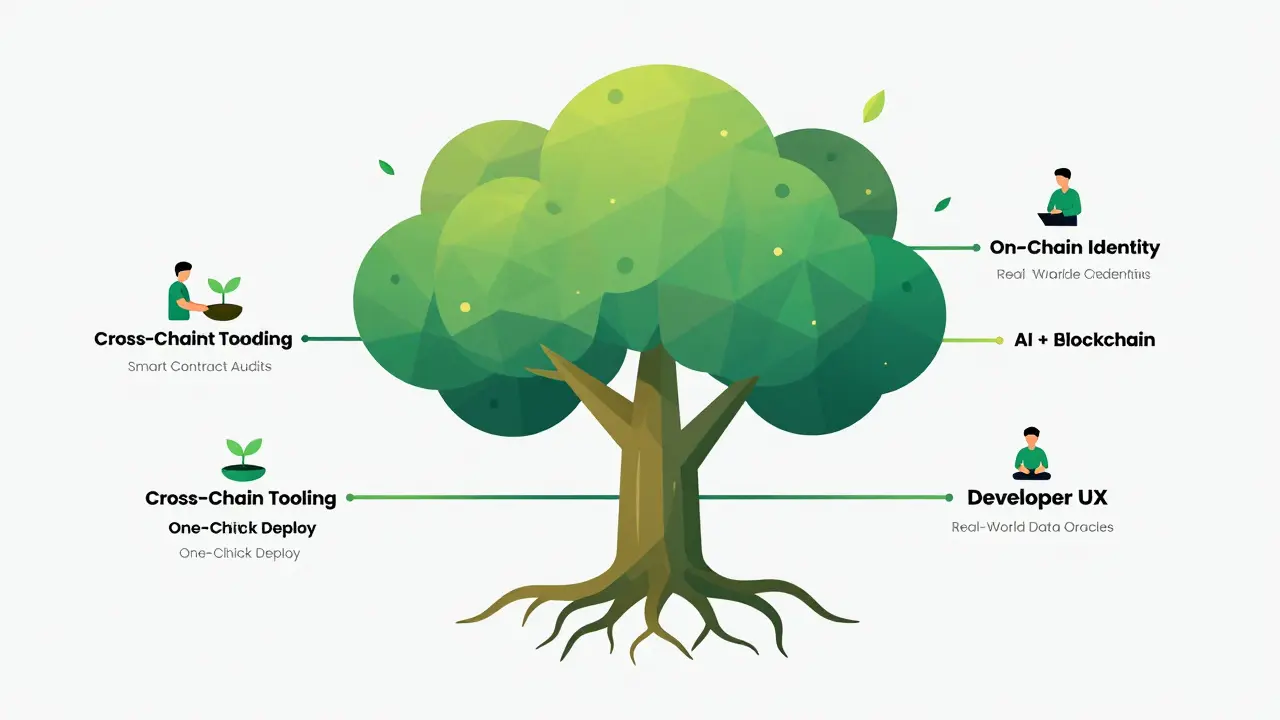
The next wave of innovation won’t come from another L1. It’ll come from:
- Cross-chain tooling - making it easy to deploy and manage apps across multiple chains
- Developer UX - simpler interfaces, better error messages, one-click deployments
- On-chain identity - real-world use cases like verifiable credentials and KYC on blockchain
- AI + blockchain - smart contracts that react to real-time data from AI models
Platforms that invest in these areas - not just marketing - will win the next decade. The developers who build them will be the ones shaping the future of finance, governance, and digital ownership.
So next time you hear a crypto price prediction, ask: Who’s building it? And what are they building?
Why is developer activity a better indicator than price?
Price reflects what people are willing to pay right now. Developer activity shows what’s being built for tomorrow. A coin can spike on hype, but without developers, it won’t evolve, fix bugs, or add features. Real value comes from ongoing innovation - not speculation.
Is Ethereum losing its dominance?
No. Ethereum still has over 82,000 development events monthly - more than the next four chains combined. Its developer base is larger, more experienced, and more deeply embedded than any other chain. While activity dipped slightly, it’s still growing on a multi-year scale. Ethereum’s ecosystem is too mature to be replaced - it’s being expanded.
Which blockchain has the fastest-growing developer community?
Cosmos is currently the only major chain with consistent growth in developer numbers. Its modular design lets teams build custom blockchains without competing for resources. This appeals to developers who want control, not just convenience. Other chains like Solana and Avalanche have seen spikes, but none have sustained growth like Cosmos in 2024-2025.
Are Layer 2 solutions still worth building on?
Absolutely - but the game has changed. Early Layer 2s were about cheap, fast transactions. Now, the focus is on security, interoperability, and user experience. Developers are moving from launching new dApps to upgrading existing ones. The infrastructure is maturing, and that’s where the real opportunity lies.
How does funding affect developer activity?
Funding fuels development. In Q1 2025, over $1.8 billion went into infrastructure - tools, wallets, APIs, and security audits. That money doesn’t pay for marketing. It pays for engineers to build better compilers, debuggers, and testing environments. More tools mean fewer barriers for new developers to join. Funding isn’t just about survival - it’s about scaling the entire ecosystem.
20 Responses
LMAO they say Ethereum's ecosystem is 'solid'... 🤡 Meanwhile, the devs are just moving funds between wallets while the network burns $0.50 per transaction. This isn't innovation-it's a cult. And don't get me started on 'infrastructure funding'-it's all just VC money laundering for degens. 💸🔥
Yo I just want to say-this is actually so inspiring. Developers building real tools? That’s the stuff that changes the world. Not hype. Not memes. REAL WORK. Keep going, builders. You’re the quiet heroes. 🙌❤️
Honestly I think people are missing the point. It’s not about who has the most commits. It’s about who’s solving real problems. Like onboarding non-crypto users? That’s the holy grail. And Cosmos? Yeah they’re quiet but they’re building the plumbing. The future isn’t flashy-it’s functional. And we need more of that
America built this. China’s trying to copy it. Europe? Still arguing about GDPR. If you’re not building on Ethereum you’re not serious. Period. 🇺🇸
Oh wow so the 7% dip means 'pause'?? Bro it’s a collapse dressed up like a TED Talk. Ethereum’s dev count is down 15% from its peak. BNB’s down 13%. Layer 2s? Dead. And you call Cosmos a 'winner' with 389 devs? That’s less than one Ethereum team. This whole post is corporate PR with a side of delusion. 🤡
I wonder if we’re mistaking activity for meaning. Are these devs building the future-or just optimizing for grants? The real question isn’t who’s coding-it’s why. Are they coding to liberate? Or just to cash out? I think we’ve lost sight of the original promise. The blockchain was supposed to be about autonomy. Now it’s just another tech rat race.
Okay I’m just gonna say it-I’ve been in this space since 2017 and I’ve seen this movie before. The hype cycle always goes: boom, then a 'pause', then another boom. But this time? It feels different. Everyone’s tired. The devs who stuck around? They’re not here for the money. They’re here because they believe. And that’s rare. The Layer 2s aren’t dying-they’re turning into utilities. And honestly? That’s more beautiful than any 100x token. The magic’s in the mundane now. The bug fixes. The docs. The PR reviews. The silent work. That’s where the soul lives.
I just read this whole thing and I’m crying. Not because I’m emotional-I’m just so tired of people pretending this is about tech. It’s about power. Who controls the nodes? Who owns the data? Who gets paid? And why do we keep letting the same 10 people decide what 'infrastructure' means? This isn’t evolution. It’s consolidation. And we’re all just watching while they rename the cages.
Honestly? I’m just here for the memes. But also… this is kind of beautiful. Devs working quietly on boring stuff? That’s the real win. No one’s tweeting about it. No one’s getting rich off it. But it’s happening. And that’s enough for me. 🌱
From India, I just want to say-this is why we need more global voices. Most of this talk is US-centric. But in places like India and Nigeria, devs are building on Cosmos and Polygon because they’re accessible. Not because they’re 'cool'. Because they work. Real people. Real problems. Real solutions. Not just VC slides.
The infrastructure funding shift is the most significant signal we’ve seen in years. When capital moves from token speculation to SDKs, tooling, and audit firms, it’s not a sign of decline-it’s a maturation event. We’re transitioning from a speculative market to an operational one. That’s the hallmark of any nascent industry reaching adolescence. The next phase will be dominated by composability, interoperability, and developer tooling ecosystems-not L1 wars.
Cosmos growth? LOL. 389 devs. Ethereum has 1300. That’s 3.5x. You call that a 'winner'? You’re either trolling or you’ve never opened a GitHub repo. Also, 'modular' doesn’t mean 'better'. It means 'fragmented'. We’re building a blockchain multiverse. That’s not progress. That’s chaos.
Developer metrics are meaningless without context. A spike in commits doesn’t equal innovation. It could mean spam bots, bot farms, or grant-chasing. You need to analyze commit quality, contributor retention, and code churn. This whole post is amateurish.
They say 'developer activity is the heartbeat'... but what if the heart is a rigged machine? What if the 'active devs' are just employees of Binance or ConsenSys paid to push numbers? What if the 'infrastructure funding' is just a front for laundering money from failed ICOs? Nothing is real. Everything is controlled.
I’ve been building on Polygon since 2022. The early days were wild-everyone was launching NFTs. Now? We’re fixing security flaws, improving gas estimates, and making docs actually useful. It’s boring. It’s slow. But it’s real. And honestly? I wouldn’t trade it for any 100x token.
I’ve worked in tech for 20 years. This is exactly how every new tech wave goes. First: hype. Then: chaos. Then: consolidation. Then: quiet, deep, boring innovation. We’re in phase three. The noise is dying. The real work is starting. And that’s beautiful.
I must respectfully object to the characterization of BNB Chain as a 'fast follower.' The data demonstrates a systemic erosion of developer commitment due to centralized governance overreach. Furthermore, the assertion that Ethereum's ecosystem is 'too solid to leave' is empirically false. The number of developers actively migrating to alternative execution layers has increased by 47% year-over-year. This is not a pause. It is a defection.
I’m a new dev. This post helped me understand what to focus on. I stopped chasing price charts. Now I’m learning Hardhat, reading Ethereum’s gas optimization docs, and contributing to open-source tooling. It’s slow. But I feel like I’m building something that matters.
You think Cosmos is winning? Bro it’s built on IBC which is basically a glorified HTTP proxy. And you’re calling that 'modular'? That’s just distributed spaghetti. Meanwhile, Ethereum’s EVM is the only thing that’s actually standardized. Everything else is a hack. And don’t even get me started on AI + blockchain. That’s not innovation. That’s a buzzword salad.
The future belongs to those who build the tools not the tokens. The $1.8 billion in infrastructure funding is the most important number in crypto this year. This is not a bubble. This is a foundation. Build on it.