
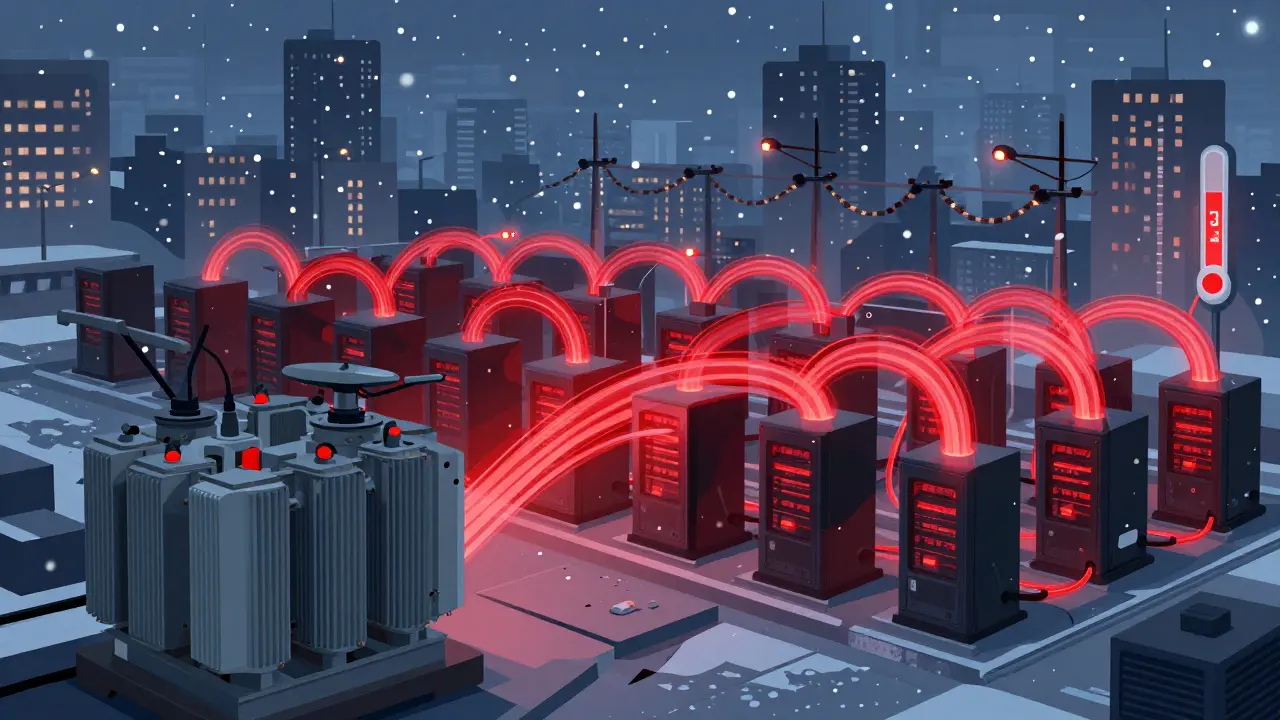
By 2024, Kazakhstan’s power grid was on the brink. One in three power plants had worn out beyond safe operation. In some regions, transmission lines lost nearly 18% of every kilowatt they carried-far above the 10-12% limit considered acceptable anywhere in the world. At the same time, thousands of crypto mining rigs, running 24/7, were sucking up electricity like thirsty machines in a drought. The government didn’t wait for a blackout to act. By early 2025, it had quietly imposed restrictions on large-scale cryptocurrency mining, not with a fanfare, but with a series of emergency power cuts and new licensing rules that effectively shut down half the country’s mining operations.
Why Kazakhstan’s Grid Couldn’t Handle Crypto Mining
Kazakhstan’s electricity system wasn’t built for the kind of demand crypto mining brings. Its grid is a patchwork of Soviet-era infrastructure, still running on aging turbines and transformers that haven’t been replaced in decades. As of January 2024, the country had 220 active power plants, but 70-90% of them were operating beyond their design life. Some regional grids showed up to 97% wear and tear. That’s not just old-it’s dangerous.Electricity losses were staggering. In the city of Oral, losses hit 18%-meaning for every 100 units of power sent out, 18 vanished before reaching homes or factories. In other areas, the number crept even higher. The national average for technical losses in 2024 was 17.42%. That’s not inefficiency. That’s collapse.
Meanwhile, crypto mining operations, mostly concentrated in the northern and western regions, were consuming up to 1.2 GW of electricity at their peak. That’s roughly the same as the entire annual output of a medium-sized coal plant. And unlike factories or homes, miners don’t turn off during peak hours. They run nonstop, regardless of whether the grid is overloaded.
The Crypto Mining Boom That Outgrew the Grid
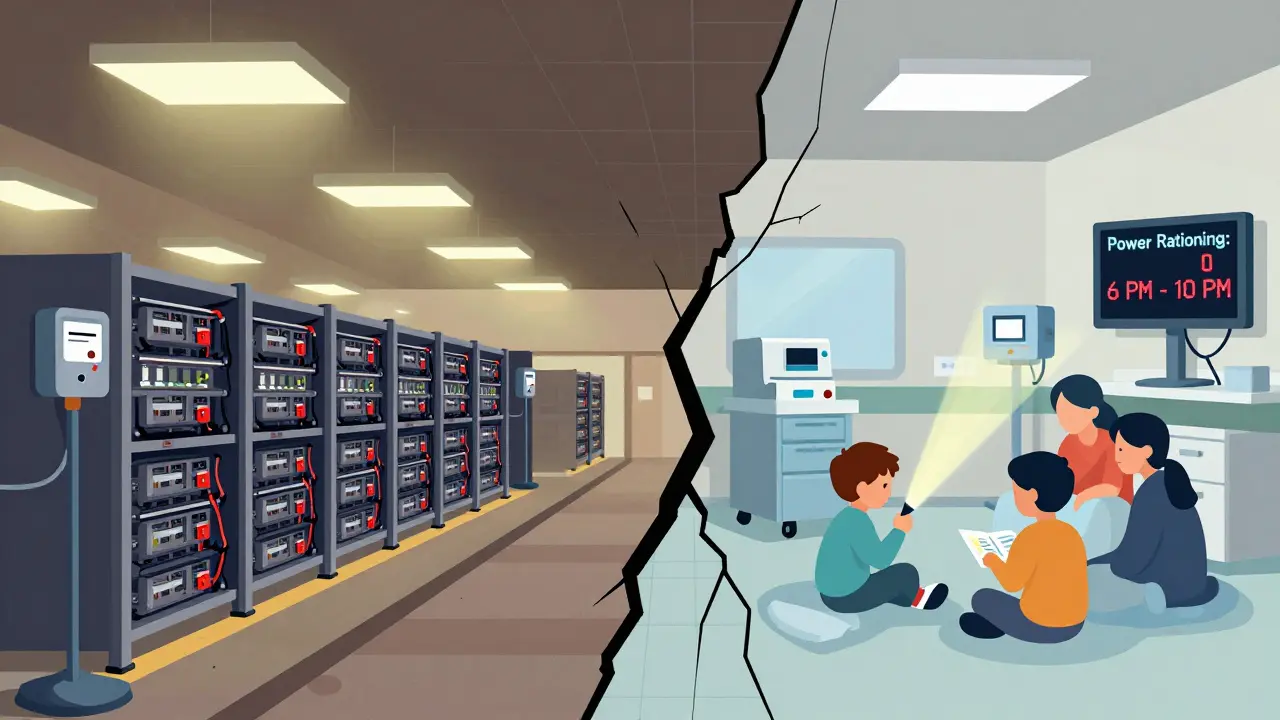
After China cracked down on crypto mining in 2021, Kazakhstan became the new hub. Miners moved in-hundreds of warehouses full of ASIC rigs, powered by cheap coal and hydroelectricity. By 2023, Kazakhstan was the world’s second-largest crypto mining country, behind only the U.S. Mining accounted for nearly 10% of the country’s total electricity consumption. In some regions, it was closer to 25%.At first, the government welcomed it. Mining brought foreign investment, tax revenue, and tech jobs. But by 2024, the cracks showed. Cities started rationing power. Schools shut down during winter because there wasn’t enough electricity for heating. Hospitals reported blackouts. The Ministry of Energy began receiving daily alerts about grid instability.
Then came the winter of 2024-2025. Temperatures plunged to -35°C. Demand for heating spiked. At the same time, wind turbines froze and solar panels lost efficiency. Coal plants, already running at maximum capacity, couldn’t ramp up fast enough. The grid buckled. For three days straight, major cities like Almaty and Nur-Sultan faced rolling blackouts. The public outcry was immediate.
The Ban That Wasn’t a Ban
Kazakhstan didn’t issue a headline-grabbing law saying “crypto mining is illegal.” Instead, it used regulatory pressure. In March 2025, the Ministry of Energy introduced a new rule: all mining operations using more than 5 MW of power must now obtain a special license. The application process requires proof of grid stability, environmental impact assessments, and proof of payment for all past electricity usage at triple the standard rate.Most miners couldn’t meet the requirements. Over 400 large-scale operations were shut down within six weeks. Smaller miners, under 5 MW, were allowed to continue-but only if they signed agreements to reduce consumption during peak hours (6 PM-10 PM). Those who didn’t comply had their power cut off immediately, with no appeals process.
The result? Crypto mining activity in Kazakhstan dropped by 58% in just four months. Mining hash rate fell from 160 EH/s to under 67 EH/s. Many operators relocated to Russia, Georgia, or even the U.S. But the ones who stayed? They’re now running on solar panels, battery backups, and strict power schedules.
What’s Left of the Grid
The government’s response didn’t stop at mining. It launched a $1.2 billion emergency grid modernization plan. The plan includes replacing 200 aging transformers, upgrading 1,500 km of transmission lines, and installing smart meters in every major city by 2027. KEGOC, the national grid operator, is also accelerating the North-South HVDC Line project-a high-voltage direct current line that will connect the energy-rich north with the industrial south, adding 2,000 MW of transmission capacity by 2029.Renewables are finally getting real attention. Three 1 GW wind farms are under construction, and solar capacity has doubled since 2023. But the real bottleneck isn’t generation-it’s distribution. The grid can’t handle sudden surges from solar or wind. Coal plants, which are slow to respond, still make up 60% of the energy mix. That means even with more renewables, the system remains rigid.
Small businesses and households still can’t afford rooftop solar. The government offers subsidies, but the paperwork takes months. By the time you get approval, the winter has already started. So most people keep using the grid-while it lasts.
Who Pays the Price?
The cost of the crisis is falling on ordinary people. Electricity tariffs rose 50% in April 2025. For a family in Karaganda, the monthly bill jumped from 28,000 KZT to over 42,000 KZT. That’s nearly 15% of the average monthly income. Pensioners are cutting back on heating. Students are studying by flashlight. Factory owners are running shifts at night, when power is cheaper-but even then, the grid flickers.Meanwhile, the mining companies that left didn’t just take their rigs. They took their profits. And they left behind broken transformers, overloaded substations, and a generation of engineers who now have to fix what was never meant to last.

Is This the End of Crypto Mining in Kazakhstan?
Not necessarily. But the era of unregulated, high-power mining is over. The country is shifting toward a model where energy use is controlled, monitored, and taxed. The government is now testing a blockchain-based energy tracking system that will record every kilowatt consumed by mining rigs in real time. If a miner exceeds its licensed limit-even by 1%-the system automatically cuts power.Some miners are adapting. A few have partnered with solar farms in the south, using excess daytime power to run their rigs. Others are moving to geothermal zones near Lake Balkhash, where heat from the earth can be converted into stable, low-cost electricity. But these are niche solutions. The majority of mining has left.
Kazakhstan’s story isn’t unique. It’s a warning. When a country’s infrastructure can’t keep up with technology, the technology gets cut off-not because it’s evil, but because the system can’t survive it.
What Comes Next?
The real challenge now is rebuilding. Kazakhstan has the wind, the sun, and the land. But it lacks the modern grid, the investment, and the political will to make it all work together. The government says it wants to generate 50% of its electricity from renewables by 2030. But without fixing the wires, the transformers, and the meters, that’s just a slogan.For now, the country is trying to walk a tightrope: reduce energy waste, support clean power, and keep the lights on-without letting crypto mining take another bite out of the grid. So far, it’s working. But it’s fragile. One harsh winter. One transformer failure. And it could all unravel again.
Why did Kazakhstan ban crypto mining?
Kazakhstan didn’t outright ban crypto mining, but it imposed strict new rules in early 2025 that effectively shut down most large-scale operations. Mining farms using more than 5 MW of power now need special licenses, proof of grid stability, and must pay triple the electricity rate for past usage. Most couldn’t comply, so they shut down or left the country. The move was a response to a collapsing grid, not a moral stance against crypto.
How much electricity did crypto mining use in Kazakhstan?
At its peak in 2023, crypto mining consumed around 1.2 gigawatts (GW) of electricity-roughly 10% of the country’s total usage. In some regions, it accounted for over 25% of local demand. That’s more than the entire annual output of a medium-sized coal plant running nonstop.
Are there still crypto miners in Kazakhstan?
Yes, but only small-scale operations under 5 MW are allowed, and they must follow strict power usage rules. Many now use solar power or operate only during off-peak hours. The hash rate has dropped by over 50% since early 2025, and most large mining farms have relocated.
What’s being done to fix Kazakhstan’s power grid?
The government launched a $1.2 billion modernization plan. This includes replacing 200 aging transformers, upgrading 1,500 km of transmission lines, and installing smart meters nationwide by 2027. The North-South HVDC Line, set to finish in 2029, will add 2,000 MW of transmission capacity. Three new 1 GW wind farms are also under construction.
Why can’t Kazakhstan just build more power plants?
Building new plants isn’t the problem-it’s delivering the power. The grid is too old and fragile to handle new generation. Even if you build a new wind farm, the wires can’t carry the electricity to where it’s needed. That’s why the focus is now on upgrading transmission lines and smart grid tech, not just adding more generation.
Is crypto mining banned in other countries for the same reason?
Yes. Countries like Iran, Venezuela, and parts of China have restricted mining during energy shortages. In 2023, El Salvador paused mining after a major blackout. The pattern is the same: when a grid can’t handle demand, mining is the first thing to get cut because it’s non-essential and uses power constantly.
24 Responses
The infrastructure decay in Kazakhstan is a textbook case of regulatory failure masked as economic opportunism. Crypto mining didn't cause the collapse-it exposed it. And yet, the government chose to punish the symptom rather than treat the disease. How is this any different from blaming a smoke alarm for a house fire?
Actually, this is a smart move. Instead of banning tech, they restructured incentives. Now miners have to be efficient or leave. That’s how you future-proof a grid. The real win? They’re using this crisis to upgrade transmission lines. That’s not punishment-it’s progress.
Oh please. They didn’t ‘restructure’ anything-they panicked. You think a 5MW limit is a solution? That’s like saying ‘you can only drink 5 sips of water per hour’ during a drought. And now they’re building wind farms? In a country where the wind doesn’t blow consistently? This is theater. Pure theater.
Let’s break this down statistically. The 17.42% technical loss rate isn’t just bad-it’s catastrophic. Most developed grids hover around 6-8%. Kazakhstan’s grid was operating at 2.5x the failure threshold. Mining consumed 1.2GW, yes, but that’s only 10% of total demand. The real issue? The grid’s inability to regulate load. Transformers from the 1970s can’t handle variable loads from renewables or crypto. The real problem isn’t mining-it’s the lack of smart grid infrastructure. And now they’re trying to fix it with a $1.2B plan that’s 15 years too late. The fact that they’re even considering blockchain-based metering shows they’re finally thinking in the 21st century. But it’s like installing a Tesla engine in a 1987 Lada. The parts don’t match. The software doesn’t talk to the hardware. And the drivers? Still using paper maps.
This is one of those moments where technology and infrastructure collide-and the infrastructure loses. But here’s the beautiful part: Kazakhstan didn’t lash out. They didn’t burn down the mining rigs. They didn’t ban crypto. They said, ‘We need to grow up.’ And they’re doing the hard, boring work-replacing transformers, upgrading lines, installing smart meters. That’s not sexy. No one’s making TikToks about it. But it’s the kind of quiet, stubborn, unglamorous progress that actually saves lives. When a hospital doesn’t lose power during a -35°C night? That’s the real win. The miners left? Fine. The grid survived? That’s the legacy.
Kazakhstan didn’t lose crypto mining-they gained a second chance. 🌞⚡ Imagine this: in 5 years, instead of mining rigs humming in warehouses, you’ve got solar farms powering homes AND charging batteries for miners during daylight. That’s the future. They’re turning a crisis into a clean energy pivot. And honestly? More countries should copy this. Not the ban-the transformation.
It’s ironic, isn’t it? The West preaches decentralization, then gets outraged when a developing nation prioritizes its own citizens over speculative digital assets. Kazakhstan didn’t ban mining. They simply stopped letting it strangle their power grid. And for that, they’re vilified. Meanwhile, the same people who condemn this move still buy Bitcoin mined in Texas using coal. Hypocrisy is a global industry.
YESSSS!! This is the kind of bold, pragmatic move we need more of! 🙌 Kazakhstan didn’t wait for the lights to go out forever-they acted. And now? They’re building a smarter grid. More wind. More sun. Less chaos. I’m so proud of them. This isn’t a ban-it’s a reboot! 💪⚡ #EnergyRevolution
they just didnt want to pay for electricity anymore thats all
I love how they didn’t go full authoritarian. They didn’t shut it all down. They said, ‘Here’s the rules: be efficient, be accountable, and don’t take more than your share.’ That’s leadership. And the fact that some miners are now using solar? That’s innovation born from necessity. It’s not perfect-but it’s moving forward. And that’s worth cheering for.
It’s fascinating how this mirrors the story of the internet itself. Early adopters flooded the network, overwhelmed the infrastructure, and eventually forced everyone to upgrade. Crypto mining was the internet’s wild west phase for energy grids. And now? Kazakhstan is building the broadband version. The miners who stayed? They’re the ones who learned to code in the new system. The rest? They’re still running on dial-up.
There’s a deeper truth here: technology doesn’t fail people. People fail to prepare for technology. Kazakhstan didn’t ban crypto. They outgrew the idea that energy could be infinite. That realization-that resources have limits-is the real revolution. Maybe the next great innovation won’t be a new blockchain. Maybe it’ll be a grid that respects the planet’s boundaries.
It’s wild to think that a country’s power grid is now the ultimate arbiter of what’s ‘ethical’ tech. Crypto miners didn’t do anything wrong. They just showed up with bigger appetites than the system could handle. And now, instead of demonizing them, Kazakhstan’s giving them a chance to adapt. That’s not a crackdown-it’s a curriculum. The miners who survive? They’ll be the most efficient in the world. The ones who left? They’ll be the ones who never learned to live within limits.
so like… the grid was basically a glitchy wifi and crypto miners were the 17 devices streaming 4k at once? yeah… they had to cut some people off. not evil. just… common sense. 😅
Wait-so they didn’t ban mining? They just made it harder? That’s not a policy-it’s a loophole! And now they’re building wind farms? In a country with dust storms and -35°C winters? That’s like installing solar panels in a hurricane zone! And who’s paying for this? The people who already can’t afford heating! This isn’t progress-it’s a bait-and-switch with a $1.2 billion price tag and zero transparency!
so the grid was like a tired old laptop and crypto was trying to run a game on it… and it just… crashed. now they’re trying to fix it with a new battery and a fan. hope it works. fingers crossed 🤞
Let’s be real-this is neocolonial energy extraction disguised as ‘economic development.’ The mining rigs were owned by foreign entities. The profits flowed out. The transformers blew up. The locals paid the price. Now Kazakhstan is asserting sovereignty over its own grid. That’s not a ban. That’s decolonization. And if you’re mad about it, ask why your crypto was mined on someone else’s crumbling infrastructure in the first place.
While the regulatory approach may appear stringent, it reflects a mature understanding of resource allocation. The prioritization of residential and institutional energy needs over speculative industrial activity is not only prudent-it is ethically imperative. The transition to renewables, coupled with grid modernization, demonstrates long-term strategic vision.
How predictable. A nation with no engineering capacity, no fiscal discipline, and no institutional memory. They welcomed mining like a starving man welcomes a bomb. Now they blame the bomb for the explosion. And yet, they expect global admiration? This is not governance. It is the arithmetic of failure.
Oh wow, look who’s suddenly the environmentalist. You guys let crypto drain your grid for years, then act shocked when the lights go out? And now you’re gonna ‘fix’ it with a $1.2 billion plan? That’s just the cost of your own greed. You didn’t ban mining because you cared about people-you banned it because you couldn’t afford to keep paying for it. Don’t pretend this is noble.
This is a textbook case of infrastructure catching up with innovation. Kazakhstan didn’t stop progress-they forced it to grow up. The miners who left? They were operating in a regulatory vacuum. The ones who stayed? They’re now part of a smarter, more sustainable energy ecosystem. This isn’t the end of crypto mining-it’s the beginning of responsible mining.
1.2GW? That’s 1.2 gigawatts. Not 1.2 megawatts. Not 1.2 kilowatts. GIGA. And they’re blaming miners? The real crime is the government letting 70-90% of the grid be over 50 years old. That’s not negligence-it’s criminal. And now they’re charging triple rates? That’s not regulation. That’s extortion disguised as reform.
Interesting point about the triple rates-but remember, those weren’t fines. They were back payments for power already consumed. Miners had been underpaying for years because the grid couldn’t track usage. Now they’re paying for what they used. That’s fair. And the real win? The grid’s now getting modernized because of this. That’s a win for every household in Kazakhstan.
And that’s the quiet truth: the most ethical technology isn’t the one that’s decentralized or anonymous. It’s the one that doesn’t break the system it depends on. Kazakhstan didn’t choose between people and crypto. They chose to make sure the people didn’t have to pay for crypto’s recklessness.