
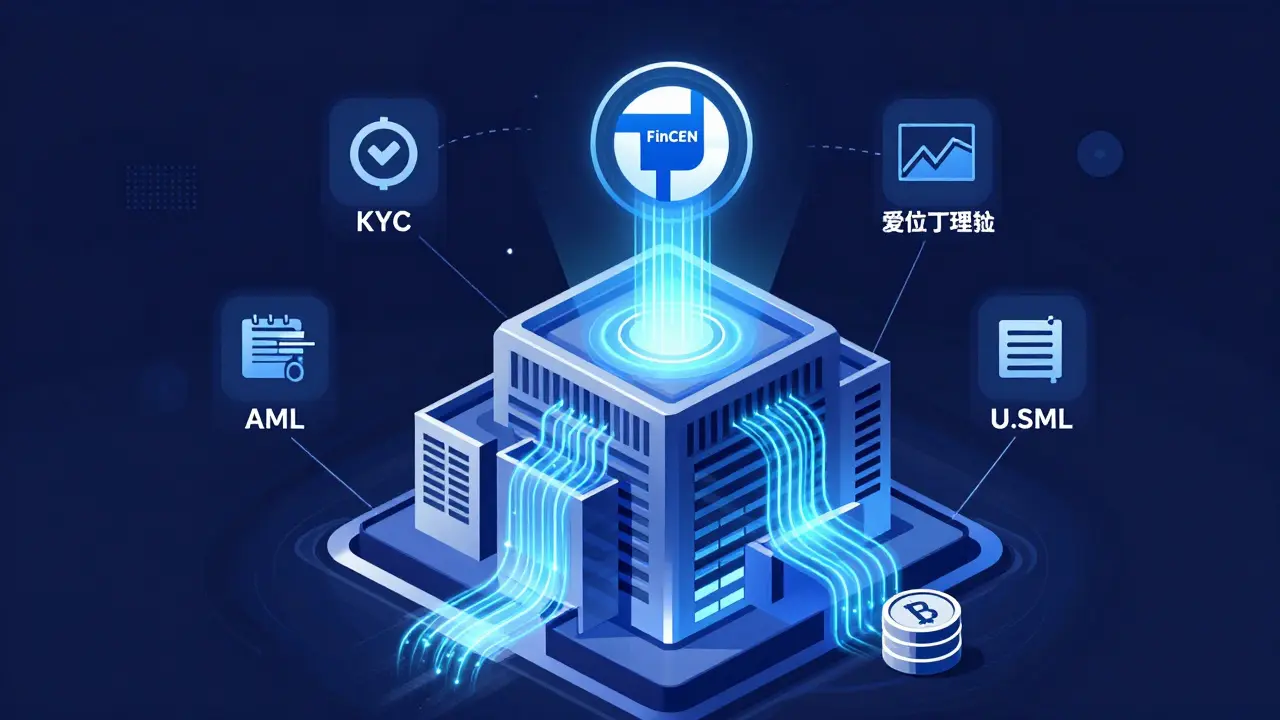
If you're running a crypto exchange in the U.S., you're not just building a platform-you're running a financial institution. And that means FinCEN registration isn't optional. It’s the first and most critical step before you even think about onboarding users. FinCEN, the Financial Crimes Enforcement Network under the U.S. Treasury, doesn’t issue licenses. But if you handle crypto-to-fiat or crypto-to-crypto transactions, you’re legally required to register as a Money Services Business (MSB). Skip this, and you’re not just risking fines-you’re risking jail.
Who Exactly Needs to Register?
Not every crypto business needs to register. But if your platform does any of these, you’re in FinCEN’s crosshairs:- Buying or selling cryptocurrency for fiat currency (USD, EUR, etc.)
- Exchanging one cryptocurrency for another
- Holding customer funds in custodial wallets
- Processing payments using crypto as a medium
That means centralized exchanges like Coinbase or Kraken? They’re registered. Decentralized protocols like Uniswap? Not directly. But if you’re building a platform where users trade directly through your interface-especially if you hold keys or control funds-you’re likely an MSB. Even if you don’t take fees, if you move value on behalf of others, FinCEN considers you a money transmitter.
And here’s the catch: it doesn’t matter if you’re based in Wyoming or California. If U.S. users trade on your platform, you’re subject to U.S. law. Foreign exchanges that serve American customers have been shut down by FinCEN. The agency doesn’t care where your servers are-it cares where your users are.
The Registration Process: It’s Not a Form, It’s a System
FinCEN registration isn’t like applying for a business license. You don’t submit a form and get a certificate. You build a compliance infrastructure.To register, you must:
- File a FinCEN Form 114 (Registration of Money Services Business) through the BSA E-Filing System
- Provide detailed business information: ownership structure, locations, services offered
- Designate a compliance officer
- Implement a written AML/CFT program
- Establish KYC procedures to verify customer identities
- Set up transaction monitoring systems
- File Suspicious Activity Reports (SARs) when needed
Once submitted, FinCEN doesn’t approve or deny you. They just acknowledge receipt. But here’s the real test: if you get audited and your AML program is weak, your registration is revoked-and you’re on the hook for penalties. The registration is only as good as your compliance.
It’s Not Just Federal-State Licenses Are a Nightmare
FinCEN registration is the floor, not the ceiling. Each state has its own rules. New York? You need a BitLicense. California? You need a Money Transmitter License (MTL). Texas? Another MTL. Florida? Another one.You need a separate license in every state where you have customers. That’s 50 licenses. Some states charge $5,000 to apply. Others require $1 million in surety bonds. The process can take 6-18 months per state. Most startups can’t afford this. That’s why many choose to partner with licensed entities like Coincover or Strike, who act as their compliance backbone.
There’s no federal shortcut. Even if you’re registered with FinCEN, you’re still breaking the law if you operate in New York without a BitLicense. The SEC and CFTC might go after you for securities or commodities violations, but FinCEN and state regulators will shut you down for operating without a license.
What Happens If You Don’t Register?
The penalties are brutal. In 2023, a crypto exchange based in Texas was fined $50 million for failing to register as an MSB. The CEO was criminally charged and faced up to five years in prison. Another exchange in Florida had its bank accounts frozen because its FinCEN registration lapsed. No bank will work with you if you’re not registered.FinCEN doesn’t wait for complaints. They monitor blockchain data, track IP addresses, and analyze transaction patterns. If you’re processing $10 million in crypto trades a month and you’re not registered, they’ll find you. And when they do, they don’t send a warning letter-they send a federal subpoena.
Compliance Isn’t a One-Time Task
You can’t register once and forget it. FinCEN requires ongoing compliance:- Update your registration every two years
- File SARs for any suspicious activity (even small, unusual transfers)
- Keep records of all transactions for five years
- Train staff annually on AML procedures
- Conduct internal audits
- Update your AML program when regulations change
That’s not just a cost-it’s a full-time job. Most exchanges hire compliance officers who earn $120,000-$200,000 a year. They also spend $50,000-$200,000 annually on KYC software like Sumsub or Jumio, transaction monitoring tools like Chainalysis or Elliptic, and legal counsel.
What’s Changing in 2026?
FinCEN’s 2024 proposed rule would expand requirements even further. If it passes, you’ll need to verify identities for transactions involving unhosted wallets-like personal MetaMask wallets-if the amount exceeds $3,000. That means even peer-to-peer trades through your platform could trigger reporting.They’re also cracking down on mixers and tumblers. In 2023, FinCEN designated several mixing services as money laundering threats. If your exchange integrates with a mixer-even indirectly-you’re at risk of being flagged.
There’s talk of a federal “BitLicense” that could replace state-by-state rules. But no bill has passed. Until then, you’re stuck with the patchwork.
Who’s Already Doing This Right?
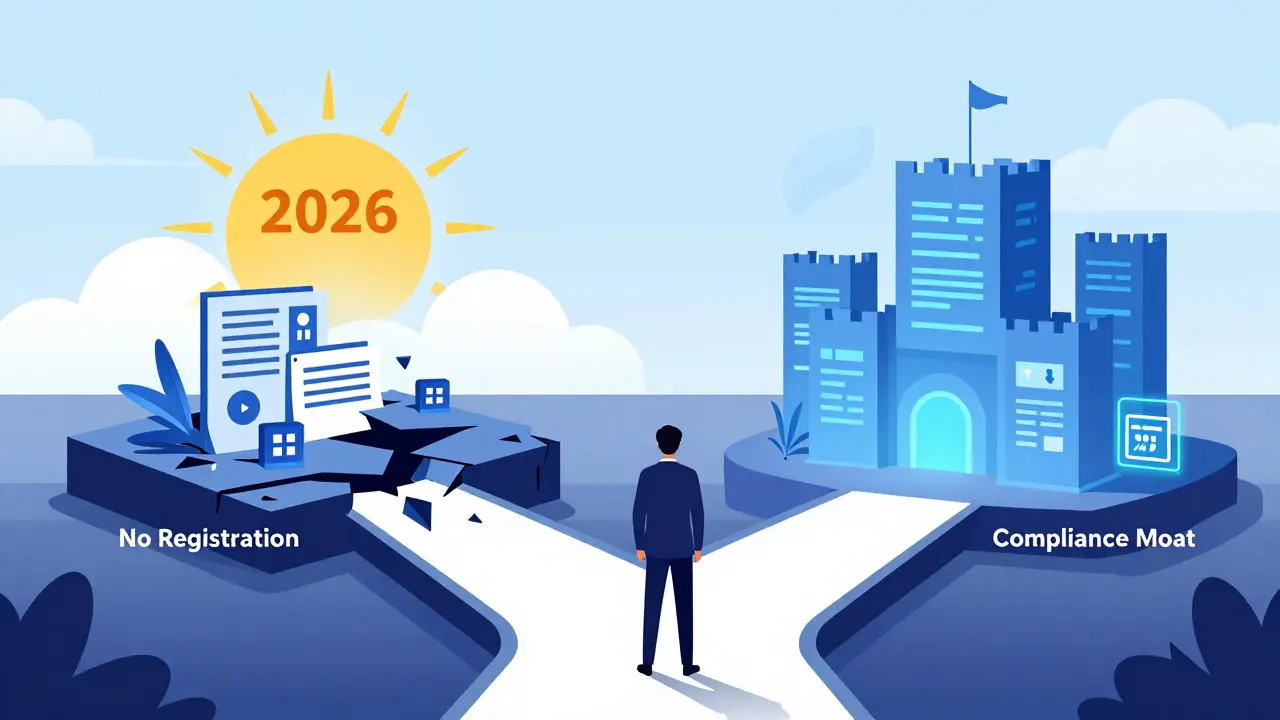
Coinbase, Kraken, and Gemini are all registered with FinCEN and hold MTLs in all applicable states. They spend millions on compliance-but they’ve turned it into a competitive edge. Customers trust them. Banks work with them. They can list new tokens without fear of regulatory backlash.Smaller exchanges that skip compliance? Most are gone within two years. Either they get shut down by banks, or they’re forced to move offshore and lose U.S. customers.
What Should You Do?
If you’re building a crypto exchange:- Don’t launch until you’re registered with FinCEN
- Partner with a licensed MSB if you can’t afford state licenses
- Invest in KYC and AML software from day one
- Hire a compliance officer with crypto experience
- Keep detailed logs of every transaction and user verification
- Stay updated-FinCEN changes its guidance every 6-12 months
There’s no shortcut. The crypto industry has grown up. The wild west days are over. If you want to operate legally in the U.S., you need to act like a bank-even if you’re just trading Bitcoin.
Do I need FinCEN registration if I only trade crypto-to-crypto?
Yes. If your platform facilitates the exchange of one cryptocurrency for another and you’re acting as an intermediary-holding user funds or processing trades-you’re a money transmitter under FinCEN rules. Even if you don’t touch fiat, you’re still required to register as an MSB.
How much does FinCEN registration cost?
The registration fee itself is $400, paid every two years. But the real cost is compliance: KYC software, transaction monitoring tools, legal fees, compliance staff, and state licenses. Total annual costs for a small exchange typically range from $150,000 to $500,000.
Can I register as an individual or do I need a company?
You must register as a business entity-LLC, corporation, or partnership. FinCEN doesn’t allow individual registrations. You need a legal business structure with a registered agent, EIN, and operating agreement.
What if I’m based outside the U.S. but serve American users?
You still need to register. FinCEN has jurisdiction over any business that serves U.S. customers, regardless of location. Several offshore exchanges have been blocked by U.S. banks and payment processors for failing to comply. If you want U.S. users, you play by U.S. rules.
Do decentralized exchanges (DEXs) need FinCEN registration?
Pure DEXs that don’t hold user funds or control transactions-like Uniswap-are generally not required to register. But if your platform offers order matching, custodial wallets, or fiat on-ramps, you’re likely considered a money transmitter and must register.
What’s the difference between FinCEN registration and a BitLicense?
FinCEN registration is a federal AML requirement for money transmitters. A BitLicense is a New York State-specific license that governs how you operate as a virtual currency business. You need both if you serve New York customers. FinCEN is about preventing crime; BitLicense is about consumer protection and business conduct.
How often does FinCEN update its guidance?
FinCEN releases new guidance every 6 to 12 months. In 2023, they targeted mixing services. In 2024, they proposed rules for unhosted wallets. Compliance programs must be reviewed and updated regularly-otherwise, you’re out of date the moment new rules drop.
25 Responses
Bro, I just launched my DEX last week and didn't think twice about FinCEN. Now my bank account's frozen and I'm getting DMs from guys in suits. Guess I'm the dumbass who thought crypto was lawless.
Turns out the wild west ended when the IRS showed up with a subpoena.
Let me break this down for the noobs: FinCEN registration isn't paperwork-it's infrastructure. You need AML/KYC like you need oxygen. Chainalysis + Sumsub + a compliance officer = your new tech stack.
Forget DeFi hype. If you're touching U.S. users, your 'coinflip app' is now a bank. And banks don't fly by the seat of their pants.
💰 Pro tip: Partner with Strike or Coincover if you're bootstrapping. Pay the fee. Save your freedom.
Hey everyone-just wanted to say you're not alone if this feels overwhelming. I helped a friend launch a small exchange last year and we spent 8 months just on compliance before going live.
It’s brutal, but worth it. We got banked. We got users. We got sleep at night.
Don’t let the fear paralyze you. Take one step: file the Form 114. Then hire a compliance consultant. Then build your AML program. Baby steps.
You got this. 💪
It is a matter of profound legal significance that any entity facilitating monetary transactions, regardless of technological medium, must adhere to the regulatory framework established by the United States Department of the Treasury. The jurisdictional reach of FinCEN is unambiguous under the Bank Secrecy Act. Non-compliance constitutes a criminal offense under Title 31, United States Code, Section 5330.
Furthermore, the extraterritorial application of U.S. law is well-established in precedent, particularly in matters concerning financial intermediation. One cannot evade responsibility by hosting servers abroad while targeting American clientele.
Compliance is not optional. It is the bedrock of legitimate financial innovation.
THIS IS A SCAM. THEY’RE JUST TRYING TO CONTROL US. WHY DO WE NEED TO GIVE THEM OUR IDENTITY FOR EVERY TRANSACTION?!
THEY WANT TO TRACK EVERY COIN. THEY WANT TO CENSOR BITCOIN.
THEY’RE THE REAL CRIMINALS. I’M NOT REGISTERING. I’M MOVING TO EL SALVADOR.
WHY CAN’T WE JUST TRADE IN PEER-TO-PEER? WHY DO THEY HATE FREEDOM?!
THEY’RE LYING ABOUT ‘MONEY LAUNDERING’-THEY JUST WANT TO TAX US MORE!
YOU’RE ALL SHEEP. I’M OPENING A MIXER. WATCH ME.
I keep thinking about how we’ve turned financial trust into a compliance checklist.
Once, you trusted a guy with your money because he was honest. Now you trust a system because it’s audited.
Is this progress? Or just a different kind of cage?
Maybe the real innovation isn’t blockchain-it’s learning how to be human in a world that demands you prove you’re not a criminal before you can even buy coffee with crypto.
It’s sad. But also… kind of beautiful, in a dystopian way.
Everyone’s missing the point. FinCEN registration is the *least* of your problems. The real issue is that 90% of these ‘exchanges’ don’t even have a legal entity. No EIN. No operating agreement. Just a PayPal link and a Discord server.
And they wonder why they get shut down.
Also, ‘unhosted wallets’ rule? That’s a myth. If you’re routing transactions through your UI and collecting fees-even 0.1%-you’re a money transmitter. Period.
Stop romanticizing decentralization. If you’re profiting from it, you’re regulated.
Just got my FinCEN registration approved last week 🎉
Spent $300k on compliance but now I can actually bank with Chase. No more wire transfers through crypto mixers. No more ‘we’re not a bank’ excuses.
Biggest win? My users trust me. That’s worth more than any airdrop.
✅ Form 114 done
✅ AML program live
✅ KYC on Sumsub
✅ Compliance officer on payroll
✅ Bank account unlocked
Don’t sleep on this. It’s the new onboarding flow.
There's something quietly revolutionary about turning compliance into a competitive advantage.
Most people see regulations as a wall. But the ones who build bridges through them? They don't just survive-they become the standard.
It's not about fear. It's about integrity.
And maybe, just maybe, that's the real crypto ethos we lost along the way.
I used to think compliance was boring. Then I watched a friend get raided by federal agents because they skipped the MSB registration.
Now I look at every new crypto project and think: ‘Do they have a compliance officer?’
That’s the new red flag. Not a rug pull. Not a token dump. A lack of paperwork.
We’re not in the wild west anymore. We’re in the courthouse. And I’m here for it.
Okay so let me get this straight. If I build a platform where users swap ETH for BTC and I don’t take a fee, but I host the frontend and handle the routing, I’m still a money transmitter? Even if I’m not touching the keys? Even if the smart contract does the swap? But if I use a DEX aggregator like 1inch and just link to it, I’m fine? But if I have a ‘buy crypto’ button that sends users to a third-party onramp, I’m still on the hook? And if I’m based in Texas but have a single user in New York, I need a BitLicense? And if I don’t file SARs on a $1,200 transfer from a wallet that’s been flagged for past mixers, I’m at risk? And if I update my AML program every 18 months instead of every 12, I’m non-compliant? And if I don’t train my support team on how to spot structuring patterns, I’m liable? And if I use a cloud server in Frankfurt but my users are all in Florida, I’m still subject to U.S. law? And if I’m a solo founder with no legal team, I’m screwed? And if I don’t have a surety bond, I can’t get a state license? And if I miss the two-year renewal window by one day, my registration is revoked retroactively? And if I’m a non-U.S. citizen but have a U.S. phone number, I’m still required to register? And if I’m a developer and not the CEO, I’m still criminally liable? And if I didn’t know any of this, ignorance isn’t a defense? And if I’m just trying to build something cool, I’m now a financial institution? And if I want to make a living doing this, I need to spend more on compliance than on development? And if I’m not doing all of this, I’m not just breaking the law-I’m endangering my users? And if I’m not doing this, I’m not a startup-I’m a liability? And if I’m not doing this, I’m not a pioneer-I’m a target? And if I’m not doing this, I’m not innovating-I’m gambling? And if I’m not doing this, I’m not building the future-I’m just waiting for the Feds to knock on my door?
FINCEN IS A COVERT U.S. IMPERIAL TOOL. THEY WANT TO MONITOR EVERY BITCOIN TRANSACTION TO CONTROL THE WORLD.
THEY’RE WORKING WITH THE FED TO KILL CRYPTO.
WHY DO YOU THINK THEY’RE PUSHING ‘UNHOSTED WALLET’ RULES? SO THEY CAN TRACK YOUR PHONE LOCATION WHEN YOU SEND ETH.
THEY’RE SCARED. BECAUSE WE’RE WINNING.
STOP REGISTERING. START MIXING.
THEY CAN’T CENSOR BLOCKCHAIN.
THEY CAN ONLY CENSOR YOU.
IF YOU REGISTER, YOU’RE A TRAITOR.
People think this is about money laundering. It’s not. It’s about control. FinCEN doesn’t care if you’re clean-they care if you’re traceable.
They want you to be a glass box. Every transaction. Every IP. Every KYC doc.
And if you don’t comply? You’re not just illegal-you’re a threat to their narrative.
So yes, register. But don’t trust them. They’ll use your data to shut you down later.
Keep backups. Use privacy tools. Stay smart.
FinCEN? More like FinCEN-sense. Like who even cares anymore?
Everyone’s just doing it offshore anyway.
Why bother? It’s 2026. The feds are behind the curve.
Just use a VPN and call it a day. 😴
just registered
took 3 months
cost more than my laptop
but now i can sleep
no more nightmares about bank freezes
also my users are happier
they dont have to worry
its worth it
trust me
Man I was skeptical too. Thought this was just bureaucracy.
Then my payment processor cut me off because I wasn’t registered.
Lost $80k in revenue in a week.
Now I’ve got a compliance team and I’m not looking back.
Don’t be like me. Do it early.
It’s not sexy. But it’s safe.
For anyone thinking ‘I’ll just skip state licenses’-you’re playing with fire.
NY BitLicense? $5k application + $1M bond. CA MTL? $5k + 6-month wait.
Most small teams just partner with a licensed entity. It’s cheaper than getting sued.
Also-don’t use a lawyer who doesn’t know crypto. They’ll charge you $500/hour and give you a 2008-era compliance doc.
Find someone who’s handled 5+ MSB registrations. Ask for case studies.
It’s worth every penny.
Just wanted to say-this post is a gift.
I’ve been trying to launch for 18 months and kept putting off compliance because it felt ‘too corporate.’
Now I’m talking to a compliance consultant tomorrow.
Thanks for the kick in the pants. 💗
Also-yes, you can do this. I’m doing it. You can too.
Okay, so I’ve been doing this for 7 years-FINCEN IS A JOKE. THEY’RE JUST TRYING TO KEEP SMALL PLAYERS OUT.
They let Coinbase get away with everything because they’re too big to touch.
But if you’re a solo dev? They’ll crush you.
It’s not about compliance-it’s about gatekeeping.
And the worst part? The people who complain about it? They’re the ones who actually follow the rules.
So keep registering. Keep paying. Keep getting screwed.
Meanwhile, the real winners? They’re in Singapore. And they’re laughing.
From the UK-this is the most accurate breakdown I’ve seen.
Most of us here think the US is overregulating. But honestly? If you want to play in the big leagues, you need this.
My client in Austin just got banked after 14 months of paperwork.
Now they’re scaling to 50k users.
Compliance isn’t the enemy. Laziness is.
And if you’re still waiting for ‘the perfect time’? There isn’t one.
Start today. Or don’t start at all.
you guys are all clueless. fincen doesn’t care if you register. they care if you get caught.
most people never get audited.
so why spend $500k when you can just fly under the radar?
use offshore processors. use non-custodial wallets. lie on your form.
the feds don’t have the manpower to chase every small exchange.
be smart. not obedient.
they’re not your friend.
I’ve seen too many founders get arrested for this.
It’s not a risk. It’s a guarantee.
If you’re processing crypto for Americans, you’re already on their radar.
They’re not waiting for you to mess up.
They’re watching you now.
Register. Or shut it down.
There’s no middle ground.
It is morally indefensible to operate a financial intermediary without adherence to the foundational principles of anti-money laundering and know-your-customer protocols. The very notion that one may circumvent legal obligations under the guise of decentralization is not only legally unsound, but ethically bankrupt.
Those who choose to ignore these requirements are not innovators-they are enablers of criminal enterprise.
Compliance is not a burden. It is a moral imperative.
As someone from India who built a crypto on-ramp for U.S. users, I can confirm: this is real.
Our bank in Mumbai froze our account because our U.S. users triggered AML flags.
Turns out, even if you’re not in the U.S., your users are.
We spent 9 months getting registered.
Now we’re live.
It’s hard. But it’s possible.
Don’t give up. Just take it step by step.
Someone above said ‘just partner with Strike’-I did. It cost me 30% of my revenue.
But now I’m banked and I don’t lose sleep.
Worth every penny.
Also-don’t try to do this yourself unless you’re a lawyer with a crypto background.
Just hire someone.