
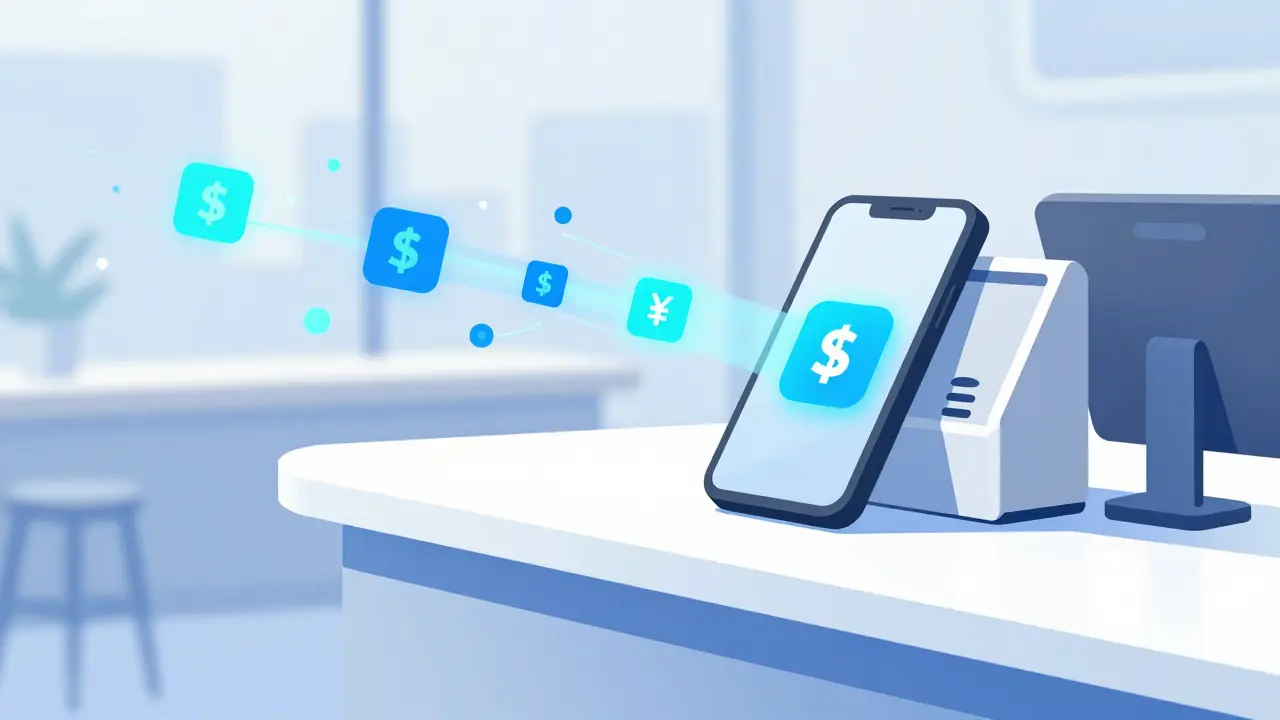
Imagine buying a coffee with Bitcoin. You don't wait ten minutes for a block confirmation. You don't pay $5 in gas fees. The transaction happens instantly, costs a fraction of a cent, and feels just like tapping your phone at a register. This isn't sci-fi; it's the promise of state channels. While headlines often chase the latest meme coin or centralized exchange drama, the real revolution in blockchain scalability is happening quietly off-chain.
State channels are not just a niche feature for crypto enthusiasts. They represent a fundamental shift in how we think about digital value transfer. By moving high-frequency interactions off the main blockchain while keeping security guarantees on-chain, state channels solve the 'blockchain trilemma'-balancing security, decentralization, and scalability-in ways that traditional Layer 2 rollups cannot. As we move through 2026, understanding where this technology is heading is crucial for developers, investors, and anyone interested in the future of decentralized finance.
What Are State Channels? The Core Concept
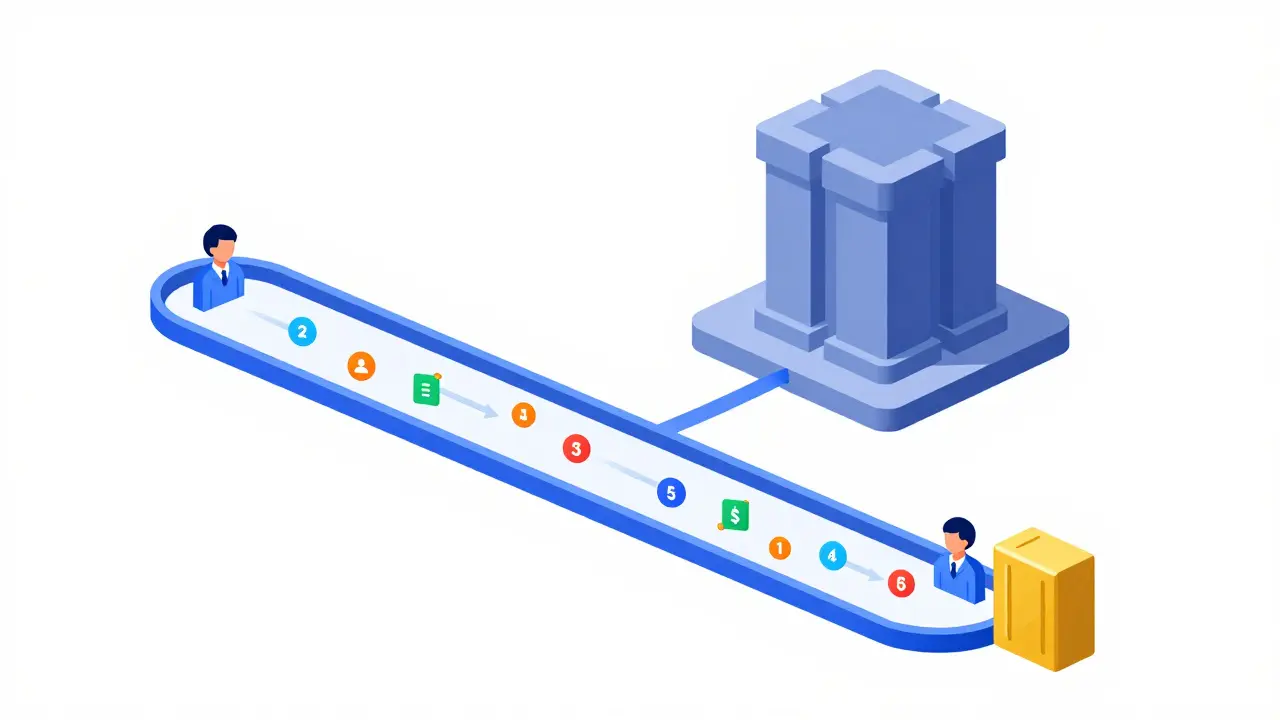
To understand the future, we need to grasp the present. A state channel is essentially a private tunnel between two or more parties. Instead of broadcasting every single micro-transaction to the entire network, participants lock funds in a smart contract on the main chain (like Bitcoin or Ethereum). They then exchange signed updates off-chain, changing the balance distribution as they see fit. Only the final state-the end result after thousands of transactions-is recorded on the public ledger.
This model drastically reduces congestion. If you play a game online, you don't save your progress to the server after every keystroke. You play for an hour, then save once. State channels work similarly. This allows for millions of transactions per second (TPS) theoretically, limited only by the computational power of the devices involved, not the blockchain itself.
The Current Landscape: Where We Stand in 2026
As of mid-2026, state channels have matured from experimental protocols to critical infrastructure. The Lightning Network alone holds over 5,300 BTC in capacity, facilitating hundreds of millions in daily volume. But it’s not just Bitcoin. Ethereum’s Raiden Network and other platforms like Aeternity have adapted these concepts for smart contract-heavy environments.
However, adoption hasn't been uniform. Data from Q2 2023 showed Lightning processing over $200 million in cumulative volume with average fees under $0.001, compared to Ethereum mainnet fees that often exceeded $1.50 during peak times. Today, those gaps remain, but the user experience has improved significantly. Major payment processors like Bitrefill now handle $500 million annually via Lightning, reporting 99.2% uptime. Yet, challenges persist. Liquidity management remains a headache for users, with surveys indicating that over 60% of retail users still encounter failed payments due to insufficient route liquidity.
Why State Channels Beat Rollups in Specific Scenarios
You might wonder why we need state channels when optimistic rollups (like Optimism) and zero-knowledge rollups (like StarkNet) exist. The answer lies in use cases. Rollups are excellent for general-purpose scaling-they batch transactions and post proofs to the main chain. But they introduce latency. Even ZK-rollups require time to generate proofs.
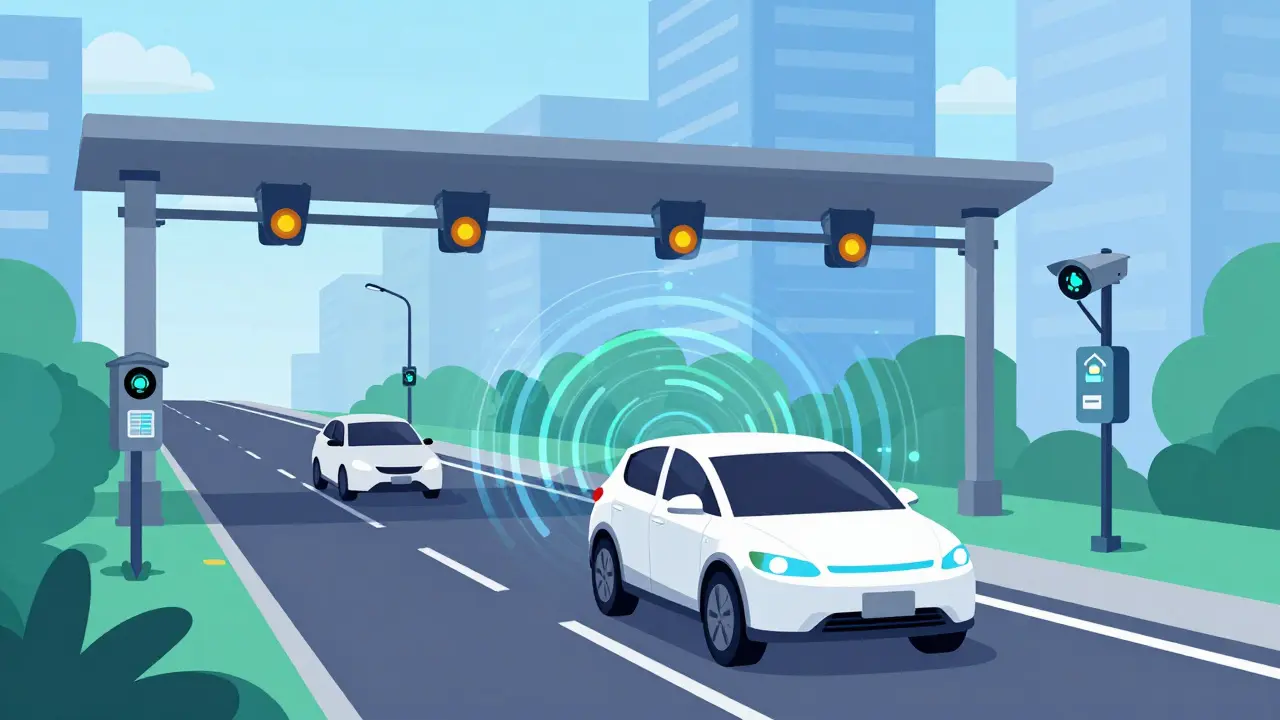
State channels offer instant finality. For micropayments, gaming, and IoT devices, milliseconds matter. Consider an autonomous vehicle paying a toll booth every second. A rollup might take minutes to finalize. A state channel settles instantly. Furthermore, state channels consume far less computational resources. They don't require complex cryptographic proof generation for every batch. According to ConsenSys’s 2023 analysis, state channels excel in high-frequency, low-value interactions, capturing 18% of Layer 2 transaction volume despite being older technology than many rollups.
| Solution Type | Finality Speed | Throughput (TPS) | Best Use Case |
|---|---|---|---|
| State Channels | Instant | Millions (off-chain) | Micropayments, Gaming, IoT |
| Optimistic Rollups | 1-7 Days (challenge period) | 2,000-4,000 | General DeFi, NFTs |
| ZK-Rollups | Minutes to Hours | 9,000+ | High-security settlements |
Key Innovations Driving the Future
The next evolution of state channels isn't about basic functionality-it's about solving the friction points. Three major innovations are reshaping the landscape:
- Channel Splicing: Traditionally, if you wanted to add more funds to a channel, you had to close it and open a new one. Splicing allows dynamic liquidity adjustments without closure. Lightning Network v2 aims to implement this, reducing capital inefficiency. Currently, users must lock 100% of their intended spend as collateral. Splicing could reduce this requirement, freeing up locked capital.
- Multi-Path Payments (MPP): Routing payments across a network of channels is complex. If one path lacks liquidity, the payment fails. MPP splits a single payment into multiple smaller streams across different routes. Recent upgrades aim to boost success rates from 68% to over 95%, making routing nearly invisible to the user.
- Watchtower-as-a-Service: Security in state channels relies on participants staying online to enforce states. If a counterparty goes offline and tries to cheat, you need a 'watchtower' to monitor and punish them. New economic models propose professional watchtower services, ensuring security even if individual nodes go offline, addressing a major reliability concern.
Enterprise Adoption: Beyond Crypto
While retail users buy coffee, enterprises are using state channels for serious business. Telecommunications companies like Telefónica use them for real-time billing, handling 500,000 micropayments daily. Energy grids utilize state channels for peer-to-peer energy trading, settling kilowatt-hour exchanges monthly without congesting public ledgers.
In gaming, platforms like Gods Unchained report 40% higher player retention when using state channels for in-game asset transfers. The speed matches traditional web2 experiences, removing the 'crypto friction' that often drives gamers away. However, issues like 'rage quitting'-where players disconnect before settlement-affect about 7.3% of sessions, highlighting the need for better dispute resolution mechanisms.
Challenges That Remain
Despite the progress, state channels aren't a silver bullet. Capital efficiency remains a hurdle. Dr. Georgios Konstantopoulos of Paradigm notes that channels still require 3-5x more locked value than equivalent rollup solutions for similar throughput. This makes them less attractive for large-scale financial settlements where liquidity is scarce.
User experience is another barrier. Managing channels requires technical knowledge. Developers report needing 3-6 months of specialized training to build robust state channel applications. While tools like the Lightning Development Kit (LDK) have reduced setup time from 40 hours to 8, the complexity persists. Regulatory uncertainty also looms. The U.S. SEC’s guidance suggests potential securities regulation risks for certain tokenized assets moved through channels, though Europe’s MiCA framework offers clearer exemptions for non-financial transactions.
Looking Ahead: 2026 and Beyond
The future of state channels lies in specialization. They won't replace rollups for general DeFi, but they will dominate vertical-specific applications. Expect wider adoption in IoT, where billions of devices need to transact autonomously. Quantum-resistant cryptography is already in development, with MIT researchers proposing lattice-based signatures to secure channels against future quantum threats, targeting implementation by 2027.
As interoperability improves, we’ll see cross-chain state channels allowing seamless value transfer between Bitcoin, Ethereum, and other networks without wrapping tokens. This composability, combined with AI-driven liquidity providers, could finally solve the discovery problem, making state channels as easy to use as sending an email.
Are state channels safer than Layer 2 rollups?
State channels inherit the security of the underlying blockchain (Bitcoin or Ethereum), making them highly secure against censorship and double-spending. However, they rely on participants staying online to enforce states. If a user goes offline, they risk losing funds if the counterparty cheats. Rollups, especially ZK-rollups, offer trustless security where the protocol enforces rules automatically, regardless of user activity. So, rollups are safer for passive holders, while state channels are safer for active, high-frequency interactors who can monitor their channels.
Can I use state channels for large transactions?
Technically, yes, but it’s inefficient. State channels require locking collateral equal to the maximum possible debt. For large sums, this ties up significant capital. Rollups or direct on-chain transactions are better suited for large, infrequent transfers because they don’t require continuous liquidity locks. State channels shine in high-volume, low-value scenarios like streaming payments or gaming.
What is 'channel splicing' and why does it matter?
Channel splicing allows users to add or remove liquidity from an existing state channel without closing it. Previously, adding funds required closing the old channel and opening a new one, which incurred on-chain fees and downtime. Splicing makes channels more flexible and capital-efficient, encouraging longer-term usage and reducing the friction of managing liquidity.
How do state channels compare to sidechains?
Sidechains are separate blockchains with their own security models and consensus mechanisms. State channels are not independent chains; they are off-chain agreements secured by the main chain. Sidechains offer greater flexibility for custom logic but sacrifice some security if their validators fail. State channels maintain full main-chain security but are limited to predefined interaction patterns between specific parties.
Will state channels replace credit cards for everyday purchases?
They have the potential to, particularly in regions with high banking fees or unstable currencies. With near-zero fees and instant settlement, state channels offer a superior cost structure. However, widespread adoption depends on solving user experience hurdles like wallet management and liquidity discovery. Until integrating a state channel wallet is as easy as tapping a card, credit cards will remain dominant for mass retail.