
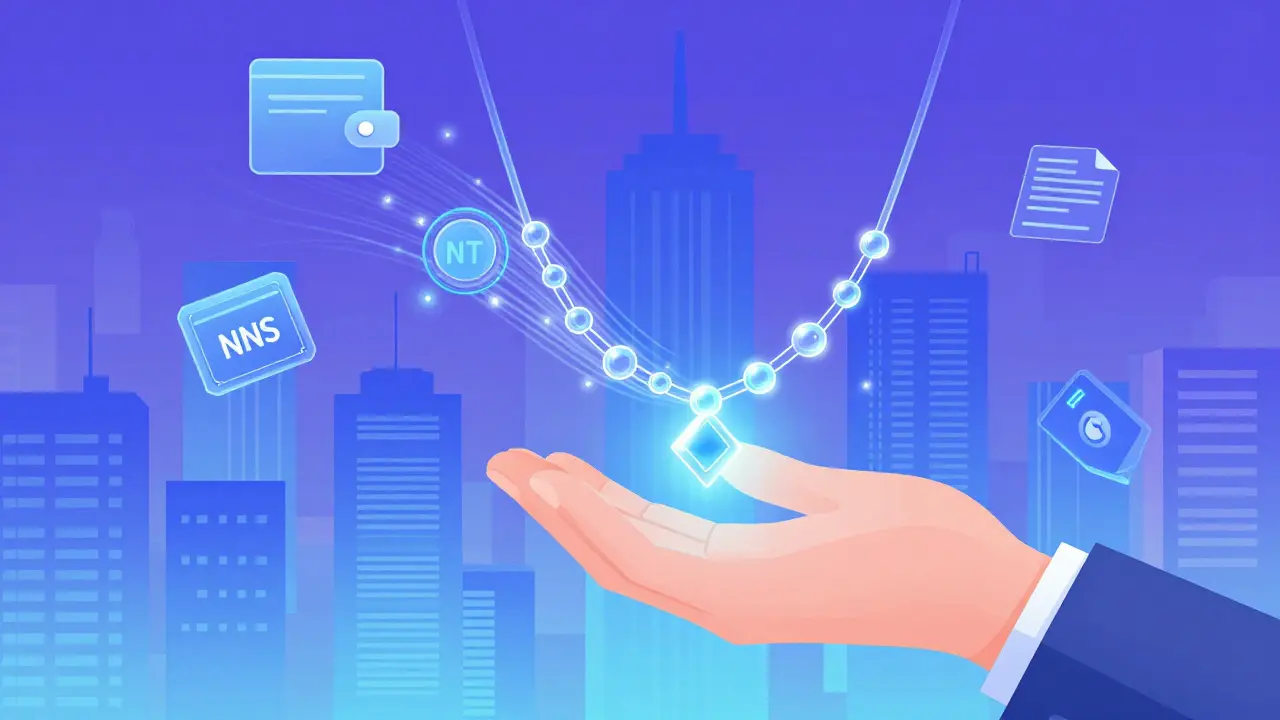
The internet isn’t just getting faster or prettier. It’s being rebuilt from the ground up. Web3 isn’t another buzzword-it’s the next version of the web where you own your data, your identity, and your digital stuff. No more corporations deciding what you can post, sell, or keep. No more hidden fees, locked-in assets, or data harvesting. This isn’t science fiction anymore. By 2025, Walmart verifies food safety in 2.2 seconds using blockchain. JPMorgan moved over $300 billion through its private blockchain network. Mastercard now processes 30% of global payments using tokenized assets. This is happening. Right now.
What Web3 Actually Means (No Jargon)
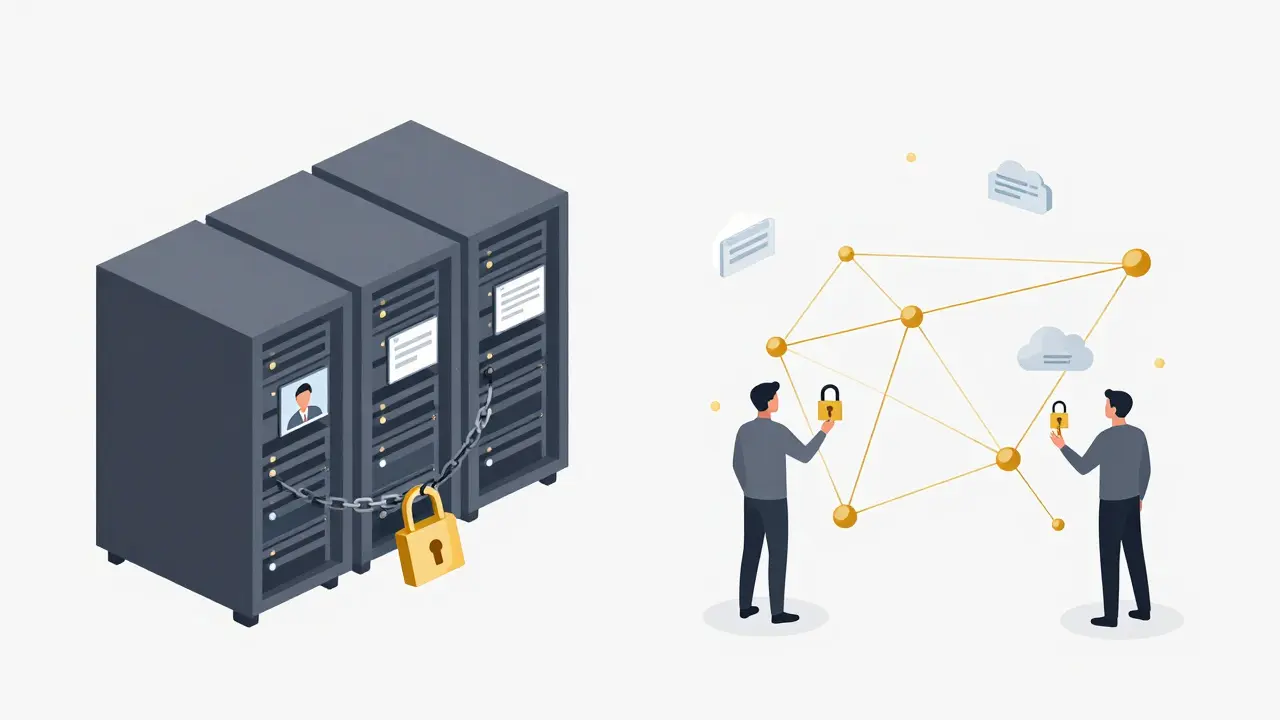
Web2 is the internet you know: Facebook, Google, Amazon. You use their tools, they collect your data, and they sell ads based on it. You don’t own your profile, your photos, or your followers. Web3 flips that. It’s built on blockchain-technology that lets people exchange value and information without needing a middleman. Your digital wallet holds your crypto, NFTs, and identity. You control the keys. No company can freeze your account. No algorithm can delete your post. If you create something, you keep it. That’s the core idea: you own it.
This isn’t just about crypto. It’s about identity, storage, and contracts. Instead of storing your files on Google Drive or Dropbox, you use IPFS or Arweave-decentralized networks where no single company controls your data. Instead of signing up with an email, you log in with a wallet. Instead of a bank approving your loan, a smart contract automatically releases funds when conditions are met. Think of it like email: you don’t need to know how SMTP works to send a message. Web3 is getting there. The complexity is being hidden behind simple interfaces.
Real-World Uses That Are Already Working
Most Web3 talk feels abstract. But here’s what’s real:
- Walmart’s food supply chain now tracks a package from farm to shelf in 2.2 seconds. Before, it took weeks. That’s not a demo-it’s daily operations.
- JPMorgan’s Onyx blockchain handles $300+ billion in corporate transactions. No wires, no delays, no middlemen.
- PayPal and Stripe now let merchants accept stablecoin payments. Customers pay in USDC. Merchants get dollars. No 3% credit card fee. No 5-day settlement.
- Decentralized finance (DeFi) platforms like Aave and Uniswap let you lend, borrow, or trade without a bank. In 2024 alone, stablecoins processed $5.7 trillion in transfers.
These aren’t startups. These are Fortune 500 companies. And they’re not doing it for hype. They’re doing it because it’s cheaper, faster, and more secure.
The Tech Behind the Hype
Web3 doesn’t run on magic. It runs on five key pieces of tech:
- AI + Blockchain: Smart contracts used to be rigid. Now, AI oracles from Chainlink feed real-time data into them. A loan contract can adjust interest rates based on your credit behavior. A supply chain payment auto-releases when AI confirms delivery.
- Interoperability: You used to need separate wallets for Ethereum, Solana, or Polygon. Now, protocols like Polkadot’s XCMP and Cosmos’ IBC let assets move freely between chains. Cross-chain swaps are becoming as easy as sending an email.
- Decentralized Identity (DID): Your identity isn’t tied to a username and password. It’s a cryptographic key only you hold. You prove who you are without giving away your birth date, phone number, or address.
- Decentralized Storage: Files on IPFS or Arweave don’t disappear if a server goes down. They’re stored across thousands of computers. Your photos, videos, or documents stay yours forever.
- Zero-Knowledge Proofs (ZKPs): You can prove you’re eligible for a loan or a discount without revealing your income, credit score, or transaction history. Privacy isn’t an afterthought-it’s built in.
These aren’t theoretical. They’re live. And they’re solving real problems.
Who’s Using It-and Who’s Not
Web3 adoption isn’t even. Enterprises are moving fast. Consumers are slower.
73 of the Fortune 100 have deployed blockchain solutions by mid-2025. Banks, retailers, and logistics firms are all in. Why? Because it cuts costs, reduces fraud, and speeds up processes. JPMorgan’s team admitted integration with old systems took 8 extra months-but the payoff was worth it.
On the consumer side, things are messier. Gamers are the most active group: 4.2 million daily active Web3 gamers now own in-game items they can sell or trade. Reddit users praise MetaMask for finally giving them control over digital assets. But complaints are loud too: “Gas fees cost me $200 on a simple trade.” “I lost my seed phrase and everything vanished.” Trustpilot ratings hover at 3.2/5. The tools are powerful-but they’re still hard to use.
The biggest gap? Onboarding. Getting someone from zero to owning their first NFT takes 15 minutes of reading, 3 apps, and a lot of anxiety. Web2 onboarding takes 30 seconds. Until Web3 apps feel as simple as Instagram or Spotify, mass adoption will stay limited to tech-savvy users-mostly Gen Z and Millennials in urban areas with incomes over $65,000.
Regulation Is Finally Here (And It’s Helping)
For years, Web3 was the wild west. No rules. No clarity. That’s changing.
The EU’s MiCA law, effective in 2024, created clear rules for crypto assets. In July 2025, the U.S. passed the GENIUS Act, giving federal licensing to stablecoin issuers. Suddenly, PayPal, Stripe, and Coinbase could legally launch stablecoin payments. Banks could integrate blockchain without fearing lawsuits. Regulatory clarity didn’t kill innovation-it unleashed it.
Now, companies aren’t asking, “Can we do this?” They’re asking, “How fast can we deploy it?” The days of crypto being seen as a legal gray zone are over. It’s now a regulated financial layer-like credit cards or wire transfers.
The Big Challenge: Complexity Is Killing Developers
Here’s the paradox: Web3 is growing fast, but developers are leaving.
Between 2024 and 2025, weekly active crypto developers dropped 38.6%-from 12,380 to 7,600. Why? Because building on Web3 is still too hard. You need to learn Solidity, Rust, cryptography, gas optimization, and multiple blockchain stacks. Most tools are poorly documented. Stack Overflow answers are outdated. Discord support takes 18 hours.
And too many teams keep reinventing the wheel. Instead of using proven infrastructure like Chainlink or OpenZeppelin, they build custom validators, consensus engines, and token standards. It’s like every restaurant deciding to make its own oven instead of buying one from a trusted supplier. It’s slow. It’s expensive. It breaks.
Experts like a16z Crypto warn: “Over-engineering breeds fragility.” The future belongs to teams that use off-the-shelf tools and focus on solving real problems-not building blockchain from scratch.

What Web3 Won’t Replace (And What It Will)
Web3 won’t kill Google or Facebook. It won’t replace your Netflix subscription. Why? Because those services are optimized for speed, simplicity, and scale. Web3 isn’t better at streaming videos or recommending cat memes.
But it’s better at:
- Proving ownership of digital assets
- Enabling peer-to-peer value exchange without intermediaries
- Ensuring supply chain transparency
- Letting creators monetize directly
- Protecting privacy through zero-knowledge proofs
Web3 isn’t replacing the internet. It’s adding a new layer-the layer where you own your stuff. Think of it like HTTPS. No one uses HTTP anymore because it’s unsafe. In 5 years, no one will use platforms that lock your data unless they have to.
The Road Ahead: 2026 and Beyond
By early 2026, Web3 will start feeling normal. Here’s what’s coming:
- Hidden complexity: Just like you don’t need to know SMTP to send email, you’ll soon click “Send Payment” and not care if it’s on Ethereum, Solana, or a sidechain.
- Unified cross-chain messaging: Polkadot and Cosmos are working on one standard to move assets between chains. No more bridging headaches.
- Global stablecoin rules: The G20 is finalizing standards by 2027. That means your USDC will work the same way in Japan, Brazil, and Germany.
- 150 million decentralized identities: By 2026, over 150 million people will log in to apps with their wallet-not an email.
- 450 million active users: That’s the projection for 2026. Not just crypto traders-regular people paying for coffee with crypto, owning virtual concert tickets, or selling digital art.
The vision isn’t just technology. It’s a shift in power. Zeebu says it best: “A world where individuals, not corporations, are at the center of the digital universe.” That’s the goal. And it’s not far off.
What You Should Do Now
If you’re curious, start small:
- Get a wallet (MetaMask or Phantom).
- Buy $10 worth of ETH or SOL. Just to feel what it’s like to hold your own asset.
- Try a simple NFT marketplace like OpenSea or Blur. List one item. See how it feels to own it.
- Use a Web3 app that replaces something you already use-like Lens Protocol for social media or Arweave for backups.
- Stop trusting platforms that say “you own your data” but lock it behind their login.
You don’t need to be a coder. You don’t need to invest thousands. You just need to ask: Who owns this? If the answer isn’t you, it’s not Web3. And it shouldn’t be your future.
Is Web3 just cryptocurrency?
No. Cryptocurrency is one part of Web3, but Web3 is bigger. It includes decentralized identity, storage, smart contracts, and user-owned platforms. Crypto is the money. Web3 is the entire system where you control that money and your digital life.
Can I lose my assets in Web3?
Yes-if you lose your private key or seed phrase, there’s no customer service to recover it. That’s the trade-off for ownership. No middleman means no safety net. Always back up your keys securely-preferably on paper, stored offline.
Is Web3 better than Web2?
It’s not better at everything. Web2 is faster, simpler, and cheaper for streaming, social media, and shopping. But Web3 is better when ownership, transparency, and control matter-like in finance, supply chains, digital art, or identity. They’re not rivals. They’re different tools for different jobs.
Why are developers leaving Web3?
Because building on Web3 is still too complex. Tools are fragmented, documentation is poor, and many teams waste time reinventing basic infrastructure instead of focusing on real products. The best developers are now using pre-built components like Chainlink and OpenZeppelin to avoid unnecessary work.
Will Web3 become mainstream by 2030?
Yes-but not as a separate internet. It’ll be invisible. Like HTTPS or SSL, Web3 will run under the hood. You’ll pay with stablecoins, log in with your wallet, and own your digital items without even realizing it. The technology will fade into the background. The ownership won’t.
What’s the biggest risk to Web3’s future?
Over-engineering. Too many teams are building custom blockchains, consensus algorithms, and token standards instead of using proven tools. This creates fragmentation, security holes, and slow development. The winners will be those who simplify, standardize, and focus on solving real problems-not building tech for tech’s sake.
22 Responses
Web3 isn’t just tech-it’s a power shift. When you hold your own keys, you’re no longer a product. You’re the stakeholder. And yeah, the UX is still clunky, but that’s like saying the first email client was ‘bad’ because it didn’t have emojis. The infrastructure is evolving. The real win? Ownership isn’t negotiable anymore.
Companies like Walmart and JPMorgan aren’t doing this for fun. They’re responding to market pressure. Consumers want control. And when enterprise moves, the rest follow.
Zero-knowledge proofs? That’s the silent revolution. Imagine proving you’re over 21 without showing your ID. That’s not privacy-it’s dignity.
And yes, losing your seed phrase is terrifying. But so was losing your bank ledger in 1985. We adapted. We’ll adapt again.
The future isn’t ‘crypto or bust.’ It’s ‘you own it or you don’t.’ And that line is getting clearer every day.
Look, I don’t care how many ‘decentralized’ this or ‘tokenized’ that you throw at me-this is just crypto with a new suit! The U.S. government just passed the GENIUS Act? That’s not regulation-it’s corporate capture! JPMorgan’s blockchain? Ha! They’re still using the same old banking mindset, just with more blockchain buzzwords!
And don’t get me started on ‘decentralized identity’-you think some guy in a hoodie in Estonia is gonna protect my data better than the FBI? Please. This whole thing is a tax dodge for tech bros who think they’re rebels but are just trading one oligopoly for another.
Gas fees? More like ‘pay-to-play’ fees. And don’t tell me ‘you own your data’-if I can’t even log in without a 12-word phrase I wrote on a sticky note, that’s not freedom, that’s a hostage situation!
Web3 is the ultimate Ponzi scheme dressed up as liberation. It’s not the future-it’s the last gasp of Silicon Valley’s delusion.
Love this breakdown! Seriously, the AI + blockchain oracle integration is the quiet MVP here. Chainlink isn’t just a tool-it’s the bridge between real-world data and on-chain logic. That’s how you get a loan approved because your smart fridge confirmed you bought groceries for a week.
And interoperability? HUGE. Remember when you had to pick one chain and pray? Now with XCMP and IBC, you can hold ETH, SOL, and MATIC in one wallet and swap between them like switching tabs. It’s not magic-it’s just well-designed plumbing.
Also, zero-knowledge proofs are the unsung heroes. You can prove you’re eligible for a government grant without revealing your income. That’s not just privacy-it’s human rights engineering.
And yes, devs are leaving because they’re being asked to build rockets when they just need a bike. Use OpenZeppelin. Use Chainlink. Stop reinventing the wheel. The future belongs to builders who stack, not start from zero.
Also-MetaMask is still the best onboarding tool. Just don’t lose your seed phrase. Ever. Seriously. I’ve seen people cry over this. It’s not a joke.
It’s fascinating how the narrative around Web3 has shifted from ‘revolution’ to ‘infrastructure.’ The real story isn’t about crypto prices or NFTs-it’s about systemic change in how value is exchanged and verified. The fact that Walmart reduced supply chain tracking from weeks to seconds is a quiet triumph of engineering.
What’s often overlooked is the cultural shift: people are beginning to see digital assets as tangible, not abstract. That’s profound. It’s not about speculation-it’s about stewardship.
And while onboarding remains a barrier, that’s a UI/UX problem, not a philosophical one. We solved similar friction with online banking in the late ‘90s. This will follow the same arc.
Regulation, ironically, is the catalyst. Clarity enables adoption. Chaos kills innovation. The EU and U.S. are finally acting like adults.
Start small. Seriously. You don’t need to become a blockchain engineer to get this. Just get a wallet. Buy $10 of ETH. Send it to a friend. Try listing a free NFT on Blur. Feel what it’s like to hold something that no one else can delete.
That’s the magic. Not the price. Not the hype. Just the quiet power of ownership.
And if you’re scared of losing your keys? Write them down. On paper. In a drawer. Not on your phone. Not in the cloud. Paper. It’s that simple.
You don’t have to love crypto. You just have to ask: ‘Who owns this?’ If the answer isn’t you, walk away.
And hey-if you’re feeling overwhelmed? You’re not alone. We’re all learning. Take a breath. You’ve got this.
I’ve been watching this space for years and honestly I’m surprised how much has changed without me even noticing
Like I just used a Web3 app to pay for coffee last week and didn’t realize it until I saw the transaction on my wallet
It just worked
No fees no delays no ‘please authenticate with your third-party provider’
That’s the real win right there
It’s not about the tech it’s about the feeling
When you click send and know no one can take it back
That’s new
And yeah the onboarding sucks but so did texting in 2005
Give it time
And if you’re worried about losing your keys
Just write them down
It’s not magic
It’s just responsibility
It is imperative to acknowledge that the foundational architecture of Web3, predicated upon cryptographic decentralization and distributed ledger technology, represents a paradigmatic departure from the centralized, rent-seeking models of Web2.
While the adoption curve among the general populace remains sluggish due to cognitive load and infrastructural immaturity, the institutional validation by entities such as JPMorgan Chase and Walmart attests to the operational viability of the underlying protocols.
Furthermore, the regulatory frameworks introduced by MiCA and the GENIUS Act are not impediments to innovation, but rather the necessary scaffolding that enables scalable, compliant, and trustworthy deployment.
The notion that Web3 is synonymous with cryptocurrency is a semantic fallacy; it is, in fact, a protocol layer for digital sovereignty.
One must, however, exercise due diligence regarding private key management, as the absence of a centralized recovery mechanism is not a bug, but a feature of the system’s design philosophy.
My cousin lost $200,000 because she thought ‘burning’ an NFT meant deleting it from her phone
She cried for three days
And then she bought another one
And now she’s convinced she’s a ‘digital artist’
Meanwhile, my dad still uses cash
And he’s happier
Web3 isn’t the future
It’s the emotional support animal for people who think the internet owes them something
And don’t get me started on ‘decentralized identity’
What’s next? A blockchain for your feelings?
Just… stop.
I’m not mad
I’m just… disappointed
Web3 is just crypto 2.0 and everyone knows it
JPMorgan’s blockchain? They’re still using the same old corporate greed, just with more buzzwords
And ‘decentralized identity’? Ha! You think some random guy in a Discord server is gonna help you recover your wallet?
It’s all just a way to get rich quick and then disappear
And don’t even get me started on NFTs
My nephew bought a pixelated monkey for $10K
It’s a JPEG
It’s not even a good JPEG
People are losing their minds
And the worst part? They think they’re smart
They’re not
They’re just broke and bored
Ownership isn’t a feature. It’s a right.
And if you’re still trusting Facebook to ‘own’ your photos or Spotify to ‘own’ your playlists-you’re already losing.
Web3 doesn’t fix everything.
But it fixes the thing that matters most.
You.
Oh wow. Another manifesto from someone who thinks ‘tokenized assets’ is a personality trait.
Let me guess-you also think ‘decentralized’ means ‘no one can tell you you’re wrong’?
Walmart’s blockchain? Cute. They’re still using it to track milk cartons, not to empower farmers.
And ‘you own your data’? Tell that to the 15-year-old who lost their entire NFT collection because they pasted their seed phrase into a Discord DM.
This isn’t liberation. It’s capitalism with extra steps.
And you? You’re just the hype man for the new dot-com bubble.
Keep selling the dream.
I’ll be here, using Gmail.
Let’s be real-this isn’t about tech.
This is about power.
And if you’re still letting corporations control your digital life, you’re giving away your future for free.
Web3 isn’t perfect.
But it’s the first time in decades that the user has a seat at the table.
Yes, the UX sucks.
Yes, gas fees hurt.
But you know what? So did dial-up.
And we didn’t give up on the internet then.
Why give up now?
Start small.
Hold something real.
And never forget-your keys, your crypto.
Someone else’s keys? Not yours.
That’s the whole point.
Everyone’s acting like Web3 is the answer.
But where’s the accountability?
Who’s responsible when a smart contract fails?
Who pays when your NFT gets rug-pulled?
Who’s there to help when you lose your keys?
Answer: No one.
And you call that freedom?
It’s just anarchy with a whitepaper.
And the worst part?
You’re proud of it.
You wear your lost wallet like a badge.
Pathetic.
Web3 is just the internet finally growing up
It’s not about crypto
It’s about who owns the rules
And if you still think Google owns your data
You’re not late
You’re still asleep
Here’s what nobody talks about: Web3 doesn’t need to beat Web2.
It just needs to exist beside it.
Like HTTPS.
You don’t use HTTP anymore because it’s unsafe.
Soon, you won’t use platforms that lock your data because it’s irresponsible.
It’s not about replacing Instagram.
It’s about giving people a real choice.
And choice? That’s the real innovation.
Look I used to think Web3 was just a scam
Then I bought $20 of ETH and sent it to my sister
She got it in 12 seconds
No bank
No fee
No waiting
She said ‘how did you do that?’
I said ‘I just clicked send’
And she didn’t ask another question
That’s the moment
That’s when it clicked
It’s not about tech
It’s about trust
And for the first time
We’re building it without middlemen
Web3 is not a Western invention-it’s a global necessity.
Where I come from, banks don’t serve the poor.
But a phone and a wallet? That’s access.
My cousin in Lagos sends money home using USDC.
It takes 90 seconds.
Costs $0.12.
And no one asks for ID.
That’s not innovation.
That’s justice.
Don’t reduce this to NFTs and memes.
This is the financial inclusion we’ve been waiting for.
And yes, the UX is rough.
But so was the first mobile phone.
They didn’t give up.
Neither should we.
I’m not into crypto.
But I do use Arweave to back up my photos.
And I log into my art portfolio with my wallet.
It’s not flashy.
It just works.
And I don’t have to trust anyone.
That’s enough for me.
The moral decay of this movement is staggering.
You promote ‘ownership’ while enabling anonymous actors to manipulate markets.
You claim ‘decentralization’ while creating a new class of digital oligarchs.
You tout ‘privacy’ while encouraging the abandonment of legal accountability.
This is not progress.
This is anarchy dressed in blockchain.
And you call it liberation?
It is the erosion of social contract under the guise of individualism.
History will not look kindly upon this era.
What if Web3 isn’t about technology at all?
What if it’s about grief?
Grief for the internet we lost-the one where we could share, create, and connect without being watched, sold, and tracked?
What if we’re not building wallets?
What if we’re building altars?
To memory.
To autonomy.
To the quiet, stubborn belief that we deserve to own our digital lives?
Maybe the code is just the language.
And the real revolution?
Is the willingness to say: ‘No more.’
And then click ‘send.’
Just saw someone say ‘Web3 is just crypto’ and I had to laugh.
It’s like saying ‘the internet is just email.’
Web3 is the layer underneath.
It’s the foundation.
And yeah, most people don’t see it yet.
But when you pay for your coffee with USDC and your wallet auto-converts it to dollars?
That’s Web3.
And you won’t even know.
Just like you don’t know how TCP/IP works when you stream Netflix.
That’s the goal.
Not hype.
Hidden magic.
That’s exactly it.
Web3 won’t win by being louder.
It’ll win by being quieter.
One day you’ll just pay for something.
And you won’t think about it.
And you’ll still own it.
That’s the quiet revolution.
And it’s already here.