
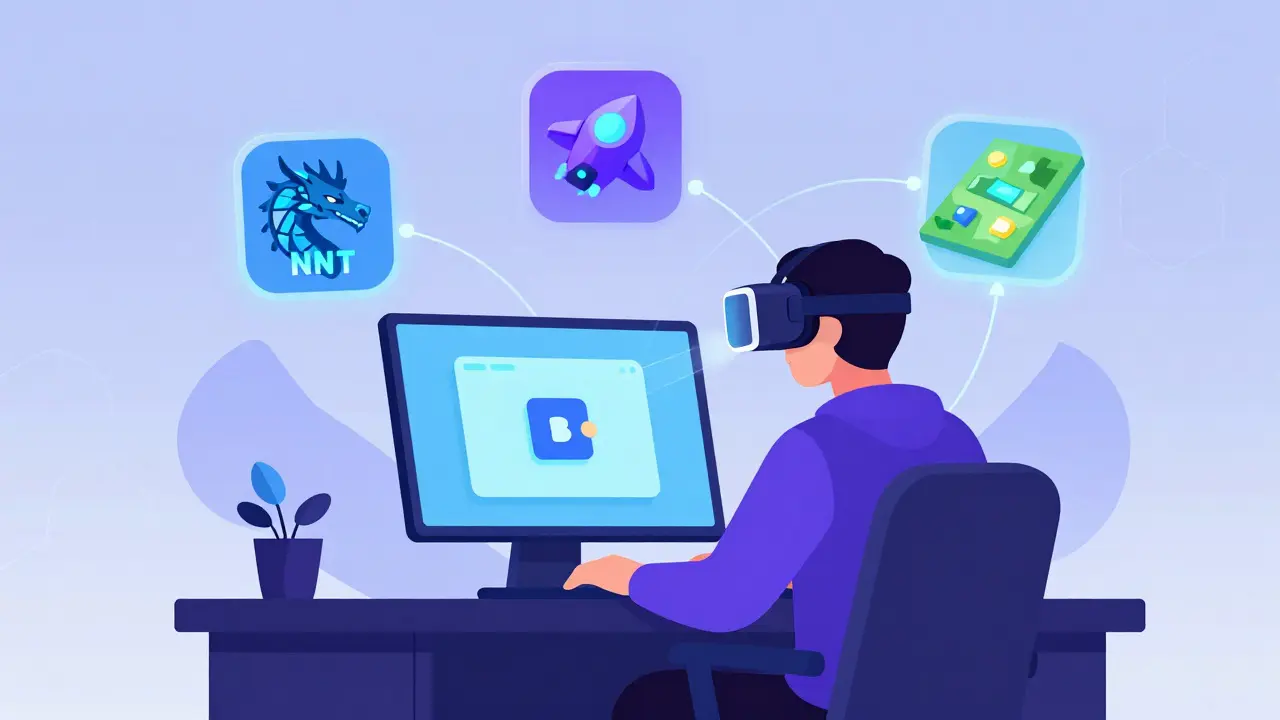
For years, video games have let you collect rare swords, skins, and virtual land-but you never really owned them. The moment a server shut down or a company changed its rules, your hard-earned items vanished. That’s changing. With gaming NFT integration, your in-game assets are now real, transferable, and yours-on the blockchain.
What Exactly Is Gaming NFT Integration?
Gaming NFT integration means using non-fungible tokens (NFTs) to represent unique digital items inside video games. Unlike regular in-game currency or items that exist only on a developer’s server, NFTs are stored on a blockchain. This means each item-whether it’s a dragon skin, a spaceship, or a plot of virtual land-has a verifiable owner, a transparent history, and can be traded outside the game.
It’s not just about owning something. It’s about control. You can sell that rare weapon on OpenSea. You can take it from one game to another if the developers allow it. You can even earn real money by playing. This isn’t a gimmick anymore. By 2025, over 11 major games had fully integrated NFT economies, from strategy titles like Immutable’s Gods Unchained to open-world adventures like The Sandbox.
How It Works: The Tech Behind the Scenes
Building a game with NFTs isn’t as simple as adding a button. It’s a full-stack system. Game engines like Unity and Unreal Engine handle the visuals and gameplay. Meanwhile, blockchain networks like Ethereum, Solana, or Polygon manage ownership and transactions. Smart contracts-self-executing code on the blockchain-define how items are created, transferred, and sold.
For example, when you buy a new weapon in a blockchain game, a smart contract generates a unique NFT with metadata: its name, rarity, stats, and a link to its digital artwork. That NFT gets sent to your crypto wallet-like MetaMask or Phantom. From there, you can hold it, trade it, or use it in-game. Platforms like Enjin and Token Trove make this easier for developers by offering pre-built tools to mint NFTs without writing code from scratch.
Layer 2 solutions like Polygon and Optimism are key here. Early NFT games choked on Ethereum’s high fees and slow speeds. Now, most new games run on these faster, cheaper networks. A transaction that once cost $15 and took 10 minutes now costs less than $0.10 and finishes in under 3 seconds. That’s what made mass adoption possible.
Why Players Care: Ownership, Earning, and Freedom
Traditional games lock you in. You spend hours grinding for a legendary item-only to lose it if the game gets shut down. With NFTs, that’s over.
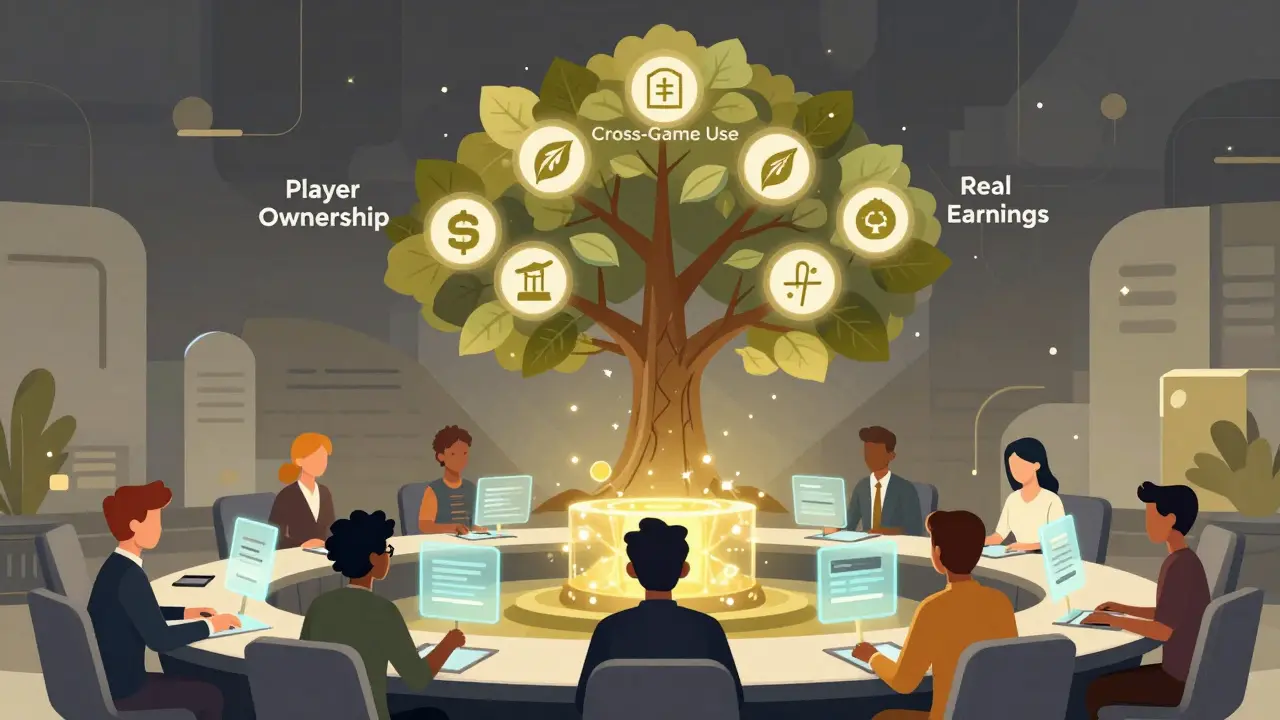
- True ownership: Your NFTs live in your wallet, not the game’s database. Even if the developer goes bankrupt, your items still exist.
- Monetization: Players in games like Axie Infinity have earned over $3 billion in total since 2020 by selling NFTs, trading resources, or renting out their characters.
- Cross-game use: Some projects are building interoperability. Imagine using your NFT sword in a RPG, then taking it to a fighting game. It’s still early, but companies like Chainlink and Polygon are building the infrastructure for this.
By Q1 2025, NFT wallet users interacting with gaming platforms rose 17%-proof that real players are sticking around. Reddit threads and forums like Whale Probe are full of guides on how to spot rare NFTs, when to sell, and how to avoid scams.
The Dark Side: Fees, Scams, and Complexity
It’s not all smooth sailing. Many players still struggle with the basics.
- Gas fees: Even on Layer 2 chains, sudden spikes during big sales or events can make trading expensive.
- Wallet management: Losing a private key means losing everything. Phishing scams targeting gamers have increased by 40% since 2024.
- Learning curve: Setting up a wallet, buying crypto, connecting it to a game-this isn’t intuitive for someone who’s never used Bitcoin.
And not every NFT game is built to last. Some were designed as “play-to-earn” cash grabs, with no real gameplay. Players bought NFTs expecting to profit, but when the hype faded, prices crashed. The smartest games now use play-and-earn models: you earn rewards by playing well, not just by buying in.
What’s Next: DAOs, VR, and Real-World Value
The next wave of gaming NFT integration isn’t just about trading items-it’s about control.
Decentralized Autonomous Organizations (DAOs) are letting players vote on game updates. In Decentraland, players have voted on land zoning, event scheduling, and even revenue splits. This turns gamers from customers into stakeholders.
Virtual reality is another frontier. Imagine putting on a VR headset and walking into a marketplace where your NFT armor is physically on your avatar. Or seeing your NFT car in augmented reality parked in your living room. Companies like NVIDIA and Meta are already testing these integrations.
Regulations are catching up too. Japan now recognizes NFTs as legal digital assets. The EU’s MiCA framework gives clear rules for blockchain-based gaming. This isn’t a fringe experiment anymore-it’s being regulated like financial products.
Who’s Winning? Players, Developers, and the Market
The numbers speak for themselves. The global gaming NFT market hit $4.91 billion in 2024. By 2035, it’s projected to hit $83.26 billion. Venture capitalists poured $4.2 billion into NFT gaming startups in 2025 alone.
Big studios are watching. Ubisoft, Square Enix, and Take-Two have all filed patents for blockchain-based game systems. But they’re not building full NFT games yet. Instead, they’re testing small features-like tradable cosmetic items in existing titles.
Meanwhile, blockchain-native studios like Gala Games, Yield Guild Games, and Immutable are leading the charge. Their games are built from the ground up around NFT economies. Players don’t just play-they participate.
Getting Started: What You Need to Know
If you’re curious about trying it out:
- Get a crypto wallet. MetaMask (for Ethereum-based games) or Phantom (for Solana) are beginner-friendly.
- Buy a little ETH or SOL. You don’t need much-$10-$20 is enough to test.
- Try a free-to-play NFT game like Blankos Block Party or My Crypto Heroes. No upfront cost, just play.
- Learn how to connect your wallet to the game. Most have step-by-step guides.
- Don’t invest heavily until you understand the market. Rarity matters. Supply matters. Community matters.
It takes weeks to get comfortable. Months to master. But if you’re a gamer who’s tired of playing for free, this is the first time the system is finally working in your favor.
Are gaming NFTs just a bubble?
Some early NFT games were speculative hype, but the infrastructure has matured. Today’s top games focus on real gameplay, player ownership, and sustainable economies. The market isn’t about flipping NFTs anymore-it’s about building value through play. The 2025 surge in active users and institutional investment shows this isn’t a passing trend.
Can I really make money playing NFT games?
Yes-but not easily. Top players in games like Axie Infinity and Gods Unchained earn thousands per month by trading rare items or renting out characters. But most players earn small amounts: $5-$50/month. Success requires time, strategy, and understanding market trends. It’s not a get-rich-quick scheme. It’s a new kind of digital job.
Do I need to spend money to start?
No. Many NFT games offer free starter packs or allow you to play without owning NFTs. Games like Blankos Block Party and DeFi Kingdoms let you earn tokens just by playing. You can experiment with $0. But to trade or sell items, you’ll need a wallet and a small amount of crypto to cover transaction fees.
What happens if the game shuts down?
Unlike traditional games, your NFTs aren’t stored on the game’s server-they’re on the blockchain. Even if the company disappears, your NFTs still exist in your wallet. You can still sell them on marketplaces like OpenSea. The game may stop working, but your digital assets don’t vanish.
Are NFT games safe from hacking?
The blockchain itself is secure, but wallets and apps aren’t. Most hacks happen because users fall for phishing scams, use weak passwords, or connect to fake websites. Use hardware wallets like Ledger for large holdings, enable two-factor authentication, and never share your seed phrase. Reputable games use multi-signature wallets and anti-fraud systems to protect assets.