

Imagine a state-sponsored criminal empire that doesn't use banks, avoids borders, and steals billions of dollars to fund nuclear missiles. This isn't a movie plot; it's the current reality of North Korean crypto crime is a sophisticated system of state-sponsored cyber thefts used by the Democratic People's Republic of Korea (DPRK) to evade international sanctions and fund its weapons programs. The scale is staggering. In the first half of 2025 alone, these operations raked in over $2.17 billion. To put that in perspective, the February 2025 hack of the ByBit exchange saw $1.5 billion vanish in a single hit, marking the largest crypto theft in history.
The Shift to a New Global Watchdog
For years, the UN Panel of Experts was the main eye on these activities. But when that panel dissolved in May 2024, it left a dangerous gap in oversight. North Korea didn't waste a second. In response, 11 like-minded nations decided to stop waiting for global consensus and built their own team. In October 2024, the Multilateral Sanctions Monitoring Team (MSMT) was formed. This group includes the US, UK, Japan, South Korea, Australia, Canada, France, Germany, Italy, the Netherlands, and New Zealand.
Unlike the old UN structure, which often got bogged down in diplomacy, the MSMT is designed to be agile. They focus on documenting exactly how the DPRK exploits private businesses and foreign governments. They aren't just writing reports; they are tracking the flow of money in real-time to close the loopholes that let stolen funds slip through the cracks.
Who is Actually Doing the Stealing?
Most of these attacks are orchestrated by the Lazarus Group, which operates under the Reconnaissance General Bureau. This isn't just a group of hackers in a basement; they are a military intelligence arm. In 2024, they were responsible for about 35% of all cryptocurrency stolen worldwide. By late 2025, that number climbed to nearly 39%.
Their tactics have evolved. They don't just hunt for software bugs. They use a strategy called "IT worker infiltration." Essentially, North Korean developers use fake identities to get hired by Western tech firms. While they collect a paycheck, they are often conducting espionage against defense contractors to steal military secrets. They've also started using generative AI to create social engineering scams so convincing that they've bypassed the security protocols of three major tech firms in late 2025.
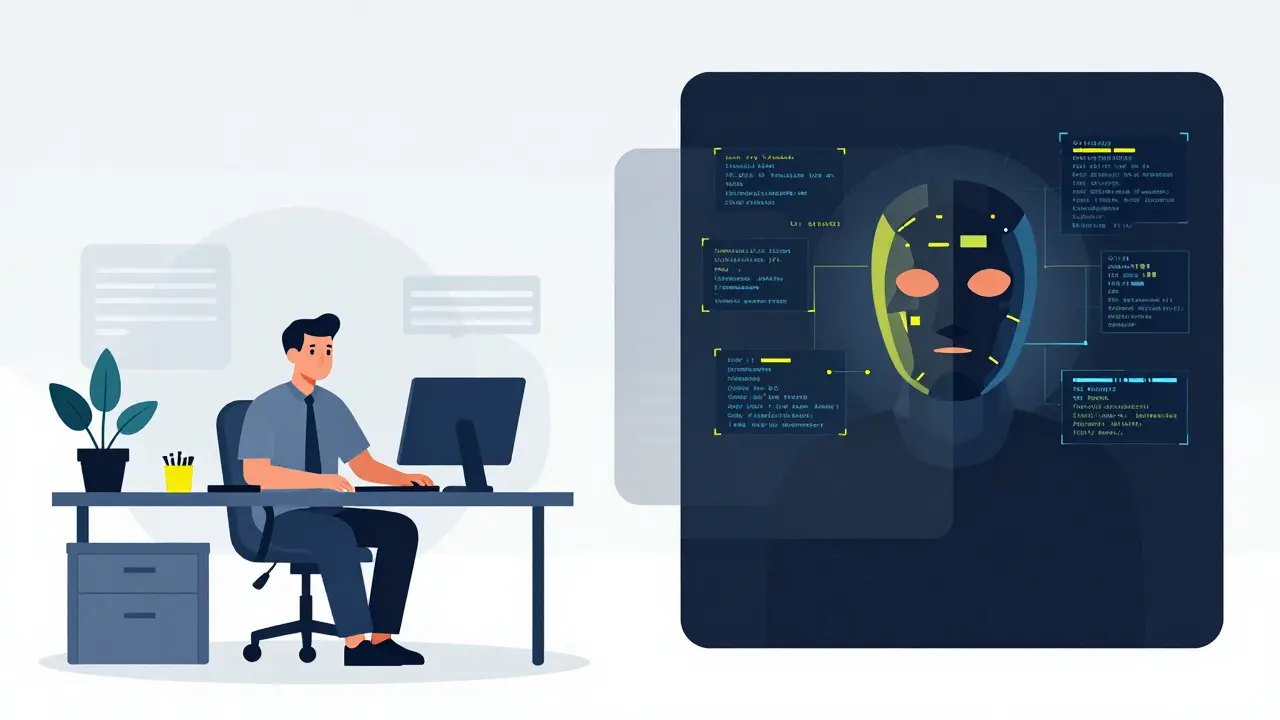
The Tech War: Blockchain Forensics
Fighting a ghost in the machine requires specialized tools. The international response relies heavily on blockchain analytics. Companies like Chainalysis, Elliptic, and TRM Labs provide the "eyes" for law enforcement. They use transaction tracing and laundering pattern analysis to figure out where the money is going, even when hackers try to hide it using cross-chain swaps or privacy coins like Monero.
| Entity | Role | Key Attribute/Value |
|---|---|---|
| MSMT | Inter-governmental Monitoring | 11 member nations; focuses on sanctions enforcement |
| OFAC | Regulatory Enforcement (US) | Issues "Red Flags" bulletins for DPRK activity |
| Blockchain Analytics Firms | Technical Attribution | Specialized tracing tools (e.g., Chainalysis) |
| MiCA II | EU Regulatory Framework | Comprehensive cross-border monitoring (starts 2026) |
This technical capability is starting to yield results. For example, the US Department of Justice recently seized $7.7 million in crypto and NFTs tied to a laundering network. Even more impressive was a coordinated effort between five MSMT nations and analytics firms that froze $237 million from the LND.fi hack within just 72 hours. It shows that when the private sector and governments actually talk to each other, they can move faster than the hackers.
The Reality for Crypto Exchanges
For the platforms where we trade, this is a nightmare of compliance and security. The ByBit hack showed that even "secure" multi-signature approval systems can be compromised during routine wallet transfers. Small exchanges like WOO X and Seedify have felt the heat too. While the MSMT provides better threat intelligence, exchange security officers often vent on forums like Reddit about how slow the actual asset recovery process is. Filing a case is one thing; getting the money back from a foreign jurisdiction is another.
The cost of staying safe is skyrocketing. Global spending on blockchain security tools jumped 63% to $2.8 billion in 2025. For a small platform, the compliance costs for new regulations-like the US Executive Order 14155 or the EU's MiCA II-can reach $1.2 million annually. This creates a divide where giant exchanges like Coinbase can afford the best armor, while smaller platforms remain vulnerable targets.

Can We Actually Stop Them?
There is a fierce debate about whether this new approach is working. Some argue that the MSMT is a huge improvement over the UN because it's faster and more focused. Others point out a glaring problem: North Korea's deepening alliance with Russia. When two states decide to help each other hide money and weapons, a coalition of 11 countries might not be enough to plug every hole.
To combat this, the MSMT is planning a "Cryptocurrency Intelligence Fusion Cell" for early 2026, with an $85 million budget. This will essentially be a war room for crypto-intelligence, combining traditional spying with real-time blockchain monitoring. The goal is to move away from "year-long investigations" toward instant response. Because in the world of crypto, if you don't freeze the funds in the first few hours, they're usually gone forever.
What is the MSMT and why was it created?
The Multilateral Sanctions Monitoring Team (MSMT) is a coalition of 11 nations (including the US, UK, and Japan) formed in October 2024. It was created to replace the UN Panel of Experts, which dissolved in May 2024, ensuring that the international community could still monitor and report on North Korea's sanctions violations and crypto thefts.
How much has North Korea stolen via cryptocurrency?
The cumulative known value of DPRK-linked crypto thefts exceeds $6 billion. In the first half of 2025 alone, they generated over $2.17 billion, with the single largest theft being the $1.5 billion ByBit hack in February 2025.
Who is the Lazarus Group?
The Lazarus Group is a state-sponsored hacking collective operating under the Reconnaissance General Bureau of North Korea. They are the primary actors behind most of the regime's crypto heists and are known for their adaptability and use of sophisticated social engineering.
How do they launder the stolen crypto?
They use a variety of complex methods including decentralized exchanges (DEXs), cross-chain swaps, and privacy-enhancing coins like Monero. They also frequently rotate through different wallet clustering techniques to confuse blockchain analysts.
What are the "IT worker" scams?
North Korean operatives create fake identities to get remote jobs at Western technology firms. Once hired, they use their positions to generate revenue for the regime and conduct industrial espionage, specifically targeting defense contractors.
What happens next?
If you run a crypto project or a financial firm, the window for "relaxed" security is closed. Expect stricter KYC (Know Your Customer) and AML (Anti-Money Laundering) checks, especially for transactions over $10,000. The shift toward the 2026 MiCA II regulations in Europe means that cross-border monitoring will become the standard, not the exception.
For the average user, the lesson is simple: stick to platforms that openly collaborate with analytics firms and the MSMT. When a platform ignores these "red flags" to save on compliance costs, they aren't just skipping paperwork-they're leaving the door open for the world's most dangerous hacking collective.
29 Responses
The shift to the MSMT is a critical move!! Blocking these nodes requires real-time agility... not slow bureaucracy!!
Oh sure, because a group of 11 countries is definitely going to stop a state-sponsored army. This is such a joke. Like we're just pretending this "Fusion Cell" thing will actually work while the money is already gone.
ABSULUTELY RIDICULOUS!!! How is anyone actually surprised that a billion dollars just vanishs?? Its basic common sense that these "secure" wallets are total garbage!!!!
We need to be very clear that the responsibility lies with the exchanges. If they can't afford the armor, they shouldn't be playing with other people's money. Period.
I agree with the focus on the private sector. Most of these platforms prioritize growth over security, and the MSMT provides the necessary pressure to force a standard of care. It is about time we stopped treating crypto as a lawless Wild West.
It's just wild how much money is actually moving around in these heists.
Haha, look at all these people acting like it's a tragedy. It's just numbers on a screen, guys. Plus, if you leave your stuff on an exchange, you're basically asking for it anyway, right?
It is truly heartening to see such a robust multilateral approach to combating these illicit activities. The coordination between the MSMT and blockchain analytics firms exemplifies the spirit of global cooperation. I believe this strategic synergy will significantly deter future incursions by the Lazarus Group. We must continue to support these initiatives with unwavering enthusiasm to ensure the integrity of the digital financial ecosystem for all nations involved.
I'm actually pretty optimistic about the Fusion Cell. If they can cut the response time down to hours instead of months, that's a huge win for the little guy.
Sure, "Fusion Cell" sounds like a fancy name for another government spying operation. Why do we think the MSMT is actually fighting North Korea and not just building a database of every single crypto user's wallet? It's all a front to bring in MiCA II and kill the whole point of decentralized currency. They want us in their "war room" so they can control the flow of everything. Wake up people, the Lazarus Group is probably just a convenient boogeyman to justify total financial surveillance.
Everyone needs to double check their security settings right now! 🛡️ This stuff is scary but manageable if we help each other out. Let's get these basics right! 🚀
I think its realy importent to remember that these hackers are probly just following orders from there goverment and dont have a choice in the matter.
Typical Western "coalitions" thinking a few reports and a "Fusion Cell" will solve a systemic failure. My country's tech sector could probably track this better with half the budget. Pathetic.
Whatever happens, the hackers win.
I don't see why we need more laws. Just use a cold wallet.
For those of you new to the space, please remember that security is a journey. Don't feel overwhelmed by the news; just focus on one small improvement to your setup today.
Yeah, just keep it simple. Hard wallets and no trust.
It makes me wonder if the very concept of a borderless currency is just a dream we had before the state-sponsored machines of the world decided to eat it alive, and maybe we're just seein the inevitability of a new kind of digital feudalism where only the biggest exchanges survive because they're the only ones who can pay the "security tax" to the governments... its kinda poetic in a really dark way if you think about it long enough.
The IT worker infiltration is the most concerning part. It's not just about the money anymore; it's about embedded espionage. We need more rigorous vetting for remote roles.
totally agree with the need for better vetting. its scary how easy it is to fake an identity online these days
The operational risk for mid-tier exchanges is becoming untenable. The overhead for MiCA II compliance creates a significant barrier to entry, essentially leading to an oligopolistic market structure dominated by a few systemic players.
Love the idea of the private sector and governments actually talking. That's where the real magic happens. We can definitely turn the tide if we stay coordinated!
The "LND.fi hack recovery" was probably just a staged event to make the MSMT look effective. Nothing is ever actually "frozen" unless they want it to be.
It is an absolute travesty that the UN Panel was allowed to dissolve in the first place! The resulting vacuum of power was practically an invitation for the DPRK to accelerate their thefts. This is a catastrophic failure of international diplomacy!
Time to kick these cyber-pirates to the curb! We need an absolute blitz of security upgrades across the board to stop this bleed. Let's get aggressive with the forensics!
I think we can all find a way to be more aware of these risks without panicking. If we just take a moment to learn how the basics work, like using two-factor authentication and not clicking on weird links, we can all help make the internet a safer place for everyone, regardless of where they are from or how much money they have in their accounts. It's all about community and looking out for one another in this digital age.
Basically, if you're using a small exchange, you're the exit liquidity for a North Korean missile. Simple as that.
Oh, look, another "inter-governmental team" to save us. I'm sure they'll be just as effective as every other committee in human history. 🙄
The sheer lack of effort by ByBit to secure their multi-sig process is just embarrassing. It's a joke that they're considered a top-tier exchange when their basic wallet transfers are this leaky.