
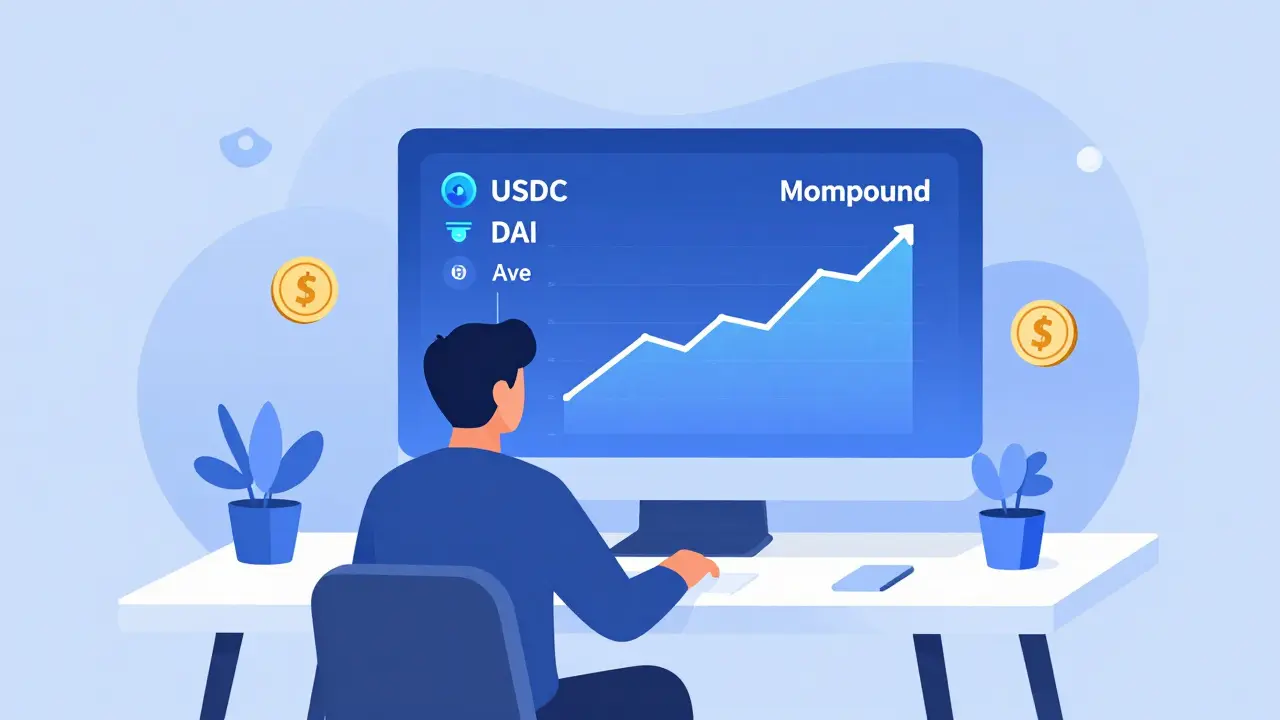
Yield farming isn’t magic. It’s not a get-rich-quick scheme. But if you understand how it works, it can turn your idle crypto into real, recurring income - without selling a single coin. Think of it like a high-interest savings account, but instead of a bank, you’re lending your digital assets to decentralized protocols on the blockchain. And yes, it’s still risky. But with the right approach, you can stack rewards while keeping your capital relatively safe.
What Exactly Is Yield Farming?
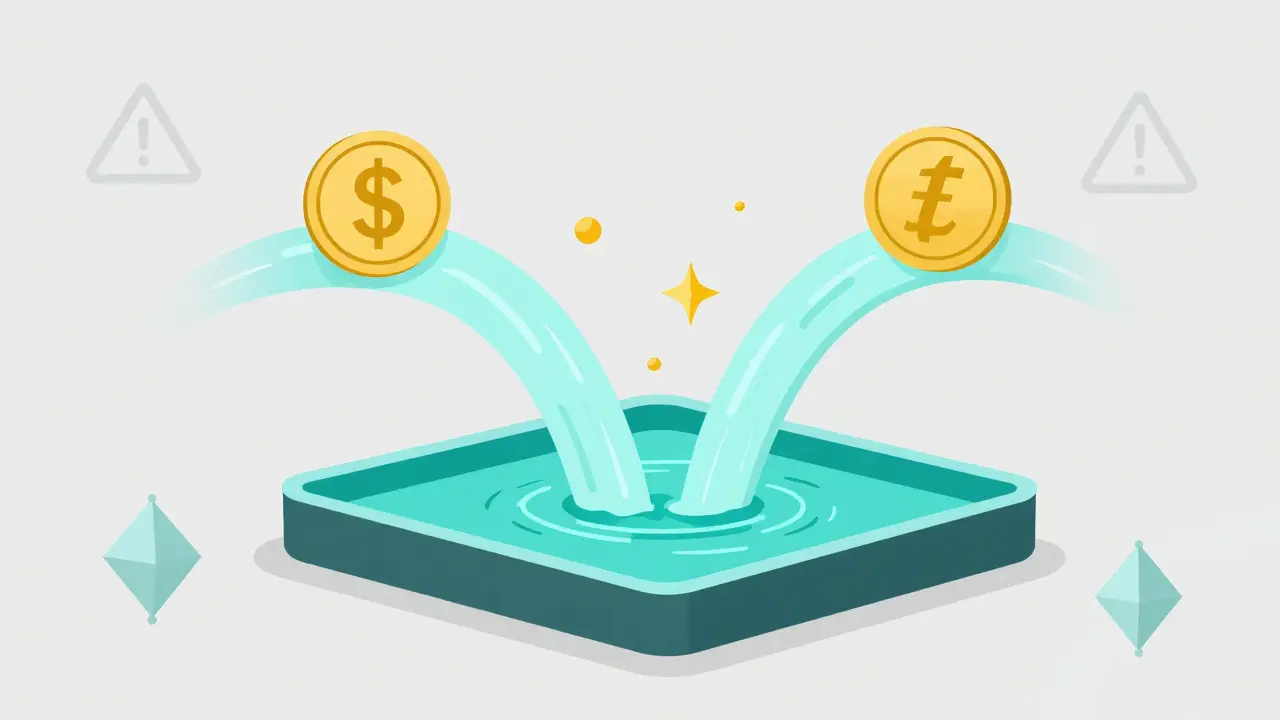
Yield farming means locking up your cryptocurrency in a DeFi protocol to earn rewards. These rewards come in different forms: interest payments, trading fees, or bonus tokens issued by the platform itself. The most common way is by providing liquidity to a trading pair on a decentralized exchange like Uniswap or Curve. For example, you might deposit $1,000 worth of USDC and $1,000 worth of ETH into a liquidity pool. In return, you get LP tokens - proof that you’ve contributed - and you start earning a cut of every trade that happens in that pool.
Some protocols don’t even require a pair. You can just stake a single token like USDC or DAI on Aave or Compound and earn interest directly. The reward is usually paid out daily or hourly, and if you reinvest those rewards, your earnings compound over time. That’s where the real growth kicks in.
It’s not just about APY numbers. The real question is: what are you actually earning, and at what risk? A pool offering 50% APY might look amazing - until you realize the token it’s paying you in is crashing 80% in value. Or worse, the smart contract gets hacked. That’s why strategy matters more than hype.
Where to Start: The Simplest Way
If you’re new to DeFi, start with stablecoin farming. It’s low-risk, predictable, and easy to understand. Here’s how:
- Get a wallet. Use MetaMask, Trust Wallet, or Coinbase Wallet. Make sure it supports Ethereum, BNB Chain, or Polygon - these are the most reliable networks for beginners.
- Buy USDC, USDT, or DAI. These are stablecoins pegged to the U.S. dollar. You want them because their value doesn’t swing like ETH or SOL.
- Go to a trusted lending protocol. Aave and Compound are the most audited and widely used. Curve Finance is another solid option for stablecoin pools.
- Deposit your stablecoin. Click "Supply" or "Deposit," confirm the transaction, and you’re done.
- Watch your rewards accumulate. You’ll earn interest in the same stablecoin you deposited - plus bonus tokens like AAVE or CRV.
On Aave right now, you can earn around 3-5% APY on USDC. That’s not flashy, but it’s steady. And because stablecoins don’t fluctuate much, you won’t lose money from price swings. You’re just earning interest - like a bank account, but without the middleman.
Level Up: Liquidity Pool Farming
Once you’re comfortable, try liquidity pool farming. This is where you pair two tokens - usually a stablecoin and a major crypto like ETH or BTC - and deposit them together into a pool on a DEX like Uniswap or PancakeSwap.
Why do this? Because every time someone trades ETH for USDC in that pool, you earn a tiny fee. Plus, many protocols give you extra tokens just for providing liquidity. For example, on Uniswap, you might earn UNI tokens on top of trading fees.
But here’s the catch: impermanent loss. If the price of ETH jumps 30% while your funds are locked in the pool, you’ll technically have less value than if you’d just held ETH in your wallet. The protocol rebalances your share to maintain a 50/50 ratio, so you end up selling high and buying low - without realizing it.
That’s why blue-chip pairs are safest: ETH/USDC, BTC/USDC, or even DOT/USDC. These assets move slowly enough that impermanent loss stays small. Avoid pairing two volatile tokens like SOL and AVAX. That’s where losses can pile up fast.
Auto-Compounding Vaults: The Set-It-and-Forget-It Option
Manual yield farming is time-consuming. You have to claim rewards, sell them, and reinvest them yourself. That’s where auto-compounding vaults come in.
Platforms like Yearn Finance, Beefy Finance, and Autofarm do the work for you. You deposit your LP tokens into a vault. The vault automatically:
- Claims your rewards
- Sells them for the base asset (like USDC or ETH)
- Reinvests everything back into the pool
This means your earnings compound daily - sometimes even hourly. On a good vault, you can turn a 10% APY into 30%+ because of compounding. In 2025, some vaults on BNB Chain are offering over 40% APY on stablecoin pairs.
But remember: you’re trusting a smart contract to manage your money. If the vault’s strategy changes or gets hacked, you could lose everything. Always check audits. Look for Certik, Hacken, or PeckShield reports. Never put more into a vault than you’re willing to lose.
Advanced Strategies: Stacking and Recursive Lending
Experienced farmers don’t stop at one protocol. They stack.
Stacking means using multiple platforms at once. For example:
- Deposit USDC into Aave → earn interest
- Take that interest and deposit it into Curve → earn more
- Use Curve LP tokens in a Beefy vault → compound again
This can multiply returns. But it also multiplies risk. One broken contract can wipe out your entire stack.
Recursive lending is even riskier. You borrow against your collateral, then use that borrowed money to deposit again. You’re essentially using leverage. If prices move against you, you get liquidated. It’s like trading on margin - but with no human oversight. Only do this if you fully understand the math and have a stop-loss plan.
How to Calculate Your Real Returns
Don’t trust the APY number on the website. It’s often optimistic. Here’s how to estimate your actual return:
- Check the APR - this is the base interest without compounding.
- Find out how often rewards are compounded - daily? hourly? The more frequent, the higher your APY.
- Factor in token rewards. If you’re earning CRV tokens worth $0.50 each, and you get 10 per day, that’s $5/day extra.
- Use a yield calculator. Tools like DeFiLlama or Apeswap’s calculator let you plug in your deposit, APY, and compounding frequency to get a realistic estimate.
Also, watch for reward decay. Many protocols start with high APYs to attract users - then slash them as the pool fills up. A pool offering 60% APY today might drop to 8% in three months. That’s normal. It’s why monitoring matters.
Risks You Can’t Ignore
Yield farming isn’t risk-free. Here are the big ones:
- Smart contract risk: Code can have bugs. In 2023, bZx lost $10M to a flash loan exploit. Even big names aren’t immune.
- Impermanent loss: If your paired tokens diverge in price, you lose value - even if the overall market goes up.
- Token depegging: Stablecoins like USDT or USDC can lose their $1 peg during panic. It’s rare, but it happened in 2022 with TerraUSD.
- Protocol changes: A vault might change its strategy overnight. You could be moved into a riskier pool without warning.
- Gas fees: On Ethereum, each transaction can cost $10-$50. If you’re claiming rewards daily, those fees eat into profits.
The best defense? Diversify. Don’t put all your money into one pool. Use trusted platforms. Read the audit reports. And never invest more than you can afford to lose.
What to Do Right Now
If you want to start today:
- Set up a wallet (MetaMask is easiest).
- Buy $100-$500 worth of USDC.
- Go to Aave or Compound and deposit it.
- Watch your balance grow over the next week.
- Once you’re comfortable, try a simple LP pool on Uniswap: ETH/USDC.
- Then, explore a well-audited auto-compounding vault on Beefy.
You don’t need to chase 100% APY. You need consistency. One stable 5% return every month is better than a 50% gain that vanishes in a week.
Final Thought: It’s a Marathon, Not a Sprint
The best yield farmers aren’t the ones who found the highest APY last week. They’re the ones who stayed in low-risk pools for months, reinvested steadily, and avoided panic when the market dipped. Yield farming rewards patience. It rewards research. And above all, it rewards discipline.
Start small. Learn the mechanics. Track your returns. And don’t let FOMO pull you into a risky pool just because someone on Twitter said it’s "the next big thing."
Is yield farming safe?
Yield farming carries real risks - smart contract bugs, impermanent loss, and token crashes can erase your money. But it’s not inherently unsafe. Starting with stablecoins on well-audited platforms like Aave or Compound reduces risk significantly. Never invest more than you can afford to lose.
Can I lose money doing yield farming?
Yes. If the price of your paired tokens moves sharply (impermanent loss), or if a protocol gets hacked, you can lose part or all of your deposit. Even stablecoin farms aren’t 100% safe - if the stablecoin depegs (like USDC did briefly in 2023), your value drops. Always research before depositing.
What’s the best platform for beginners?
For beginners, Aave and Compound are the safest. Both have been around since 2020, have multiple audits, and high total value locked (TVL). Start by depositing USDC or DAI. Avoid new, unknown protocols with flashy APYs - they’re often traps.
Do I need to pay gas fees for yield farming?
Yes. Every deposit, withdrawal, or claim costs gas - especially on Ethereum. To save money, use networks like Polygon or BNB Chain, where fees are under $0.10 per transaction. Always check the network before connecting your wallet.
How often should I check my yield farming positions?
Check once a week. Watch for changes in APY, token rewards, or protocol updates. If your APY drops by more than 30% in a week, it’s time to reconsider. Don’t check daily - that leads to stress and bad decisions. But don’t ignore it either. DeFi moves fast.
Can I use yield farming on mobile?
Yes. Wallets like Trust Wallet and Coinbase Wallet have built-in DeFi access. You can deposit, claim rewards, and switch pools directly from your phone. Just make sure you’re on a secure Wi-Fi network - never use public hotspots for crypto transactions.
Yield farming works when you treat it like a business - not a gamble. The rewards are real. The risks are real too. But with the right steps, you can build a steady stream of passive income from crypto - without ever selling your coins.
20 Responses
Just started with $200 in USDC on Aave last week and already earned $3 in interest. It’s not glamorous but it’s steady. No need to chase 50% APY when you can sleep at night knowing your money’s safe.
Also, if you’re new, don’t skip the wallet setup step. MetaMask is easy, but make sure you write down your seed phrase. I lost a friend’s crypto once because they trusted a screenshot.
LOL you guys are so cute thinking yield farming is "safe"
Smart contracts are code. Code has bugs. Bugs get exploited.
And you’re just giving your coins to strangers on the internet.
Meanwhile I’m holding BTC and sipping coffee.
:P
I’ve been in stablecoin farming for 8 months now. Didn’t make a fortune but didn’t lose anything either. That’s the win.
It’s like having a quiet side hustle that just… works.
Also, using Polygon saves so much on gas. Totally changed my experience.
One thing people overlook is compounding frequency. A 10% APY that compounds hourly is way better than one that compounds monthly.
And don’t just look at the APY number on the site - check DeFiLlama for historical trends. Many pools drop 80% in 30 days after launch.
Also, if a vault has no audit report, treat it like a sketchy gas station in the middle of nowhere.
Patience > hype. Always.
While the concept of yield farming presents an intriguing opportunity for passive income generation, one must remain cognizant of the inherent systemic risks associated with decentralized financial infrastructure.
Notably, the absence of regulatory oversight and the probabilistic nature of smart contract integrity necessitate a highly disciplined approach to capital allocation.
One might argue that the current landscape resembles early-stage venture capital, albeit with significantly higher volatility and lower legal recourse.
Yield farming my ass
You think you’re banking interest but you’re just feeding the DeFi machine
Every time you deposit, you’re paying gas fees to make some dev rich
And then you get rug pulled because some guy coded in his basement after 3 Red Bulls
Wake up. You’re the product.
And no, I’m not jealous I just got scammed last year. I’m just saying.
Still holding my BTC though. Fuck your LP tokens.
I love how chill this post is. No hype, no FOMO.
Just real talk.
My first farm was on Curve with USDC. Earned $1.50 in a week. Felt like winning the lottery.
Now I use Beefy for auto-compounding. It’s like having a robot that does my chores.
And yeah, I check once a week. Not daily. I’m not a crypto trader. I’m a crypto gardener.
Water it. Don’t scream at it.
🌱
I started with $50. Just to see how it works.
Didn’t expect to earn anything.
But I did. $0.80. It felt weirdly satisfying.
Not because of the money. Because I understood something new.
That’s the real win.
And I still sleep fine.
That’s more than I can say for some people I know.
you all act like this is some new shit
its just digital lending
we been doing this since 2017
the only difference is now they call it yield farming and charge 50$ in gas
and you still lose if the token crashes
same as before
you just got more hashtags
and less sense
Stablecoin APYs are being compressed due to macro liquidity shifts and protocol incentive decay.
On Ethereum, gas cost efficiency is now suboptimal for micro-deposits.
Recommend shifting to Layer 2 solutions with native yield aggregation, particularly those with non-ERC-20 reward structures.
Also, impermanent loss exposure is non-linear in volatile pairs - consider delta-neutral strategies.
I’ve been in DeFi since 2020. You’re all still playing with play money.
Real yield farmers use leverage. Real yield farmers know the math.
And real yield farmers don’t post on Reddit asking how to start.
Just saying.
Who controls the protocols? Who audits them? Who really owns the code?
What if the devs are front-running your trades?
What if the "audits" are paid for by the same team?
What if the whole thing is a Fed-backed pump-and-dump?
Just asking.
Also, I think my MetaMask is tapped.
My gas fees went up after I posted this.
Coincidence? I think not.
"Start with $100"
Yeah right. That’s what they said before the Terra collapse.
And now we’re back to the same script.
"Stablecoins are safe"
Until they’re not.
Fun fact: USDC dipped to $0.87 in 2023. You remember that, right?
Or did you just scroll past it for the 30% APY?
Just sayin’.
Oh sweetie, you think you’re "earning"?
You’re just the fuel in someone else’s rocket.
Every LP token you hold is a debt instrument wrapped in a pretty UI.
And you’re proud of $0.50 in CRV?
How cute.
I made 12x last year by shorting yield farms.
And I still don’t have a wallet.
But I’m rich.
So… who’s the fool now?
As someone who grew up in a household where financial prudence was paramount, I find the democratization of financial instruments through DeFi both fascinating and deeply concerning.
While the accessibility of yield farming empowers individuals previously excluded from traditional finance, the absence of consumer protections raises significant ethical questions.
One must ask: Are we enabling financial literacy, or simply expanding the playground for speculative behavior?
Bro I tried it once
Lost $40 in gas fees
Then the APY dropped to 0.1%
Now I just hold DOGE
It’s easier
And I can meme about it
That’s all I need
Wow. So you’re telling me the solution to "not having a bank account" is to give your money to a bunch of anonymous coders who don’t even know your name?
And you call that "passive income"?
My grandma’s savings account has more security than this.
And she doesn’t even know what a blockchain is.
Just saying.
Why bother? Just buy Bitcoin.
Everything else is noise.
Yield farming = time wasted.
Gas fees = money wasted.
LP tokens = paper.
Done.
You’re all missing the point. Yield farming is just a liquidity trap designed to extract user capital under the guise of passive income. The protocols don’t care about you. They care about TVL metrics to attract venture capital. Once the VCs cash out, the APY collapses and you’re left holding worthless tokens. This isn’t finance - it’s a Ponzi architecture with a whitepaper. The only winners are the devs who exit liquidity pools before the rug pull. And you’re still here asking how to start? Pathetic.
That’s why I stick to Aave and Compound. No flashy tokens. No weird LP pairs.
Just USDC in and USDC out, plus a little extra.
And I don’t touch anything without a Certik audit.
Been doing this for 2 years. Never lost a cent.
Not because I’m smart.
Because I’m lazy.
And lazy people avoid drama.