

You might have seen LFJ listed as a top decentralized exchange (DEX) and assumed it runs on the Binance Smart Chain (BSC). Here is the twist: LFJ is actually the token for Trader Joe, which lives primarily on the Avalanche network. If you are looking for an "LFJ BSC" exchange, you are likely dealing with a bridge, a wrapped version of the token, or a common mix-up between two major low-fee blockchains. This guide clears up the confusion, reviews what Trader Joe actually offers, and helps you decide if this platform fits your trading style in 2026.
The Name Game: Why LFJ Is Not Native to BSC
Let’s get the biggest misconception out of the way first. LFJ stands for Liquidity Finance Jars, but most people just call it by its brand name: Trader Joe. It launched in 2021 on the Avalanche blockchain. The reason people search for "LFJ BSC" is simple-both Avalanche and Binance Smart Chain offer cheap transaction fees compared to Ethereum. Traders often move assets between these chains using bridges. So, when you see LFJ on BSC, you are usually seeing a wrapped token that represents the original LFJ on Avalanche. You cannot trade native LFJ directly on the Binance Smart Chain mainnet without using a cross-chain bridge like Wormhole or Multichain.
This distinction matters because security risks change when you bridge tokens. If you hold LFJ on BSC, you are relying on the smart contracts of the bridge, not just Trader Joe itself. Always check the contract address to ensure you aren't buying a fake token mimicking the real thing.
What Is Trader Joe? A Quick Overview
Trader Joe is a decentralized exchange built on the Avalanche network. Unlike centralized exchanges where you trust a company with your money, here you keep your own keys. You connect a wallet like MetaMask or Rabby, swap tokens, and provide liquidity all from your browser. As of 2026, it remains one of the leading DEXs on Avalanche, supporting over 171 coins and hundreds of trading pairs. It doesn’t touch Bitcoin or Ethereum directly; instead, you trade their wrapped versions, such as wBTC or wETH, which exist as ERC-20 equivalents on other chains.
The platform gained fame for its user-friendly interface. While many DeFi apps look like complex dashboards from a spaceship, Trader Joe feels more like a standard bank app. It simplifies the experience for newcomers while keeping the power tools available for pros. The core function is swapping tokens instantly using automated market makers (AMMs), but it also offers lending, staking, and yield farming options.
Key Features That Set It Apart
Why do traders choose Trader Joe over competitors like PancakeSwap on BSC or Uniswap on Ethereum? It comes down to three specific features that solve real pain points in DeFi.
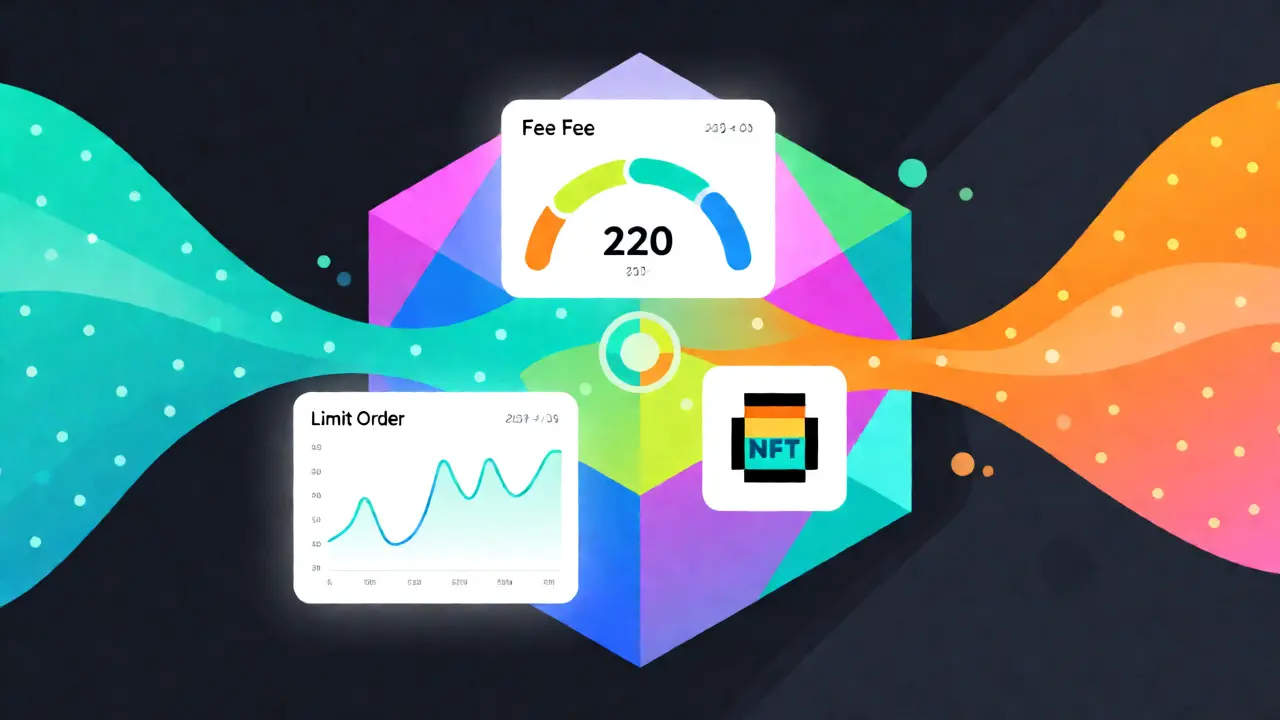
- Dynamic Fees: Most AMMs charge a flat fee, say 0.3%, regardless of volatility. Trader Joe adjusts fees based on market conditions. During high volatility, fees go up to protect liquidity providers from impermanent loss. When markets are calm, fees drop to attract volume. This balances risk and reward better than static models.
- Limit Orders: Traditional AMMs only allow market orders-you buy at whatever price exists right now. Trader Joe introduced limit orders, letting you set a specific price to buy or sell. This feature alone saves users thousands in slippage during volatile swings.
- Joepegs: This is their NFT marketplace integrated directly into the DEX. You can mint, buy, and sell NFTs using the same wallet connection you use for swapping tokens. It keeps everything under one roof.
Fees and Tokenomics: What Does LFJ Do?
The LFJ token serves multiple purposes within the ecosystem. It is not just a speculative asset; it has utility. If you hold LFJ, you gain voting rights in the governance system. You can vote on changes to fee structures, new listings, and treasury allocations. Beyond governance, holding LFJ gives you discounts on trading fees. The more you hold, the lower your swap costs become, creating an incentive loop for long-term holders.
Staking LFJ earns you rewards from protocol revenue. Every time someone swaps on Trader Joe, a portion of the fee goes to the treasury. Part of this treasury funds buybacks and burns of LFJ, reducing supply over time. Deflationary pressure like this can support the token price, though it depends heavily on trading volume. In 2025 and 2026, volume on Avalanche has fluctuated, so LFJ’s value tracks closely with overall network activity.
Security and Trust: Can You Rely on It?
DeFi platforms carry inherent risks. Smart contract bugs, hacks, and rug pulls are constant threats. Trader Joe mitigates some of this through rigorous auditing. The codebase underwent audits by reputable firms like HashEX and Paladin. These audits check for vulnerabilities in how funds move through the system. However, remember that self-custodial means self-responsibility. If you lose your private key or approve a malicious contract, there is no customer support line to call.
| Feature | Trader Joe (DEX) | Centralized Exchange (CEX) |
|---|---|---|
| Custody of Funds | User Wallet (Self-Custody) | Exchange Wallet (Custodial) |
| Hack Risk | Smart Contract/Bridge Risk | Platform Breach/Hacking |
| Recovery Option | None (If Key Lost) | Password Reset/KYC Support |
| Anonymity | High (No KYC required) | Low (KYC mandatory) |
| Audits | Public Code Audits | Internal/Private Audits |
One critical point: $2.38 billion worth of cryptocurrency was stolen in 2023 across various platforms. While Trader Joe has maintained a strong track record, the broader industry reminds us that security is never guaranteed. Always enable hardware wallets for large holdings and revoke unnecessary token approvals regularly.
How to Use LFJ on BSC: Bridging Steps
If you insist on using LFJ on the Binance Smart Chain, you need to bridge it. Here is the practical workflow for moving value from Avalanche to BSC and back, since native LFJ isn’t on BSC.
- Connect Wallet: Ensure your MetaMask or Rabby wallet is connected to the Avalanche network.
- Select Bridge: Use a trusted bridge provider like Wormhole Portal or Stargate. Avoid obscure bridges with low liquidity.
- Wrap Tokens: Swap your AVAX or USDC on Avalanche for the bridged version on BSC. Note that you won’t get native LFJ on BSC; you’ll likely hold AVAX or stablecoins to trade on BSC DEXs like PancakeSwap.
- Trade on BSC: Once on BSC, you can trade popular pairs. If you specifically want LFJ exposure on BSC, look for synthetic derivatives or wrapped LFJ tokens provided by third-party protocols, but verify their backing carefully.
- Bridging Back: To return funds to Avalanche, reverse the process. Be aware of bridge fees and wait times, which can range from minutes to hours depending on congestion.
Pros and Cons: Is It Right for You?
No platform is perfect. Here is a balanced view based on current market conditions in 2026.
Pros:
- Fast transactions with low gas fees thanks to Avalanche.
- Advanced features like limit orders reduce slippage.
- Strong community and active development team.
- No KYC requirements preserve privacy.
Cons:
- Not natively on BSC, requiring bridges for BSC users.
- Limited fiat on-ramps compared to CEXs.
- Learning curve for managing wallets and approvals.
- Dependent on Avalanche network health.
Final Verdict
Don’t let the "BSC" label confuse you. Trader Joe (LFJ) is an Avalanche powerhouse. If you are already deep in the Binance Smart Chain ecosystem, you might prefer PancakeSwap for its native integration. But if you are willing to bridge assets, Trader Joe offers superior technology with dynamic fees and limit orders. For serious DeFi traders who value control and advanced tools, it remains a top-tier choice. Just remember: always double-check network settings before sending funds. A wrong click can cost you dearly in unrecoverable losses.
Is LFJ available on Binance Smart Chain?
No, LFJ is the native token of Trader Joe on the Avalanche network. It does not exist natively on Binance Smart Chain. Users can access it on BSC only via cross-chain bridges, resulting in a wrapped version of the token.
What is the difference between LFJ and Trader Joe?
Trader Joe is the name of the decentralized exchange platform. LFJ is the governance and utility token associated with the platform. They are part of the same ecosystem but serve different functions-one is the service, the other is the currency/governance tool.
Do I need KYC to use Trader Joe?
Generally, no. As a decentralized exchange, Trader Joe allows users to connect crypto wallets and trade without submitting personal identification documents. This makes it accessible globally without regulatory hurdles typical of centralized exchanges.
Are there limit orders on LFJ/Trader Joe?
Yes, Trader Joe supports limit orders. This feature allows users to specify a desired price for buying or selling tokens, rather than accepting the current market price. This helps manage slippage and execute trades at preferred levels.
How safe is Trader Joe compared to centralized exchanges?
Safety profiles differ. Trader Joe uses audited smart contracts and self-custody, meaning you hold your own keys. Risks include smart contract bugs and user error (like phishing). Centralized exchanges face hacking risks but offer insurance and recovery options. Neither is perfectly safe; both require vigilance.