

Imagine buying a digital asset that started as a joke, watched it make you rich overnight, and then saw it vanish into the ether three months later. That is the reality for most people touching memecoins. But here is the twist: while 95% of them die young, a few survivors like Dogecoin have outlasted entire tech companies. So, are these tokens just gambling chips with pretty pictures, or are they building something real? If you are wondering whether to hold your bags or cut your losses in 2026, you need to look past the hype and at the hard data.
The Harsh Reality of Meme Coin Lifespans
Let’s be honest: most memecoins fail. It isn’t a matter of if, but when. A study from the University of Chicago’s Booth School of Business dropped a bombshell in September 2025. They found that nearly 95% of memecoins lose 90% of their value within 18 months of launch. Think about that. You buy in because you think you’re early, and less than two years later, your investment is worth pennies on the dollar. The median lifespan of an unsuccessful meme project is just 87 days. That is barely enough time for your first paycheck to clear.
Why so short? Because most of these projects have no engine. They run on attention. When the Twitter buzz dies down, the price collapses. Fidelity Investments’ Digital Assets Research team noted in August 2025 that only 12% of memecoins launched in the last five years still had a market cap over $1 million. The rest? Gone. Forgotten. Rug-pulled. If you are holding a token that doesn’t have a working product or a massive, active community, you are likely holding a melting ice cube.
Dogecoin and Shiba Inu: The Exceptions Proving the Rule
You might point to Dogecoin as proof that memes can last. Created in 2013 by Billy Markus and Jackson Palmer as a satire of Bitcoin hype, DOGE has stuck around for over a decade. As of late 2025, it sits comfortably in the top 10 cryptocurrencies with a market cap hovering around $22.3 billion. Why did it survive? Community. Unlike newer coins that pop up and fade, Dogecoin has a loyal base of about 2.3 million monthly engaged users. It also got a massive boost from Tesla integrating it into their payment system in December 2024, processing millions in transactions monthly.
Shiba Inu (SHIB) is another outlier. Launched in 2020, it carved out its own niche by building an ecosystem rather than just riding a wave. Its Layer-2 solution, Shibarium, launched in mid-2024, processed over 247 million transactions with fees averaging just $0.0003. This gave SHIB actual utility beyond being a meme. But don’t get it twisted-these two are anomalies. For every Dogecoin that survives, there are thousands of Trump-themed or cat-themed tokens that crashed 99% in a week. Bernstein Research predicts that by 2030, only the top 3-5 memecoins will maintain relevance, potentially capturing just 1-1.5% of the total crypto market.
Utility vs. Vibes: Where Do Memecoins Fit?
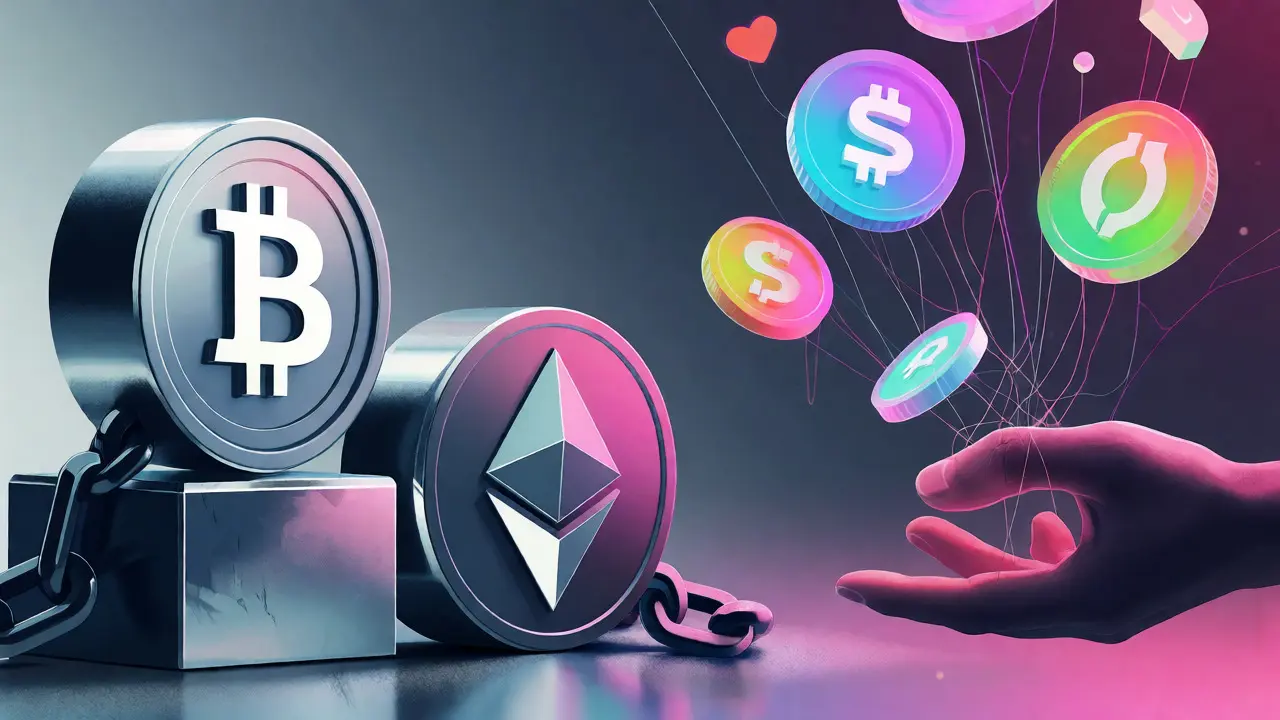
Traditional cryptocurrencies like Bitcoin and Ethereum derive value from network security, transaction volume, and technological innovation. Memecoins? They derive value from cultural resonance. It sounds fluffy, but it’s a real economic driver. However, the utility gap is huge. Bitcoin processes about 7 transactions per second; Ethereum handles 30. Solana-based memecoins can theoretically hit 65,000 TPS, but actual usage rarely exceeds 1,000 TPS. Most people aren’t using memecoins to buy coffee. Only 0.7% of merchants accepting crypto take anything other than Dogecoin.
So what is the use case? Speculation and entertainment. According to BitPay’s 2025 survey, enterprise adoption is virtually nonexistent outside of novelty marketing. If you need a stable store of value, memecoins are terrible choices. Their annual volatility averages 82.3%, compared to Bitcoin’s 48.7%. If you need a medium of exchange, they are too slow and unstable. Their primary job is to be a vehicle for retail speculation. And that’s fine, as long as you know what you’re buying.
Regulatory Headwinds and Institutional Skepticism
Regulators don’t love memecoins. In February 2025, the SEC issued a staff statement classifying them as "akin to collectibles" rather than securities. This means they don’t generate yield or convey rights to future profits. It’s a legal way of saying: "This is a toy." Meanwhile, the Commodity Futures Trading Commission (CFTC) filed 17 enforcement actions against memecoin promoters in the first nine months of 2025 alone. Compare that to just 3 in all of 2024. The message is clear: if you pump and dump, we’re watching.
Institutional investors remain skeptical. A Morningstar survey in October 2025 found that 92% of financial advisors recommend keeping memecoins under 1% of any portfolio. Why? Because they lack fundamental value. Dr. Emily Chen, Chief Economist at the IMF, testified before Congress that memecoins represent "speculative excesses" with little support behind their valuations. While some analysts like Raoul Pal argue that community-owned assets are a new asset class, the consensus among traditional finance is that memecoins are high-risk lottery tickets, not investments.

How to Spot a Survivor Among the Noise
If you insist on playing this game, how do you avoid getting burned? First, check the community size. LunarCrush data shows that successful coins have tens of thousands of active social mentions. If a coin has fewer than 5,000 active members, it’s likely dead weight. Second, look for audits. Koinly reported that 73% of memecoins launched in 2024 had no third-party security audit. Unaudited code is a rug pull waiting to happen. Third, watch the holder distribution. If one wallet holds 20% of the supply, they can crash the price whenever they want.
| Metric | Bitcoin (BTC) | Ethereum (ETH) | Dogecoin (DOGE) | Typical New Memecoin |
|---|---|---|---|---|
| Annual Volatility | 48.7% | 56.2% | 75.0% | 82.3%+ |
| Avg. Hold Time | > 1 Year | > 1 Year | ~6 Months | < 90 Days |
| Merchant Acceptance | High | Medium | Low (Novelty) | Negligible |
| Security Audits | Rigorous | Rigorous | Basic | Often Missing |
| Primary Value Driver | Store of Value | Smart Contracts | Community/Hype | Hype/Celebrity |
The Verdict: Will They Last Forever?
Will memecoins disappear? Probably not entirely. Humans love jokes, and internet culture isn’t going anywhere. But the era of random tokens making millionaires overnight is fading. The market is maturing. By 2030, expect a consolidation where only a handful of "blue-chip" memecoins remain, backed by genuine communities and perhaps minor utilities like NFTs or governance voting. The rest will join the graveyard of failed experiments.
For now, treat memecoins like casino chips. Put in what you can afford to lose, take profits aggressively, and don’t confuse a viral tweet with a business plan. The long-term viability isn’t about technology-it’s about staying relevant in a world that forgets things fast.
What percentage of memecoins actually survive long-term?
According to research from Fidelity Investments and the University of Chicago, only about 12% of memecoins launched in the last five years remain actively traded with significant market caps. The vast majority fail within 18 months, with the median lifespan of unsuccessful projects being just 87 days.
Is Dogecoin a good long-term investment?
Dogecoin is an outlier due to its strong community and brand recognition, maintaining a top-10 position since 2013. However, it remains highly volatile and speculative. Financial advisors generally recommend limiting exposure to less than 1% of a portfolio, viewing it more as a speculative bet than a stable investment.
Why do most memecoins fail?
Most fail due to a lack of utility, poor security audits, and reliance on fleeting social media hype. Without a dedicated community or functional product, prices collapse once the initial marketing buzz fades. Additionally, many suffer from "rug pulls," where developers abandon the project after raising funds.
Are memecoins considered securities by regulators?
In February 2025, the SEC classified memecoins as "akin to collectibles" rather than securities, noting they typically lack functionality or yield. However, regulatory scrutiny has increased, with the CFTC filing numerous enforcement actions against promoters for fraud and manipulation.
How does memecoin volatility compare to Bitcoin?
Memecoins are significantly more volatile. Data from CoinDesk in 2025 showed memecoins averaging 82.3% annual volatility, compared to Bitcoin’s 48.7% and Ethereum’s 56.2%. This makes them unsuitable for risk-averse investors seeking stability.