

Imagine trying to move millions of euros into Bitcoin without getting flagged by every regulator in Europe. For most traders, that sounds like a nightmare. But for businesses and serious investors, it’s just Tuesday. That’s where Mercurity.Finance comes in. It isn’t the flashiest app on your phone, nor is it the place you’ll go to buy the latest meme coin before it pumps 1000%. Instead, it operates as a fortress of compliance, designed specifically for those who need their crypto transactions to play nice with traditional banking laws.
As we settle into 2026, the crypto landscape has shifted dramatically. The wild west days are over, replaced by strict regulations like the EU’s Markets in Crypto-Assets (MiCA) regulation. Mercurity.Finance, operating under the entity Mercurity Fintech Holding, positioned itself early for this change. With full MiCA authorization secured back in early 2024, it stands out as one of the few exchanges that regulators actually trust. But does that safety come at too high a price for everyday traders? Let’s break down what this platform really offers, who it’s built for, and whether it deserves a spot in your portfolio strategy.
The Core Identity: A Compliance-First Hybrid Exchange
To understand Mercurity.Finance, you have to look past the standard features every exchange offers. What makes this platform unique is its hybrid structure. It blends centralized control with decentralized principles, but the heavy lifting is done by its proprietary "compliance engine." According to their transparency reports from mid-2025, this system processes over 2.3 million transaction checks daily with 99.98% accuracy. Why does that matter? Because it allows seamless cross-border transactions between European and Asian markets without triggering false positives or frozen accounts.
This focus on regulation isn’t just marketing fluff. Mercurity was founded in 2020 by James van der Kolk and Dr. Elena Petrova, aiming to bridge the gap between fintech payments and digital assets. By late 2022, they expanded into full exchange functionality. Today, they support over 300 cryptocurrencies and integrate with 47 fiat currencies through partnerships with 12 global banking networks. If you are a business owner in Berlin needing to pay a supplier in Tokyo using stablecoins, this is your playground. If you are a day trader looking to scalp volatile altcoins based on Twitter rumors, you might find the environment too restrictive.
Trading Fees and Account Tiers Explained
Costs can make or break your trading strategy. Mercurity uses a maker-taker fee model, which rewards liquidity providers while charging slightly more for those who take liquidity. Here is how the numbers stack up:
- Makers: Pay between 0.05% and 0.15% per trade.
- Takers: Pay between 0.15% and 0.25% per trade.
These rates decrease if you hit specific volume thresholds. For instance, once your 30-day trading volume exceeds $50,000, you unlock the first tier of discounts. However, you must choose an account tier to access these benefits fully. The Basic tier is free but requires a minimum deposit of $100. The Professional tier costs $19.99/month and requires a $1,000 balance. For large players, the Institutional tier starts at $499/month with a hefty $100,000 minimum deposit.
One hidden cost many users overlook is withdrawal fees. Mercurity charges a flat $15 fee for any withdrawal under $1,000. Compare that to Coinbase’s 0.5% fee structure, and you see why small retail traders often complain. If you are moving $200, that $15 fee eats up 7.5% of your capital instantly. This structure clearly discourages frequent small withdrawals, pushing users toward larger, more efficient transactions.
| Feature | Mercurity.Finance | Binance | Coinbase |
|---|---|---|---|
| Regulatory Status | Full MiCA Authorized (EU) | Varies by region (Limited EU) | Fully Regulated (US/EU) |
| Maker/Taker Fees | 0.05-0.15% / 0.15-0.25% | 0.10% / 0.10% (Standard) | 0.40% / 0.60% (Standard) |
| Cross-Border Speed | <45 seconds (via SBI partnership) | Variable (Blockchain dependent) | 1-3 Business Days (Bank transfer) |
| Altcoin Selection | 300+ (Curated, Conservative) | 600+ (Extensive) | 200+ (Moderate) |
| Best For | Institutions, EU Businesses | Retail Traders, High Volume | Beginners, US Residents |
Security Architecture: Beyond Basic Cold Storage
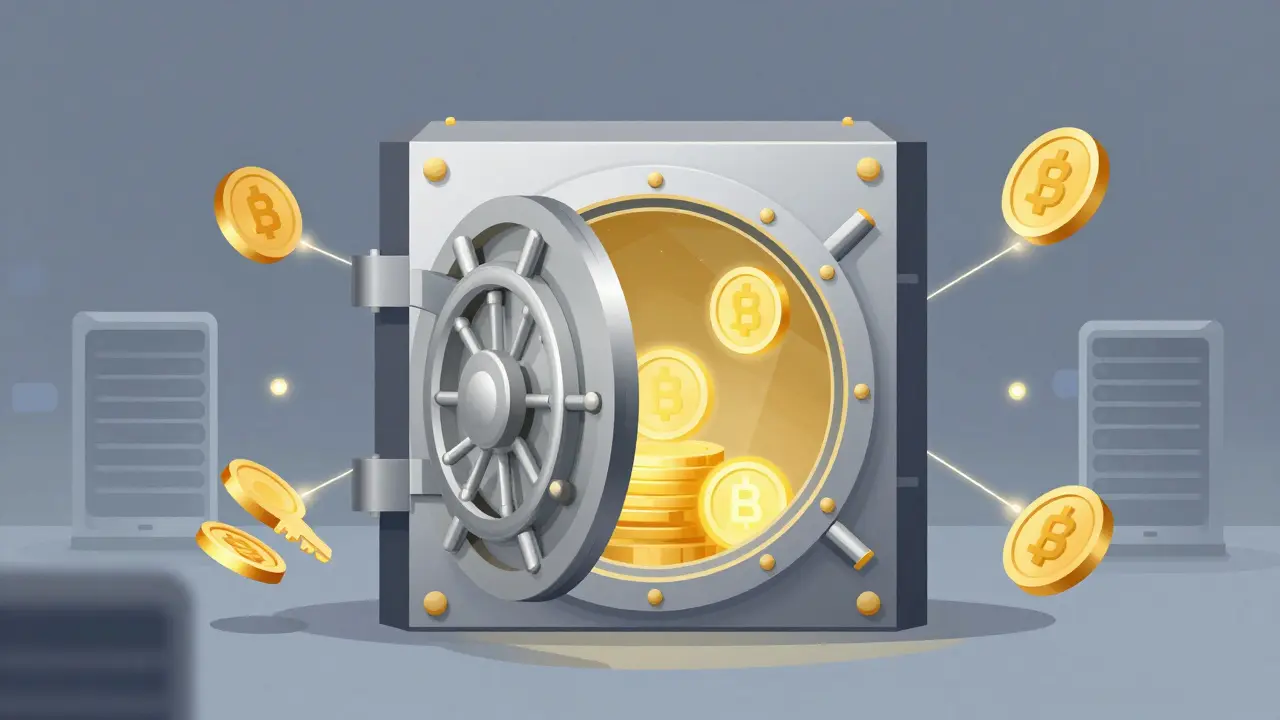
When you hand over your private keys to an exchange, you are trusting them with your life savings. Mercurity takes this seriously. They utilize Multi-Party Computation (MPC) wallet technology, which splits private keys into multiple parts stored in different locations. No single point of failure exists. Furthermore, 95% of all user assets are kept in cold storage, meaning they are offline and inaccessible to hackers.
Their security setup also includes RAM-based private key storage for active operations, a detail highlighted in TechRepublic’s security analysis. This means even if a server is physically compromised, the keys aren’t sitting on a hard drive waiting to be stolen. On the user side, mandatory 3-factor authentication with biometric options adds another layer of defense. In a market where exchange hacks still happen, this architecture provides peace of mind, especially for institutional clients managing millions in assets.

User Experience: Where It Shines and Where It Stumbles
Let’s talk about the actual experience of using the platform. If you are a business user, you will likely love it. Trustpilot data from late 2025 shows a 4.1/5 rating, with 68% of positive reviews praising the "seamless integration with European banking systems." The ability to process €2.3 million in monthly conversions with same-day settlement is a game-changer for CFOs tired of wire transfer delays.
However, retail traders tell a different story. The same Trustpilot data reveals that 52% of negative reviews cite "limited altcoin selection." If you missed out on Solana when it launched because Mercurity hadn’t listed it yet, you won’t be alone. The platform averages 17 days to list new tokens, compared to the industry average of 7 days. Their conservative approach ensures only vetted, compliant assets make it onto the board, but it kills the hype cycle for speculative traders.
Performance is another mixed bag. During periods of extreme volatility, some users report a "laggy interface." TradingView forum users rate the charting tools a 3.7/5. While order execution reliability is superior to competitors like KuCoin, the visual feedback loop isn’t smooth enough for high-frequency scalpers. Additionally, API rate limits are capped at 500 requests per minute, which is 40% lower than Binance or Bybit. If you run automated bots, this bottleneck could cost you opportunities.
The SBI Digital Markets Partnership: A Strategic Edge
One of Mercurity’s biggest advantages is its partnership with SBI Digital Markets, established in June 2024. This collaboration enables direct yen-euro tokenized transactions with settlement in under 45 seconds. Think about that speed. Traditional banking channels for cross-border transfers often take days. This feature gives Mercurity a massive edge in the EU-Asia trade corridor.
SBI Holdings increased their stake to 19.8% in August 2025, signaling strong confidence in this strategy. For businesses importing goods from Japan or exporting software to Europe, this reduces currency risk and transaction costs significantly. It’s not just a feature; it’s a core value proposition that separates Mercurity from generic exchanges.
Who Should Use Mercurity.Finance?
Not every tool fits every job. Here is a quick guide to help you decide:
- Use Mercurity if: You are a European business needing compliant crypto-fiat ramps. You value regulatory safety over having every obscure token available. You engage in significant EU-Asia cross-border trade.
- Avoid Mercurity if: You are a North American retail trader (access is limited to Canada with restricted features). You rely on high-frequency trading bots requiring low latency. You want to speculate on newly launched meme coins immediately after they launch.
Future Outlook: Digital Euro and Real-World Assets
Looking ahead, Mercurity is positioning itself for the next wave of financial innovation. In September 2025, they announced integration with the European Central Bank’s digital euro pilot program, with live testing scheduled for Q1 2026. This aligns perfectly with their compliance-first ethos. Additionally, their roadmap includes expanding into real-world assets (RWAs) by Q2 2026, allowing users to trade tokenized versions of physical assets like real estate or commodities.
Despite strong revenue growth ($87 million in Q3 2025, up 32% year-over-year), Bernstein Research maintains a "Hold" rating, citing limited scalability beyond niche institutional corridors. The challenge remains balancing strict compliance with the fast-paced nature of crypto innovation. As regulations tighten globally, however, platforms like Mercurity may become the standard rather than the exception.
Is Mercurity.Finance safe for beginners?
Yes, Mercurity is very safe due to its MiCA compliance and MPC wallet technology. However, it may not be ideal for absolute beginners looking for a simple, gamified experience. The interface is geared towards professionals, and the high withdrawal fees for small amounts can be frustrating for those starting with small budgets.
Can I use Mercurity.Finance in the United States?
No, Mercurity.Finance is primarily focused on the European and Asian markets. It is currently not accessible to residents of the United States. Canadian users have limited access, but full functionality is reserved for supported jurisdictions like the EU and Japan.
How do Mercurity's fees compare to Binance?
Mercurity's trading fees (0.05-0.25%) are competitive with Binance's standard tiers. However, Mercurity charges higher withdrawal fees for small transactions ($15 flat fee under $1,000), whereas Binance often offers lower or zero withdrawal fees depending on the cryptocurrency. For high-volume traders, Mercurity's volume discounts can make it cheaper overall.
What is the SBI Digital Markets partnership?
This partnership allows Mercurity users to perform direct yen-euro tokenized transactions with settlement times under 45 seconds. It is a major advantage for businesses conducting trade between Europe and Asia, offering much faster and cheaper cross-border settlements than traditional banking methods.
Does Mercurity support DeFi protocols?
Mercurity has limited DeFi integration compared to competitors. Its focus is on regulated, compliant assets and institutional-grade trading. While it supports major cryptocurrencies used in DeFi, it does not offer native interfaces for interacting with decentralized protocols like Uniswap or Aave directly within the platform.