
Have you stumbled upon New Capital while looking for a place to trade cryptocurrency? If so, stop scrolling and take a deep breath. Before you type in your credit card number or connect your wallet, there is a massive red flag waving right in front of you that most people miss because they are too focused on the promise of easy profits.
Here is the hard truth: There is no verifiable evidence of a legitimate, regulated entity called "New Capital" operating as a standard cryptocurrency exchange. Instead, search results and financial watchdogs point to "New Capital Lenders," an offshore lending platform that has raised serious alarms among experts. In the world of digital assets, if you cannot find who runs the company, where they are registered, or which government agency watches over them, you are likely walking into a trap.
The Red Flags of New Capital Lenders
When we talk about New Capital Lenders, a high-risk financial services platform flagged by regulators for lack of transparency and unverified operations, we aren't just talking about bad customer service. We are talking about structural risks that can lead to total loss of funds. Financial analysts updated their warnings as recently as June 2025, highlighting several critical failures that separate this entity from legitimate businesses.
First, look at the regulatory status. Legitimate financial institutions operate under strict oversight. They have licenses from bodies like the SEC in the US, the FCA in the UK, or FinCEN globally. New Capital Lenders lacks registration with any Level 1, Level 2, or Level 3 financial regulator. This isn't a minor paperwork error; it means there is no safety net. If the platform disappears tomorrow, there is no government body you can call to get your money back.
Second, consider the management team. A trustworthy company puts its leaders' faces and credentials on the website. You should be able to see their LinkedIn profiles, their past experience, and their track record. With New Capital, this information is either completely absent or relies on fake profiles. When a company hides its owners, it usually means those owners don't want to be held accountable for their actions.
Third, check the complaints. The Better Business Bureau (BBB) has documented numerous complaints against New Capital Lenders. Users report deceptive loan terms, hidden fees, and misleading information about how the business works. These aren't isolated incidents; they form a pattern of problematic conduct that suggests the business model itself may be predatory or fraudulent.
| Feature | New Capital / New Capital Lenders | Legitimate Crypto Exchange |
|---|---|---|
| Regulatory License | None verified / Offshore | Verified (e.g., NYDFS, FCA) |
| Management Transparency | Hidden or Fake Profiles | Publicly Listed Executives |
| User Complaints | High Volume (Deceptive Practices) | Low Volume (Resolved via Support) |
| Fund Security | No Insurance / Cold Storage Unknown | Cold Storage + Insurance Funds |
What Experts Say About High-Risk Platforms
I’ve spent years analyzing financial platforms here in Wellington, and I’ve seen many schemes come and go. The advice from seasoned financial professionals regarding New Capital is blunt: avoid it entirely. One expert assessment states clearly, "I recommend completely disregarding any mentions of such companies and refraining from doing business with them and its affiliate bodies." That is not a suggestion; it is a warning based on long-term market experience.
Why do these platforms exist? They often target beginners who are excited about crypto but don't know how to verify safety. They use flashy websites, promises of high returns, and aggressive marketing to lure users in. Once your money is deposited, withdrawing it becomes difficult or impossible. You might be asked to pay "taxes" or "fees" to release your funds, which is a classic advance-fee scam tactic.
If you have already sent money to New Capital or New Capital Lenders, time is critical. Do not send more money to "unlock" your account. Instead, immediately explore all options for fund recovery. File a complaint with your local financial oversight authority. In the US, this could be the FTC or CFPB. In other countries, contact your national consumer protection agency. Consider pursuing legal remedies through court systems if the amount is significant. While recovery is never guaranteed, acting quickly improves your chances.
The Safe Alternative: How Real Exchanges Operate
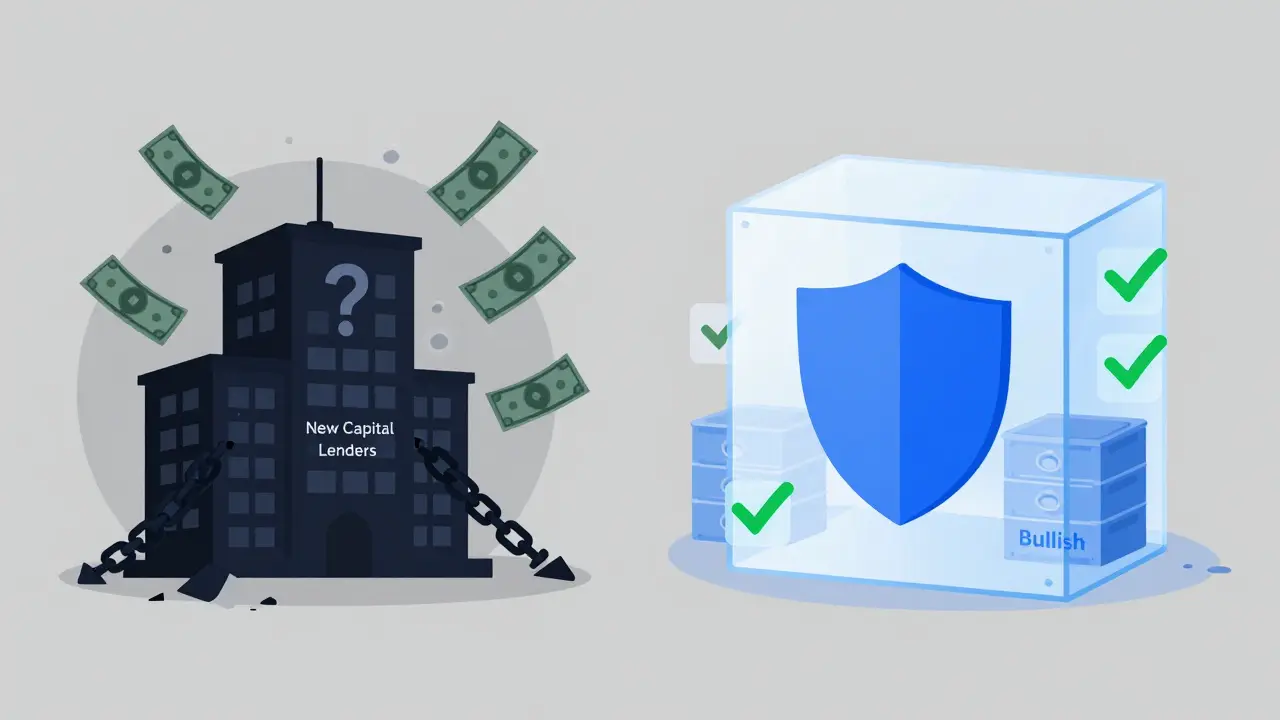
To understand why New Capital is dangerous, you need to see what a safe exchange looks like. Let’s look at Bullish, a regulated cryptocurrency exchange holding BitLicense and money transmission licenses, enabling secure trading across multiple US states. Bullish is a prime example of compliance and security in the 2026 market.
Bullish holds a BitLicense from the New York Department of Financial Services (NYDFS). This is one of the toughest licenses to get in the world. It requires rigorous audits, proof of funds, and strict anti-money laundering (AML) protocols. Because of this license, Bullish can operate legally in 20 US states, including California, Florida, and New York. Since 2021, they have handled $1.5 trillion in trading volume internationally. That scale is only possible when institutional investors trust the platform with billions of dollars.
Compare this to New Capital. No license. No transparency. No track record. The difference is night and day. Legitimate platforms prioritize user protection through cold storage solutions (keeping most funds offline), insurance funds to cover potential hacks, and transparent fee structures. They don't hide behind offshore registrations.
How to Spot a Crypto Scam Before You Lose Money
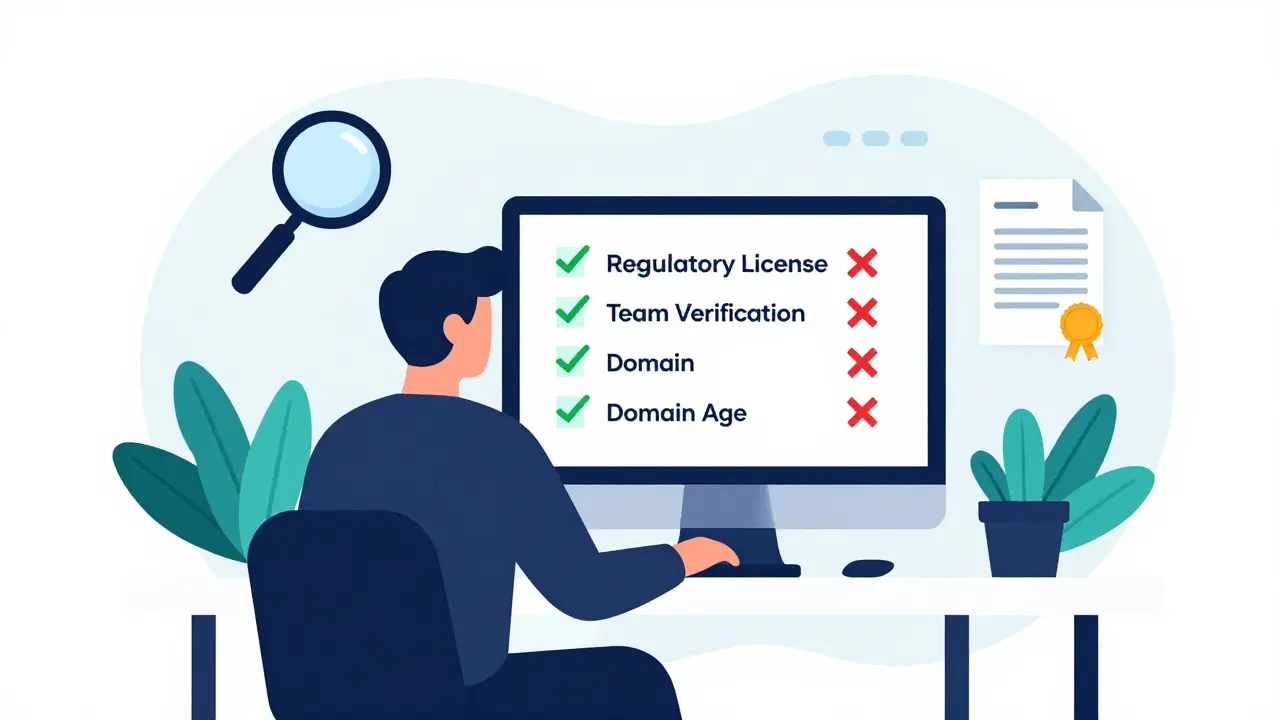
You don't need to be a cybersecurity expert to spot a risky platform. Here is a simple checklist I use every time I evaluate a new service:
- Check the Regulators: Go to the website of major financial regulators (SEC, FCA, ASIC, FINTRAC). Search for the company name. If they claim to be regulated but don't appear in the official database, they are lying.
- Verify the Team: Look up the CEO and founders on LinkedIn. Do their profiles match the company's history? Are there photos? Real people have real digital footprints.
- Read Independent Reviews: Don't trust reviews on the company's own site. Look for forums like Reddit, Trustpilot, or specialized crypto communities. Search for "[Company Name] scam" or "[Company Name] withdrawal issues."
- Test Customer Support: Ask a complex question before depositing. If they ignore you, give generic answers, or pressure you to act fast, walk away.
- Check Domain Age: Use a WHOIS lookup tool. If the website was created six months ago but claims to have been operating for five years, it’s a red flag.
California’s Department of Financial Protection and Innovation maintains a Crypto Scam Tracker that documents fraudulent platforms. This tracker reveals common patterns: fake trading interfaces, investment group scams on Telegram, and platforms that promise unrealistic daily returns. New Capital fits many of these risk profiles due to its lack of verifiable data.
Choosing a Reliable Partner for Your Crypto Journey
The cryptocurrency market in 2026 is maturing. Regulatory frameworks are tightening, and the distinction between legit platforms and scams is clearer than ever. Users are increasingly demanding proper licensing, transparent operations, and institutional-grade security. This shift is good for everyone because it forces bad actors out of the market.
When choosing an exchange, prioritize safety over hype. A platform with slightly higher fees but full regulatory compliance is infinitely better than a "free" platform that steals your savings. Use broker-finding tools that verify regulatory compliance. Stick to well-known names that have survived market crashes and regulatory scrutiny.
If you are in New Zealand, Australia, or the US, ensure the platform is licensed in your jurisdiction. For example, in New Zealand, check if the provider is registered with the Financial Markets Authority (FMA). In the US, look for state-level money transmitter licenses. These licenses mean someone is watching the company’s books.
Is New Capital a legitimate crypto exchange?
No, there is no verifiable evidence that "New Capital" operates as a legitimate, regulated cryptocurrency exchange. Available information points to "New Capital Lenders," an offshore entity lacking regulatory licenses and facing numerous complaints for deceptive practices. Financial experts strongly advise against using this platform.
What are the signs of a crypto exchange scam?
Key signs include lack of regulatory licenses, hidden or fake management teams, unrealistic profit promises, difficulty withdrawing funds, and negative reviews on independent sites. Always verify the company's registration with official government databases before depositing money.
Is Bullish a safe alternative to New Capital?
Yes, Bullish is considered a safe and regulated alternative. It holds a BitLicense from New York and operates legally in 20 US states. Unlike New Capital, Bullish has transparent operations, verified management, and a strong track record of handling large trading volumes securely.
What should I do if I lost money to New Capital?
If you have lost money, stop sending any further payments. Immediately file a complaint with your local financial regulatory authority (such as the FTC in the US or FMA in New Zealand). Contact your bank or payment provider to dispute the transaction. Consider seeking legal advice for potential recovery options.
How can I verify if a crypto exchange is regulated?
Visit the official websites of financial regulators in your country (e.g., SEC, FCA, ASIC). Use their online search tools to look up the exchange's name. Legitimate exchanges will list their license numbers and regulatory status prominently on their own websites, usually in the footer.
16 Responses
These people are evil. They steal from the poor and weak. The system is rigged against us all but these scammers are the worst kind of criminals. I hope they rot in prison forever.
u actually think u need a license to trade crypto?? lol ur so naive. its just the gov trying to control money flow. new capital might be shady but at least they dont report to the IRS like Coinbase does. do your own research instead of listening to this fear mongering article.
hey folks just wanted to say that while the post is right about red flags you should also check if the site has ssl encryption. most scams use http not https. also look for community discord servers if they have one usually legit projects have active devs answering questions there
I agree with the assessment. In India, we see many such platforms popping up with fancy names but no substance. It is crucial to verify regulatory status before investing any hard-earned money. The lack of transparency is a huge warning sign for anyone.
This is an incredibly important discussion to have. Many individuals are eager to enter the cryptocurrency market without understanding the underlying risks associated with unregulated entities. It is vital that we educate ourselves and others on how to identify legitimate financial institutions versus fraudulent operations.
typical foreign scam targeting americans :( we need stronger borders and stricter laws against these offshore thieves. why do we even allow them to operate? protect american workers and investors first!! :)
boring read. i already knew it was a scam. why waste my time with this obvious info? real traders know better than to touch anything unregulated. yawn.
Let me break this down for everyone here because it seems some of you are missing the point. Regulatory compliance isn't just paperwork; it's your safety net. When you deposit funds into an unregulated entity, you have zero recourse if they vanish. Always prioritize licensed exchanges like Bullish or Coinbase over random offshore sites promising moonshots.
The nature of trust in digital finance is fascinating. We rely on code and cryptography, yet human greed still finds ways to exploit the gaps in regulation. New Capital represents the shadow side of this innovation, where anonymity becomes a shield for deceit rather than privacy for users.
I cannot believe how many people fall for this every single day! It is absolutely tragic to see families lose their life savings to these predatory schemes. My heart breaks for those who have been deceived by false promises of wealth. Please, please stay safe out there!
Oh look, another article telling sheep what to do. If you cant figure out its a scam yourself then maybe you dont deserve to be in crypto. But sure, keep reading these hand-holding guides while the real whales make millions.
The analysis provided here is superficial at best. While regulatory absence is a concern, it is not the sole indicator of fraud. One must examine the tokenomics, the whitepaper depth, and the developer activity on GitHub. This article fails to provide a comprehensive technical audit of the platform's infrastructure.
From a risk management perspective, the alpha-beta model of portfolio theory suggests diversifying across regulated assets only 📉📈. Unregulated entities introduce idiosyncratic risk that cannot be hedged effectively. Stick to NYDFS licensed platforms to maintain portfolio integrity 🛡️💼.
In the global fintech landscape, regulatory arbitrage is common. However, platforms like New Capital often fail due to lack of institutional-grade KYC/AML protocols. For cross-border transactions, compliance with FATF recommendations is essential. Without it, banks will freeze accounts instantly.
Clearly a scam. Avoid.
Hey everyone! Just wanted to add that checking the domain age is super easy using WHOIS. If the site is less than a year old, run away fast. Also, Bullish is great because they have customer support that actually replies within 24 hours. Try sending a test email before you deposit anything big!