
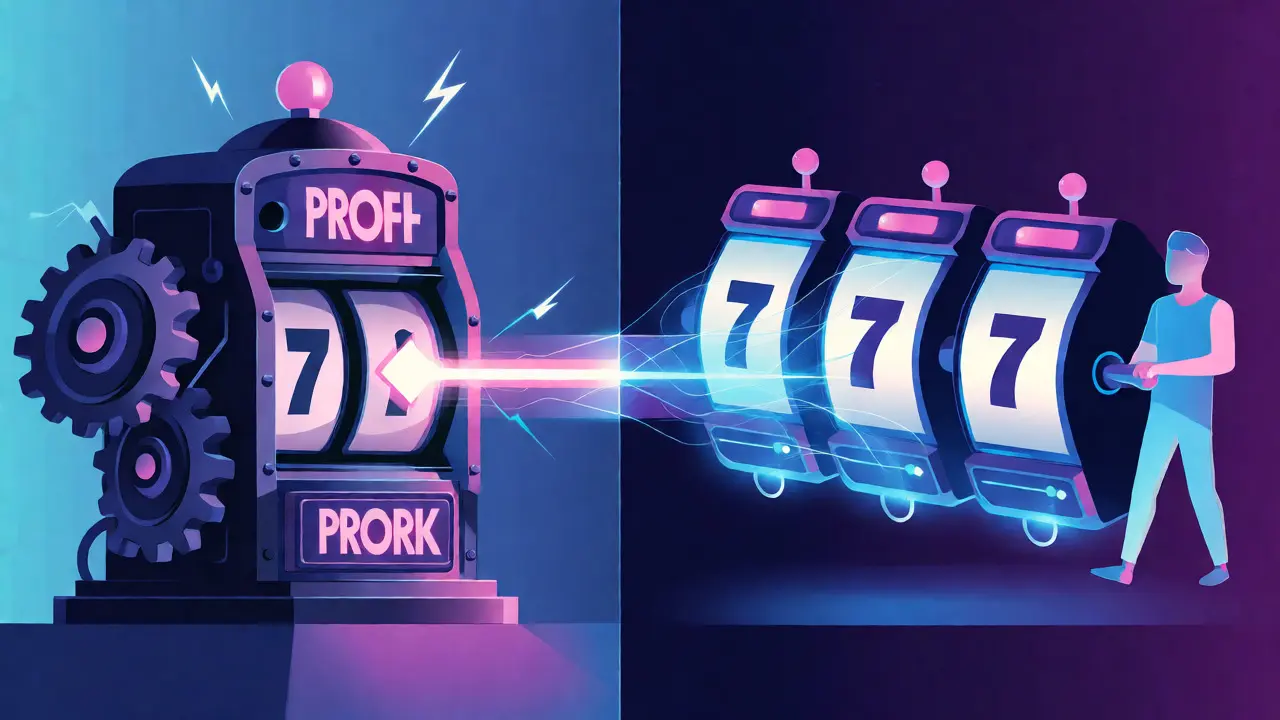
Imagine you’re running a casino. You have two slot machines side-by-side. One pays out $100, the other $200. In the old days of Proof of Work (PoW), you had to choose one machine because you only had enough electricity to run one. But in modern Proof of Stake (PoS) systems, it’s like having infinite free electricity. You can pull the lever on both machines simultaneously. If either hits, you win. This sounds great for you, but it breaks the game entirely. This is the core of the Nothing at Stake Problem.
It sounds counterintuitive, doesn’t it? How can validating multiple chains be a problem if you get paid more? The issue isn’t about your profit; it’s about network security and finality. If everyone validates every possible version of history, no single version becomes "true." The blockchain fractures into chaos. Vitalik Buterin first highlighted this vulnerability back in 2017, noting that without penalties, rational validators would always bet on every fork to maximize expected returns. Today, with Ethereum fully transitioned to PoS since September 2022, understanding how we fixed this is crucial for anyone staking or building on-chain.
The Core Mechanics: Why Free Validation Breaks Consensus
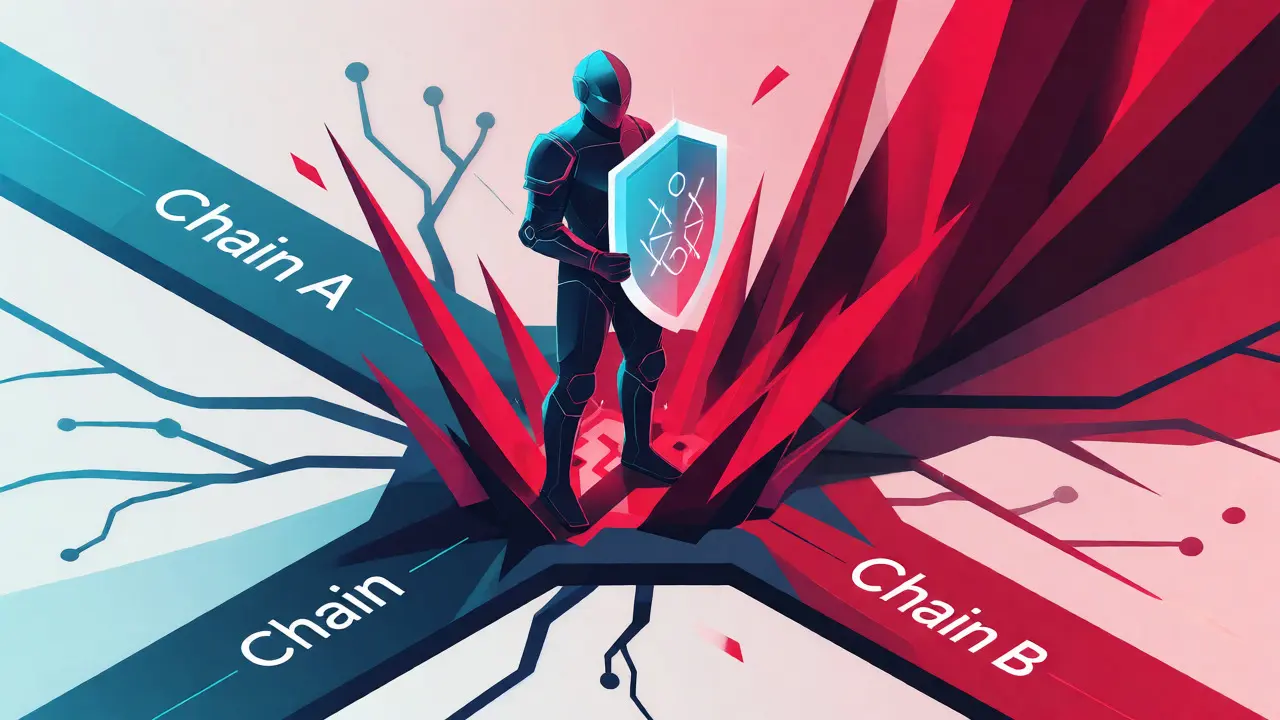
To grasp why this was such a headache for early developers, look at the difference between spending energy and spending time. In Bitcoin’s PoW model, mining requires massive amounts of hardware and electricity. If a fork happens-say, Chain A and Chain B split-miners must decide where to point their hash power. Splitting your rig means halving your chance of winning on either chain. It’s economically painful. You want to pick the winner fast to stop wasting cash on electricity.
In pure PoS, there is no electricity bill. Creating a block is just signing a message with your private key. It costs virtually nothing. So, when a fork occurs, a validator can sign blocks on Chain A and Chain B at the exact same moment. There is no resource conflict. You don’t lose anything by hedging your bets. As long as there’s even a tiny probability that Chain B becomes the main chain, you should validate it too. Why leave money on the table?
This behavior creates a tragedy of the commons. Individually, each validator acts rationally by supporting all forks. Collectively, this prevents the network from ever agreeing on a single state. The chain never finalizes. Double-spend attacks become incredibly cheap because an attacker doesn’t need to buy up 51% of the hash rate; they just need to convince a few validators to keep voting on their malicious fork while honest validators hedge their bets on both sides.
Slashing Conditions: The Economic Penalty That Saves PoS
If validation is free, the solution is to make cheating expensive. Enter slashing conditions. This is the primary mechanism used by Ethereum and most modern PoS networks to solve the Nothing at Stake problem. Instead of rewarding good behavior alone, the protocol punishes bad behavior severely.
Think of it like a deposit. When you stake 32 ETH on Ethereum, you’re putting down collateral. If you act honestly, you earn rewards. If you try to play both sides of a fork-specifically, if you sign two different blocks at the same height (equivocation)-you get slashed. You lose a portion of your stake, and often, you are ejected from the validator set entirely.
Ethereum’s implementation uses specific rules called Casper FFG (Friendly Finality Gadget). There are two main types of slashing:
- Equivocation Slashing: Signing two conflicting blocks at the same epoch. This is direct proof that you tried to double-sign.
- Surround Voting Slashing: Making votes that contradict previous votes in a way that suggests you’re trying to finalize conflicting histories.
The penalty isn’t trivial. For severe violations, you can lose your entire 32 ETH stake. Suddenly, validating on both forks isn’t "free" anymore. It’s a gamble where the downside risk (losing $60,000+) vastly outweighs the upside reward (a few dollars per block). Rational actors stop hedging. They commit to one chain because the cost of being wrong is catastrophic.
PoW vs. PoS: Comparing Fork Resolution Strategies
How do these two consensus models stack up when dealing with forks? It comes down to natural disincentives versus engineered ones. PoW relies on physical constraints; PoS relies on economic contracts.
| Feature | Proof of Work (e.g., Bitcoin) | Proof of Stake (e.g., Ethereum Post-Merge) |
|---|---|---|
| Resource Cost | High (Electricity + Hardware wear) | Near Zero (CPU + Bandwidth) |
| Fork Strategy | Split resources or pick longest chain | Validate all forks unless penalized |
| Disincentive Mechanism | Natural (Opportunity cost of wasted energy) | Engineered (Slashing of staked funds) |
| Attack Cost | Buy 51%+ Hash Rate | Acquire 33-51% Stake + Risk Slashing |
| Finality Speed | Probabilistic (takes ~6 blocks) | Deterministic (via Checkpoints) |
Notice the shift in attack vectors. In PoW, an attacker needs to rent or buy massive computing power. In PoS, they need to buy tokens. But thanks to slashing, they also risk losing those tokens if they fail. This makes PoS theoretically secure against nothing-at-stake attacks, provided the slashing parameters are tuned correctly.
Long-Range Attacks and Checkpointing
Slashing solves immediate forks, but what about old history? Imagine a new validator joins the network today. They download the blockchain from genesis (block zero). How do they know which branch is real? An attacker could create a fake chain starting from year one, validly signed with keys that were active back then. Since those keys might not be active now, slashing them is impossible-they’ve already moved on or sold their coins.
This is known as the Long-Range Attack. To fix this, PoS networks use checkpointing. The network periodically "locks in" the state of the blockchain. For example, Ethereum finalizes blocks roughly every 6.4 minutes (two epochs). Once finalized, the history before that point is considered immutable. New nodes don’t verify the entire history from scratch; they trust the latest checkpoint and verify forward from there. This removes the ability for attackers to rewrite ancient history without controlling a significant portion of current stake.
Real-World Implementation: Lessons from Ethereum
Ethereum’s transition, known as "The Merge," wasn’t just a switch flip. It required rigorous testing of these slashing mechanisms. During testnets like Goerli, thousands of validators ran through scenarios where they intentionally tried to equivocate. The results showed that slashing works. In fact, a December 2022 incident saw over 2,000 validators slashed due to configuration errors, proving that the penalty system is active and unforgiving.
For those running nodes, this means infrastructure matters. You can’t just run software blindly. Tools like Prysm and Lighthouse include built-in protection databases that track what your validator has signed. If the database says you already signed Block X, and the network asks you to sign Block Y at the same height, the client refuses to sign to prevent accidental slashing. This software-level guardrail is essential because human error is common.
Community data supports the effectiveness of these fixes. A survey by Consensys found that over 87% of stakers understood slashing as the primary defense against nothing-at-stake behavior. Moreover, actual incidents of malicious equivocation on mainnet are rare. Most slashes reported are due to bugs or downtime issues, not coordinated attacks. This suggests that once the economic incentives are aligned, the theoretical vulnerability becomes practically negligible.

Beyond Ethereum: Other PoS Solutions
Not all PoS chains handle this identically. Cosmos, for instance, uses Tendermint consensus, which employs a different form of bonded stake. Validators lock up ATOM tokens, and misbehavior leads to confiscation. Cardano, another major player, has faced criticism regarding its approach to finality and nothing-at-stake risks during extreme partitions, though its founders argue their Ouroboros protocol mitigates these through rigorous mathematical proofs rather than just punitive slashing.
Polkadot takes a hybrid approach with its Nominated Proof of Stake (NPoS) model. Here, nominators stake DOT to back validators. If a validator gets slashed, the nominators share the loss. This distributes the risk and incentivizes nominators to monitor their chosen validators closely. It adds a layer of social accountability to the technical slashing mechanism.
Key Takeaways for Stakers and Developers
If you’re planning to stake or build on a PoS chain, keep these points in mind:
- Check the Slashing Rules: Every chain defines penalties differently. Some slash a small amount; others take everything. Know the risk.
- Use Redundant Infrastructure: Running multiple clients can help, but ensure they share a slashing protection database. Otherwise, you might accidentally double-sign.
- Understand Finality: Learn how many confirmations are needed before a transaction is irreversible. In Ethereum, waiting for finality (approx. 13 minutes) is safer than waiting for simple inclusion.
- Watch for Long-Range Risks: If you’re syncing a node from scratch, ensure you’re using trusted checkpoints. Don’t blindly trust the earliest headers.
The Nothing at Stake problem was a genuine threat to early PoS designs. It threatened to turn blockchains into fragmented messes where no truth prevailed. By introducing slashing conditions and checkpointing, modern protocols turned this weakness into a strength. Now, honesty is the cheapest policy. The cost of lying exceeds the profit, keeping the network unified and secure.
What exactly is the Nothing at Stake problem?
It is a vulnerability in Proof of Stake systems where validators can support multiple competing chains simultaneously at almost no cost. Without penalties, rational validators would validate every fork to maximize rewards, preventing the network from reaching consensus on a single canonical chain.
How does slashing solve the Nothing at Stake problem?
Slashing imposes financial penalties on validators who behave dishonestly, such as signing two different blocks at the same height. By risking the loss of their staked funds, validators are disincentivized from supporting conflicting chains, making it economically irrational to "stake on nothing."
Does Proof of Work suffer from the Nothing at Stake problem?
No, Proof of Work does not suffer from this issue naturally. Miners must spend significant energy and hardware resources to mine blocks. Splitting hash power across forks reduces their earnings potential, creating a natural economic incentive to commit to the most likely winning chain quickly.
What is a long-range attack in Proof of Stake?
A long-range attack occurs when an attacker creates a fake blockchain history starting from the genesis block. Since old keys may no longer be active, slashing cannot punish past actions. Networks mitigate this by using checkpointing, where recent finalized states are trusted as the source of truth.
Can I get slashed for making a mistake?
Yes, unintentional mistakes can lead to slashing. Common causes include running multiple validator instances with the same keys or failing to properly configure slashing protection databases. Always ensure your client software is updated and configured to prevent double-signing.