
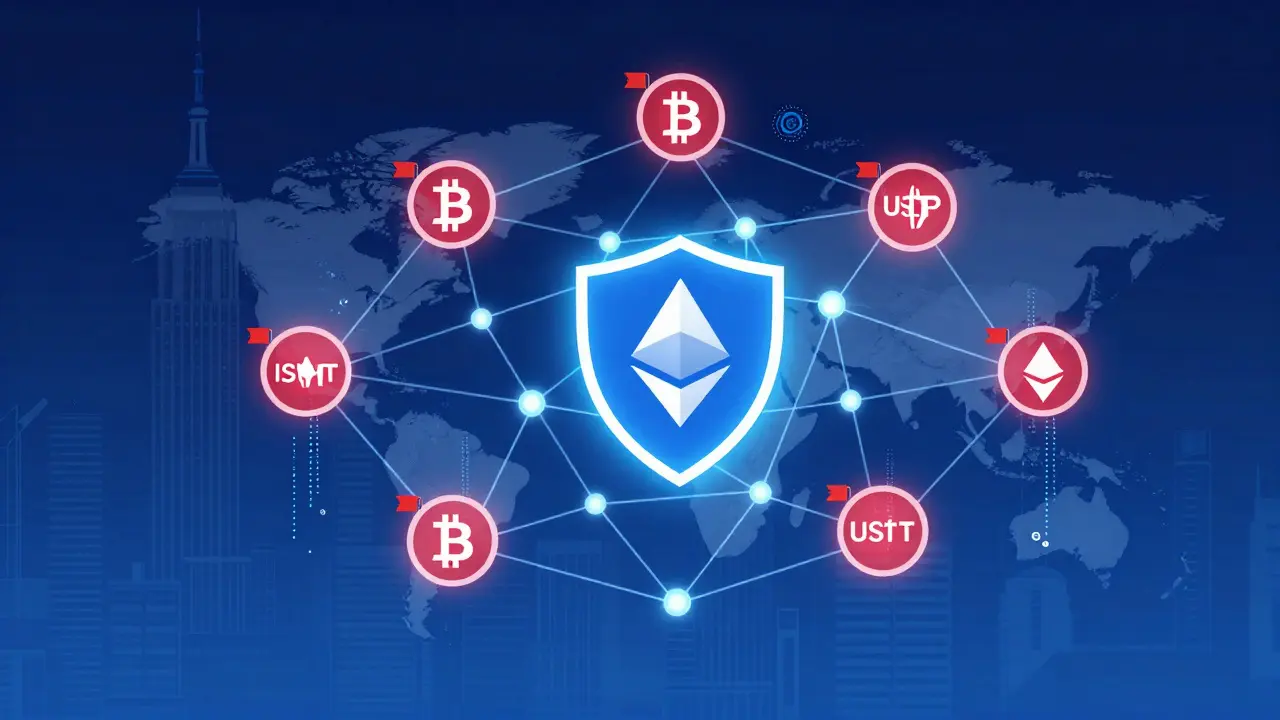
When you send Bitcoin or Ethereum to someone, you might think it’s just a digital transaction. But if that recipient is on the OFAC sanctions list, you could be breaking U.S. law - even if you didn’t know it. As of 2025, the Office of Foreign Assets Control (OFAC) has added over 1,200 cryptocurrency wallet addresses to its Specially Designated Nationals (SDN) list. This isn’t just about blocking banks anymore. It’s about freezing digital wallets, tracing blockchain trails, and shutting down entire networks that move money for criminals, terrorists, and hostile governments.
What Exactly Is the OFAC Sanctions List?
OFAC, part of the U.S. Department of the Treasury, doesn’t just target banks or businesses. It goes straight for the addresses. Every wallet on the list - whether it’s a Bitcoin, Ethereum, or Monero address - is legally off-limits to anyone doing business with U.S. entities. That means U.S.-based exchanges like Coinbase or Kraken must block any transaction going to or from those addresses. Even if you’re in New Zealand, Canada, or Brazil, if your crypto platform has any U.S. ties, you’re subject to these rules.
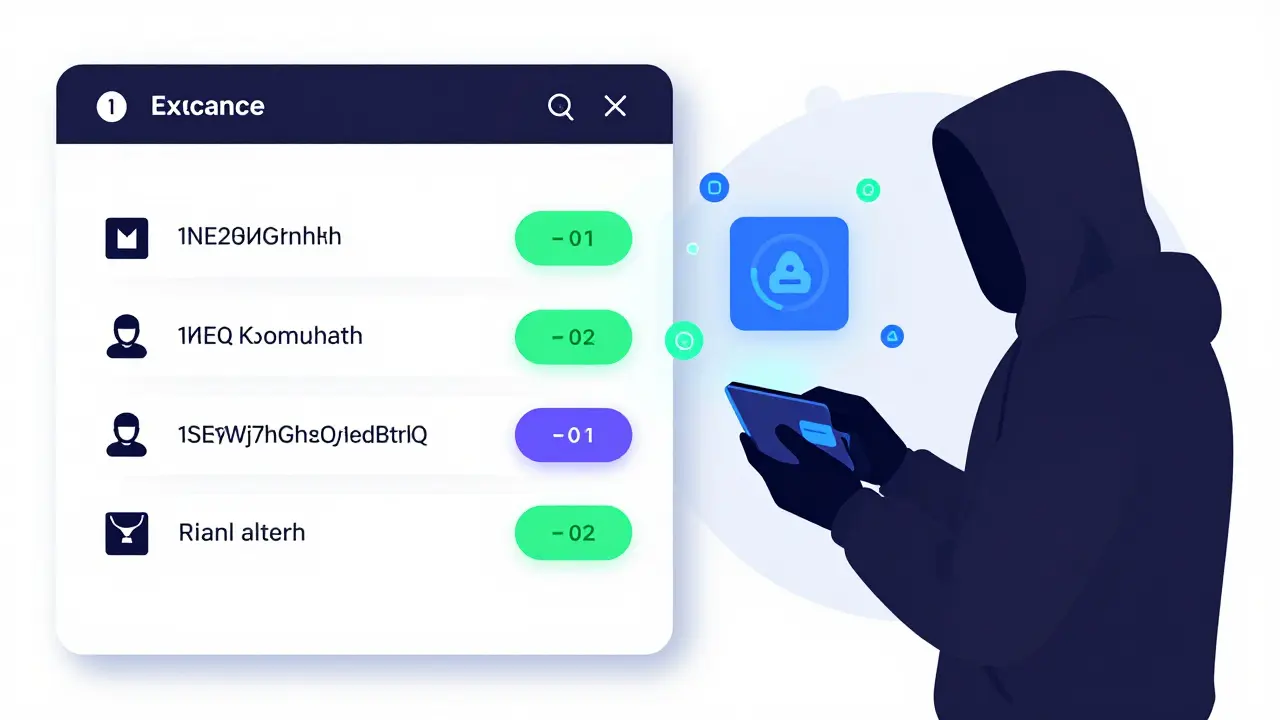
The list includes not just individuals, but entire organizations. In 2025, OFAC sanctioned SECONDEYE SOLUTION - a front linked to the Internet Research Agency LLC, the same group tied to foreign election interference. Their wallets? 1NE2NiGhhbkFPSEyNWwj7hKGhGDedBtSrQ and 19D8PHBjZH29uS1uPZ4m3sVyqqfF8UFG9o. Those aren’t random strings. They’re active addresses that have moved millions in Bitcoin.
Cryptocurrencies Targeted by OFAC
OFAC doesn’t pick favorites. It goes after all major coins - even the ones designed to hide transactions. The sanctioned list covers 17 different cryptocurrencies:
- Bitcoin (XBT)
- Ethereum (ETH)
- Monero (XMR)
- Litecoin (LTC)
- ZCash (ZEC)
- DASH
- Bitcoin Gold (BTG)
- Ethereum Classic (ETC)
- Bitcoin Satoshi Vision (BSV)
- Bitcoin Cash (BCH)
- Verge (XVG)
- USD Coin (USDC)
- USD Tether (USDT)
- Ripple (XRP)
- Tron (TRX)
- Arbitrum (ARB)
- Binance Smart Chain (BSC)
Why so many? Because bad actors use them all. Monero and ZCash are popular for privacy. USDT and USDC are used to move large sums quickly without price swings. Tron and Arbitrum help bypass Ethereum’s high fees. OFAC tracks them all.
How OFAC Tracks Crypto Wallets
Before 2025, OFAC’s tools were clunky. Now, they’ve upgraded to OFAC Blacklist v2.0, launched in May 2025. This system doesn’t just list addresses - it connects them. It tracks how funds flow between wallets, flags clusters of addresses linked to the same operator, and even monitors layer-2 networks like Polygon and Arbitrum, where transactions were once harder to trace.
Compliance platforms like Scorechain now update their screening tools within 15 minutes of an OFAC release. That’s faster than most banks update their internal systems. When OFAC adds a new wallet, exchanges like Binance and Coinbase freeze it automatically. No human approval needed. No delay.
Here’s how it works behind the scenes:
- OFAC releases a new XML file:
sdn_advanced.xml - Compliance software parses the file and extracts wallet addresses
- Transaction monitoring systems cross-check every incoming/outgoing transfer
- If a match is found, the transaction is blocked and reported
- Alerts go to regulators and law enforcement
It’s not perfect. But it’s getting closer.
Real Cases: Who’s on the List?
OFAC doesn’t just slap names on a list. It publishes real-world examples.
Iranian Oil Money: In September 2025, Iranian nationals Alireza Derakhshan and Arash Estaki Alivand were sanctioned. Their wallets received over $600 million in proceeds from oil sales. Most came in via Ethereum and TRON. They used decentralized exchanges to swap crypto into stablecoins, then moved funds through multiple wallets to hide the trail. OFAC traced it all.
Garantex Exchange: This crypto exchange, based in Russia, was shut down in March 2025 after being linked to laundering over $26 million. U.S. Secret Service, German police, and Finnish authorities raided their servers. Even after Garantex tried to relaunch as “Grinex,” OFAC added new addresses and indicted its executives. The case showed how sanctions can follow a company even after it changes its name.
Lazarus Group: North Korea’s hacking team stole $200 million in Q1 2025, funneling it through DeFi protocols like Uniswap and Curve. OFAC flagged the smart contracts they used. That’s new. Before, they only targeted wallets. Now, they’re targeting the code itself.
DeFi, DAOs, and the New Frontiers
One of the biggest shifts in 2025 was OFAC’s decision to sanction DAOs - decentralized organizations with no CEO, no headquarters, no legal structure. If a DAO’s smart contract is used to launder money, it can be added to the sanctions list. No person needs to be named. Just the contract address.
And then came the AI bot.
In February 2025, OFAC sanctioned the first AI-powered autonomous trading bot used by a sanctioned entity. The bot moved $60 million through 12 different wallets, auto-swapping tokens to avoid detection. It wasn’t human-run. It learned from past transactions. OFAC didn’t just freeze the bot’s wallet - they froze the entire algorithm. That’s a legal first.
And it’s not over. Proposed regulations in May 2025 would make smart contract developers personally liable if their code is used for sanctions evasion. Imagine being sued because someone used your DeFi protocol to launder money. That’s the new reality.
Why Stablecoins Are the #1 Tool for Sanctioned Actors
Bitcoin is flashy. But for moving large sums quietly? It’s stablecoins - especially USDT - that do the heavy lifting.
In March 2025, Tether froze $450 million tied to Iranian entities. Why? Because USDT operates on public blockchains, and its issuer, Tether Limited, is subject to U.S. jurisdiction. Unlike Bitcoin, which is peer-to-peer, USDT has a central issuer who can freeze funds. That’s why sanctioned actors love it: it’s fast, global, and stable. But it’s also the easiest to track.
OFAC’s data shows 73% of all sanctioned crypto transactions in 2025 involved USDT or USDC. Not because they’re the most private - but because they’re the most practical.
What Happens If You Send Crypto to a Sanctioned Address?
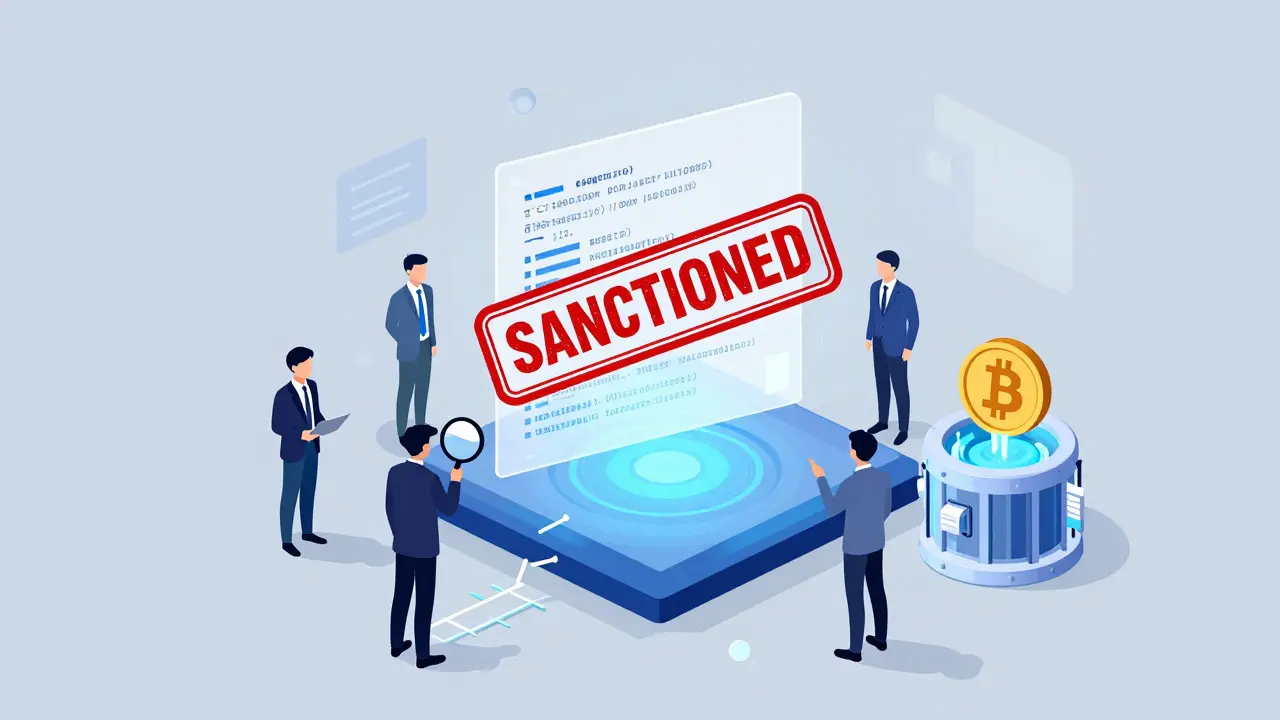
If you’re a regular user, you probably won’t know. Most wallets don’t show OFAC flags. But if you’re running an exchange, wallet service, or DeFi platform? You’re legally required to screen every transaction. Failure can mean fines, loss of licenses, or criminal charges.
Here’s what’s at stake:
- Exchanges that don’t screen can lose their U.S. banking access
- Developers of DeFi protocols can be sued if their code enables evasion
- Individuals who knowingly transact with sanctioned addresses face asset seizure
There’s no “I didn’t know” defense if you’re a business. The law expects you to know.
How to Stay Compliant
If you’re a crypto business, here’s what you need:
- Real-time screening software that updates within 15 minutes of OFAC releases
- Support for all 17 sanctioned cryptocurrencies
- Monitoring of layer-2 networks and DeFi protocols
- Integration with OFAC’s XML data feed (sdn_advanced.xml)
- Audit trail showing you screened every transaction
Most platforms take 3 to 6 months to build this from scratch. But there are third-party tools - like Chainalysis, Elliptic, and Scorechain - that do it for you. They’re not cheap. But they’re cheaper than a $50 million fine.
What’s Next?
OFAC’s next moves are clear:
- More sanctions on privacy coins - Monero, ZCash, and others will face tighter scrutiny
- Expanded tracking of cross-chain bridges - where money moves between blockchains
- More joint operations with Europol and Interpol - like the six international raids in 2024
- Increased rewards - the U.S. State Department now offers up to $5 million for info leading to Garantex executives’ arrest
The goal isn’t to stop crypto. It’s to stop crime using crypto. And the tools to do it are getting smarter every day.
Can I still send crypto to someone if I don’t know they’re sanctioned?
If you’re an individual sending a small amount to a friend, you’re unlikely to be targeted. But if you’re a business - like an exchange, wallet provider, or DeFi app - you’re legally required to screen every transaction. Ignorance isn’t a defense for companies. OFAC expects you to use screening tools. If you don’t, you risk fines or losing your license.
Are all crypto wallets on the OFAC list public?
Yes. The OFAC sanctions list is public and downloadable as an XML file. But not every wallet that’s ever been used for crime is on it. OFAC only adds addresses linked to confirmed violations - usually after investigation. Experts estimate the list covers less than 10% of all illicit crypto activity. Many bad actors still slip through.
Can I avoid sanctions by using Monero or ZCash?
Not anymore. While Monero and ZCash were once considered “untraceable,” OFAC now tracks them through transaction patterns, timing, and linking to known addresses. Exchanges that accept them are required to flag suspicious activity. In 2025, multiple Monero wallets linked to ransomware gangs were added to the sanctions list. Privacy coins aren’t safe - they’re just harder to trace, not impossible.
Do OFAC sanctions apply outside the U.S.?
Yes - if your service has any U.S. connection. That includes using U.S.-based servers, having U.S. customers, or holding a U.S. bank account. Even if you’re based in New Zealand or Australia, if your crypto platform processes transactions through a U.S. bank, you must comply. Most major exchanges worldwide follow OFAC rules simply because they need access to the U.S. financial system.
What happens if I accidentally send crypto to a sanctioned address?
If it’s a one-time mistake and you’re not a business, OFAC rarely takes action. But if you’re a service provider, you must report it immediately and freeze the funds. Failure to report can lead to penalties. Some platforms now auto-freeze and notify users if a transaction hits a sanctioned address - so you’ll know right away.
Can OFAC freeze my personal wallet?
Only if you’re on the sanctions list yourself - not if you’re just sending money to someone who is. OFAC doesn’t freeze wallets of ordinary users unless they’re directly linked to a sanctioned entity. But if you’re a business and you process transactions for sanctioned addresses, your entire operation can be frozen - including bank accounts and assets.
22 Responses
This is all a scam. They dont care about crime. They just want to control money. Every wallet they block is a step toward a digital dictatorship. No one needs to know where your money goes. This is fascism with a blockchain logo.
I wonder what happens when the law clashes with human rights. If someone sends crypto to help a family in a sanctioned country, are they a criminal? The system is designed to punish connection, not intent. Maybe we need to rethink what justice means in a digital world.
I just want to say: this is incredibly complex, and I appreciate how clearly it's laid out. But I'm also nervous. If my wallet gets flagged by accident, what do I do? Who do I call? The system feels so automated, but there's no human backup. I hope there's a way to appeal.
AI bots being sanctioned?? 😳 That’s wild. Like… if a bot learns to move money to avoid detection, is it guilty? Or is the person who trained it? This is sci-fi becoming real. We’re not ready for this. 🤖💸
Honestly I dont even know if i should be using crypto anymore. I just want to send money to my cousin in Nigeria without getting dragged into some government drama. Its not about politics. Its about family. And now even that feels risky.
You think this is about crime? Nah. It's about control. The US doesn't want decentralized money. They want banks to still be the middlemen. Every time they sanction a wallet, they're saying 'we own the ledger'. Crypto was supposed to be free. Now it's just Wall Street with a new logo.
This entire system is a bureaucratic nightmare. You have to monitor 17 different blockchains, integrate with XML feeds, and update every 15 minutes? Who is paying for this? Who is auditing it? This isn't compliance - it's a financial arms race. And the little guys are getting crushed.
Let me tell you something - this is the future. And it's not going away. If you're building something in crypto, you better get ready. Screen everything. Log everything. Document everything. This isn't optional anymore. The game changed. Adapt or get left behind - and I mean completely.
i mean like… i get that they wanna stop bad actors but like… what if you just sent 0.001 eth to a friend and they had a wallet that got flagged? like… are you gonna get fined? i feel like this system is so overreaching and it’s not even consistent. like why is monero on the list but not like… 10 other coins? it feels random.
The real story here isn't the sanctions - it's the surrender. We gave up privacy for convenience. We traded anonymity for fast transactions. Now we're surprised when the system we built turns around and locks us out? We built this cage. We just didn't realize we were the ones holding the key.
Ugh. Another 'crypto is bad' article. You know what's worse than crypto? Banks. At least with crypto, you can move your money. Banks freeze accounts for no reason. They lie. They charge fees. And they're all US-based. So yeah - OFAC? More like OFA-CONTROL.
The international implications are staggering. If a German exchange must comply with U.S. sanctions to access U.S. banking, then sovereignty is dead. This isn't law - it's economic imperialism. Countries that don't comply will be cut off. The world is being forced into one financial system. And it's not democratic.
This is why America is losing. You're so obsessed with control that you're killing innovation. Every time you sanction a wallet, you push more people to the dark web. You're not stopping crime - you're creating a black market for crypto. And you're doing it with taxpayer money. Pathetic.
I work with small crypto businesses. This is killing them. They can't afford Scorechain or Chainalysis. They're getting shut down for not having tools they can't pay for. This isn't about safety - it's about who gets to play. The big players win. The rest? They get erased.
Stablecoins are the real villain here. USDT is basically a bank account with a blockchain sticker. Tether freezes funds? That's not crypto - that's banking with extra steps. The whole 'decentralized' thing is a joke when one company can freeze $450 million in seconds.
In Nigeria, we use crypto to bypass broken banking systems. This isn't about terrorism - it's about survival. If you cut off access to USDT for people trying to send money home, you're not fighting crime. You're punishing poverty. This feels colonial.
AI bots being sanctioned?? 😂 LMAO. Next they'll sanction a chatbot for 'aiding money laundering' because it gave someone a bad tip. This is like suing a toaster for burning toast. The system is out of control. They're not catching criminals - they're chasing ghosts.
if u use crypto u r already sus. why even pretend? they know who u r. they know where u send it. they know ur ip. they know ur wallet history. this whole 'privacy coin' thing is a joke. just use cash. or stop pretending ur anonymous.
I just want to say - how many of these addresses are actually bad? Or are they just 'associated' with bad actors? I’ve seen wallets get flagged because they received a transaction from a sanctioned one - even if they never sent anything out. This is guilt by association. And it’s terrifying.
This is the future. Get used to it. Compliance isn't optional anymore. If you're in crypto, you're in finance. And finance means rules. No more cowboy days. The tools are here. Use them. Or get out. Simple as that. 🚀🔒
The notion that a smart contract developer can be held personally liable is a legal abomination. We are criminalizing innovation. We are turning open-source collaboration into a felony. This is not regulation - it is the death of public software. And we are allowing it.
Let’s be real: this is just the beginning. Once they control crypto, what’s next? Your car? Your fridge? Your heartbeat? They’re building a digital surveillance grid. And we’re handing them the keys because we’re too lazy to care. Wake up. This isn’t about crime. It’s about power.