

You think your offshore crypto account is invisible because you used a VPN and a fresh wallet. You're wrong. In 2026, the gap between pseudonymity and anonymity has collapsed. What used to be a simple way to park assets outside your home jurisdiction is now a high-stakes game against sophisticated forensic tools that see through most privacy tricks. The risk isn't just getting caught; it's facing a legal web that includes massive fines, frozen assets, and prison time under increasingly aggressive global enforcement regimes.
The Myth of Blockchain Anonymity
Many people still believe that because blockchains are decentralized, they are anonymous. This is a dangerous misconception. While public ledgers don't show names next to transactions, they record every movement of value permanently. Blockchain analytics firms like Chainalysis and Elliptic have turned this transparency into a surveillance tool. They don't need to know who you are immediately; they just need to map your behavior. If you move funds from an exchange to a personal wallet, then later to another exchange, those three points create a triangle of evidence. Investigators call this "address clustering." By analyzing how funds pool and split, they can link dozens of separate wallets back to a single human being or entity. For offshore holders, this means your "separate" accounts in different countries are likely seen as one big, messy pile of money by regulators.
How Forensic Tools Track Your Moves
Detection isn't just about looking at the chain data anymore. It involves correlating on-chain activity with off-chain footprints. Here is how the modern toolkit works against you:
- IP Correlation: If you log into a web-based wallet or exchange without a robust anonymization setup, your IP address gets logged. Regulators can subpoena ISP records to match that IP to your physical location. Even if you use a VPN, timing mismatches between your transaction timestamp and your internet ping can reveal your true geography.
- Dusting Attacks: This is a passive tracking method where investigators send tiny amounts of crypto (dust) to thousands of addresses. When you sweep these dust coins into a main wallet to clean up your balance, you inadvertently reveal which other addresses belong to you. It’s a low-cost, high-yield tactic for law enforcement.
- Peel Chain Analysis: If you try to hide the origin of funds by splitting them into smaller and smaller transactions (a technique called peeling), algorithms flag this pattern instantly. It looks exactly like money laundering layering. Modern software visualizes these flows, making it easy for analysts to trace the money back to its source.
Legal Consequences: From Fines to Prison
The legal landscape has shifted from "gray area" to "hostile territory." In the United States, the Bank Secrecy Act (BSA) requires exchanges to register with FinCEN and maintain strict Anti-Money Laundering (AML) programs. But the reach extends beyond the US. Globally, regulators are enforcing Anti-Money Laundering/Counter-Terrorist Financing (AML/CFT) standards that apply to anyone touching fiat currency. If you convert your offshore crypto to local cash, you enter the regulated financial system, triggering Know Your Customer (KYC) checks that can expose undeclared holdings. The penalties are no longer just monetary. Consider the precedent set by the Office of Foreign Assets Control (OFAC). In 2022, they sanctioned Tornado Cash, a popular Ethereum mixer, effectively criminalizing the use of certain privacy tools for US persons. This sent a shockwave through the industry. Today, using specific mixers or privacy coins can lead to asset forfeiture. In Australia, AUSTRAC has established specific suspicious activity indicators for digital currencies, requiring entities to report anomalies within tight timeframes. Ignorance is not a defense when the rules are published and accessible.
Comparison of Detection Methods and Risks
Not all obfuscation methods carry the same risk profile. Some techniques are nearly obsolete, while others remain moderately effective but costly. Understanding the trade-offs is crucial for assessing your exposure.
| Method | Detection Risk Level | Primary Weakness | Legal Precedent/Status |
|---|---|---|---|
| Standard Exchange-to-Wallet Transfer | High | KYC data links identity to address | Standard AML reporting triggers |
| Address Reuse | Critical | Creates permanent historical trail | Easy target for cluster analysis |
| Using Mixers/Tumblers | Moderate-High | Input/Output patterns still analyzable | Sanctioned entities (e.g., Tornado Cash) |
| Privacy Coins (e.g., Monero) | Moderate | Exchange entry/exit points are visible | Scrutiny increasing globally |
| Cold Storage + No Fiat On/Off-Ramp | Low (Until Exit) | Risk spikes upon conversion to fiat | Hard to trace until liquidity event |
The Role of International Cooperation
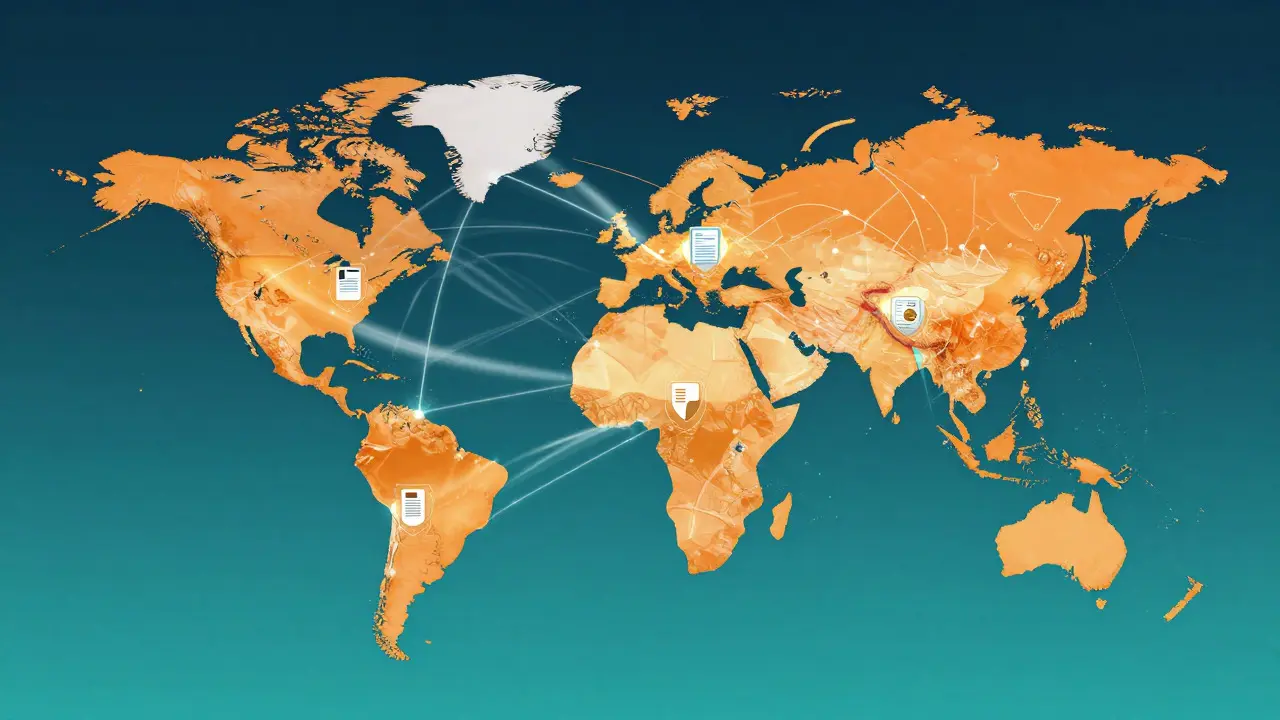
One of the biggest changes since 2020 is the level of international data sharing. The Financial Action Task Force (FATF) has updated its Travel Rule, requiring Virtual Asset Service Providers (VASPs) to share sender and receiver information for transfers above certain thresholds. This means if you move $1,000 or more between jurisdictions, the data travels with the money. Regulators in New Zealand, the EU, and the US now collaborate to cross-reference these datasets. An offshore account held in a jurisdiction with weak privacy laws might seem safe, but if you interact with a compliant exchange elsewhere, the trail leads back home. The days of hiding behind jurisdictional borders are ending as data interoperability improves.
Practical Steps to Reduce Exposure
If you already hold offshore assets, panic is counterproductive. Instead, focus on hygiene and compliance. First, audit your current footprint. Have you reused addresses? Have you linked your email or phone number to multiple wallets? Second, consider consolidating. Moving funds from obscure, unregulated platforms to major, compliant exchanges reduces the risk of technical detection, even if it increases KYC visibility. Third, keep records. If you can prove the source of funds is legitimate income or inheritance, you are less likely to be accused of money laundering. Finally, consult a tax attorney who specializes in digital assets. The legal definition of "tax evasion" versus "tax avoidance" hinges on documentation, and crypto adds a layer of complexity that generalists often miss.
Frequently Asked Questions
Is holding crypto offshore illegal?
Holding crypto offshore is not inherently illegal. However, failing to declare these assets for tax purposes or moving funds to evade regulatory oversight can lead to charges of tax evasion or money laundering. The legality depends entirely on whether you comply with reporting requirements in your home jurisdiction.
Can blockchain tracers identify me if I use a VPN?
A VPN helps hide your IP address, but it doesn't hide on-chain behavior. If you make a mistake like reusing an address or interacting with a known entity, tracers can link your activities. Furthermore, if you connect to a service without a VPN, or if your VPN leaks, your real IP is exposed. It's a layer of protection, not a guarantee of invisibility.
What is the difference between AML and CFT in crypto?
AML (Anti-Money Laundering) focuses on preventing criminals from disguising illegally obtained funds as legitimate income. CFT (Counter-Terrorist Financing) targets funding sources for terrorist activities. In practice, both require similar compliance measures like KYC and transaction monitoring, but the underlying intent differs slightly.
Do privacy coins offer total safety?
No. Privacy coins like Monero hide transaction details on the chain, but you must still buy and sell them on exchanges. These exchanges are subject to KYC. Once you exit the privacy coin ecosystem into fiat currency, your identity is revealed. Additionally, some governments are considering banning or taxing privacy coins heavily due to their opacity.
How long do regulators keep track of crypto transactions?
Effectively forever. Blockchains are immutable ledgers. Every transaction ever made is stored permanently. While the data is public, it takes resources to analyze it. However, once an investigation begins, forensic teams can look back years into history to find connections. There is no statute of limitations on the data itself, only on the legal prosecution.