
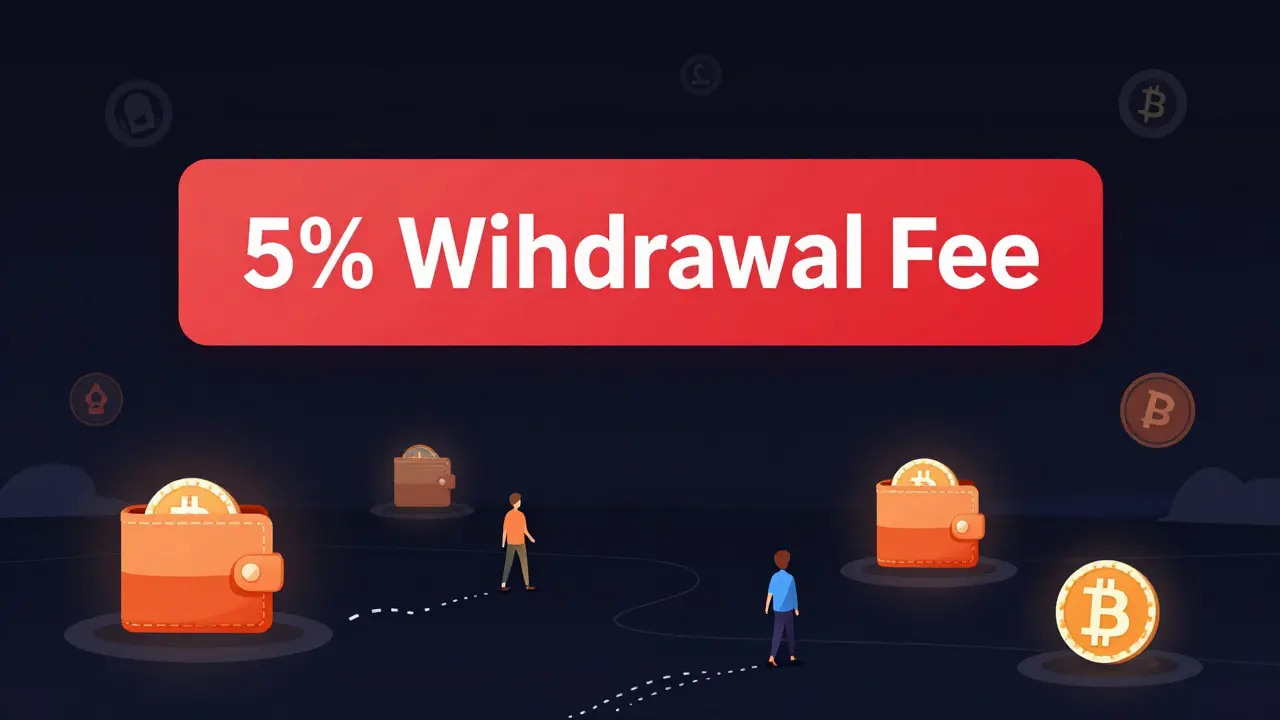
Withdrawal Fee Calculator
This calculator shows why OpenLedger DEX's 5% withdrawal fee was catastrophic. Enter any withdrawal amount to see how much you'd lose to percentage-based fees.
OpenLedger DEX was never meant to be another crypto exchange. It promised speed, decentralization, and a clean interface - but it killed itself with a fee so outrageous, even the most patient traders walked away. If you’re wondering whether OpenLedger DEX is still alive or if it’s worth exploring today, the answer is simple: it closed permanently on May 15, 2020. No warnings. No refunds. Just gone.
What Was OpenLedger DEX?
OpenLedger DEX was a decentralized exchange built on the BitShares blockchain. Unlike centralized exchanges like Binance or Coinbase, it didn’t hold your coins. You traded directly from your wallet using smart contracts. That’s the ideal: no middleman, no hacks, no freeze-ups. Sounds great, right?
But here’s the catch - while the tech was solid on paper, the business model was broken from day one. OpenLedger charged a flat 0.20% fee on every trade. That’s not terrible. In fact, it was slightly below the 0.25% average back in 2020. The real problem? Withdrawals.
The 5% Withdrawal Fee That Killed It
Every time you wanted to pull your crypto out of OpenLedger, they took 5%.
Let’s say you deposited 10 BTC. You traded it, made a profit, and now you want to cash out. You’d get back 9.5 BTC. That’s half a Bitcoin - worth about $5,000 in 2020 - just to get your own money out. For a 1 BTC withdrawal? You lost $500. For $1,000 in ETH? You paid $50 just to move it.
This wasn’t a mistake. It wasn’t a glitch. It was the business model. Most exchanges charge a flat fee - $1, $5, maybe $10 - no matter how much you withdraw. OpenLedger charged a percentage. And that percentage was the highest ever seen in the industry. Cryptowisser called it “the - by far - highest percentage based withdrawal fee we have ever heard of.”
Why would anyone do this? Maybe they thought small traders wouldn’t notice. Maybe they assumed people would just leave their coins there forever. But traders aren’t dumb. If you’re actively trading, you move money. If you’re holding, you want to move it to a cold wallet. OpenLedger made both options expensive.
No Liquidity, No Trading
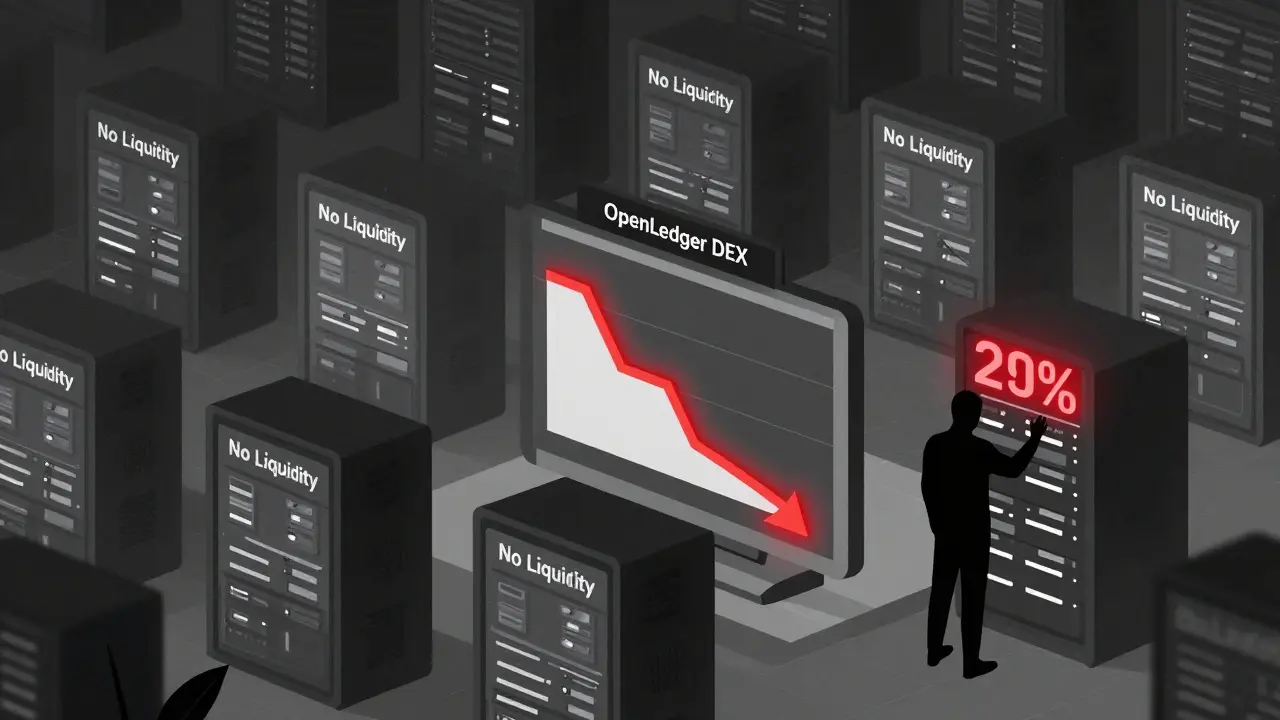
Even if you ignored the withdrawal fee, you couldn’t trade much anyway. The exchange had almost no liquidity.
Liquidity means there are enough buyers and sellers to make trades fast and at fair prices. Without it, you can’t buy or sell without moving the market. Revain’s user reviews listed “no liquidity” as one of the top three complaints - right next to the 5% fee and the shutdown.
Compare that to Binance in 2020. It handled over $1 billion in daily volume. OpenLedger? A few thousand dollars at best. You’d pick a coin, place an order… and wait. And wait. Sometimes your order wouldn’t fill for hours. Or at all.
Why? Because no serious trader would risk their capital on a platform that charged 5% to withdraw. And without traders, there’s no volume. Without volume, no one comes. It was a death spiral.
Speed Claims vs. Reality
OpenLedger bragged about handling 100,000+ transactions per second - faster than Bitcoin and Ethereum combined. That number came from BitShares’ theoretical capacity. But theory doesn’t pay bills.
Real-world performance? Slow. Unreliable. Users reported delays, failed trades, and order mismatches. The platform had two interfaces - one for beginners, one for pros - but neither fixed the core issue: the exchange didn’t have enough trading activity to function.
Even if the blockchain was fast, the exchange itself was a ghost town. No traders. No depth. No movement. Speed doesn’t matter if there’s nothing to trade.
Security? Unclear
OpenLedger claimed to be decentralized, so it was “more secure.” But decentralization doesn’t mean safe. Without proof-of-reserves, public audits, or transparent wallet addresses, users had no way to verify their funds were actually there.
Centralized exchanges like Kraken and Coinbase publish regular audits. OpenLedger didn’t. Not once. That’s not just a lack of transparency - it’s a red flag. If you can’t prove you have the money, why should anyone trust you with it?
What Happened After the Shutdown?
On April 25, 2020, OpenLedger announced it would shut down on May 15. No apology. No explanation beyond “business reasons.”
By May 16, the website was down. The Twitter account went silent. The Discord server vanished. The BitShares blockchain kept running - but OpenLedger as a service? Dead.
Today, CoinMarketCap and CoinGecko don’t list it. Forex Peace Army confirms it’s “out of business.” No reviews exist because no one could leave them - users couldn’t access their accounts to post feedback.
Anyone who left funds on OpenLedger after May 15, 2020, lost them. Forever. There was no recovery process. No customer support. No hope.
Is There a New OpenLedger?
Yes - but not the one you’re thinking of.
There’s an “OpenLedger (OPEN)” token floating around. There’s also a “White Label DEX” product on SourceForge, marketed as a solution for startups. Neither has anything to do with the original exchange.
These are separate projects, different teams, different blockchains. Don’t be fooled by the name. The real OpenLedger DEX is gone.
Why Does This Matter Today?
OpenLedger DEX didn’t fail because it was too decentralized. It failed because it was greedy.
It took a powerful technology - decentralized trading on a high-speed blockchain - and ruined it with a fee that punished users for doing the one thing they needed to do: get their money out.
This isn’t just a story about a dead exchange. It’s a warning. Every time you see a new DEX promising low fees, high speed, or “revolutionary tech,” ask: how do they make money? If they charge a percentage on withdrawals, walk away. If they don’t publish audits, walk away. If they have no liquidity, walk away.
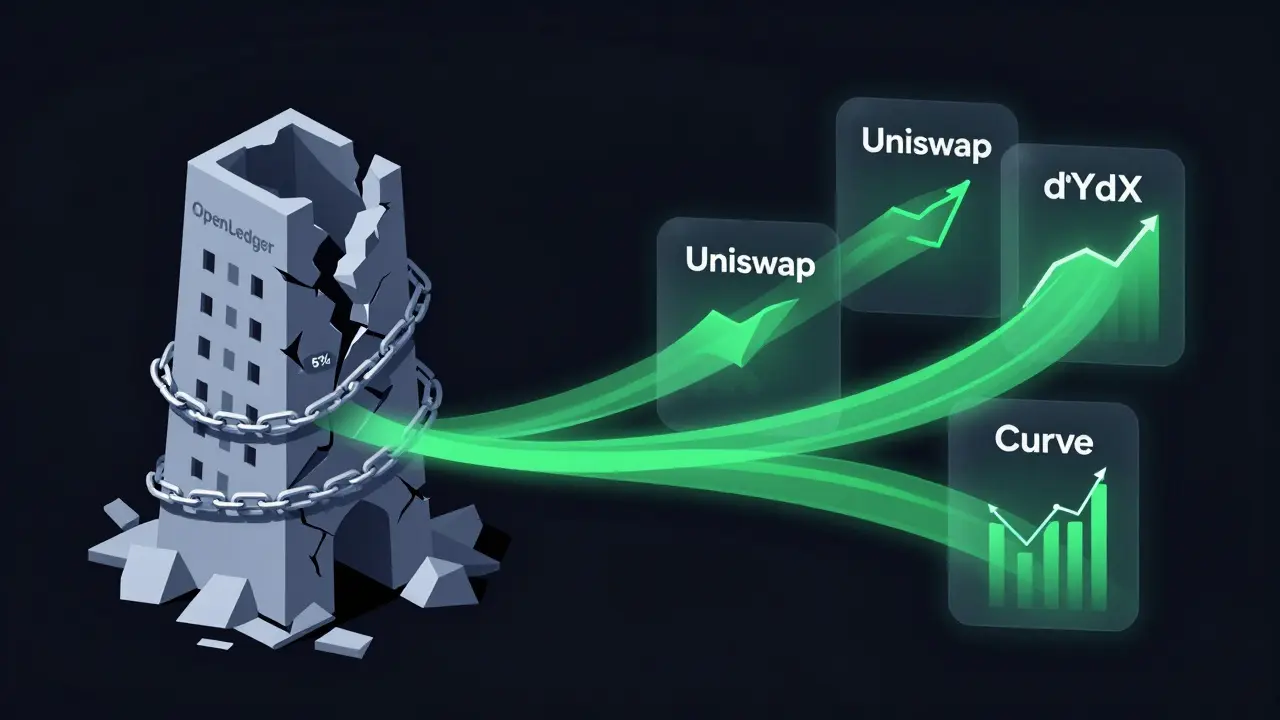
Decentralized exchanges can work. Uniswap, dYdX, and Curve all have real volume and fair fees. They don’t steal your money to survive. OpenLedger did.
The lesson isn’t that DEXes are risky. The lesson is that bad business models kill even the best tech.
What Should You Use Instead?
If you want a decentralized exchange today, here are three real options:
- Uniswap (Ethereum) - 0.30% trading fee, no withdrawal fee. Highest liquidity of any DEX.
- dYdX (StarkNet) - 0.02% maker fees, 0.05% taker fees. Built for advanced traders.
- Curve Finance - 0.02%-0.04% for stablecoin swaps. Best for low-slippage trading.
All of these charge flat or minimal fees. None take a cut of your withdrawals. All have public audits and real trading volume.
OpenLedger DEX is a museum piece now - a relic of crypto’s wild west days. Don’t let it be your cautionary tale too.