
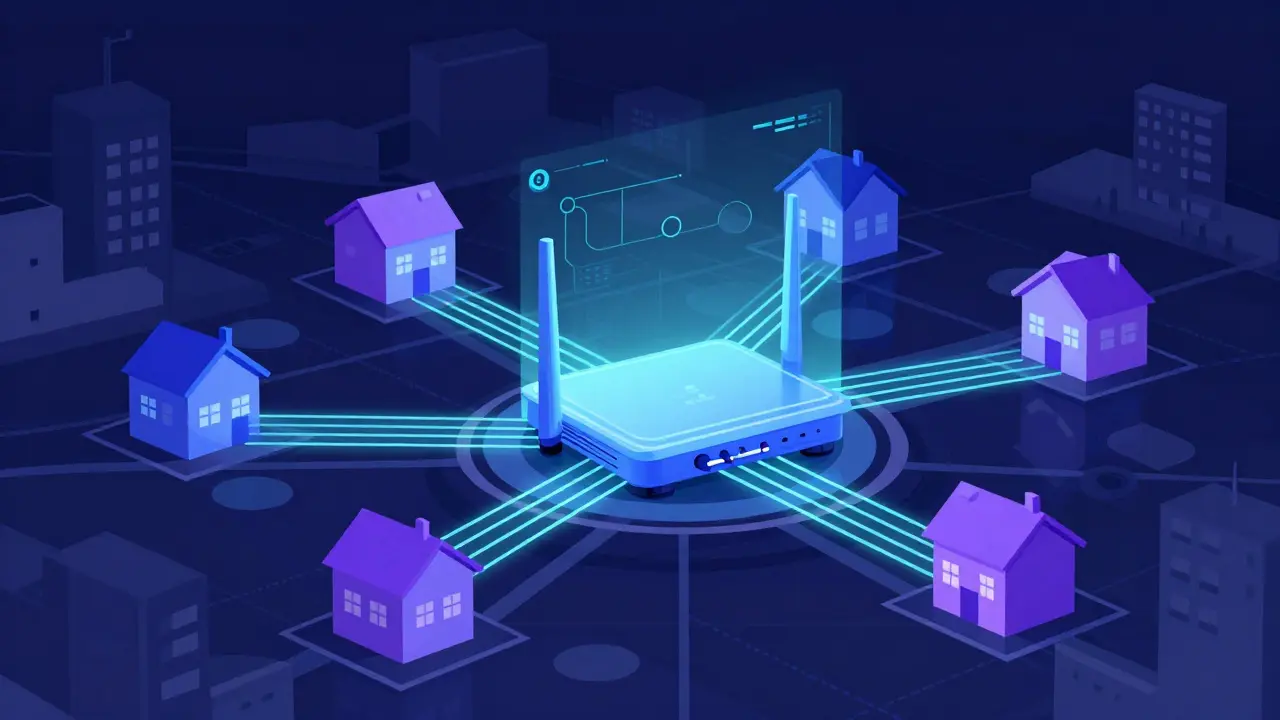
Imagine you've spent weeks perfecting a trading bot that spots arbitrage opportunities faster than any human could. You're ready to scale, but there's a catch: the exchange bans you the moment you open a second account from the same IP. This is where most serious traders hit a wall. To the exchange, you don't look like a professional trader; you look like a bot farm. To get around this, many turn to residential proxies is a networking technology that routes internet traffic through IP addresses assigned to real household devices rather than servers. By mimicking a regular person browsing from their living room, you can bypass the restrictions that usually kill automation strategies. But is the anonymity worth the potential security trade-offs?
Why Standard Proxies Fail in Crypto Trading
If you've tried using a cheap datacenter proxy, you probably noticed they get flagged almost instantly. That's because Datacenter Proxies originate from server farms owned by companies like AWS or Google. Exchanges have massive lists of these IP ranges. When a request hits their server from a known datacenter, it triggers an immediate "bot alert."
Residential proxies are different because they are issued by an Internet Service Provider (ISP) to a home user. When you use one, the exchange sees a request coming from a residential neighborhood in New York or London. This makes your activity indistinguishable from a retail trader. For someone running multiple accounts to maximize liquidity or avoid rate limits, this is the only way to stay under the radar. While datacenter options are faster, their detection rate is simply too high for high-stakes trading.
How It Actually Works for Traders
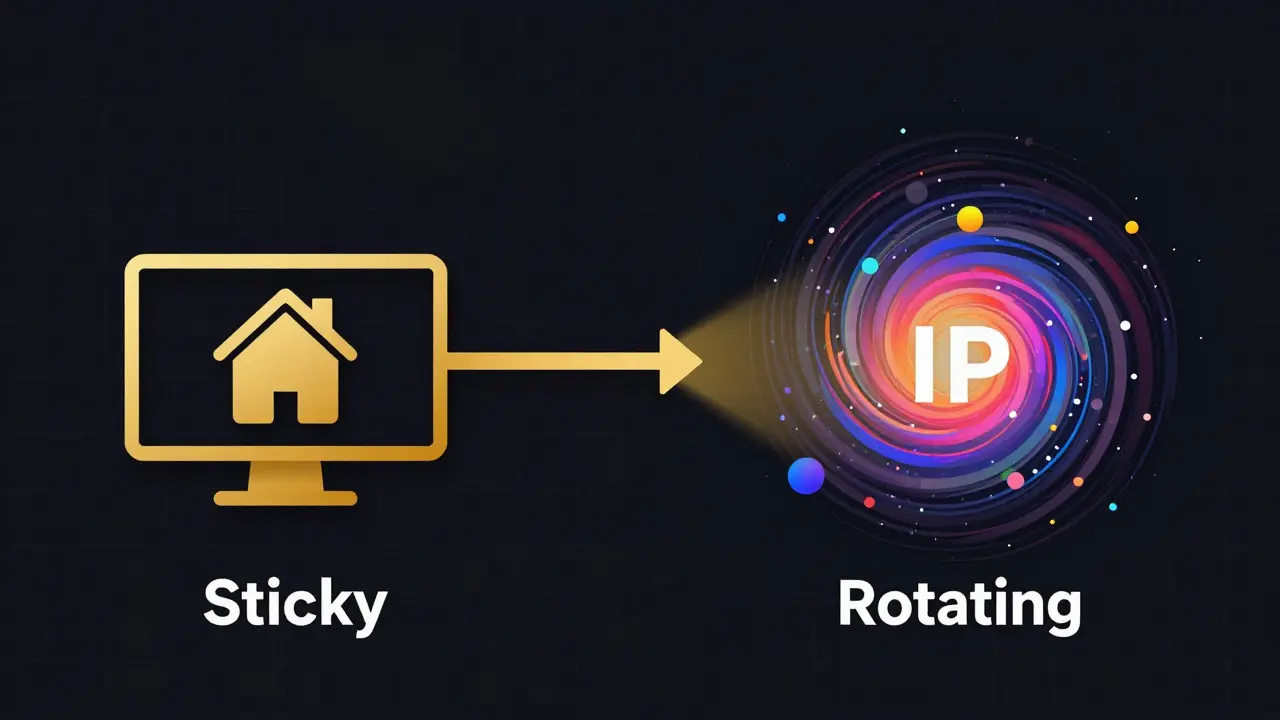
Using these proxies isn't just about hiding your location; it's about managing how you appear to the network. Most professional setups rely on two specific types of sessions to balance stability and stealth:
- Sticky Sessions: These keep you on the same IP address for a set window, usually up to 30 minutes. This is vital for crypto trading because if your IP jumps from Japan to Brazil in the middle of a trade, the exchange's security system will likely freeze your account for "suspicious login activity."
- Rotating Sessions: Here, the IP changes with every single request. This is ideal for scraping price data from dozens of different coins across multiple exchanges without getting your IP blacklisted for too many requests per second.
By combining these, a trader can maintain a stable connection for the actual trade execution while using rotating IPs to gather market intel. This approach allows for the management of multiple cryptocurrency wallets from one machine without triggering a mass ban.
| Feature | Residential Proxies | Datacenter Proxies |
|---|---|---|
| Detection Rate | Very Low (Looks like a home user) | High (Identified as a server) |
| Stability | Moderate (Depends on home Wi-Fi) | High (Consistent server uptime) |
| Price | Expensive ($300 - $1,500/mo) | Cheap |
| Best Use Case | Account scaling & Bot automation | Simple web scraping |
The High-Stakes Benefits: Arbitrage and Privacy
For the pros, these tools aren't just about avoiding bans-they're about profit. Arbitrage involves buying a coin on one exchange where the price is low and selling it on another where it's higher. Since these windows last only seconds, any delay or block is a lost opportunity. Residential proxies allow bots to monitor multiple exchanges simultaneously without being throttled by rate limits.
Beyond the money, there's a massive privacy angle. Trading large volumes of crypto can make you a target for hackers. By routing your connection through a proxy, you hide your actual home IP address. This adds a layer of security, making it harder for malicious actors to pinpoint your physical location or launch a DDoS attack against your home network to disrupt your trading during a volatile market swing.
The Dark Side: Risks and Market Manipulation
It's not all sunshine and profits. The same anonymity that protects a legitimate trader is a goldmine for bad actors. Security research from Trend Micro has highlighted how residential IPs are used in credit card stuffing and financial fraud. Because the traffic looks "human," it bypasses the most basic anti-fraud filters used by banks and exchanges.
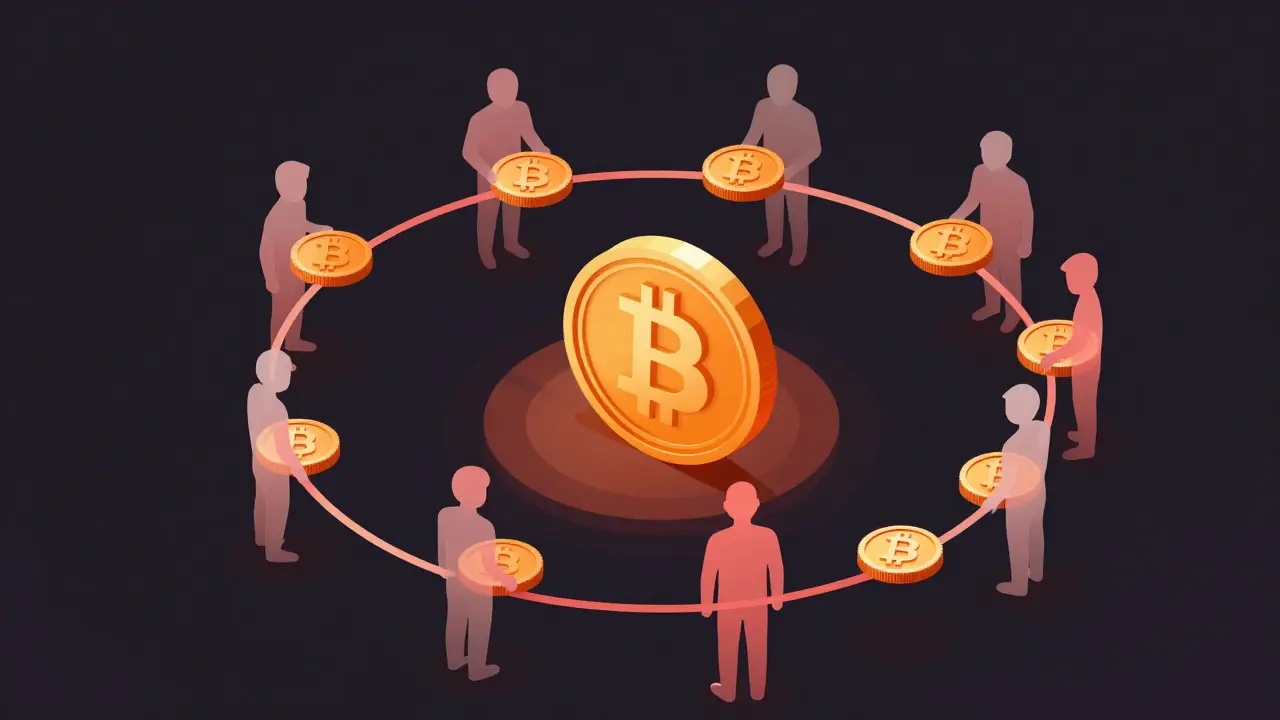
The impact on the market is real. A study by Forbes found that roughly 51% of daily Bitcoin trading volume is likely fraudulent. A huge part of this is driven by Wash Trading, where a single person uses a network of residential proxies to trade a coin back and forth between their own accounts. This creates a fake illusion of high volume and demand, tricking regular investors into buying a "hot" coin that is actually a ghost town.
If you're using these tools, you're operating in a grey area. As regulators catch on, the risk of "guilt by association" increases. If you use a proxy provider that also sells IPs to scammers, your accounts might be flagged simply because you're sharing a subnet with a known fraudster.
Practical Implementation: The Learning Curve
You can't just plug in a proxy and expect a million dollars. Most traders spend 2 to 4 weeks just getting the basics right. The biggest headache is usually session management. If your bot rotates IPs too quickly, the exchange will flag the activity as "impossible travel" (e.g., logging in from New York and then Tokyo two seconds later).
To do this right, you need to align your proxy rotation with the exchange's specific detection patterns. This often requires using tools like anti-detect browsers that manage cookies and browser fingerprints alongside the IP address. Without this, the exchange can still identify you via your browser's unique hardware signature, rendering the expensive proxy useless.
The Future of Proxy Trading in 2026
We're entering an era of extreme scrutiny. By 2026, financial regulators are expected to push for tighter compliance, possibly requiring exchanges to implement more aggressive identity verification that goes beyond the IP address. We're seeing a split in the market: one side is moving toward fully compliant, regulated proxy services, while the other is diving deeper into the underground "dark" proxy networks.
For the average trader, the rule of thumb is now: use reputable providers like Bright Data or Oxylabs. While they are more expensive, they offer better transparency and fewer "dirty" IPs that have already been banned by major exchanges. Using a cheap, unverified proxy list is essentially gambling with your account's survival.
Will residential proxies prevent me from getting banned?
They significantly reduce the risk by making your traffic look like a home user, but they aren't a magic shield. If your trading behavior (like 1,000 trades per second) is inhuman, the exchange will ban you based on activity patterns, regardless of your IP address.
Which is better for crypto: Rotating or Sticky proxies?
It depends on the job. Use rotating proxies for market research and price scraping to avoid rate limits. Use sticky sessions for the actual trading and account management to avoid triggering security alerts for frequent location changes.
Are residential proxies legal for trading?
Using a proxy is generally legal in most jurisdictions. However, using them to engage in wash trading, market manipulation, or to bypass KYC (Know Your Customer) regulations can lead to severe legal consequences and permanent account bans.
Why are residential proxies so much more expensive than datacenter ones?
Because they rely on real people's internet connections. Providers have to pay users or companies to route traffic through their home devices, whereas datacenter proxies are just rented space on a server the company already owns.
Can I use a free proxy for crypto trading?
Absolutely not. Free proxies are often "honey pots" designed to steal your API keys and login credentials. In the world of crypto, using a free proxy is the fastest way to have your wallet drained.
Next Steps for Implementation
If you're just starting, don't dump $1,000 into a proxy plan on day one. Start with a small pool of sticky IPs to test if your exchange is flagging your specific browser fingerprint. If you're an advanced trader, look into integrating your proxy API directly into your bot's logic to automate rotation based on the HTTP response codes you get from the exchange (e.g., rotate automatically upon receiving a 429 Too Many Requests error).