

Most people think airdrops are just free money for holding a token. You buy it, wait, and hope for a surprise drop in your wallet. But Scaleswap is a decentralized IDO launchpad on Layer 2 that uses a merit-based scoring system called ScaleSCORE to distribute partner project tokens. It’s not about passive holding; it’s about active participation. If you’re sitting on SCA tokens expecting a windfall without lifting a finger, you might miss out on the best allocations.
The Core Mechanism: Why Passive Holding Fails Here
Scaleswap isn’t like Uniswap, where everyone who traded before a certain date got the same bag of UNI tokens. The platform operates differently. It functions as a launchpad for Initial DEX Offerings (IDOs), primarily on Polygon. This means transaction fees are low, and speed is high. But the real magic lies in how it handles rewards. Instead of a simple snapshot of balances, Scaleswap uses the ScaleSCORE system. Think of this as a loyalty credit score for crypto users. Your score determines how much of an airdrop you get from projects launching on the platform.
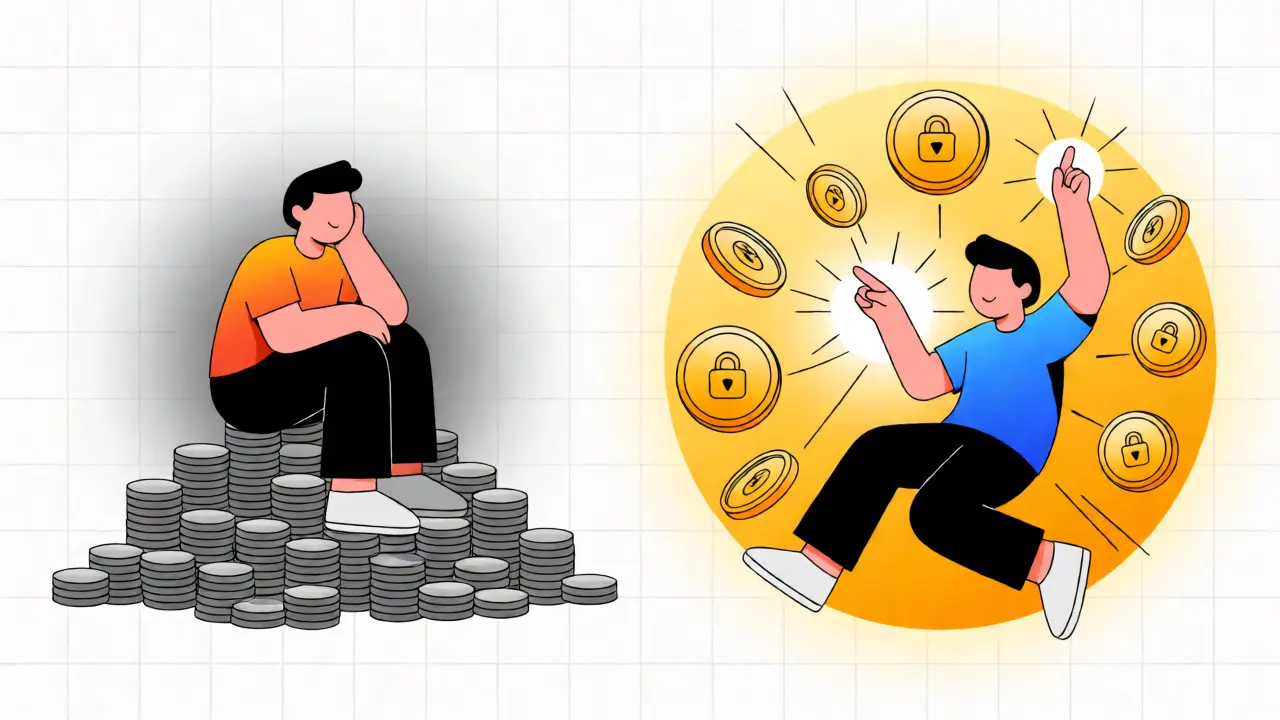
Why does this matter? Because projects want engaged users, not speculators who dump their tokens five minutes after listing. By weighting distributions based on activity, Scaleswap ensures that those who actually use the platform-voting, staking, interacting with new launches-get rewarded more heavily. It’s a quality-over-quantity approach. If you hold 10,000 SCA but never touch the platform, your ScaleSCORE will be low. Meanwhile, someone holding 500 SCA who actively participates could earn a larger share of the next partner airdrop.
Understanding the SCA Token Utility
The native token, $SCA, serves two main purposes: governance and fee payment. Every time you interact with the platform’s features, you pay fees in SCA. Crucially, these tokens are burned after use. This creates a deflationary pressure similar to burning vouchers. As platform usage grows, the supply of SCA shrinks, potentially increasing scarcity for remaining holders.
But utility goes beyond just paying fees. The token grants access to the DAO (Decentralized Autonomous Organization). Here, holders vote on key decisions, such as which projects get listed or how treasury funds are allocated. This democratic structure aligns incentives between the team and the community. Security is also a priority, led by co-founder Stanislav Stolberg, whose background in information security helps mitigate common DeFi risks like smart contract exploits.
| Feature | Scaleswap | Traditional Launchpads |
|---|---|---|
| Distribution Method | Weighted by ScaleSCORE (Activity) | Snapshot of Holdings (Passive) |
| Network | Polygon (Layer 2) | Ethereum Mainnet (often) |
| Token Economics | Deflationary (Fees Burned) | Inflationary/Fixed Supply |
| Governance | DAO Voting Rights | Limited or Centralized |
How to Maximize Your ScaleSCORE
If you want a bigger slice of the pie, you need to boost your ScaleSCORE. This metric doesn’t appear by magic; it requires consistent action. First, stake your SCA tokens. Staking locks up liquidity and signals long-term commitment to the protocol. Second, participate in IDOs. Even small contributions count if they demonstrate genuine interest in the ecosystem. Third, engage in governance votes. Showing up to vote on proposals proves you’re part of the community, not just a silent holder.
Consider a scenario: Alice holds 1,000 SCA and stakes them for six months while voting on every proposal. Bob holds 2,000 SCA but leaves them idle in his wallet. When a partner project launches an airdrop, Alice likely receives a significantly higher allocation per token held than Bob. Her active engagement outweighed his larger balance. This dynamic encourages healthy community growth rather than whale dominance.
Partner Projects and Real Opportunities
Scaleswap doesn’t typically run its own massive "SCA airdrop" event like some newer chains do. Instead, it facilitates airdrops from partner projects. These are tokens from startups launching via the Scaleswap IDO platform. One notable partnership involves WISeKey International Holding Ltd, a Nasdaq-listed firm. They launched WISe.Art, an NFT platform using the TEC DAO Token. Users engaging with Scaleswap during these launches can qualify for these partner-specific drops.
This model reduces risk for users. Since the projects are vetted through the launchpad process, you’re less likely to encounter outright scams compared to random Twitter giveaways. However, due diligence remains essential. Check the whitepaper of any project launching on Scaleswap. Look for clear utility, a competent team, and realistic roadmaps. The ScaleSCORE system filters out noise, but it doesn’t guarantee success for every project listed.

Risks and Market Context
DeFi is volatile. While Scaleswap offers a structured way to earn airdrops, it carries inherent risks. Smart contract vulnerabilities exist, even on secure platforms. Regulatory uncertainty looms over all crypto activities. And market downturns can crush token prices regardless of utility. In late 2021, Polygon saw massive user growth, surpassing Ethereum in daily active users at times. Scaleswap benefits from this trend, but if Polygon adoption stalls, so does the volume of IDOs.
Compare this to other major airdrop programs. Jupiter distributed billions of JUP tokens based on swap volume. Optimism ran multiple seasons rewarding early adopters. Scaleswap’s approach is more niche but potentially more sustainable because it ties rewards to ongoing engagement rather than one-time historical actions. You aren’t rewarded for what you did last year; you’re rewarded for what you’re doing now.
Action Plan for Investors
Ready to dive in? Start by acquiring SCA tokens on supported exchanges. Move them to a self-custody wallet compatible with Polygon. Next, find the official Scaleswap interface and connect your wallet. Stake your tokens to begin accruing ScaleSCORE points. Monitor upcoming IDOs and participate in those that align with your investment thesis. Finally, keep an eye on governance announcements. Voting rights are a powerful tool, and using them boosts your standing within the community.
Don’t expect overnight riches. The beauty of the ScaleSCORE system is consistency. Regular interaction beats sporadic large investments. Treat it like a fitness routine: small, repeated efforts yield better results than occasional intense bursts. Stay updated through official channels, as partner projects announce their specific airdrop criteria independently. Some may require minimum staking durations, others may prioritize recent voters. Adaptability is key.
Does Scaleswap have its own token airdrop?
Not exactly. Scaleswap primarily facilitates airdrops for partner projects launching on its platform. While there may be community rewards for SCA holders, the primary value comes from receiving tokens from new projects based on your ScaleSCORE.
What is ScaleSCORE?
ScaleSCORE is a proprietary scoring system used by Scaleswap to measure user loyalty and activity. It weighs factors like staking duration, IDO participation, and governance voting to determine airdrop eligibility and size.
Which blockchain does Scaleswap operate on?
Scaleswap operates on Polygon, a Layer 2 scaling solution for Ethereum. This allows for lower transaction fees and faster processing times compared to the Ethereum mainnet.
Is my SCA token burned when I use the platform?
Yes, fees paid in SCA tokens for platform utilities are burned after consumption. This creates a deflationary mechanism that can potentially increase the scarcity of the remaining token supply.
Can I lose my ScaleSCORE?
Generally, ScoreSCORE accumulates over time. However, specific rules may apply regarding unstaking or prolonged inactivity. Always check the latest documentation on the Scaleswap website for current scoring mechanics.