
By June 30, 2025, if you were running a crypto exchange, wallet service, or token trading platform from Singapore - even if you only served customers overseas - you had to be licensed. No exceptions. No grace period. That’s how strict Singapore’s new rules became. This isn’t just another update. It’s a full overhaul. And it changed everything for anyone touching digital assets in or out of the country.
What Changed in 2025? The FSMA Reset
Before 2025, Singapore’s crypto rules lived under the Payment Services Act (PSA) from 2020. It was solid. It required licenses, AML checks, and capital buffers. But it had gaps. Companies could operate from Singapore, serve global clients, and slip through the cracks. Not anymore. The Financial Services and Markets Act 2022 (FSMA) came into full effect on June 30, 2025. It didn’t tweak the old system - it replaced it. Now, every digital token service provider (DTSP) operating from Singapore, regardless of where their customers are, needs a license. That includes exchanges, custodians, token issuers, and even some DeFi intermediaries. If your server is in Singapore, you’re under MAS’s thumb. Even if your user is in Brazil, Nigeria, or Canada. The MAS didn’t just expand scope - they tightened the screws. No transitional period. No grandfathering. Unlicensed operators had to shut down by midnight on June 30. Fines for non-compliance? Up to SGD 1 million or three times the profit gained - whichever is higher. Jail time for directors who knowingly break the rules. This isn’t a warning. It’s a line in the sand.The Two License Tiers: Standard vs. Major
Singapore doesn’t believe in one-size-fits-all. The licensing system splits DTSPs into two clear buckets based on monthly transaction volume.- Standard Payment Institution License: For businesses handling up to SGD 3 million in digital token transactions per month. Minimum capital? SGD 100,000. You need basic AML checks, customer due diligence, and annual reporting. This is the sweet spot for small-to-medium exchanges, local wallet apps, and crypto payment processors targeting retail users.
- Major Payment Institution License: For anyone hitting more than SGD 3 million monthly. Minimum capital jumps to SGD 250,000. Now you’re looking at advanced cybersecurity protocols, real-time transaction monitoring, mandatory internal audits, and a full-time Singapore-based compliance officer. This is for Kraken-style platforms, institutional trading desks, and high-volume staking services.
Compliance Isn’t Optional - It’s Built In
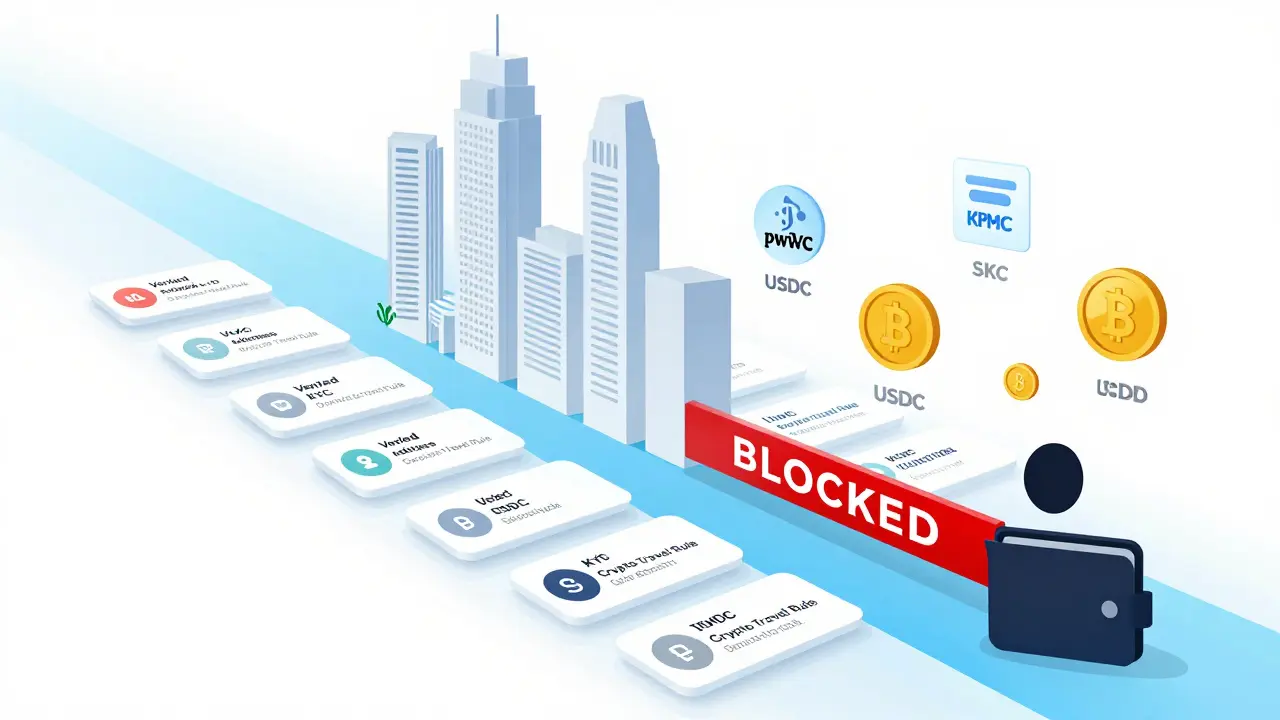
Singapore doesn’t just say “follow the rules.” They force you to build compliance into your DNA. The Crypto Travel Rule (MAS Notice PSN02) is one of the strictest in the world. Every time a user sends crypto worth more than SGD 1,000, your platform must transmit the sender’s and receiver’s full names, account numbers, and addresses - just like a bank wire. And you have to keep that data for at least five years. No anonymized wallets. No mixing services. No privacy coins that obscure the trail. You also need:- Real-time transaction monitoring software that flags suspicious patterns - like rapid transfers between multiple wallets or sudden spikes in activity.
- Know Your Customer (KYC) checks that verify government-issued IDs, proof of address, and source of funds for every user - even if they’re from outside Singapore.
- Annual independent audits by MAS-approved firms. No in-house reviews. No shortcuts.
- A dedicated compliance officer who lives in Singapore and reports directly to MAS.

Crypto Exchanges and Capital Markets Rules
If your platform lets users trade crypto like stocks - buying, selling, or issuing tokens - you need a Capital Markets Services (CMS) license under the Securities and Futures Act. This applies to any token that acts like a security: profit-sharing tokens, utility tokens with investment expectations, or tokenized assets like real estate or equity. The MAS treats these like traditional securities. That means:- Full disclosure of risks, fees, and tokenomics.
- Prohibition of misleading marketing - no promises of returns.
- Segregation of client funds. Your crypto can’t sit in the same wallet as your company’s operating funds.
- Strict limits on leverage. No margin trading unless you’re a licensed futures broker.
Stablecoins: Backed, Audited, and Licensed
Stablecoins aren’t treated as afterthoughts in Singapore - they’re front and center. The MAS released a dedicated framework in early 2025 that requires all stablecoin issuers to be licensed DTSPs. But there’s more.- Every stablecoin must be 100% backed by high-quality, liquid assets - cash, government bonds, or short-term treasuries. No algorithmic stablecoins. No unbacked claims.
- Issuers must publish monthly audits by top-tier firms (like PwC or KPMG) showing asset reserves match circulating supply.
- Redemption must be guaranteed within 48 hours. No delays. No excuses.
- Only licensed entities can issue stablecoins pegged to SGD, USD, or other fiat currencies.
Why Singapore Stands Out - and What It Means for You
Compare Singapore to other hubs:- EU (MiCA): Still rolling out. Transitional periods. Unclear enforcement. Many firms are waiting to see how it plays out.
- US: Patchwork of state rules. SEC lawsuits. No clear federal framework. Uncertainty kills innovation.
- Hong Kong: Strong, but newer. Still finalizing rules on derivatives and custody. Slower adoption.
What Happens If You Ignore the Rules?
Don’t think you can fly under the radar. MAS has teeth.- Unlicensed platforms are blocked from Singapore’s banking system. No local bank accounts. No SGD deposits.
- Local payment processors like PayNow and NETS refuse to work with unlicensed crypto firms.
- Domain names registered in Singapore can be seized.
- Directors can be personally fined or jailed for up to 7 years.
- International partners - like payment gateways or custody providers - will cut ties to avoid their own regulatory risk.
Looking Ahead: Innovation Within Boundaries
Singapore isn’t trying to kill crypto. It’s trying to tame its chaos. That’s why they’re also testing tokenized bonds, digital IDs for DeFi, and pilot programs for CBDCs. But every innovation must pass through the same filter: transparency, accountability, and protection of the financial system. The result? A crypto ecosystem that’s smaller than it was in 2023 - but far more trustworthy. Investors know their assets are safe. Banks are willing to work with licensed firms. Developers build products that can scale globally without fear of sudden crackdowns. This isn’t a restriction. It’s a foundation. And for anyone serious about crypto - not just speculation - that’s worth more than any hype.Do I need a license if I only trade crypto personally in Singapore?
No. Individual retail trading is not regulated. You can buy, sell, and hold Bitcoin or Ethereum without a license. But if you run a platform, exchange, wallet service, or offer crypto as a service to others - even just to friends - you need a license. The rules target businesses, not users.
Can I still use USDT or USDC in Singapore?
Yes, but only if they’re issued by a licensed stablecoin provider. As of 2025, Tether (USDT) and Circle (USDC) have both applied for licenses in Singapore. Until they’re approved, platforms can’t offer them as direct fiat on-ramps. You can still hold them if you bought them elsewhere, but you can’t buy them directly with SGD on unlicensed platforms.
What if my crypto business is based outside Singapore but serves Singaporean users?
If your business targets Singaporeans - through marketing, language, or payment options like SGD deposits - MAS considers you operating in Singapore. You need a license. The regulator looks at where your customers are, not just where your servers are. Many foreign exchanges have been blocked from advertising in Singapore because they didn’t comply.
Are NFTs regulated in Singapore?
It depends. If an NFT represents ownership of a physical asset or a share in a company, it’s treated as a security and requires a CMS license. If it’s purely a digital collectible - like a profile picture or game item - it’s not regulated. But if you’re selling NFTs as investment opportunities with promises of future value or royalties, MAS will treat it as a capital market product. Clarity matters.
How long does it take to get a crypto license in Singapore?
On average, 6 to 9 months. MAS reviews applications thoroughly. You need detailed business plans, cybersecurity audits, AML procedures, and proof of capital. Many applicants get rejected on their first try for incomplete documentation. Hiring a local compliance consultant isn’t required, but it increases your chances significantly.
28 Responses
sg got balls. no more crypto wild west. if you cant play by the rules, dont play at all.
finally someone got it right. no more shady exchanges hiding behind offshore servers. this is how you build real trust.
the travel rule alone is insane. but honestly? i’d rather have my funds safe than anonymous.
let me break this down for the crypto bros who think they’re clever. mas didn’t just raise the bar-they moved the entire field to a different continent. you think your ‘decentralized’ wallet is safe? if it’s hosted in sg, you’re under their microscope. no more pretending you’re not a financial institution when you’re processing $500M/month. they see you. they’ve always seen you. and now they’ve got the power to shut you down with a single audit. this isn’t regulation. this is a full system override. if you’re still running a crypto business without a license, you’re not a pioneer-you’re a liability waiting to explode.
imagine if every country did this. no more offshore shell companies, no more rug pulls disguised as ‘utility tokens.’ singapore didn’t just create rules-they built a cathedral of trust. and honestly? after seeing what happened in ftx, terra, and all those other collapses, i’d rather have a slow, clean system than a fast, broken one. the people who hate this? they’re not pro-innovation. they’re pro-gambling. and i’m done pretending that’s the same thing.
finally a place that gets it. crypto isn’t about getting rich quick-it’s about building something that lasts. and sg is doing it right.
the part about credit cards being banned for crypto? genius. so many people ruined their finances buying btc on their visa
usa should just give up. we’re the laughingstock of global finance now. sg is out here building the future while we’re still arguing if crypto is money or not.
oh wow, how revolutionary. regulate the bad actors. who would’ve thought?
sg is the adult in the room 🤝
the fsma 2022 constitutes a paradigmatic realignment of digital asset governance, supplanting the fragmented psa framework with a vertically integrated regulatory architecture predicated on systemic risk mitigation and institutional accountability. the tiered licensing model-standard versus major-introduces proportionality without compromising integrity, and the mandatory singapore-based compliance officer requirement effectively eliminates regulatory arbitrage. this is not merely compliance-it’s institutional embedding.
sg doing what africa should be doing. stop letting foreigners run our money games. if you want to play, build it here, pay taxes, follow the rules.
everyone’s acting like this is genius. what about privacy? what about freedom? you’re just building a crypto police state.
thank you for this. i’ve been waiting for someone to make sense of all this chaos. sg is quiet but so strong 💛
obviously, this is the only rational approach. anyone who opposes this clearly lacks the intellectual maturity to comprehend systemic financial integrity.
regulation is just control dressed up as safety. sg isn’t protecting users-they’re protecting their own financial empire.
why do we even need licenses for crypto? it’s supposed to be decentralized
the more i read about this, the more i believe sg isn’t just regulating crypto-they’re redefining what financial trust looks like in the 21st century. this is the blueprint the world needs.
as someone from india, i see how this could inspire our own framework. we need structure, not chaos. thank you for the clarity.
usa should ban all crypto until we have rules this tight. we’re a joke.
you think this is strict? wait until the feds catch up. this is just the warm-up round.
oh my god, i just realized-this is what happens when you let engineers run finance. no emotion. no soul. just spreadsheets and compliance officers. i miss the wild days.
they call this progress? they’re just turning crypto into another bank. where’s the innovation?
only the elite get licenses. the rest? they’re just peasants with wallets. congrats, sg-you’ve created a crypto caste system.
you think this is tough? try getting a license in india. they make you fill out 47 forms and wait two years. at least sg has a clear path. this is actually fair.
if you’re building something real, sg’s rules aren’t a barrier-they’re a badge of honor. this is the gold standard. if your project can’t pass this, maybe it shouldn’t exist.
sg didn’t just regulate crypto-they gave it dignity. now the world has to catch up.
what’s fascinating is how this mirrors the evolution of global finance itself. in the 19th century, banks needed charters to operate. in the 20th, securities firms needed registration. now, in the 21st, digital asset platforms need licenses. this isn’t about controlling innovation-it’s about integrating it into the fabric of mature financial systems. the real question isn’t whether sg is too strict-it’s whether every other jurisdiction has the courage to be this clear-eyed.