

Trading crypto on Ethereum used to feel like paying a toll for every step you took. Gas fees could easily eat up your profits, turning a small trade into a net loss. That is exactly why SushiSwap on the Harmony blockchain has become a go-to spot for traders who want speed without the sticker shock. But does this specific deployment actually deliver on its promises, or is it just another fragmented piece of the decentralized finance (DeFi) puzzle?
This review cuts through the noise. We will look at how SushiSwap performs on Harmony, what you can realistically earn from liquidity pools, and whether the security risks are worth the savings. By the end, you will know if this platform fits your trading style or if you should stick to centralized exchanges.
The Core Value: Why Trade on Harmony?
To understand SushiSwap on Harmony, you first need to understand Harmony itself. Launched as a scalable blockchain solution, Harmony uses a sharding architecture that allows transactions to be processed in parallel. The result? Transaction finality takes about two seconds, and gas fees often hover around $0.0001. Compare that to Ethereum’s historical average of $15+ during peak times, and the math becomes obvious for retail traders.
SushiSwap (Harmony) is a decentralized exchange instance deployed on the Harmony blockchain, offering low-cost trading via an automated market maker model. It launched in 2021 as part of SushiSwap’s multi-chain strategy. While the main SushiSwap protocol started on Ethereum, the Harmony version was built to capture users frustrated by high fees and slow speeds. It currently supports 13 coins and 35 trading pairs, which might sound limited compared to giants like Uniswap, but it covers the most essential assets for Harmony users: ONE, USDC, ETH, and SUSHI.
The primary job here is simple: swap tokens cheaply. If you are moving large institutional volumes, this might not be your best bet due to liquidity depth issues (more on that later). But for everyday swaps, the cost efficiency is unmatched.
How the Platform Works: AMM and Rewards
SushiSwap operates on an Automated Market Maker (AMM) model. This means there is no order book with buyers and sellers matching prices. Instead, you trade against liquidity pools-reservoirs of tokens provided by other users. When you swap ONE for USDC, you pull from the pool and deposit your token back in, slightly adjusting the price based on supply and demand.
Here is where it gets interesting for you as a user. SushiSwap doesn’t just let you trade; it pays you to provide liquidity. The fee structure is split as follows:
- 0.25% of every trade goes directly to the Liquidity Providers (LPs).
- 0.05% goes to holders of xSUSHI (staked SUSHI tokens).
This dual-reward system is a key differentiator. Competitors like Uniswap v3 focus heavily on capital efficiency but don’t offer native token rewards in the same way. On Harmony, this means if you deposit funds into a popular pool like ONE/USDC, you earn both trading fees and SUSHI tokens. In June 2025, one Reddit user reported earning a 23.7% APY after accounting for gas costs and rewards. That is a compelling return, especially when traditional savings accounts offer fractions of a percent.
However, keep in mind that these yields fluctuate. They depend on trading volume and the price of the SUSHI token itself. If SUSHI drops in value, your rewards lose purchasing power, even if the percentage looks high.
Security and Trust: What Are the Risks?
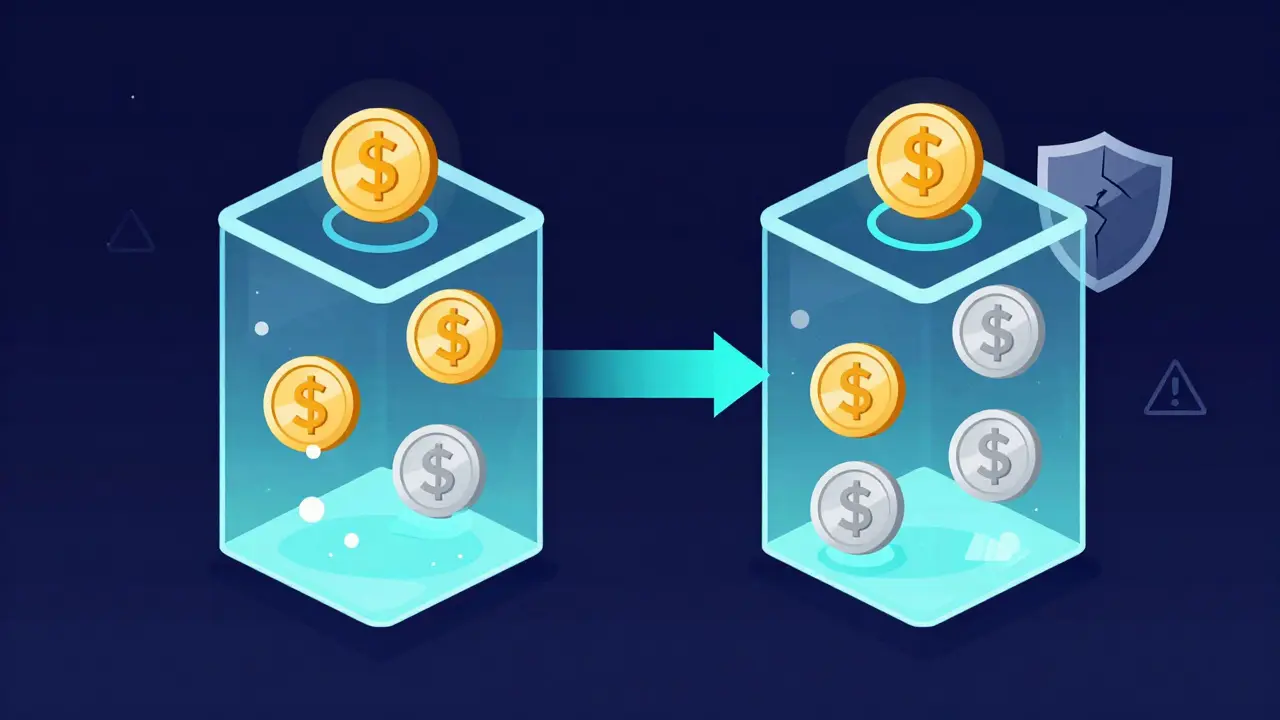
Let’s address the elephant in the room: security. SushiSwap has a controversial past. In September 2020, the anonymous founder 'Chef Nomi' withdrew $14 million in ETH from the protocol before returning it and handing control over to community governance. While the funds were returned, the incident raised red flags about centralization risks.
Today, the project is led by core developer 0xMaki and CTO Joseph Delong, operating under a decentralized autonomous organization (DAO) model. But does that make the Harmony deployment safe?
Harmony itself uses a proof-of-stake consensus with 250 validator nodes, providing a solid foundation. However, Maya Zehavi, a blockchain security researcher at OpenZeppelin, noted in her November 2024 audit review that SushiSwap’s rapid expansion has stretched engineering resources thin. She warned that Harmony contracts received 40% less audit attention than the Ethereum mainnet versions. This is a critical detail. Smart contract risk is real, and while no major hacks have targeted the Harmony instance specifically, the complexity of the codebase means vulnerabilities can hide in plain sight.
Additionally, Harmony faced regulatory scrutiny. In 2024, the SEC settled with Harmony regarding the classification of the ONE token. While no enforcement actions have targeted SushiSwap directly, this regulatory ambiguity adds a layer of uncertainty for long-term holders.
| Feature | SushiSwap (Harmony) | Pangolin (Avalanche Fork) | ProBit Global (Centralized) |
|---|---|---|---|
| Avg. Gas Fee | $0.0001 | $0.05 - $0.10 | $0 (included in spread) |
| Liquidity Depth | Low ($1.2M avg pool) | Medium | High |
| Trading Pairs | 35 | 50+ | 100+ |
| KYC Required | No | No | Yes |
| Reward System | SUSHI + Fees | PNG + Fees | None |
User Experience: Getting Started
Using SushiSwap on Harmony is straightforward if you already use DeFi tools, but beginners might find the setup process tedious. According to CryptoSlate’s October 2025 guide, experienced users take about 15 minutes to start, while newcomers may need 45-60 minutes.
Here is the typical workflow:
- Add Harmony to Your Wallet: You need an EVM-compatible wallet like MetaMask. You must manually add the Harmony network using the RPC endpoint
https://api.s0.t.hmny.ioand Chain ID1666600000. - Bridge Assets: If your crypto is on Ethereum, you can’t just send it. You need to use a bridge like Horizon Bridge. This takes 15-20 minutes and involves trusting the bridge smart contracts.
- Approve Tokens: Before swapping, you must approve the token contract. This costs roughly $0.0003 in gas.
- Execute Swap: Set your slippage tolerance carefully. A common mistake among new users is setting it too low, causing transactions to fail during volatile periods.
User feedback highlights a mixed experience. On Reddit, user 'DeFiNewbie88' complained about the confusing interface, noting it took three attempts to configure slippage correctly. Conversely, 63% of Discord users praised the seamless integration with MetaMask. The biggest pain point remains managing xSUSHI rewards across chains. One user reported losing $87 worth of SUSHI while trying to unstake from Harmony after migrating wallets. This complexity suggests that SushiSwap is better suited for users comfortable with technical troubleshooting.
Market Position and Future Outlook
As of Q3 2025, SushiSwap dominates the Harmony DEX landscape, holding 46% of the market share with $42.7 million in Total Value Locked (TVL). It beats out competitors like Pangolin (29%) and ThorSwap (15%). David Hamilton, a DeFi analyst at Delphi Digital, called it "one of the most successful multi-chain expansions in DeFi history," capturing 63% of Harmony’s DEX volume despite launching later than native competitors.
However, growth isn’t guaranteed. The platform faces fragmentation risks. With SushiSwap deployed on over 15 chains, liquidity is spread thin. Bernstein analysts warn of "existential risk" if the protocol fails to consolidate this liquidity. For Harmony specifically, the upcoming "Trident" concentrated liquidity pools, scheduled for January 2026, aim to increase capital efficiency by 3-5x. This upgrade could significantly boost yields for LPs and attract more serious traders.
Also, in August 2025, SushiSwap integrated Orbs’ dLIMIT and DCA protocols on Harmony. This finally brings limit orders and dollar-cost averaging to the chain, features previously missing. This move addresses a major complaint from traders who wanted more control over their entry and exit points.
Verdict: Who Should Use SushiSwap on Harmony?
SushiSwap on Harmony is not for everyone. If you are a large institutional trader looking to move millions of dollars with minimal slippage, look elsewhere. The average pool size of $1.2 million means trades above $50,000 will likely suffer from slippage exceeding 2%. Centralized exchanges like ProBit Global offer deeper liquidity but require KYC and charge higher implicit fees through spreads.
For retail traders, however, this platform shines. If you hold Harmony ONE or want to experiment with DeFi yields without burning cash on gas fees, SushiSwap is a top choice. The combination of near-zero transaction costs, SUSHI token rewards, and fast settlement makes it highly efficient for small-to-medium trades.
Just remember to do your own research. Understand the risks of smart contracts, keep your private keys secure, and start with small amounts to familiarize yourself with the bridging and staking processes. The potential rewards are attractive, but so are the pitfalls if you aren’t careful.
Is SushiSwap on Harmony safe to use?
While no major hacks have targeted the Harmony instance, it carries inherent smart contract risks. Security researchers note that Harmony contracts receive less audit attention than Ethereum versions. Always use a hardware wallet for large holdings and never share your seed phrase.
What are the fees on SushiSwap Harmony?
Trading fees are typically 0.3% total (0.25% to liquidity providers, 0.05% to xSUSHI stakers). Gas fees are negligible, often costing less than $0.001 per transaction, making it much cheaper than Ethereum-based DEXs.
How do I get Harmony tokens to use SushiSwap?
You can buy ONE on a centralized exchange like Binance or Coinbase, then withdraw it to your MetaMask wallet connected to the Harmony network. Alternatively, you can bridge assets from Ethereum using the Horizon Bridge.
Can I earn passive income on SushiSwap Harmony?
Yes, by providing liquidity to pools. You earn trading fees and SUSHI token rewards. Yields vary based on pool volume and SUSHI price, with some pools reporting over 20% APY in recent months.
Why is liquidity lower on Harmony compared to Ethereum?
Harmony is a smaller ecosystem with less total value locked (TVL) than Ethereum. SushiSwap’s liquidity is also fragmented across 15+ chains, meaning each individual chain deployment has fewer funds available for large trades.
Does SushiSwap Harmony support limit orders?
Yes, since August 2025, SushiSwap on Harmony has integrated Orbs’ dLIMIT protocol, allowing users to set limit orders and use dollar-cost averaging strategies directly on the platform.
15 Responses
look i dont care what the article says about low fees because it is all part of the great reset to track every penny you spend in crypto. they want you on harmony so they can control the sharding and watch your transactions in real time while ethereum is just a distraction for the sheep. the gas fees arent even the point its about surveillance capitalism disguised as decentralization and we are all walking into the trap willingly because we think we are saving money on swaps but really we are handing over our financial privacy to some anonymous devs who could rug pull us anytime. stop buying into this narrative.
You need to focus on the fundamentals here rather than getting lost in conspiracy theories that have no basis in reality. The data clearly shows that transaction finality in two seconds is a massive advantage for retail traders who are tired of waiting hours for confirmations on mainnet. If you approach this with an open mind and a willingness to learn, you will see that the risk-reward ratio is actually quite favorable when you understand how liquidity pools work. Let me help you break down why the APY numbers are compelling if you ignore the noise and look at the raw volume metrics.
The slippage tolerance issue mentioned in the UX section is a critical failure point for novice users entering the DeFi ecosystem without proper technical literacy. When you execute a swap on SushiSwap Harmony, the automated market maker algorithm adjusts prices based on the pool's reserve ratios, which means high volatility periods can result in significant impermanent loss if your slippage settings are too tight. You must calibrate your meta-transaction parameters carefully before initiating any large volume trades because the protocol does not offer price protection mechanisms like centralized exchanges do. This is why capital efficiency drops drastically for trades exceeding fifty thousand dollars due to shallow liquidity depth.
It is important to note that the security audit discrepancies between the Ethereum and Harmony deployments present a non-trivial risk vector for long-term holders of SUSHI tokens staked in these pools. The fact that Harmony contracts received forty percent less audit attention according to OpenZeppelin researchers suggests that potential vulnerabilities may remain undetected within the smart contract codebase. Users should exercise extreme caution and perhaps consider using hardware wallets exclusively for interactions with these specific dApps to mitigate the risk of private key compromise through malicious browser extensions or phishing sites.
I agree with the points raised about liquidity fragmentation being a major hurdle for institutional adoption but I believe the upcoming Trident concentrated liquidity upgrade will address many of these concerns by improving capital efficiency significantly. It would be great if the community could collaborate more on testing the new limit order features introduced via Orbs integration since this adds a layer of sophistication previously missing from the platform. We should all participate in the governance votes to ensure that resources are allocated properly toward securing the Harmony instance specifically.
I am genuinely curious about how the dual-reward system impacts the overall sustainability of the yield farming incentives over time especially when the price of SUSHI is highly volatile. It seems fascinating that users can earn both trading fees and native tokens simultaneously but I wonder if this model creates an inflationary pressure that eventually dilutes the value of the rewards for early adopters. Could someone explain how the xSUSHI staking mechanism interacts with the total supply cap and whether there are any deflationary burns happening on the Harmony chain specifically?
this whole thing is a scam designed to steal your money and the SEC knows it but they let it slide because they are in bed with the tech bros running these protocols. american taxpayers should not have to worry about foreign chains like harmony messing up our financial stability with unregulated securities. keep your money in gold and silver and stay away from this digital garbage that collapses overnight when the music stops :)
please spare me the breathless praise for another mediocre dex fork that offers nothing new except slightly lower fees which are irrelevant if the liquidity is trash. the ui is clunky and confusing even for experienced users and the customer support is nonexistent because its decentralized which is just code for no one is responsible when things go wrong. i tried it once and almost lost my wallet seed phrase trying to bridge assets and now i stick to binance where at least i know who to blame when my account gets frozen.
Let me clarify the bridging process for those who are hesitant to move assets from Ethereum to Harmony because the Horizon Bridge is actually quite secure if you follow the official documentation step by step. You need to make sure you are using the correct RPC endpoint and chain ID to avoid sending funds to the wrong network which is a common mistake among beginners. Once your assets are on Harmony, the gas costs are negligible so you can afford to make small test transactions to familiarize yourself with the interface before committing larger amounts of capital to the liquidity pools.
One must consider the philosophical implications of relying on sharded blockchains for financial sovereignty when the centralization of validator nodes remains a contentious issue within the broader crypto community. The promise of scalability often comes at the cost of decentralization and this trade-off is rarely discussed openly in promotional materials. While the speed and low fees are attractive features, we should question whether true freedom exists in a system where only two hundred fifty validators determine the validity of transactions across the entire network.
I cannot stress enough how devastating it was when I lost eighty seven dollars worth of SUSHI tokens trying to unstake from Harmony after migrating my wallet setup incorrectly. The complexity of managing cross-chain rewards is absolutely maddening and feels like a deliberate design flaw to trap user funds within the ecosystem. Every time I thought I had figured out the process something else went wrong and the lack of clear guidance made the experience feel incredibly hostile towards average users who just want to access their own money.
Oh wonderful another review telling people to throw their money into a fragmented liquidity pool hoping the yields stay high long enough to cover the inevitable rug pull. You people are so eager to be exploited by venture capitalists that you celebrate low gas fees as if that makes up for the fundamental insecurity of the platform. Wake up and realize that you are not smarter than the market you are just providing free labor for the developers who get paid in equity regardless of whether you profit or lose everything.
The technical analysis of the current TVL distribution reveals that SushiSwap on Harmony is merely a shadow of its former self on Ethereum with diluted liquidity spread across too many chains to maintain any significant competitive edge. The introduction of concentrated liquidity pools is a band-aid solution that fails to address the core issue of declining organic demand and increasing regulatory scrutiny surrounding the ONE token classification. Investors who continue to allocate capital here without understanding the macroeconomic headwinds are simply donating to insiders who are already exiting their positions quietly.
From a risk management perspective, it is crucial to diversify your exposure across multiple chains rather than concentrating all your liquidity in a single deployment like Harmony which carries unique smart contract risks 🛡️. The integration of Orbs dLIMIT protocol is a positive development for advanced traders who require precise entry and exit points but it does not eliminate the underlying impermanent loss associated with volatile asset pairs. Always use multi-sig wallets for large LP positions and monitor the health factors of your pools daily to ensure you are not caught off guard by sudden market movements 📉.
In the context of global DeFi adoption, the success of SushiSwap on Harmony highlights the growing demand for accessible financial tools in emerging markets where traditional banking infrastructure is either unreliable or prohibitively expensive. The ability to execute trades with minimal fees empowers individuals in countries with high inflation rates to preserve their purchasing power through stablecoin pairs and yield-generating strategies. However, cultural differences in user interface expectations mean that localization efforts must continue to improve accessibility for non-English speaking communities who represent a significant portion of the potential user base.