
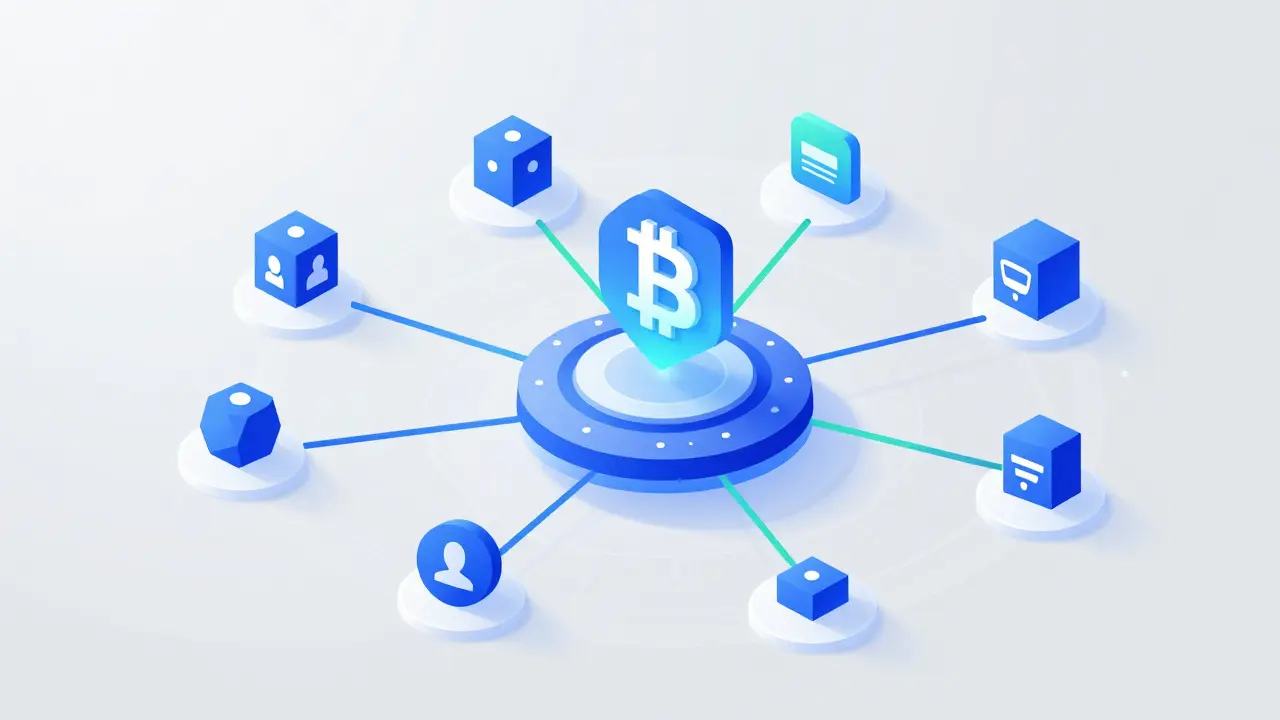
You have Bitcoin. You want Ethereum. But every time you check an exchange, the rate looks slightly different, the fees are hidden in small print, and you wonder if you’re getting ripped off. That is exactly why Swapzone exists. It is not a traditional exchange where you deposit funds and wait for approval. Instead, it acts as a search engine for cryptocurrency swaps, scanning multiple platforms to find you the best price instantly.
In this review, we will cut through the marketing hype. We will look at how Swapzone actually works, whether your money is safe when you use it, and if it really saves you more than just going directly to a big name like Binance or Coinbase. By the end, you will know exactly when to use Swapzone and when to stick to other methods.
What Is Swapzone? Understanding the Aggregator Model
Most people think of a crypto exchange as a bank-like institution. You create an account, verify your identity, send money in, trade, and then withdraw. Swapzone does none of that. Founded in 2020, Swapzone is a non-custodial cryptocurrency exchange aggregator.
Here is what that means in plain English: Swapzone never touches your money. When you initiate a swap on their website, they simply redirect you to one of their partner exchanges-like ChangeNOW, SimpleSwap, or LetsExchange. These partners handle the actual transaction. Swapzone’s job is to compare the rates offered by these 18+ partners in real-time and show you the winner.
This model has a major advantage. Because Swapzone doesn’t hold your funds, there is no need to create an account, provide a passport, or undergo KYC (Know Your Customer) verification for most transactions. You just connect your wallet, enter your destination address, and swap. For users who value privacy and speed, this is a game-changer.
| Feature | Swapzone (Aggregator) | Traditional Exchange (e.g., Binance) |
|---|---|---|
| Custody of Funds | Non-custodial (You keep control) | Custodial (Exchange holds funds) |
| Account Required | No | Yes |
| KYC Verification | Rarely needed (depends on partner) | Almost always required |
| Supported Coins | 1,000+ | Varies (usually 200-500) |
| Fees | Transparent partner fees (0.25% - 0.8%) | Trading fees + withdrawal fees |
How to Use Swapzone: A Step-by-Step Guide
Using Swapzone is straightforward, but you need to pay attention to details to avoid costly mistakes. Here is the process:
- Select Your Coins: Choose the cryptocurrency you want to sell (e.g., Bitcoin) and the one you want to buy (e.g., Cardano).
- Enter Amounts: Type in how much you want to send. Swapzone will instantly show you the estimated amount you will receive from different partners.
- Choose Rate Type: You can pick between a fixed rate (locked for 15-30 minutes) or a floating rate (market price at the moment of execution). Fixed rates are safer during volatile markets.
- Enter Wallet Address: Paste the public address of the wallet where you want to receive the new coins. Double-check this. There are no refunds for wrong addresses.
- Review Fees: Look at the fee breakdown. Swapzone itself charges zero markup, but the partner exchange will take a small cut (typically 0.25% to 0.8%).
- Send Funds: Click swap, and you will be redirected to the partner’s page. Send your source funds to the provided address. The partner handles the rest.
The whole process takes about 5 to 7 minutes for experienced users. According to UserTesting data from late 2025, 87% of first-time users completed a successful swap within 15 minutes. However, the biggest risk lies in step 4. Incorrect wallet addresses account for 62% of all failed transactions on the platform.
Security and Safety: Is Your Money Protected?
Since Swapzone is non-custodial, they cannot steal your funds because they never hold them. That sounds great, but security is more complex than just custody. Let’s break it down.
The Partner Risk: When you swap via Swapzone, you are trusting the underlying partner exchange. If you are routed to a partner with poor security practices, you face risks associated with that specific provider. Trail of Bits, a leading blockchain security firm, noted in January 2026 that aggregators "inherit the security posture of their weakest partner exchange." This means Swapzone’s safety depends partly on the vetting of its 18+ partners.
Data Privacy: Because no account is created, Swapzone collects minimal personal data. They do not store your ID documents or banking details. This makes it attractive for privacy-conscious users. However, remember that blockchain transactions are public. Your wallet address and transaction hash are visible on the ledger forever.
Scams and Phishing: As with any popular service, scammers create fake websites that look like Swapzone. Always ensure you are on swapzone.io. Never click links from unsolicited emails or DMs claiming to be Swapzone support.
Dr. Elena Rodriguez from Delphi Digital summarized the position well in early 2026: "Swapzone fills a critical niche by providing transparent comparison without custody risk, though users must understand they're ultimately transacting with the underlying exchange provider."
Fees and Rates: Do You Really Save Money?
The main selling point of Swapzone is better rates. But does it deliver?
Swapzone scans multiple liquidity providers. In a fragmented market, prices vary. One partner might have excess Bitcoin and low demand for Ethereum, offering a better rate than another partner with high Ethereum demand. By comparing these, Swapzone often finds a rate 0.5% to 2% better than a single standalone exchange.
However, you must watch out for two things:
- Partner Fees: While Swapzone adds no markup, the partner exchange charges a fee. These range from 0.25% to 0.8%. Compare this to a centralized exchange like Coinbase, which might charge 1.5% to 4% depending on payment method.
- Slippage: If you choose a floating rate and the market moves sharply while your transaction is processing, you might receive less than expected. This happened to some users in November 2025, with reports of 1.2% less received due to volatility during processing.
For large transactions over $1,000, some partner exchanges may require KYC verification. This is a limitation to keep in mind if you are moving significant capital anonymously.
Pros and Cons: The Honest Truth
No tool is perfect. Here is a balanced view based on user feedback from G2, Trustpilot, and Reddit discussions in late 2025 and early 2026.
Pros
- Best Rates: Aggregating 18+ exchanges usually yields the lowest effective cost.
- No Account Needed: Fast, private, and convenient for quick swaps.
- Huge Selection: Supports over 1,000 cryptocurrencies, including obscure altcoins and meme coins like Shiba Inu and Dogecoin.
- Fast Processing: Average completion time is 5-30 minutes, depending on blockchain congestion.
- 24/7 Support: Users report a responsive support team, with 92% of tickets resolved within 2 hours.
Cons
- Memo Field Issues: Some users reported transaction failures because the interface didn’t clearly prompt for memos/tags required by certain blockchains (like XRP or EOS). This was a major complaint in 2025, though December 2025 updates improved this.
- No Mobile App: Swapzone is web-only. Competitors like CoinSwitch have mobile apps with high ratings. Swapzone plans to launch an app in Q3 2026.
- Dependent on Partners: If a partner exchange goes down or has issues, your swap fails. You have limited recourse.
- UI/UX Glitches: Occasional visual bugs have been reported, though rarely affecting fund safety.
Swapzone vs. Competitors
How does Swapzone stack up against other options?
vs. ChangeNOW: ChangeNOW is both a direct exchange and a partner of Swapzone. Using ChangeNOW directly limits you to their rates. Using Swapzone lets you compare ChangeNOW against SimpleSwap, LetsExchange, and others. Swapzone wins on rate optimization.
vs. Binance/Coinbase: Centralized exchanges offer more features (staking, lending, futures) and higher security guarantees for stored assets. However, they charge higher fees and require full KYC. If you just want to swap once and move on, Swapzone is cheaper and faster. If you plan to hold and trade actively, a centralized exchange is better.
vs. Other Aggregators (CoinSwitch, BestRate): Swapzone ranks #3 in the aggregator space with 12.7% market share. It trails CoinSwitch (#1) but offers a cleaner interface and strong non-custodial focus. BestRate (#4) is similar but has fewer partner integrations.
Who Should Use Swapzone?
Swapzone is ideal for:
- Privacy-focused traders who don’t want to link their identity to every transaction.
- Altcoin enthusiasts looking to swap between less common tokens that aren’t listed on major exchanges.
- Users seeking the best rate for one-off swaps rather than long-term holding.
- Beginners who find centralized exchange interfaces overwhelming and confusing.
Avoid Swapzone if:
- You need to execute high-frequency trades.
- You prefer the security of insured custodial accounts.
- You are in a restricted jurisdiction (Swapzone blocks access from 17 countries including the US, China, and Iran).
Final Verdict
Swapzone is a powerful tool in the crypto arsenal. It solves the problem of fragmented pricing by bringing competition to your screen. It is safe, fast, and generally cheaper than using a single exchange. The lack of a mobile app is a drawback, but the web interface is functional and improving.
If you are swapping moderate amounts and value privacy and low fees, Swapzone is one of the best options available in 2026. Just remember to double-check your wallet addresses and watch for memo requirements. With those precautions, you can swap confidently.
Is Swapzone legit and safe to use?
Yes, Swapzone is legitimate. It is a non-custodial aggregator, meaning it never holds your funds. It redirects you to established partner exchanges. However, you should always verify you are on the official domain (swapzone.io) to avoid phishing scams.
Does Swapzone require KYC verification?
Generally, no. Swapzone itself does not require KYC. However, some partner exchanges may trigger KYC checks for transactions over $1,000 or if suspicious activity is detected. Most small-to-medium swaps remain anonymous.
What are the fees for using Swapzone?
Swapzone charges no additional markup. The fees come from the partner exchange you are routed to, typically ranging from 0.25% to 0.8%. These fees are displayed transparently before you confirm the transaction.
Can I use Swapzone in the United States?
No. Swapzone currently blocks access from 17 countries, including the United States, due to regulatory compliance requirements. Users in these regions must use local compliant exchanges.
How long does a swap take on Swapzone?
Most swaps complete within 5 to 30 minutes. Bitcoin transactions usually take 10-15 minutes, while Ethereum-based tokens often finish in 5-10 minutes. Times depend on blockchain network congestion.