

People in North Macedonia are trading crypto-even though it’s officially banned.
It sounds impossible. How can you trade something the government says is illegal? Yet in Skopje, Bitola, and even small towns across the country, people are buying Bitcoin, Ethereum, and other coins every day. Not through exchanges. Not through banks. But face-to-face, in cash, over encrypted apps, and through peer-to-peer platforms that don’t ask questions.
The National Bank of the Republic of Macedonia banned cryptocurrency trading back in 2017. They called it a foreign financial instrument, the same category as stocks and derivatives you can’t touch without special permission. For years, that was the law. No crypto. No trading. No wallets. End of story.
But laws on paper don’t stop people who want to trade. And in North Macedonia, a lot of people want to.
How the ban works (and why it doesn’t)
The 2017 ban was clear: no buying, selling, or exchanging crypto through any financial institution. Banks were told to block any transactions linked to crypto. Exchanges couldn’t operate. No licenses. No oversight.
But here’s what the ban didn’t do: it didn’t make owning crypto illegal. It didn’t criminalize holding a wallet. It didn’t say you couldn’t meet someone in a café and hand them cash for Bitcoin.
That gap is what opened the door.
In 2022, the government passed new anti-money laundering laws that defined crypto as “virtual assets.” Suddenly, the same people who said crypto was illegal were now writing rules about how to track it. They created definitions for wallets, service providers, and transactions. But they didn’t lift the ban. They just started preparing to regulate it.
Today, the official stance is this: crypto isn’t legal-but it’s not illegal either, if it’s not regulated. That’s not a policy. That’s confusion dressed up as law.
The underground market: P2P platforms that work
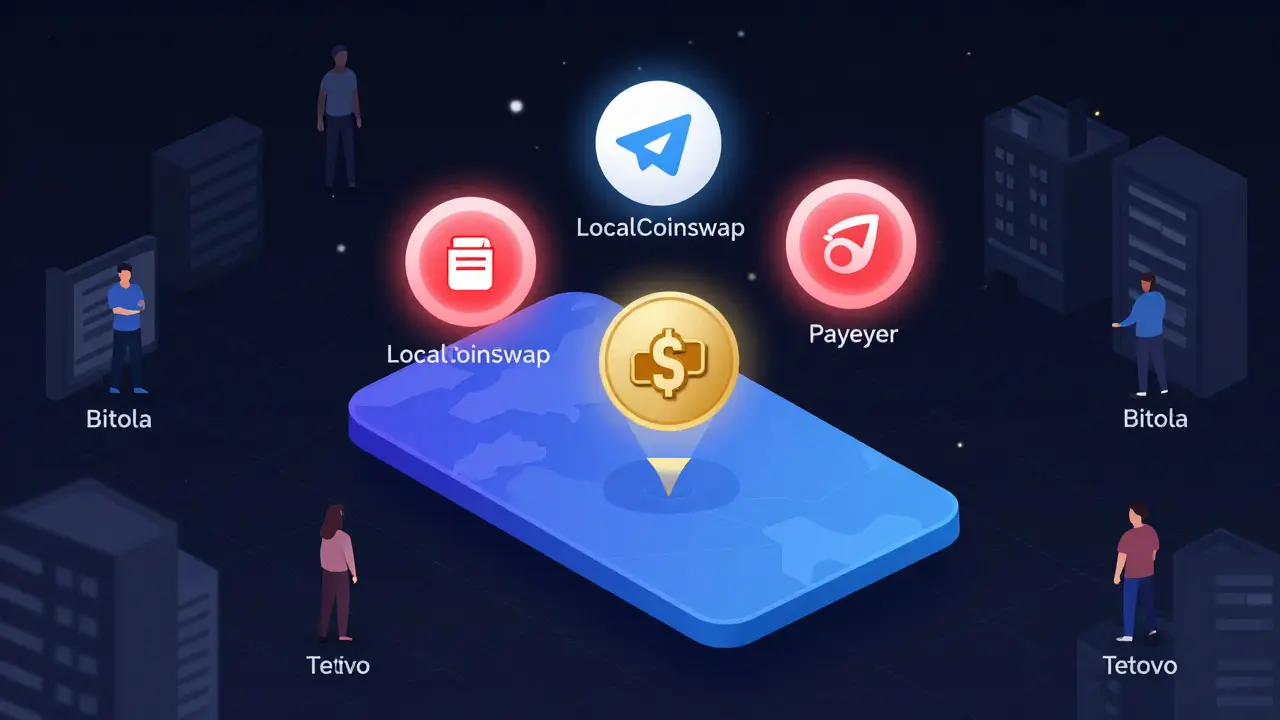
If you want to buy crypto in North Macedonia, you don’t go to a bank. You go to Symlix or LocalCoinSwap.
Symlix is a peer-to-peer marketplace. You create an account, choose how you want to pay-cash, bank transfer, PayPal, even gift cards-and find someone nearby willing to sell. The platform holds the crypto in escrow until you confirm you’ve received the cash. Then it releases the coins. No bank involvement. No paperwork. No questions asked.
LocalCoinSwap works the same way. It supports over 300 payment methods, including ones locals actually use: Western Union, Payeer, Skrill, and even cash drops at convenience stores. Users filter offers by city, payment type, and price. Some trades take five minutes. Others take hours. But they happen.
These platforms aren’t illegal. They’re just not regulated. And in North Macedonia, that’s enough.
There’s no official data on how many people use them, but LocalCoinSwap says Macedonian user activity jumped 300% between 2022 and 2024. Symlix has thousands of active users. Reddit threads in r/NorthMacedonia are full of people asking, “Where’s the safest place to buy Bitcoin here?” The top answers are always the same: Symlix. LocalCoinSwap. Don’t use local exchanges-they’ll vanish.
The brokers that slipped through the cracks
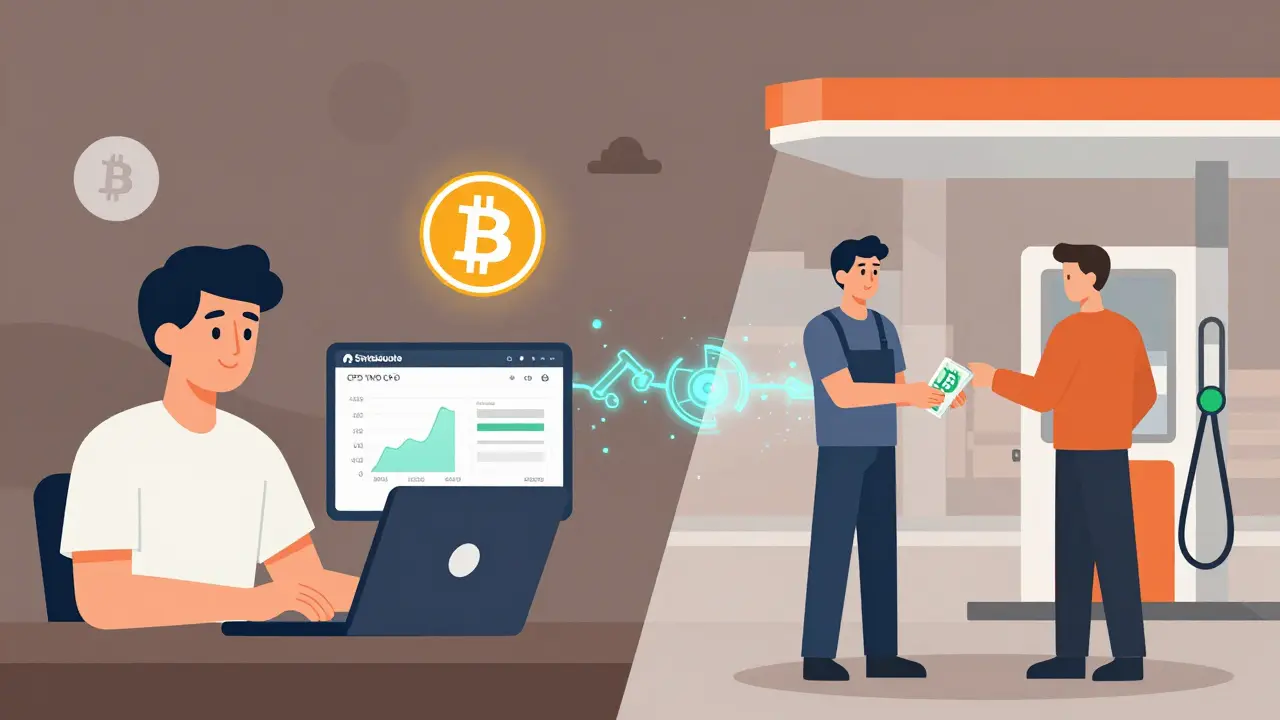
Then there are the international brokers: Swissquote, Interactive Brokers, MultiBank, Oanda.
These aren’t crypto exchanges. They’re traditional investment platforms. But they let Macedonian users trade crypto as an asset-buying Bitcoin through a CFD, for example, not owning the actual coin.
Swissquote is the most popular. According to BrokerChooser, 42% of Macedonian crypto traders use them. Why? Because they’re regulated in Europe. They offer good security. And they accept deposits from local bank accounts-even though the National Bank says crypto trading is banned.
But there’s a catch. Fees are high. For a €100 trade, you might pay €15 in fees. That’s 15%. Interactive Brokers has lower fees but offers fewer coins and no built-in wallet. Oanda is cheaper still, but their interface is clunky and their support is slow.
People use them because they’re safer than P2P. But they’re not cheap. And they’re not the same as owning real crypto.
What users actually do (and what goes wrong)
Most traders in North Macedonia are retail users. They’re not investors. They’re people trying to protect their savings from inflation or hoping to make a quick profit.
One user on Reddit said he bought €500 worth of Bitcoin through Symlix last month. He met the seller at a coffee shop in Tetovo. They exchanged cash. He got his Bitcoin. No problems.
Another user tried to send €1,200 to a crypto exchange via bank transfer. The bank froze the transaction. For two weeks, he couldn’t access his money. He had to file a dispute. Eventually, the bank released it-but only after he proved the money wasn’t linked to fraud.
Trustpilot reviews for Swissquote show a pattern: 7 out of 12 Macedonian users praise reliability. Nine complain about high fees. Five say customer service takes days to respond.
The biggest risk? Regulatory whiplash.
What if the National Bank suddenly decides to enforce the 2017 ban? What if they start prosecuting people for using Symlix? There’s no precedent. No court cases. No fines. But the law is still there. Waiting.
Who’s using crypto-and why
About 42,000 people in North Macedonia are actively trading crypto. That’s 2.3% of the population. The EU average is 5.1%. But growth is fast.
Most users are under 35. Many are students, freelancers, or small business owners. They don’t trust the local banking system. They’ve seen inflation eat away at their savings. They’ve watched neighbors lose money in scams or bad investments.
One mechanic in Kumanovo told a local journalist he bought Ethereum because “the bank gives me 0.5% interest. Bitcoin gave me 20% last year.” He didn’t know how blockchain worked. He just knew his money was growing.
There are no crypto ATMs. No local exchanges. No government-backed apps. But there are Telegram groups. One called “MK Crypto” has over 1,200 members. They share lists of trusted traders. They warn each other about scams. They post photos of cash meets at gas stations and libraries.
The future: Regulation is coming-but when?
Experts agree: North Macedonia will regulate crypto. It’s not a matter of if. It’s a matter of when.
The 2022 AML/CTF law was the first step. Draft legislation expected by late 2025 will likely require P2P platforms to register, verify users, and report transactions. That’s the EU’s MiCA model-and North Macedonia, as a candidate for EU membership, is expected to follow it.
But until then, the underground market thrives.
Swissquote and LocalCoinSwap aren’t going anywhere. They’re too useful. Too popular. Too embedded in daily life.
The government knows this. They’re not shutting them down. They’re watching them. Waiting for the right moment to bring them into the system.
When that happens, the underground market won’t disappear. It will just get a license.
What you need to know before you start
- Don’t use your bank account to send money to crypto exchanges. It will get flagged. You’ll lose access to your funds.
- Use escrow on P2P platforms. Never send cash before you get the crypto. Never release crypto before you get paid.
- Start small. Test with €20 or €50 before doing larger trades.
- Meet in public. Always. Cafés, libraries, police stations. Never private homes.
- Keep records. Even if it’s not required, save screenshots of trades, payment confirmations, and chat logs.
- Understand the risk. The law could change tomorrow. Your coins could be frozen. Your account could be blocked.
There’s no perfect way to trade crypto in North Macedonia. But there are ways that work-right now.
FAQ
Is crypto illegal in North Macedonia?
Technically, yes-since 2017, the National Bank banned financial institutions from handling crypto. But owning or trading crypto privately isn’t a crime. The 2022 anti-money laundering law defined crypto as a "virtual asset," signaling a shift toward regulation, not enforcement. So while the ban still exists on paper, it’s not actively enforced against individuals.
Can I buy Bitcoin with my local bank account?
No. Most banks in North Macedonia block transfers to crypto exchanges. Even if you try, the transaction will likely be frozen or reversed. The safest way is through peer-to-peer platforms like Symlix or LocalCoinSwap using cash, PayPal, or mobile payments.
Are platforms like Symlix safe to use?
They’re among the safest options available. Symlix uses escrow protection, live chat, and identity verification. Over 85% of disputes are resolved within 24 hours. But since they’re unregulated, there’s no legal recourse if something goes wrong. Always use small test trades first and meet in public if paying in cash.
Why do people use Swissquote if fees are so high?
Swissquote is regulated in Europe and accepts deposits from Macedonian bank accounts. Even though fees are high (up to 15% on small trades), users trust them because they’re not a crypto exchange-they’re a licensed broker. That means less risk of sudden shutdowns. For people who want to avoid P2P meets, it’s the least risky option.
Will North Macedonia legalize crypto soon?
Yes. Draft legislation expected in late 2025 will likely require P2P platforms to register and comply with KYC and reporting rules. Full alignment with the EU’s MiCA framework is expected by 2026-2027. The underground market won’t vanish-it’ll just become regulated.
What happens if I get caught trading crypto?
There have been no known cases of individuals being prosecuted for personal crypto trading. The ban targets financial institutions, not users. But if you’re involved in large-scale trading, money laundering, or using unregistered platforms, you could face scrutiny. For most people doing small P2P trades, the risk is low-but not zero.
30 Responses
This is wild.
People in North Macedonia are doing what they’ve always done: finding ways to survive when the system fails them. It’s not about rebellion-it’s about pragmatism. The bank gives 0.5% interest while inflation eats 15%. Of course they turn to Bitcoin. No one’s asking for permission to keep their money from vanishing.
The state’s inability to enforce a ban on non-custodial ownership reveals the fundamental flaw in centralized control. Virtual assets exist outside institutional jurisdiction. The law is a relic. The market is the ontology. Regulation is not the solution-it’s the admission of defeat.
I love how communities just… figure it out. 🌍 Cash meets at libraries? Telegram groups keeping people safe? This is grassroots finance at its purest. No banks. No bureaucracy. Just humans helping each other. I wish more places had this kind of organic resilience.
I mean, come on. You can't just say 'crypto is illegal' and expect people to stop. That's like saying 'water is illegal' and then pretending people won't drink it. Use escrow. Meet in public. Start small. These aren't rules-they're survival tips.
It is interesting to observe the sociopolitical implications of decentralized financial autonomy in a post-colonial context. The state’s regulatory ambiguity reflects a deeper epistemological crisis regarding sovereignty and digital identity.
Swissquote users are just paying a tax on their naivete. If you’re not holding actual Bitcoin, you’re not trading crypto-you’re gambling on derivatives. Pathetic.
I swear if one more person says ‘the law is just on paper’ I’m going to scream. The law is the law. If you break it, you’re breaking it. No matter how cute your cash meet at the library is.
Let me tell you something real. I’ve been in Skopje twice. I met a guy named Nikola who fixes cars for a living. He showed me his wallet on his phone-2.3 BTC he bought over six months, one €50 trade at a time. He didn’t know what hashing was. He didn’t care. He just knew his money wasn’t rotting in a bank that wouldn’t even let him withdraw without a three-day wait. That’s not crypto. That’s dignity. And the fact that the government is watching instead of shutting it down? That’s the quietest kind of victory. This isn’t a black market. It’s a backup system. And when the main one fails, people don’t ask for permission-they just build another one.
I don't get why people are acting like this is some noble act. You're breaking the law. End of story. The government didn't ban crypto because they hate innovation. They banned it because they can't control it. And now you're celebrating that? That's not freedom. That's recklessness.
This is so cool to see! People are literally building their own financial system in the cracks. I love that they use libraries and gas stations for meets-so safe and smart. And the Telegram group? That’s next-level community care. Someone’s gotta write a book about this.
I grew up in a country where the government banned foreign currency for decades. People still traded it in alleyways, under tables, with handwritten IOUs. This is the same story, just with Bitcoin instead of dollars. Human beings will always find a way to exchange value. The only thing that changes is the medium.
There’s something beautiful about how this isn’t about ideology. It’s about survival. No grand manifesto. No protest signs. Just people quietly securing their future, one cash transaction at a time. That’s the quietest revolution I’ve ever seen.
so like... the government is basically just pretending they don't see it? that's the most macedonian thing ever lol
Wait, so you're saying it's okay to break the law because the law is dumb? That's not how society works. If everyone did this, we'd have chaos. And what about the kids who get scammed? You think they care about your ‘pragmatism’?
i read this whole thing and just kept thinking about how i'd be terrified to do a cash meet but these people are just… doing it. like at a gas station. with no security. wow. i'm impressed and also kinda scared for them.
The regulatory ambiguity is a strategic delay, not a failure. The state is allowing the market to mature so that when regulation arrives, it can be calibrated to existing behavior. This is not lawlessness-it is policy in slow motion.
The 2022 AML law was the first step toward integration, not enforcement. The National Bank is not ignoring the market-it is mapping it. This is the quiet preparation for a regulated future. The underground is not a loophole. It is a pilot program.
Everyone’s acting like this is genius but 85% of these P2P trades are probably scams. You think people are just being nice? Nah. They’re harvesting wallets. And Swissquote? 15% fees? That’s a ripoff. You’re all being played.
I can’t believe people are actually doing this. What if someone gets robbed? What if the police show up? What if your Bitcoin gets stolen? You’re all so reckless. I’m shaking just reading this.
This is all a psyop by the deep state. They want you to trade crypto so they can track your every move. The P2P platforms are monitored. The Telegram groups are infiltrated. The cash meets? GPS tagged. You think you’re free? You’re being mapped.
I had a friend in Belgrade do this back in 2019. She bought Ethereum with cash from a guy who worked at a bookstore. They met every Friday. She saved up for a year, then bought a laptop with it. No one ever asked questions. It felt… normal. Like buying bread.
You’re all romanticizing a regulatory vacuum. This isn’t freedom-it’s a failure of governance. A functioning state doesn’t let its citizens operate in legal gray zones. You’re not heroes. You’re symptoms.
I think this is awesome. People are taking control. No waiting for permission. No bureaucracy. Just real people helping real people. That’s the future.
I just cried reading this. Not because it’s sad. Because it’s beautiful. People risking everything just to keep their money from disappearing. I wish my country had this kind of grit.
Why are Americans and Indians even commenting on this? This is a Macedonian issue. Stay in your lane.
Swissquote is a scam. Everyone knows it. Just use LocalCoinSwap and save the fees.
The emergence of a parallel financial architecture in a non-EU candidate state reveals the obsolescence of state-centric monetary control. The blockchain does not recognize borders. It recognizes trust. And in North Macedonia, trust has been redefined-not by institutions, but by individuals meeting in cafés.
Start with €20. Always. I did. Met someone in a library. Got my BTC. No drama. Now I do €200 every month. It’s not magic. It’s just smart.
You’re right about Swissquote. But here’s the thing-most people don’t care about owning Bitcoin. They care about not losing their life savings. Swissquote gives them that illusion of safety. And sometimes, that’s enough.