

Token Classification Tool
Determine Token Classification
Answer the questions below to assess whether your token is likely classified as a utility token or security token under the Howey Test.
Results
Token Classification Result:
Key Findings:
It’s 2025. You’re building a blockchain app. You’ve coded the smart contracts, designed the tokenomics, and you’re ready to raise funds. But here’s the question no one tells you until it’s too late: Is your token a utility token or a security token? The answer isn’t about what you call it. It’s about how it works, how you sell it, and what investors expect. Get this wrong, and you could be facing an SEC investigation, a $5 million fine, or worse-your project shut down.
What Makes a Token a Security?
The legal line between utility and security tokens comes from a 1946 U.S. Supreme Court case: SEC v. W.J. Howey Co. Back then, the court ruled that selling citrus grove contracts with promises of profits from the seller’s management counted as an investment contract-and therefore, a security. Fast forward to 2017, and the SEC applied that same logic to blockchain tokens. That’s when the Howey Test became the global benchmark for classifying digital assets.
A token is a security if it meets all three parts of the Howey Test:
- You invest money (or crypto) into the project.
- There’s a common enterprise-your success is tied to the team’s efforts.
- You expect profits primarily from the work of others, not your own.
It doesn’t matter if the token is called "FuelCoin" or "AccessPass." If the marketing materials say things like "invest in the future of our platform" or "holders will benefit from network growth," you’re likely selling a security. The SEC doesn’t care about the name. They care about the substance.
Real-world examples? Tradeflow eNote™ is a security token-it represents a share in a debt instrument. When you buy it, you’re not buying access to a service. You’re buying a financial stake. And if your token is backed by real estate, company equity, or revenue shares, you’re in security territory. These tokens must comply with securities laws: registration, disclosures, investor accreditation rules, and ongoing reporting. Issuing one in the U.S. can cost between $100,000 and $500,000 just in legal fees.
What Makes a Token a Utility?
Utility tokens are meant to be used, not held for profit. They’re digital keys. Think of them like arcade tokens-you don’t buy them to resell. You buy them to play games.
Take ETH. The SEC officially said in 2018 that Ethereum’s native token isn’t a security because it functions as fuel for the network. You need it to pay for transactions, deploy smart contracts, or interact with dApps. Its value comes from demand for usage, not from promises of returns.
Other examples: IXS Token gives access to DeFi trading tools. Chainlink’s LINK is used to pay node operators for data feeds. These tokens have a functional role inside their ecosystems. If you hold them, you’re not expecting the team to make you rich-you’re expecting to use the service.
But here’s the trap: many projects start as utility tokens and turn into securities by accident. If your token’s price spikes 300% because the team built a successful product, and then you start promoting it as "a great investment opportunity," the SEC can retroactively classify it as a security. That’s what happened to Kik Interactive in 2019. Their Kin token was marketed as a "digital currency for messaging," but the SEC said the marketing focused on profit potential. They paid $5 million.
Why the Distinction Matters
This isn’t just legal jargon. It changes everything about how you raise money, who can invest, and how your token trades.
Security tokens are locked down. You can only sell them to accredited investors unless you go through a full SEC registration-which takes years and millions. Trading is restricted to regulated platforms like the SIX Digital Exchange in Switzerland, which processed over CHF 1 billion in security token trades in early 2023. But the upside? Institutional investors love them. One fund manager told me last year: "Security tokens gave us the regulatory comfort to put $5 million into blockchain for the first time."
Utility tokens? They’re wide open. Anyone can buy them. You can list them on Uniswap or Binance. No KYC, no investor limits. That’s why over $40 billion is locked in DeFi protocols using utility tokens. But there’s no investor protection. If the team vanishes, your token becomes worthless. And if regulators decide it was a security all along? You’re on the hook.
Market data shows the split: over 10,000 utility tokens exist, with a combined market cap of $950 billion. Security tokens? Only $11.1 billion in 2022-but projected to hit $22.5 billion by 2025. The growth is slow but steady, driven by real estate, private equity, and bond tokenization.
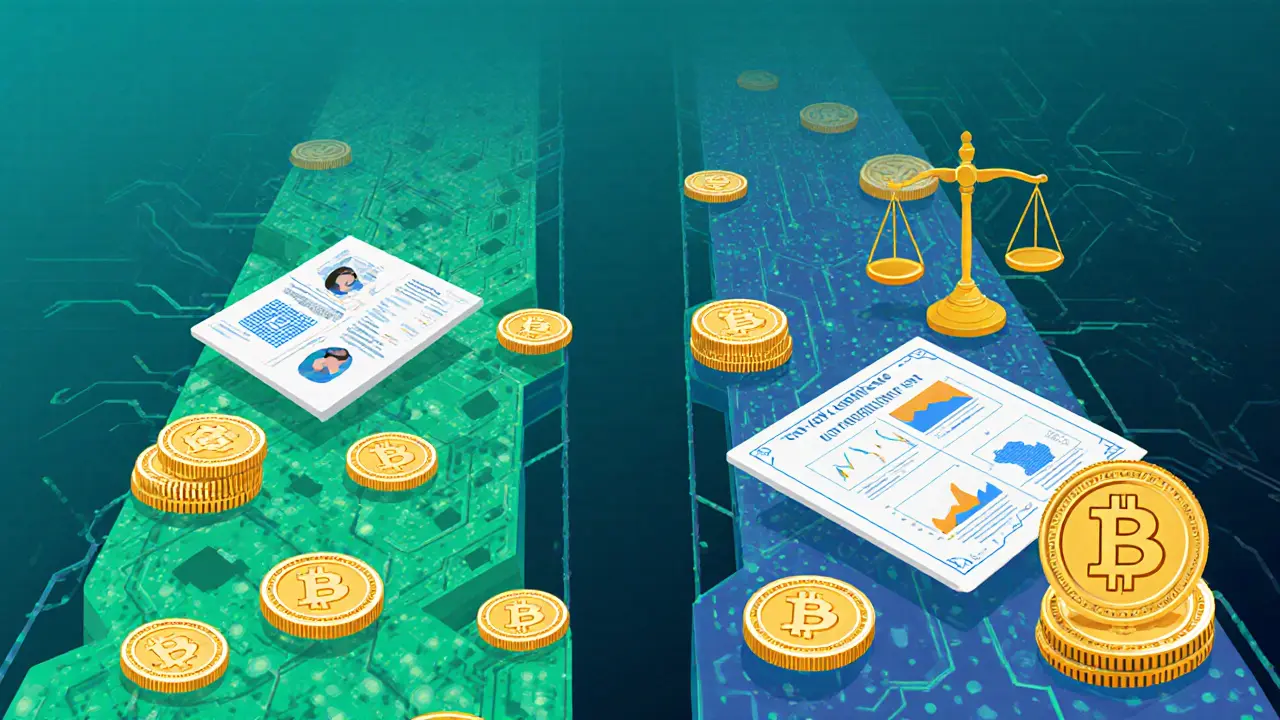
Where the Rules Are Changing
The U.S. has been the main driver of enforcement, but other places are catching up-and offering clearer paths.
Switzerland’s FINMA has three clear categories: payment, utility, and asset tokens. Only asset tokens (equivalent to securities) need heavy regulation. Singapore’s MAS follows a similar model. Both are popular with startups because the rules are predictable.
The EU’s MiCA regulation, which took full effect in 2024, is a game-changer. It explicitly defines utility tokens as those providing access to services and excludes them from securities rules-if they meet specific criteria. The U.S. is catching up too. The FIT21 Act passed the House in May 2024 and would create a safe harbor for tokens with genuine utility. The SEC’s own Digital Asset Securities Act proposal (March 2024) could soon carve out exemptions for tokens that don’t promise profits.
But the biggest shift? The Ripple case in February 2024. The court ruled that XRP sold to retail buyers on exchanges was a security-but XRP sold directly to institutions wasn’t. That’s the first time a U.S. court drew a line based on how a token was sold, not just what it does. This sets a new precedent: same token, different treatment based on distribution method.
What Projects Get Wrong
Most failed token launches don’t fail because of bad code. They fail because of bad legal design.
Common mistakes:
- Promising price appreciation in whitepapers or Discord chats.
- Having the core team hold 30%+ of tokens with no vesting schedule.
- Marketing the token as "an investment in our ecosystem."
- Using centralized governance where one entity controls upgrades.
- Linking token value directly to company revenue or profits.
One developer on Reddit shared that their project flew under the radar for 18 months-until their token price jumped after a major upgrade. Then the SEC sent a letter. They had to shut down the token sale and refund investors. "We didn’t think we were selling securities," he wrote. "But the SEC saw profit expectations in every tweet."
The fix? Design for compliance from day one.
- Use time-locked vesting for team tokens (e.g., 4-year cliff).
- Avoid any language about "returns," "ROI," or "investment opportunities."
- Make the token’s utility undeniable-can you use it without owning it? Can it be used by non-investors?
- Decentralize development: let the community contribute, not just your core team.
According to CoinDesk’s 2023 survey, 68% of blockchain teams now hire securities lawyers before launching a token. In 2018, it was 22%. That’s not paranoia. That’s survival.
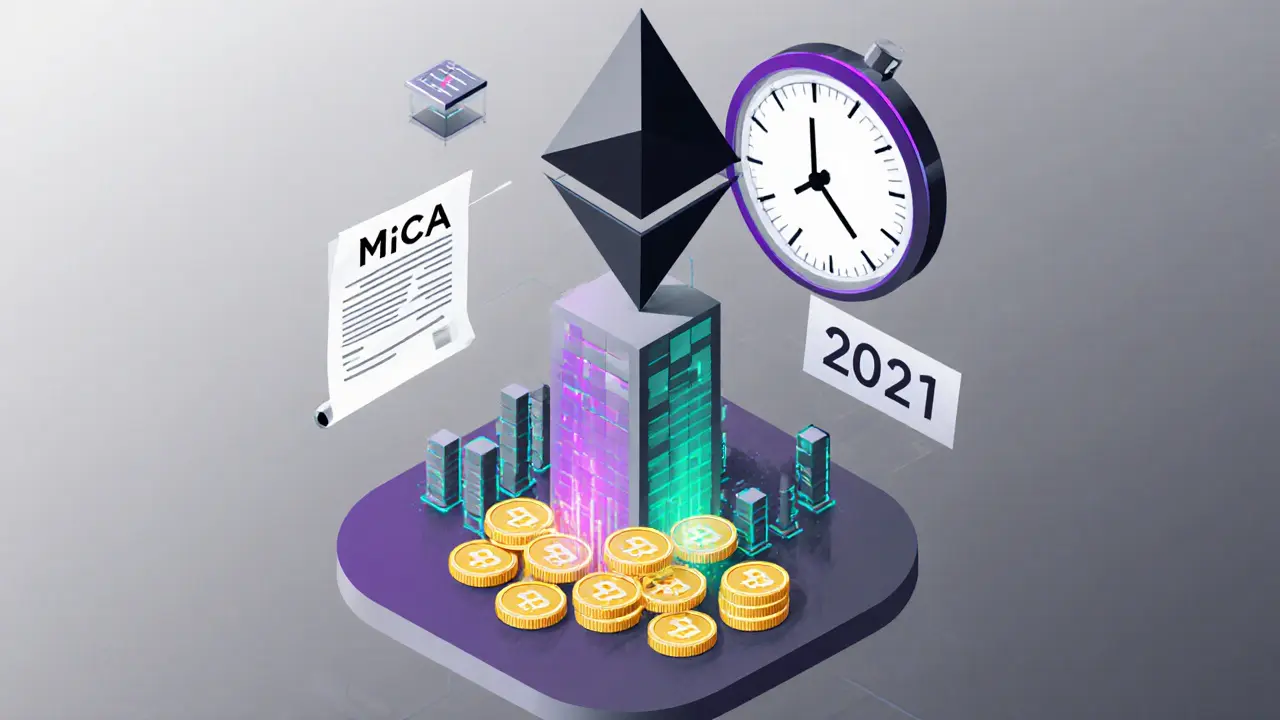
Hybrid Models Are the Future
The future isn’t utility vs. security. It’s both.
Projects like Avalanche are already using dual-token systems: one token for network fees (utility), another for governance and profit-sharing (security). This lets them serve retail users and institutional investors at the same time.
Real estate tokenization is another hybrid space. A property is tokenized into 10,000 security tokens (each representing ownership), but users pay rent or maintenance fees in a separate utility token. The security token gets regulated. The utility token stays free-flowing.
Even Ethereum is moving this way. ETH is utility. But staking rewards? Those are income-generating. The SEC hasn’t ruled on staking rewards yet-but if they’re seen as passive income from the network’s operation, they could be classified as securities. That’s the next legal battleground.
What You Should Do Now
If you’re launching a token in 2025, here’s your checklist:
- Don’t call it a "token sale." Call it a "service access launch."
- Write your whitepaper like a user manual, not an investment pitch.
- Make sure the token has a clear, non-speculative use case-like paying for compute power, storage, or data.
- Keep team tokens locked for at least two years.
- Get a legal opinion from a blockchain-specialized attorney before launch.
- Document everything: design choices, marketing materials, user onboarding flows.
And if you’re an investor? Don’t assume a token is safe just because it’s on Coinbase or Binance. Ask: "Is this token being sold as a way to profit from someone else’s work?" If yes, it’s probably a security-and it may not be registered.
The blockchain world isn’t lawless anymore. The regulators are watching. The tools to detect violations are better than ever. And the penalties? They’re not just fines. They’re project deaths.
Build with utility. Sell with honesty. And never, ever confuse a tool with an investment.
Are utility tokens completely unregulated?
No. While utility tokens aren’t classified as securities, they still fall under anti-money laundering (AML), know-your-customer (KYC), and tax laws. In the U.S., the IRS treats them as property. In the EU, MiCA requires transparency in token issuance. Even if you’re not selling an investment, you still need to verify users and report transactions.
Can a token start as a utility and become a security later?
Yes. This is called "reclassification." The SEC looks at the economic reality over time. If a token’s price rises because the team’s efforts made the platform valuable-and the marketing starts promoting it as a profit opportunity-it can be reclassified as a security, even if it was originally designed as utility. Kik’s Kin token is a prime example.
What’s the difference between a security token and a stock?
Security tokens are digital representations of traditional assets like stocks, bonds, or real estate. They’re built on blockchain and can be traded 24/7 with lower fees. But legally, they’re treated the same as stocks: they represent ownership, pay dividends, and require regulatory compliance. The difference is the technology, not the legal rights.
Why does the SEC care about tokens that aren’t sold in the U.S.?
The SEC claims jurisdiction if U.S. investors can buy the token, even if the company is overseas. If your website accepts U.S. dollars, allows U.S. IP addresses, or promotes your token in English to a global audience, you’re likely subject to U.S. law. The SEC has pursued cases against companies in Canada, Singapore, and the UK based on this principle.
Is ETH a utility token? What about staking rewards?
Yes, ETH is classified as a utility token by the SEC because it’s used to pay for network operations. But staking rewards are a gray area. If you stake ETH and earn rewards because the Ethereum network runs on consensus mechanisms, it’s likely still utility. But if you’re told "stake and earn 5% yearly" as an investment, regulators may argue it’s a security. The SEC hasn’t ruled yet-but many legal experts believe staking rewards could face scrutiny.
What happens if I ignore the legal distinction?
You risk enforcement actions: fines, asset freezes, or criminal charges. Kik paid $5 million. Telegram paid $18.5 million and shut down its Gram token. In extreme cases, founders face personal liability. Even if you’re outside the U.S., you may be blocked from U.S. exchanges, banks, or payment processors. Your project could become untouchable.
25 Responses
Bro, I just bought a token called "ZapCoin" and called it a "utility token" because you need it to unlock memes on our app 😎 But now I’m scared the SEC is gonna come knockin’ with a subpoena and a Starbucks gift card 🤭
It is imperative to recognize that the SEC’s enforcement actions are not arbitrary; they are the logical extension of centuries-old common law principles governing fiduciary duty and contractual obligation. The Howey Test remains the only coherent doctrinal framework for distinguishing speculative instruments from legitimate utility. Any deviation from this standard constitutes a dangerous erosion of investor protection and market integrity.
i mean… i get why people panic about the sec. but like… most devs just wanna build cool shit, yknow? like, i made this dapp where you pay in tokens to get a custom ascii art of your cat. nobody’s getting rich off it. it’s just dumb fun. why does it gotta be so complicated? 🥺
Wait so if I use my token to pay for my yoga classes online, is that utility? Or if I post pics of my yoga mat on Instagram and say "this token is gonna 10x" is it security? 😅 I’m confused now. Can someone explain like I’m 5? I’m from India and we just wanna make apps without lawyers!
It’s not just about legal definitions-it’s about power. Who controls the narrative? Who controls the liquidity? Who gets to say whether your token is a "tool" or a "bet"? The SEC doesn’t care if you’re a 19-year-old coder in Bangalore or a VC in Palo Alto. They care about control. And control? It’s always held by those who write the rules. So… who’s really being protected here? And who’s being silenced?
Ohhhhh so THAT’S why Coinbase listed XRP? They knew the SEC was gonna lose. This whole thing is a rigged game. The SEC is just a puppet for Wall Street to crush decentralized finance. They don’t want you to own anything-they want you to rent it. From them. Always from them. 🕵️♀️💸
They took Kik’s money. They shut down Telegram. Now they’re coming for you. And you’re still posting memes? Wake up. This isn’t a game. This is war. And you’re already losing.
Let’s not conflate regulatory arbitrage with innovation. The fact that 98% of utility tokens are just security tokens with a different name is a market failure, not a loophole. If your token’s price is driven by speculation, not utility, then your entire tokenomics model is a Ponzi with a whitepaper. The real innovation? Compliance. That’s the new DeFi.
There is a quiet dignity in building something useful, even if the world doesn’t reward it with riches. A token that lets someone pay for a meal in a refugee camp, or access a medical record across borders-that’s the kind of utility that outlives lawsuits. Maybe we’ve lost sight of why we started this in the first place.
Oh wow, so if I say "buy this token and you’ll get a free NFT" it’s utility? But if I say "buy this token and you’ll get rich" it’s security? What a joke. The SEC doesn’t read your marketing-they just read your bank account. And if it’s big enough? Congrats, you’re a criminal.
Of course ETH is a utility token. Everyone knows that. But let’s be real-no one buys ETH to pay for gas. They buy it because they think it’ll hit $100K. So stop pretending. The entire crypto space is a theater of illusions. And the SEC? They’re just the audience clapping.
Hey! If you’re building something cool-don’t panic! Just be honest. Don’t promise moonshots. Don’t use "invest" in your Discord. Say "this token lets you do X" and mean it. I’ve seen teams go from zero to $50M valuation without ever saying "ROI." You can do it. You’re not alone. 💪✨
Everyone here is clueless. You think MiCA or FIT21 changes anything? No. The SEC owns every exchange, every wallet, every blockchain node. They control the infrastructure. You’re not building a token-you’re building a target. And if you’re not paying a $200k legal retainer, you’re already dead. Wake up. You’re not a founder. You’re a liability.
Just made a token for my local coffee shop. You use it to buy lattes, get discounts, and vote on new flavors. No price promises. No staking. Just coffee and community. 🤝☕ The lawyer said it’s fine. The SEC hasn’t called. And guess what? People love it. Sometimes, simple works.
why do we even need to label it at all like its some kind of religion utility this security that why cant we just let people decide what they want to buy
Security tokens are just stocks with blockchain glitter. Utility tokens are just scams with better PR. I don’t care what you call it. Just give me the moon.
So if I make a token that gives you access to my private Spotify playlist… is that utility? Or am I just a criminal with a playlist?
They say the future is decentralized. But the regulators are the new kings. They sit in their offices, sipping espresso, deciding whether your meme coin is a tool or a trap. And you? You’re just the peasant with the code. The revolution was sold to Wall Street long ago.
Regulatory clarity is not the enemy of innovation-it is its foundation. Without clear boundaries, markets cannot function. Without trust, capital cannot flow. The path forward is not evasion. It is engagement. Collaboration. Legal design as a core component of product development. This is not censorship. It is civilization.
Back home in India, we don’t have lawyers for everything. We just build. My friend made a token to pay for rickshaw rides. People use it. No one cares about SEC. Maybe the world doesn’t need your rules. Maybe your rules are too big for the real world.
I just want to say… I’ve been in crypto since 2017. I’ve seen projects rise and crash. I’ve lost money. I’ve cried over spreadsheets. But I’ve also seen a 70-year-old woman in Ohio use a utility token to buy insulin from a decentralized pharmacy. That’s not speculation. That’s survival. And if the SEC takes that away… I don’t know what we’re even fighting for anymore.
It’s funny how we obsess over labels. A hammer is still a hammer whether you call it a "tool" or a "potential weapon." The real question isn’t whether it’s a security-it’s whether the people using it are being treated fairly. If your token empowers, don’t hide it. If it exploits, don’t disguise it. The law will catch up. But ethics? That’s your job.
Let me tell you what’s really happening. The SEC isn’t trying to stop innovation. They’re trying to stop fraud. And guess what? 90% of these "utility tokens" are just fraud with a whitepaper. The ones that are legit? They’re quiet. They don’t tweet. They don’t have influencers. They just build. And that’s the real story. The quiet builders. The ones who don’t need a moonshot to sleep at night.
Why should American regulators dictate what happens in India, Brazil, or Nigeria? This isn’t global finance-it’s digital colonialism. You think your SEC rules are universal? They’re not. They’re just loud. And the world is getting tired of listening.
Wait… so if I make a token that lets you vote on what my dog eats… is that utility? 😅