
Imagine building a house where you don't own the land, the bricks are controlled by a bank, and the blueprint changes whenever the architect feels like it. That is essentially how most of us interact with the internet today. You create content, but platforms own the data. You use apps, but servers control access. Now, imagine flipping that model. You own your data. The code runs on a network no single entity controls. This is the promise of Web3, a paradigm shift toward a decentralized internet where users retain sovereignty over their digital lives. But how do we actually build this? It’s not magic; it’s engineering. To understand Web3, you need to look under the hood at the technology stack that powers it. This isn’t just about buying crypto; it’s about understanding the infrastructure that makes trustless systems possible.
Key Takeaways
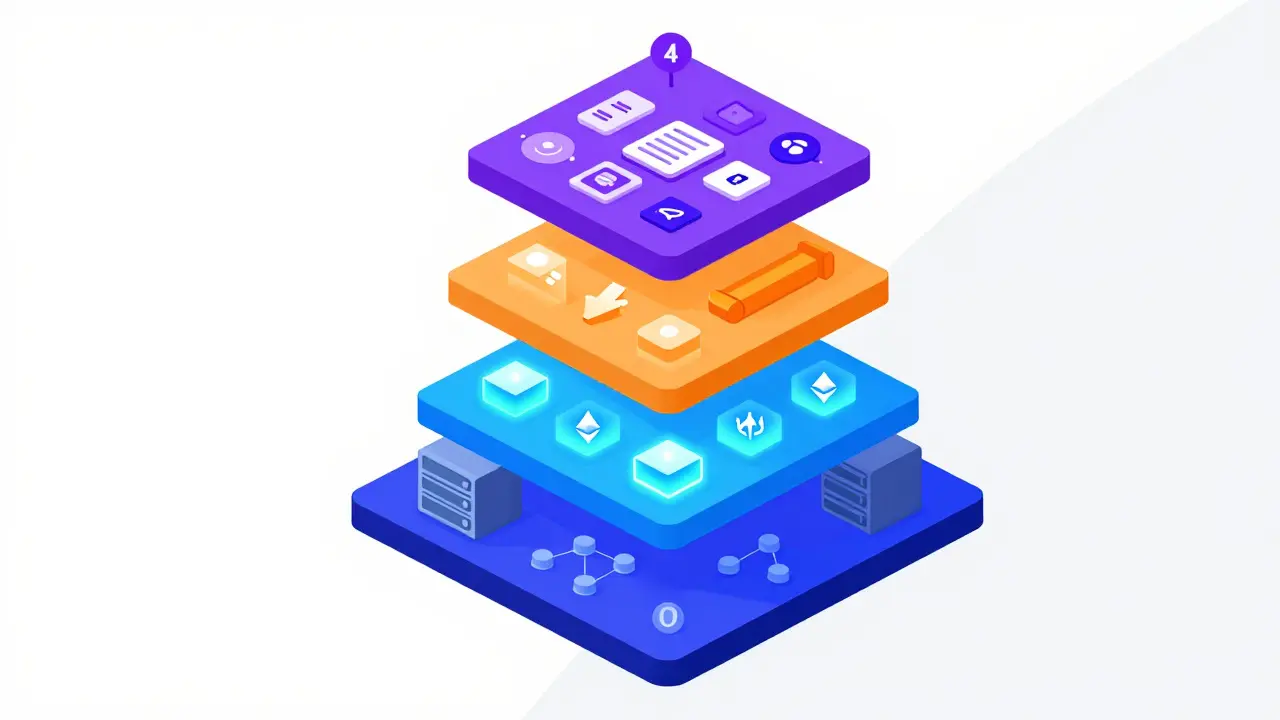
- The Web3 stack is layered, moving from physical hardware (Layer 0) up to user-facing applications (Layer 4).
- Smart contracts act as the logic layer, replacing traditional backend servers with self-executing code on blockchains like Ethereum.
- Decentralized storage solutions like IPFS replace centralized cloud providers, ensuring data persistence without a single point of failure.
- Developers must master new tools like MetaMask for wallet integration and Hardhat for testing, which differ significantly from traditional web dev stacks.
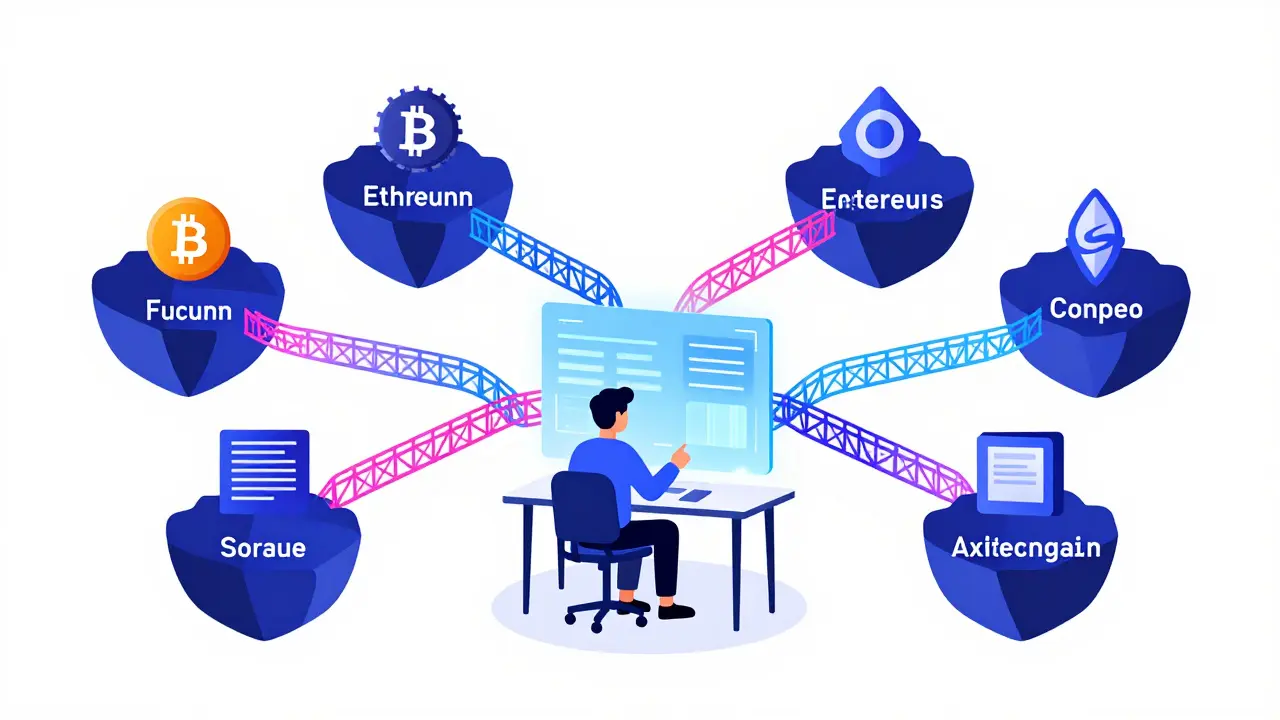
- Interoperability remains the biggest challenge, requiring bridges and cross-chain protocols to connect isolated networks.
Layer 0: The Physical Foundation
Before any code runs, there must be hardware. In traditional web development, we often ignore Layer 0 because cloud providers abstract it away. In Web3, however, understanding the physical layer is crucial because decentralization starts here. Layer 0 consists of the actual devices-servers, computers, and networking equipment-that form the nodes of the blockchain network. These aren’t just generic servers in a data center owned by Amazon or Google. They are distributed globally, often running on consumer-grade hardware or specialized mining rigs.
The goal of Layer 0 is resilience. If one node goes offline, the network survives. This contrasts sharply with Web2, where a server outage at a major provider can take down thousands of services simultaneously. For developers, this means you never directly manage Layer 0 infrastructure. Instead, you rely on the consensus mechanisms built into the protocols above to ensure that the physical layer remains honest and synchronized. Think of it as the soil beneath the foundation; you don’t see it, but if it’s unstable, everything above cracks.
Layer 1: The Protocol Core
This is where the real action happens. Layer 1 refers to the foundational blockchain protocols themselves. When people talk about Bitcoin, Ethereum, Solana, or Cardano, they are discussing Layer 1 networks. Each of these protocols defines the rules of the road: how transactions are validated, how blocks are created, and how consensus is reached. This is the "database" of Web3, but unlike a SQL database, it is immutable and transparent.
Ethereum dominates this space for developers due to its robust ecosystem and the introduction of the Ethereum Virtual Machine (EVM). The EVM is a decentralized computer that runs on every node in the network. It allows developers to write smart contracts in languages like Solidity, which then execute exactly as programmed across the entire network. Other Layer 1s offer different trade-offs. Solana prioritizes speed and low cost through a unique consensus mechanism called Proof of History, while Cardano focuses on peer-reviewed academic research for security. Choosing a Layer 1 depends on your application’s needs: do you need maximum security and decentralization, or high throughput and low fees?
| Protocol | Consensus Mechanism | Primary Use Case | Key Advantage |
|---|---|---|---|
| Ethereum | Proof of Stake (PoS) | Smart Contracts, DeFi | Largest developer ecosystem, highest security |
| Solana | Proof of History + PoS | High-frequency trading, NFTs | Extreme speed, low transaction costs |
| Bitcoin | Proof of Work (PoW) | Digital Gold, Store of Value | Highest decentralization and security track record |
| Cardano | Ouroboros PoS | Identity, Supply Chain | Academic rigor, energy efficiency |
Layer 2: Scaling the Network
Here’s the problem with Layer 1 blockchains: they are slow and expensive when congested. Ethereum, for instance, can handle only about 15-30 transactions per second (TPS). Visa handles 24,000 TPS. This bottleneck makes microtransactions impractical and gas fees prohibitive during peak times. Enter Layer 2 solutions. These are protocols built on top of Layer 1 blockchains to increase transaction capacity without compromising security.
Layer 2s work by processing transactions off the main chain and then posting a summary back to Layer 1 for settlement. Two popular approaches are Rollups and State Channels. Optimistic Rollups assume transactions are valid unless proven otherwise, reducing computational load. ZK-Rollups (Zero-Knowledge Rollups) use cryptographic proofs to verify transactions instantly, offering both speed and privacy. Projects like Arbitrum, Optimism, and zkSync are leading this charge. For developers, integrating Layer 2 means your dApp can feel as fast as a Web2 app while retaining the security guarantees of Ethereum. It’s the difference between driving on a two-lane country road versus a multi-lane highway.
Layer 3: Development Tools and Services
You wouldn’t build a website using raw machine code, right? Similarly, you don’t interact directly with blockchain nodes in production. Layer 3 provides the tools, APIs, and services that make development feasible. This layer includes RPC providers like Infura and Alchemy, which give your frontend code access to the blockchain without running your own node. It also includes development frameworks like Hardhat and Truffle, which allow you to compile, test, and deploy smart contracts locally before pushing them to the mainnet.
Another critical component of Layer 3 is decentralized identity and indexing. Traditional databases use SQL queries to fetch data. Blockchains are append-only ledgers, making complex queries difficult. Indexing services like The Graph solve this by organizing blockchain data into subgraphs that developers can query via GraphQL. Additionally, identity solutions like ENS (Ethereum Name Service) allow users to have human-readable addresses (e.g., `alice.eth`) instead of long hexadecimal strings. These abstractions are vital for user adoption. Without them, interacting with Web3 would require memorizing private keys and navigating complex terminal commands.
Layer 4: Decentralized Applications (dApps)
This is the layer users actually see. Layer 4 consists of the decentralized applications (dApps) themselves. From a technical standpoint, a dApp looks similar to a Web2 app: it has a frontend built with React, Vue, or Angular. However, the backend is replaced by smart contracts on the blockchain. When a user clicks "Swap Tokens," the frontend sends a transaction request to the user’s wallet, which signs it and broadcasts it to the network. The smart contract executes the swap, and the frontend updates the UI based on the result.
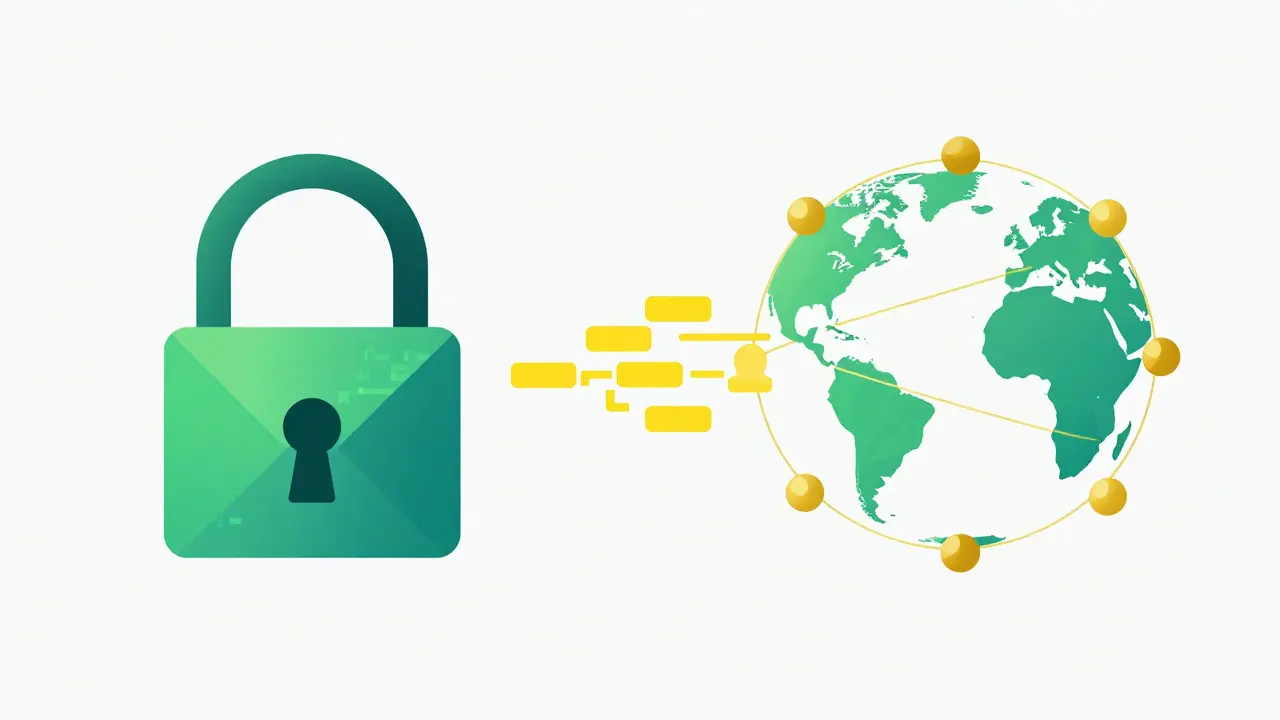
The key distinction is data storage. Web2 apps store user data in centralized databases. Web3 apps store state on-chain and files in decentralized storage systems like IPFS (InterPlanetary File System) or Arweave. IPFS uses content-addressing rather than location-addressing. Instead of fetching a file from a specific server URL, you request it by its hash. This ensures that if one node goes offline, another node with the same file can serve it. This architecture makes dApps censorship-resistant. No government or corporation can shut down an IPFS-hosted site by seizing a server. They would have to shut down the entire internet.
Smart Contracts: The Logic Engine
If blockchains are the database, smart contracts are the application logic. A smart contract is a self-executing piece of code stored on the blockchain. It triggers actions when predefined conditions are met. For example, a simple escrow smart contract might hold funds until a buyer confirms receipt of goods, then automatically release the payment to the seller. There is no middleman, no lawyer, and no delay.
Solidity is the most widely used language for writing smart contracts, primarily because of Ethereum’s dominance. It resembles JavaScript in syntax, which lowers the barrier to entry for web developers. However, programming for the blockchain requires a different mindset. Code on the blockchain is immutable once deployed. Bugs cannot be patched easily; they must be worked around by deploying new contracts. Security is paramount. A single vulnerability can lead to millions of dollars in stolen funds. Developers must use rigorous testing frameworks and undergo professional audits before deployment. Libraries like OpenZeppelin provide battle-tested code snippets for common functions like token creation and access control, reducing the risk of reinventing the wheel insecurely.
Decentralized Storage and Communication
Blockchains are terrible at storing large files. Storing a single image on Ethereum would cost hundreds of dollars. Therefore, Web3 relies on decentralized storage networks. As mentioned, IPFS is the standard. Another player is Filecoin, which incentivizes nodes to store data by paying them with cryptocurrency. This creates a market-driven storage solution that is more resilient than centralized cloud providers.
Communication is another hurdle. Traditional apps use HTTP requests to send data between client and server. Web3 apps need ways for smart contracts to communicate with each other and with external data sources. Oracles like Chainlink bridge this gap. They bring real-world data (like stock prices or weather data) onto the blockchain in a secure manner. Without oracles, smart contracts would be blind to events outside the blockchain, severely limiting their utility. Furthermore, decentralized communication protocols like Whisper enable private messaging between nodes, adding a layer of confidentiality to public blockchains.
From Web2 to Web3: The Developer Transition
Moving from Web2 to Web3 development isn’t just about learning a new language; it’s about adopting a new philosophy. In Web2, you trust the platform. In Web3, you verify the code. This shift affects every part of the stack. User authentication changes from email/password logins to wallet signatures. Users sign a message with their private key to prove ownership of their address. This eliminates password resets and phishing risks associated with credential theft, though it introduces the risk of losing access if the seed phrase is lost.
Data ownership also shifts. In Web2, companies monetize user data. In Web3, users control their data and can choose to share it selectively. This enables new business models, such as Data DAOs, where users collectively own and monetize their data. For developers, this means designing systems that respect user sovereignty. It requires careful consideration of privacy, consent, and data minimization principles. While the learning curve is steep, the tools are maturing rapidly. Frameworks like Next.js integrate seamlessly with Web3 libraries like ethers.js and wagmi, allowing developers to build full-stack decentralized applications with familiar workflows.
Challenges and Future Outlook
Despite the excitement, Web3 faces significant hurdles. Scalability is improving with Layer 2s, but interoperability remains a challenge. Different blockchains operate in silos, making it difficult to move assets or data between them. Cross-chain bridges have emerged as a solution, but they have been targets for hackers due to complex attack surfaces. Standardization efforts like ERC standards help, but true interoperability requires deeper protocol-level integration.
User experience is another barrier. Managing wallets, gas fees, and seed phrases is confusing for mainstream users. Solutions like Account Abstraction (ERC-4337) aim to simplify this by allowing social recovery and sponsored transactions, making Web3 apps feel like Web2 apps. Regulatory uncertainty also looms large. Governments worldwide are grappling with how to classify tokens and regulate decentralized networks. Clear regulations could boost institutional adoption, while overly restrictive laws could stifle innovation.
Looking ahead, the Web3 stack will continue to evolve. We expect to see greater abstraction of complexity, better tooling for developers, and improved scalability. The convergence of AI and Web3 is also emerging, with decentralized compute markets enabling fair access to GPU resources for training models. As the technology matures, the distinction between Web2 and Web3 may blur, with hybrid applications becoming the norm. For now, mastering the Web3 stack offers developers a front-row seat to the next evolution of the internet.
What is the difference between Web2 and Web3 technology stacks?
The primary difference lies in data ownership and control. Web2 stacks rely on centralized servers and databases controlled by corporations, whereas Web3 stacks use decentralized blockchains and distributed storage. In Web2, users authenticate via passwords; in Web3, they authenticate via cryptographic wallet signatures. Web2 backends process logic on central servers, while Web3 backends use smart contracts executed on a global network of nodes.
Do I need to know Solidity to build Web3 apps?
Not necessarily. While Solidity is essential for writing smart contracts on Ethereum-compatible chains, frontend developers can build dApps using standard JavaScript/TypeScript libraries like ethers.js or wagmi. However, understanding smart contract logic is crucial for integrating them correctly. For non-EVM chains like Solana, you would need Rust or C++ instead.
How does decentralized storage like IPFS work?
IPFS stores data by breaking files into chunks and assigning each chunk a unique cryptographic hash. Instead of requesting data from a specific server URL, you request it by its hash. Any node in the IPFS network that has the chunk can serve it. This eliminates single points of failure and ensures data availability as long as at least one node pins the content.
What are Layer 2 solutions, and why are they important?
Layer 2 solutions are protocols built on top of main blockchains (Layer 1) to improve scalability and reduce transaction costs. They process transactions off-chain and settle results on the main chain. This allows dApps to handle higher transaction volumes and lower fees, making them viable for everyday use cases like gaming and micropayments.
Is Web3 development more secure than Web2?
Web3 offers different security properties. While it eliminates risks associated with centralized data breaches, it introduces new vulnerabilities like smart contract bugs and private key management issues. Once deployed, smart contracts are immutable, meaning errors cannot be easily fixed. Security requires rigorous auditing, formal verification, and careful key management practices.