
Imagine a $400 billion problem. Every year, counterfeit goods flood the market, tricking consumers and costing brands billions. This isn't just a minor issue-it's a massive global challenge. But what if there was a way to track every product from raw material to your hands, ensuring it's genuine? Enter Supply Chain NFTs-a game-changer for how we verify products.
What exactly are Supply Chain NFTs?
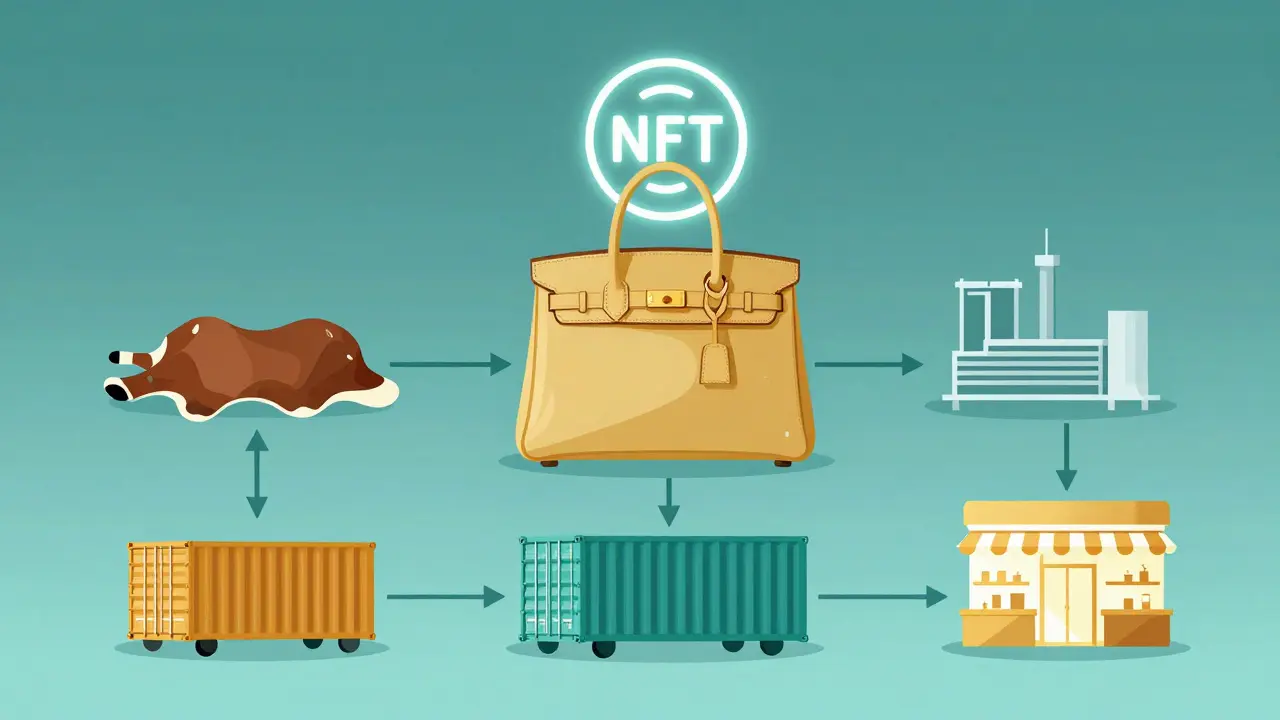
A Supply Chain NFT is a unique digital certificate stored on a blockchain that tracks a physical product's journey. Unlike regular digital tokens, each NFT is one-of-a-kind and can't be swapped like money. Think of it as a digital fingerprint for a physical item. For example, when a luxury handbag is made, it gets its own NFT. This NFT lives on a blockchain and contains all the product's history-where materials came from, who made it, and every step it took to reach you.
Blockchain technology makes this possible. A Blockchain is a decentralized digital ledger that records transactions across many computers. This setup ensures no single company controls the data, making it super secure. When a product moves through the supply chain, each check-in updates the NFT. These updates are permanent and can't be erased or changed.
How Supply Chain NFTs work in practice
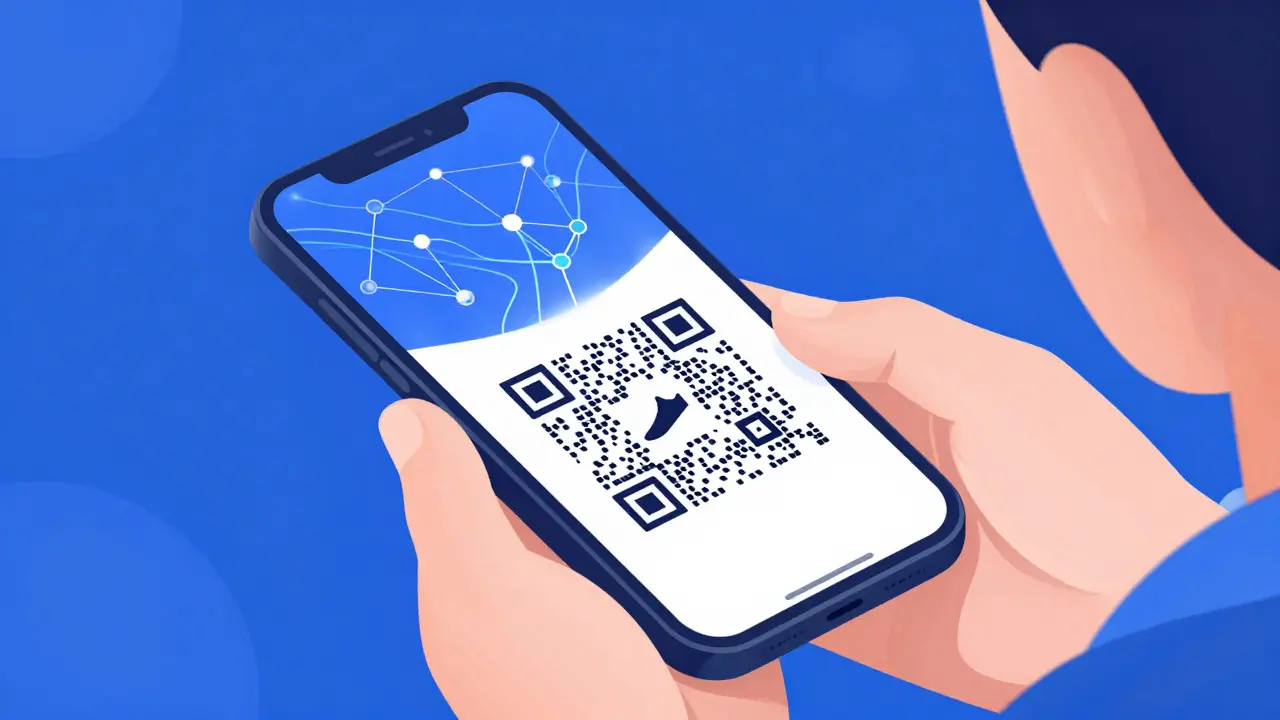
Let's follow a pair of sneakers from factory to your feet. First, the manufacturer creates a unique NFT for that specific pair. This NFT stores details like the factory location, materials used, and production date. As the sneakers move through shipping, customs, and retail, each step updates the NFT. For instance, when a truck picks up the sneakers, the NFT records the pickup time and location. At customs, it logs the clearance date. Finally, when you buy them in-store, the NFT shows the sale date and retailer.
How do you access this info? Simple. Scan a QR code on the product. The code links to the NFT's data on the blockchain. You don't need technical skills-just a smartphone. Brands like OEMs (Original Equipment Manufacturers) use this to prove authenticity. A customer scanning a designer bag's QR code instantly sees its entire journey, confirming it's real.
Behind the scenes, InterPlanetary File System (IPFS) is a decentralized storage system that secures product data linked to NFTs. IPFS ensures the data stays safe even if one server goes down. This combo of blockchain and IPFS creates a tamper-proof record that's hard to fake.
Why companies are adopting this technology
Counterfeiting is a massive problem. The OECD reports fake goods cost the global economy over $400 billion yearly. Supply Chain NFTs tackle this head-on. For luxury brands, it's a game-changer. A Smart Contract is a self-executing code on a blockchain that automates supply chain processes. It can verify authenticity at every stage. If a bag's NFT shows it was made in Paris but sold in a counterfeit shop in Bangkok, the system flags it immediately.
Pharmaceutical companies also benefit. Fake medicines kill people. With Supply Chain NFTs, each pill bottle has a unique digital record. Doctors and pharmacists can scan it to confirm it's genuine. This saves lives. In electronics, tracking components prevents faulty parts from reaching consumers. For example, a smartphone manufacturer can trace a faulty battery back to its source and recall only the affected batches.
Transparency builds trust. Customers increasingly want to know where their products come from. A study by IBM found 85% of consumers value transparency in supply chains. Supply Chain NFTs deliver this by showing every step of a product's journey. This isn't just about avoiding fakes-it's about building loyalty.
The challenges and limitations
Despite the benefits, Supply Chain NFTs face real hurdles. First, energy use. Older blockchains like Ethereum require massive electricity to process transactions. For a company shipping millions of items, the carbon footprint could be huge. Newer networks like Polygon use 99% less energy, but adoption is slow. Energy concerns make some companies hesitate to adopt.
Integration is another big issue. Most supply chains use legacy systems from decades ago. Connecting these to blockchain isn't plug-and-play. It requires custom coding and training staff. Blockchain Networks are different systems that handle blockchain transactions, each with unique features. Choosing the right one is tricky. A small business might struggle with the technical complexity.
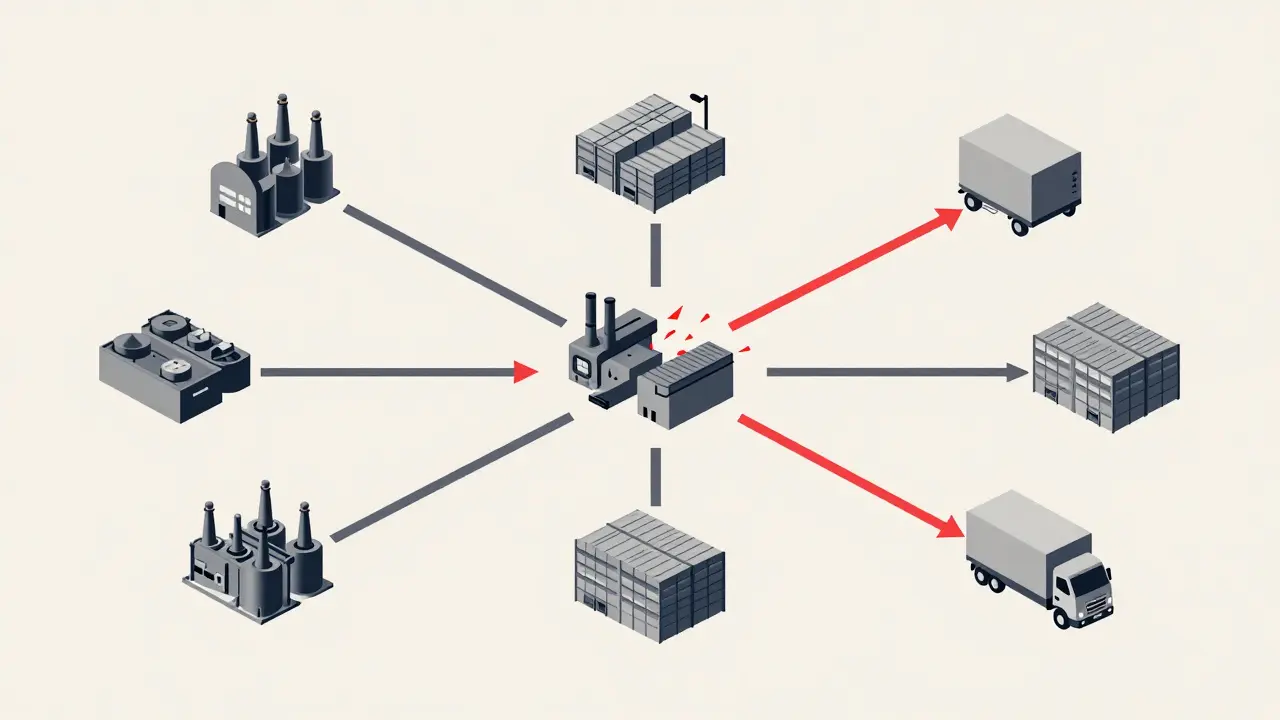
Then there's coordination. For NFTs to work, every partner in the supply chain must participate. If a shipping company doesn't update the blockchain, the data breaks. This requires trust and cooperation across competitors. It's not impossible, but it's tough. As Mecalux noted in 2021, the technology is still experimental for most industries.
Real-world examples today
While still in early stages, some companies are leading the charge. Gucci tested Supply Chain NFTs for handbags in 2022. Customers could scan a QR code to see the bag's entire journey-from Italian leather sourcing to the store. This helped them fight counterfeits and build trust. LVMH, which owns Louis Vuitton, has a similar program called AURA. It tracks luxury items across the supply chain, giving customers full transparency.
In pharmaceuticals, a company like Pfizer uses blockchain for vaccine tracking. Each dose has a unique NFT, so hospitals can verify authenticity. This is critical in regions where fake medicines are common. Automotive brands like BMW track parts for electric vehicles. If a battery fails, they trace it back to the exact factory and batch, fixing issues faster.
These examples show the potential, but they're not yet mainstream. Most uses are pilot programs. However, they prove the concept works. As the technology matures, expect more industries to jump on board.
What's next for Supply Chain NFTs
Experts predict Supply Chain NFTs will become mainstream by 2027-if they solve key issues. Energy consumption is a top priority. Newer blockchains like Solana and Avalanche are designed to be greener. This could make adoption easier for eco-conscious companies.
Standardization is also key. Right now, every company uses different blockchain systems. This creates fragmentation. Industry groups are working on common standards so NFTs work across different supply chains. Once these standards exist, integration will be smoother.
Regulation is another factor. Governments are starting to create rules for blockchain in supply chains. Clear regulations will build trust and encourage adoption. For example, the EU's Digital Product Passport initiative requires product data to be traceable. Supply Chain NFTs fit perfectly here.
The biggest shift will be in consumer expectations. More people want to know where their products come from. As demand grows, companies will have no choice but to adopt transparent tracking. Supply Chain NFTs are the tool to make that happen.
Frequently Asked Questions
How do Supply Chain NFTs prevent counterfeiting?
Each product gets a unique NFT that records its entire journey. This data is stored on a blockchain, which can't be altered. When a customer scans a QR code, they see the product's history. If the data doesn't match (e.g., a luxury bag made in Paris but sold in a counterfeit shop), it's flagged as fake. This makes it nearly impossible to fake products without detection.
What industries benefit most from Supply Chain NFTs?
Luxury goods, pharmaceuticals, automotive, and electronics lead the way. Luxury brands use them to fight counterfeits and build trust. Pharma companies track medicines to prevent fake drugs from reaching patients. Auto manufacturers trace parts for recalls. Electronics firms ensure components are genuine. These industries have high stakes in authenticity and traceability.
Are Supply Chain NFTs only for high-end products?
Not at all. While luxury brands are early adopters, the tech works for any product. For example, a food company could track organic produce from farm to store. A toy manufacturer could verify safe materials. The cost is decreasing as blockchain tech matures, making it feasible for smaller businesses too. It's all about the value of transparency for the product type.
Can Supply Chain NFTs track multiple products at once?
Yes. Each product has its own NFT, but they can be grouped. For example, a batch of 1,000 smartphones could each have individual NFTs, while a single "batch NFT" tracks the whole group. This gives both granular detail and overall visibility. Companies choose the level of detail based on their needs-tracking every item or just batches.
How much does it cost to implement Supply Chain NFTs?
Costs vary widely. Small businesses might spend $5,000-$20,000 for a basic setup. Larger companies with complex supply chains could pay $100,000+ for full integration. The main expenses are blockchain infrastructure, staff training, and integrating with existing systems. However, the long-term savings from reducing counterfeits and improving efficiency often outweigh the initial costs.
Do Supply Chain NFTs work with existing supply chain systems?
Yes, but integration requires work. Most companies use legacy software, so connecting to blockchain needs custom APIs and middleware. For example, a shipping company might need to update its tracking system to log data onto the blockchain. It's not plug-and-play, but many platforms offer tools to simplify this. Partners like IBM and Oracle provide solutions for smoother adoption.
Are Supply Chain NFTs secure?
Yes, they're designed to be secure. Blockchain technology makes data tamper-proof. Once recorded, data can't be changed without consensus from the network. However, security depends on implementation. If a company stores private keys insecurely, hackers could access data. Using reputable blockchain networks and following best practices ensures strong security. Most major deployments use enterprise-grade safeguards.
What's the biggest challenge for Supply Chain NFTs?
Getting all supply chain partners to participate. If one company doesn't update the blockchain, the data breaks. For example, if a shipping firm doesn't log a delivery, the product's history becomes incomplete. This requires trust and coordination across competitors. It's easier for companies with strong partnerships, but industry-wide adoption takes time and standardization.
Will Supply Chain NFTs replace traditional tracking?
Not entirely, but they'll complement it. Traditional methods like barcodes and RFID will still be used for basic tracking. Supply Chain NFTs add a layer of transparency and authenticity on top. For example, a barcode might show a product's location, while the NFT shows its entire journey with verified data. They work together to create a more complete picture.
26 Responses
Supply Chain NFTs are cool but i wonder how they'll work in practice. Like, if one company doesn't update the blockchain, the whole chain breaks. Energy use is a problem, though newer blockchains are better. Maybe only for high-end stuff. For everyday items? Not sure it's worth it.
The implementation of Supply Chain NFTs presents a promising avenue for enhancing product authenticity and transparency. However, it is imperative that all stakeholders collaborate effectively to ensure seamless integration. While challenges such as energy consumption and legacy system integration exist, the potential benefits for industries like luxury goods and pharmaceuticals are substantial. With careful planning and industry-wide cooperation, this technology could revolutionize supply chain management.
India is uniquely positioned to lead the adoption of Supply Chain NFTs. Our technological expertise and strategic foresight make us ideal for this initiative. Other nations must follow our example to ensure global supply chain security. Without such leadership, the world risks falling behind in this critical technological advancement.
Blockchain is just another way for the elite to spy on us. Trust me, I know.
This is the future. Supply Chain NFTs will change everything. But only if we do it right. Otherwise, it's just another failed tech trend. Let's not mess this up.
Man, this supply chain NFT stuff is deep. It's like, every product has a soul now, right? But seriously, how do we make sure everyone plays nice? If one link breaks, the whole thing crumbles. And energy use-ugh, we need better solutions.
Supply Chain NFTs are awesome! They help fight counterfeits and build trust. Imagine knowing your shoes are real or your medicine is safe. It's not perfect yet, but this tech can change the world. Let's keep pushing forward!
Supply Chain NFTs? It's a revolutionary concept, but it's not without its challenges. The integration with legacy systems is a major hurdle; however, with the right approach, it can be overcome. The energy consumption issue is significant, but newer blockchains like Polygon are addressing this. Still, the real challenge is coordination across all supply chain partners. Without full cooperation, the system is useless. It's a complex problem, but the potential benefits are immense.
suppy chain nfts? pfft. how do you expect small businesses to afford this? and energy use? like, no way. this is just for rich companies. also, blockchain is a scam anyway.
This is just another surveillance tool disguised as innovation. Blockchain is controlled by a few entities, and they'll use it to track everything. Trust me, this is a bad idea.
Supply Chain NFTs sound great, but let's be real. How many companies will actually use them? And what about the energy? It's like, 'oh, we'll solve climate change with blockchain!' Yeah, right. Cool idea, but needs serious work.
This is such a hopeful development! Imagine a world where every product's journey is transparent. It's not just about stopping fakes-it's about building trust and ethical practices. Sure, there are challenges, but the future is bright. Let's keep pushing forward!
America should lead this. We have the best tech. Other countries should follow. This is the future, and we're gonna make it happen.
The adoption of Supply Chain NFTs represents a pivotal moment for global trade security. Britain, with its rich history of innovation, is uniquely positioned to spearhead this initiative. The integration of blockchain technology into supply chains will undoubtedly enhance transparency and combat counterfeiting on an unprecedented scale. It is imperative that international collaboration ensues to establish robust frameworks for this transformative technology.
Supply Chain NFTs offer significant potential for enhancing product authenticity and transparency. However, successful implementation requires careful consideration of technical and operational challenges. It is crucial that all stakeholders collaborate to ensure seamless integration with existing systems. With proper planning, this technology can revolutionize supply chain management while maintaining integrity and security.
This is a gimmick. Blockchain for supply chains? Please. It's not solving anything real. Just another tech fad that'll fizzle out.
blockchain is cool but hard to use. not sure if it works.
Supply Chain NFTs are the epitome of decentralized innovation! 🌟 Leveraging blockchain's immutable ledger to create a transparent ecosystem is revolutionary. However, the integration with legacy systems poses significant challenges. 🤔 The energy consumption issue is a critical concern, but emerging networks like Solana offer sustainable solutions. 🚀 This is the future of supply chain management! ✨
Supply Chain NFTs seem useful, but there's a lot to figure out. It's good that people are working on it. Hope it works out.
This is a promising technology. It can help fight counterfeits and build trust. However, it's important to address challenges like energy use and system integration. With collaboration, this can be a big step forward.
Supply Chain NFTs are a necessary evolution for global trade. However, the current implementation is flawed. Energy consumption is a major issue, and legacy systems aren't compatible. But the real problem is that people don't understand blockchain. If they did, they'd see how amazing this is. It's not hard to grasp-just common sense.
Let me tell you, Supply Chain NFTs are the downfall of modern supply chains. It's a complete disaster. The energy use alone is catastrophic. And the integration with old systems? Impossible. This is why we need to go back to basic tracking methods. It's all a scam. Seriously, people are being misled.
Supply Chain NFTs could be good. But it's complicated. Maybe it works for some things. Not sure.
Why even bother with this? It's too complicated for small businesses. And what about privacy? This is just another way for corporations to control us.
Oh, another 'blockchain solution' to fix everything. How revolutionary. 🙄 Supply Chain NFTs? Sure, let's make everything more complicated while pretending it's transparent. Meanwhile, the real issues are ignored. Classic.
Blockchain is the future. Period. 😎 Supply Chain NFTs will change everything. No more fakes. Done.