
You’ve probably heard of Uniswap or PancakeSwap. They’re great for trading established tokens like ETH or BNB. But what happens when a brand-new project launches? Who provides the initial liquidity so people can actually buy the token? That’s where Basilisk comes in. It’s not just another decentralized exchange; it’s a specialized engine designed to help new crypto projects bootstrap their liquidity fairly and efficiently.
If you are digging into the Polkadot and Kusama ecosystems, you’ve likely seen the ticker BSX. Maybe you saw it on an exchange, maybe a friend mentioned it, or maybe you’re just curious about what this "Snek"-themed protocol actually does. Is it a meme coin with substance, or serious infrastructure? Let’s cut through the noise and look at what Basilisk really is, how it works, and why it matters in the broader DeFi landscape.
The Core Mission: Solving the Cold Start Problem
New crypto projects face a chicken-and-egg problem. You need liquidity to attract traders, but you need traders to create liquidity. Traditional exchanges often require massive upfront capital from market makers, which excludes smaller or newer projects. This leads to high volatility and slippage in the early days.
Basilisk solves this by operating as an independent parachain on the Kusama network. Unlike many projects that simply rent security from a parent chain, Basilisk runs its own logic while leveraging Kusama’s robustness. Its primary job is liquidity bootstrapping. Think of it as a launchpad specifically tuned for creating healthy, fair markets for new assets.
Why Kusama? If you don’t know, Kusama is Polkadot’s "canary network." It’s faster, cheaper, and less regulated than Polkadot, making it perfect for experimental DeFi protocols. Basilisk isn’t just a dApp sitting on top of Kusama; it’s a dedicated chain optimized for automated market maker (AMM) operations. This specialization allows it to offer features that general-purpose chains struggle to provide.
How Basilisk Works: The Modular AMM Design
Most DEXs force you to use one type of Automated Market Maker. You get constant product formulas (like $x \times y = k$), and that’s it. Basilisk takes a different approach. It uses a modular AMM design. This means developers can choose the specific liquidity model that fits their tokenomics.
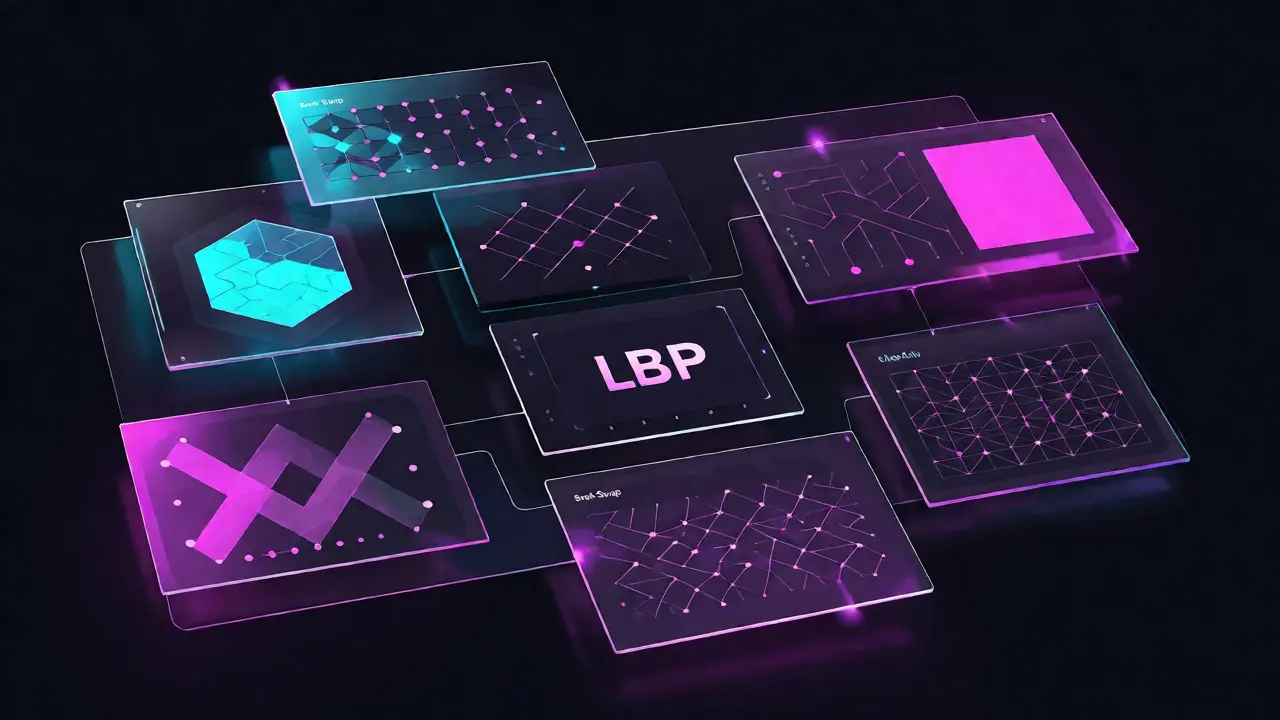
Here are the key tools in the Basilisk arsenal:
- Snek Swap: This is the standard token exchange interface. If you want to swap DOT for a new asset, you go here. It aggregates liquidity across various pools to give you the best price.
- Snek LBP (Liquidity Bootstrapping Pool): This is the star of the show. LBPs allow new projects to launch their tokens without pre-mining issues or unfair advantages for insiders. The price starts high and gradually drops over time, encouraging organic buying pressure rather than bot-driven sniping.
- Snek Farms: Once you provide liquidity, you earn rewards. These farms incentivize users to keep capital in the pools, ensuring depth and stability for traders.
- NFT Marketplace: Yes, there’s an NFT component. While not the main focus, it allows for the auctioning and trading of digital collectibles directly within the ecosystem, adding another layer of utility.
This modularity is crucial. A stablecoin might need a low-slippage curve, while a volatile meme coin might benefit from the dynamic pricing of an LBP. Basilisk lets projects pick their poison-or rather, their potion.
The BSX Token: More Than Just Gas
Every blockchain needs a native token. For Basilisk, that’s BSX. It serves multiple roles, acting as the lifeblood of the ecosystem.
First, it pays for transaction fees. Since Basilisk is its own chain, you pay gas in BSX, not KSM (Kusama’s native token). This keeps the economic activity contained within the Basilisk economy.
Second, it’s a governance token. Holders can propose referendums and vote on council elections. This isn’t just window dressing; the community has real power over protocol upgrades, fee structures, and treasury management. If you hold BSX, you have a say in where the ship is headed.
Third, it’s used for staking and farming rewards. Providing liquidity earns you BSX, which you can then stake to secure the network or compound back into your positions. It creates a circular economy where participation is rewarded.
The HydraDX Connection: A Strategic Partnership
You cannot talk about Basilisk without mentioning HydraDX. These two projects are closely linked, sharing a common vision for the future of cross-chain liquidity.
Think of them as complementary stages in a crypto asset’s lifecycle. Basilisk handles the "birth" phase. It helps new tokens find their footing, establish a market price, and gather initial users. Once those tokens mature and gain significant traction, they transition to HydraDX. HydraDX operates on Polkadot and focuses on the "maturity" phase, offering deep, unified liquidity through its Omnipool architecture.
| Feature | Basilisk (BSX) | HydraDX (HDX) |
|---|---|---|
| Primary Function | Liquidity Bootstrapping | Unified Multi-Asset Liquidity |
| Network | Kusama Parachain | Polkadot Parachain |
| Target Asset Stage | New/Emerging Projects | Established/Mature Assets |
| Key Mechanism | Modular AMMs & LBPs | Omnipool Architecture |
This partnership reduces fragmentation. Instead of every new project trying to build its own isolated liquidity silo, they plug into a shared pipeline. It’s a smart architectural choice that strengthens both networks.
Market Performance and Risks
Let’s look at the hard numbers. As of mid-2026, BSX has faced significant headwinds. The price sits around $0.00001152 USD, with a circulating supply of roughly 23.57 billion tokens out of a maximum supply of 100 billion. That’s a lot of tokens, and inflation is a real concern for long-term holders.
Yearly performance shows a decline of over 75%. Why the drop? Several factors play in. First, the broader crypto market has been choppy. Second, competition in the DEX space is fierce. Third, some investors question the sustainability of the token emission schedule. High supply with low demand can suppress price action, regardless of technology quality.
However, bear markets also reveal resilience. Despite the price drop, development continues. The team is working on Basilisk V3, which promises cross-chain capabilities. This upgrade aims to let assets move seamlessly between chains without relying on traditional, often hack-prone bridges. If successful, this could significantly boost utility and demand for BSX.

Who Should Use Basilisk?
Not everyone needs to interact with Basilisk. Here’s who benefits most:
- New Project Founders: If you’re launching a token on Kusama or Polkadot, Basilisk offers a fair launch mechanism via LBPs. It helps avoid the "dump after listing" scenario common on centralized exchanges.
- DeFi Yield Farmers: If you enjoy providing liquidity for high-risk, high-reward opportunities, Basilisk’s farms often offer competitive APRs, especially for new pairs.
- Polkadot/Kusama Enthusiasts: If you already hold KSM or DOT, diversifying into the application-specific parachains like Basilisk gives you exposure to the ecosystem’s growth beyond just the relay chain.
Conversely, if you prefer simple, low-effort investing, the complexity of managing LP positions and navigating a niche UI might be too much friction. Stick to major exchanges until you’re comfortable with DeFi mechanics.
Getting Started: Practical Steps
Ready to try it out? Here’s a quick checklist:
- Get a Wallet: You’ll need a wallet compatible with Substrate-based chains. Polkadot.js or Talisman are popular choices.
- Fund Your Account: Buy KSM on a major exchange and send it to your wallet. Then, bridge or swap KSM for BSX. Some interfaces allow direct swaps, but checking current routes is wise.
- Connect to Basilisk: Visit the official Basilisk app. Connect your wallet. Ensure you have enough BSX for gas fees.
- Explore Pools: Look at the available liquidity pools. Check the TVL (Total Value Locked) and recent volume to gauge activity.
- Provide Liquidity or Trade: Decide if you want to swap tokens or become a market maker. Remember, providing liquidity exposes you to impermanent loss.
Is Basilisk the same as Snek?
No. Snek is the branding theme for Basilisk’s products (Snek Swap, Snek LBP, etc.). Basilisk is the underlying protocol and blockchain. Think of Snek as the storefront and Basilisk as the factory behind it.
Can I mine BSX?
You cannot "mine" BSX in the traditional proof-of-work sense. However, you can earn BSX by staking it to secure the network or by providing liquidity in Snek Farms. These are forms of yield generation rather than computational mining.
What makes Basilisk different from Uniswap?
Uniswap is a general-purpose DEX on Ethereum. Basilisk is a specialized parachain on Kusama focused on liquidity bootstrapping. Its modular AMM design and LBP mechanisms are tailored for new project launches, whereas Uniswap is optimized for high-volume trading of established assets.
Is BSX a good investment for 2026?
This depends on your risk tolerance. BSX has shown high volatility and significant price depreciation recently. However, if you believe in the growth of the Kusama ecosystem and the success of the Basilisk V3 cross-chain update, it could offer upside potential. Always do your own research and never invest more than you can afford to lose.
Does Basilisk support Binance Smart Chain?
Yes, Basilisk offers compatibility with Binance Smart Chain (BSC) side chains. This allows developers to use programmable modules and extend the ecosystem's reach to BSC users, facilitating easier integration for projects already active in that environment.
Final Thoughts
Basilisk isn’t trying to be everything to everyone. It’s a specialized tool for a specific job: getting new crypto projects off the ground. In a market saturated with generic DEXs, having a platform dedicated to fair launches and flexible liquidity models is valuable. The connection to HydraDX adds strategic depth, creating a full lifecycle solution for assets in the Polkadot/Kusama universe.
Will it save BSX from its current price slump? Only time will tell. But for builders and early adopters willing to navigate the complexities of Kusama, Basilisk remains a compelling piece of infrastructure. Keep an eye on the V3 roadmap-if cross-chain functionality lands smoothly, it could change the game entirely.