
You might have seen the ticker LTO on your exchange app and wondered what it actually does. It isn’t just another meme coin or a speculative gamble. LTO Network is a hybrid blockchain platform designed specifically for enterprise use cases, focusing on secure data verification, workflow automation, and decentralized identity. Unlike Ethereum, which tries to put everything on-chain, LTO keeps sensitive business data private while using the blockchain only to prove that data hasn't been tampered with.
This distinction matters if you are tired of crypto projects that promise the world but deliver nothing but volatility. LTO was built in Europe, originally by a legal-tech company called LegalThings One, with a very specific goal: to make blockchain usable for real businesses that care about privacy laws like GDPR. Today, it stands as a bridge between the rigid requirements of corporate IT departments and the flexibility of Web3 technology.
How the Hybrid Architecture Works
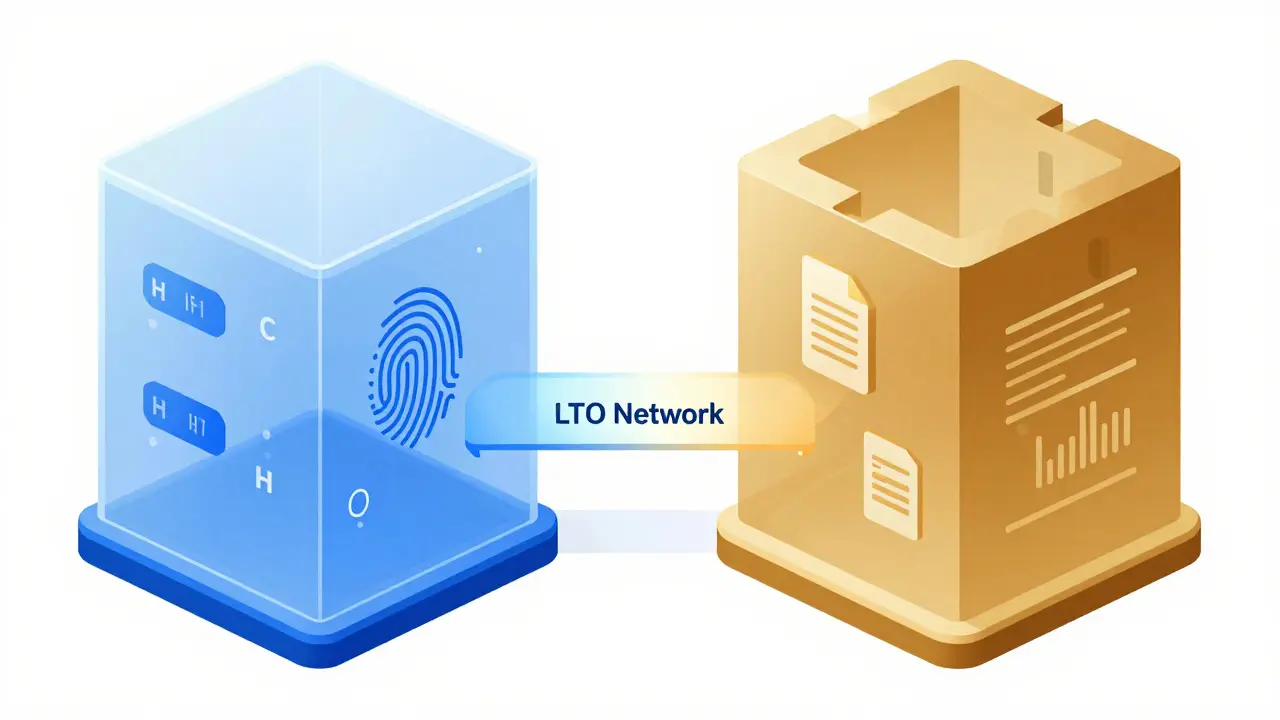
The core innovation of LTO Network is its two-layer structure. Most public blockchains are like glass houses-everyone can see everything inside. For a bank or a hospital, this is a dealbreaker because they handle confidential patient records or financial details. Storing that data directly on a public ledger would violate privacy regulations instantly.
LTO solves this with a Hybrid Blockchain Model that combines a permissionless public layer for consensus with a private layer for processing sensitive data. Here is how it breaks down:
- The Public Layer: This is the part you recognize from Bitcoin or Ethereum. It is open to everyone. However, instead of storing actual documents or personal info, it only stores cryptographic hashes (digital fingerprints) and metadata. These hashes act as an immutable timestamp, proving that a document existed at a specific time and hasn't changed since.
- The Private Layer: This is where the heavy lifting happens. Organizations run their workflows here, off-chain. They process contracts, manage logistics, or verify identities without exposing the raw data to the public internet. Only the proof of these events gets sent to the public layer.
Think of it like a notary public. You don’t hand over your entire life story to the notary; you just sign a document in front of them, and they stamp it with the date. The stamp (the hash on the LTO chain) proves the signature is valid, but the content of your life story stays in your pocket (the private layer).
Leased Proof-of-Stake: Securing the Network
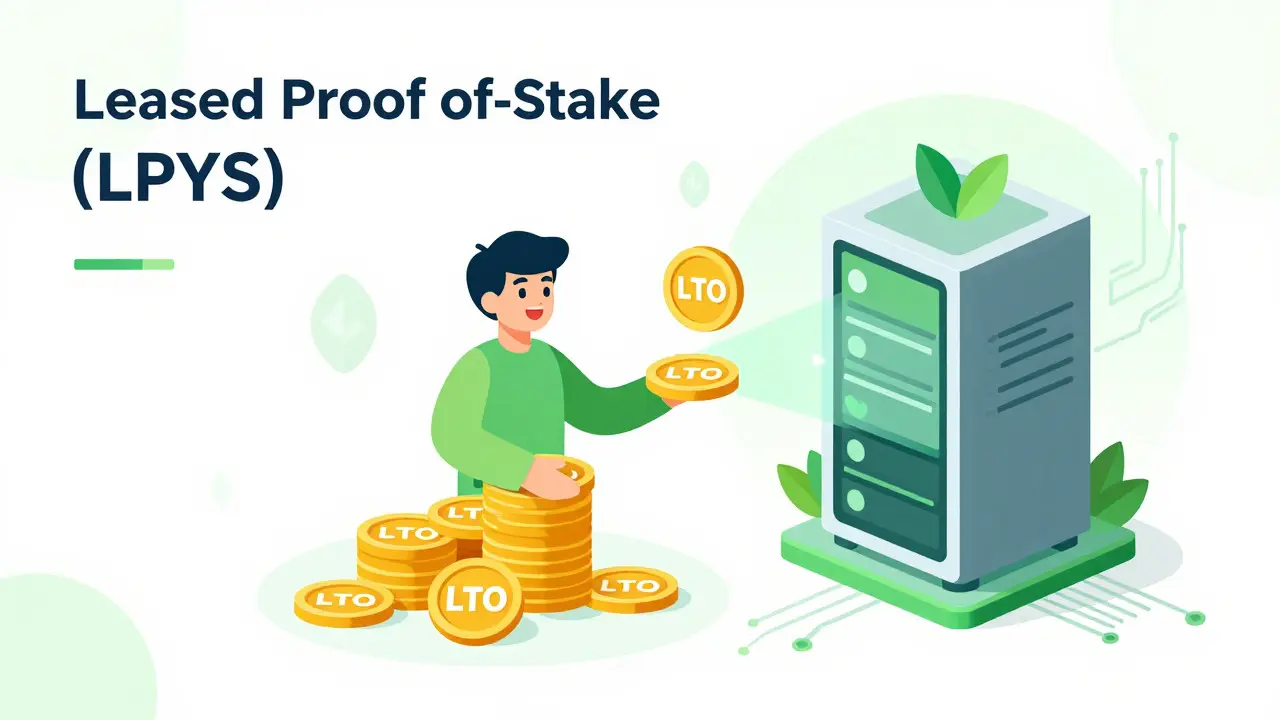
To keep this system running, LTO uses a consensus mechanism called Leased Proof-of-Stake (LPoS) that allows token holders to lease their stake to node operators without giving up custody of their coins. If you’ve heard of Proof-of-Work (mining), you know it consumes massive amounts of electricity. LPoS is energy-efficient and eco-friendly, which appeals to environmentally conscious enterprises.
In traditional Proof-of-Stake, you often need to lock up huge amounts of tokens to become a validator. In LTO’s model, you can simply "lease" your tokens to a node operator. You keep control of your assets, and the node operator uses your stake to help secure the network. In return, both parties share the rewards. This lowers the barrier to entry significantly, allowing more people to participate in securing the network without needing technical expertise to run a server.
GDPR Compliance: The European Advantage
One of the biggest hurdles for blockchain adoption in Europe has been the General Data Protection Regulation (GDPR). The "right to be forgotten" clashes with the immutable nature of blockchain. If data is written to the chain, it cannot be deleted.
LTO Network was designed with this conflict in mind. Because the public chain only holds hashes-not the actual personal data-companies remain compliant. If a user requests their data be deleted, the company deletes it from their private database. The hash remains on the blockchain, but it now points to nothing (or a null value). The audit trail exists, proving when the data was removed, but the sensitive information itself is gone. This architectural choice makes LTO particularly attractive to European firms looking to modernize their infrastructure without breaking the law.
NFT 2.0 and Decentralized Identity
While LTO started with document verification, its focus has shifted toward NFT 2.0 and dynamic non-fungible tokens that can hold complex logic, ownership rights, and interactive features beyond static images. Standard NFTs are mostly pictures or collectibles. NFT 2.0 aims to represent real-world assets, memberships, or licenses that change state based on conditions.
Closely tied to this is the push for Decentralized Identifiers (DID) and Verifiable Credentials (VC) that allow users to own and control their digital identity without relying on central platforms like Google or Facebook. Imagine logging into a service using a credential issued by your university or employer, verified on the LTO network, without ever creating a new username and password. LTO provides the infrastructure to anchor these credentials securely, giving users true sovereignty over who they are online.

Tokenomics and Market Reality
The native asset is the LTO Token that serves as the medium for transaction fees, staking leasing, and bridging liquidity across different blockchains. Like many altcoins, its price history is volatile. Early reports suggested a max supply of 500 million, but subsequent burns and accounting adjustments have led to conflicting data across exchanges. Some sources cite a circulating supply closer to 291 million, while others still reference higher figures. This discrepancy highlights the importance of checking multiple reliable aggregators before making investment decisions.
| Feature | LTO Network | Hyperledger Fabric / Corda | Ethereum (Public) |
|---|---|---|---|
| Architecture | Hybrid (Public + Private) | Permissioned (Private only) | Permissionless (Public only) |
| Data Privacy | High (Data off-chain, Hashes on-chain) | High (Consortium controlled) | Low (All data visible) |
| GDPR Friendly | Yes (Designed for it) | Yes | No (Immutable data issues) |
| Consensus | Leased Proof-of-Stake | Various (PBFT, Raft) | Proof-of-Stake |
| Primary Use Case | Workflow Automation & Identity | B2B Supply Chain & Finance | DeFi, Smart Contracts, dApps |
Currently, LTO sits in the micro-cap territory in terms of market capitalization. While this means high risk and potential for significant upside if adoption grows, it also implies lower liquidity compared to giants like Bitcoin or Solana. Traders should be aware that slippage can be higher on smaller exchanges, and price movements can be sharp.
Who Is LTO For?
If you are a retail investor looking for quick flips, LTO might not be your first stop due to its lower trading volume. However, if you believe in the long-term narrative of real-world asset tokenization and enterprise-grade blockchain adoption, LTO offers a compelling thesis. It is not trying to replace Visa or Amazon; it is trying to provide the plumbing that allows existing businesses to trust each other digitally without building their own siloed systems.
For developers and companies, LTO offers a pragmatic path. You don’t need to rewrite your entire ERP system. You build your workflow as usual, and you plug into LTO to add an unforgeable layer of trust and verification. As the demand for verifiable credentials and secure digital identities grows, especially in regulated industries, LTO’s niche becomes increasingly valuable.
Is LTO Network safe to invest in?
Like any cryptocurrency, LTO carries risk. Its technology is robust and focused on real utility, but its market cap is small, leading to higher volatility and lower liquidity. Always do your own research and never invest more than you can afford to lose. Check current listings on major exchanges like Coinbase or KuCoin for the most up-to-date trading pairs.
How does LTO differ from Ethereum?
Ethereum is a general-purpose public blockchain where all data is visible and stored on-chain. LTO is a hybrid system designed for businesses. It keeps sensitive data private (off-chain) and only stores cryptographic proofs on the public chain. This makes LTO much more suitable for industries that must comply with strict privacy laws like GDPR.
What is Leased Proof-of-Stake (LPoS)?
LPoS is LTO’s consensus mechanism. It allows token holders to "lease" their LTO tokens to node operators to help secure the network. Unlike standard staking, you retain custody of your tokens and can reclaim them easily. Node operators use the leased stake to produce blocks and earn rewards, which are then shared with the lessors.
Can I use LTO for NFTs?
Yes, LTO is pivoting toward "NFT 2.0," which focuses on dynamic NFTs that can store complex logic and represent real-world assets or identities, rather than just static images. This aligns with its broader goals in decentralized identity and verifiable credentials.
Where can I buy LTO tokens?
LTO is available on several centralized exchanges including Coinbase, KuCoin, Crypto.com, and MEXC. Availability may vary depending on your region. Always verify the contract address if trading wrapped versions (like ERC-20 LTO) on decentralized exchanges to ensure you are getting the correct asset.