
Imagine a cryptocurrency named after the CEO's pet. Sounds like a joke? For Russell (RUSSELL), it’s a serious business strategy on the Base blockchain. This meme coin launched in late 2024, riding the wave of hype generated by its direct connection to Coinbase leadership. Specifically, it honors Russell, the Akita Inu dog owned by Coinbase CEO Brian Armstrong. If you are wondering whether this token has legs or if it’s just another fleeting internet trend, you need to look past the cute name and examine the hard data.
This guide breaks down exactly what Russell is, how it functions technically, and why its market performance raises red flags for investors. We will explore its supply mechanics, trading liquidity, and the specific risks tied to its micro-cap status. By the end, you will know if Russell fits your risk tolerance or if it belongs strictly in the "gambling" bucket of your portfolio.
The Origin Story: Why a Dog Named Russell?
Meme coins thrive on community and narrative. Unlike utility tokens that solve complex technical problems, Russell’s value proposition is entirely social. It leverages the massive brand recognition of Coinbase and the personal appeal of its CEO’s pet. When the token launched, it tapped into the existing user base of the Base network, Ethereum’s Layer-2 solution developed by Coinbase. The logic was simple: if people trust Coinbase, they might trust a token endorsed by its culture, even if unofficially.
However, context matters. While the inspiration is clear, the official status is murkier. Most authoritative sources confirm it is a community-driven project, not an official Coinbase product. This distinction is critical. You aren’t buying equity in Coinbase; you’re buying a speculative asset with a celebrity endorsement vibe. The project aims to create a vibrant community within decentralized finance (DeFi), but it lacks the deep developer activity seen in more established projects. GitHub repositories show minimal commits, suggesting that development efforts have stalled since the initial launch frenzy.
Technical Specifications and Blockchain Infrastructure
Technically, Russell operates as an ERC-20 token on the Base Layer-2 blockchain. This means transactions are fast and cheap compared to Ethereum mainnet, thanks to Base’s optimistic rollup technology. The smart contract address is verified and public, which helps users avoid fake clones-a common issue in the meme coin space.
Here are the core technical attributes you need to know:
- Blockchain: Base (Coinbase’s L2)
- Token Standard: ERC-20
- Total Supply: 1,000,000,000 (1 billion) tokens
- Circulating Supply: Approximately 970 million tokens (97%)
- Contract Address: 0x0C5142BC58f9A61AB8C3D2085DD2F4e550c5cE0B
The high circulating supply percentage is actually a positive sign. Many meme coins lock up large portions of their supply, leading to sudden dumps when vesting periods end. With Russell, most tokens are already in circulation, reducing the risk of immediate supply shocks from team unlocks. However, this also means there is little room for new token emissions to drive price appreciation through scarcity mechanisms.
Market Performance and Volatility Analysis
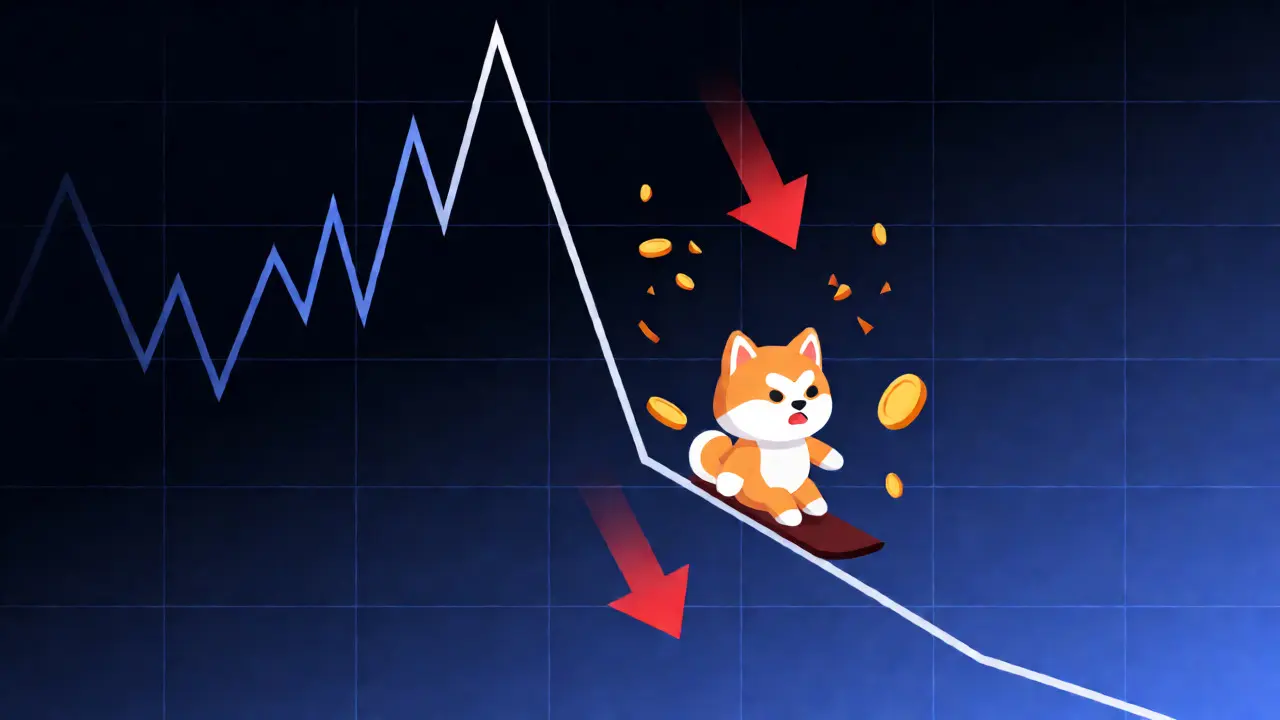
If you look at the price charts, the story is one of extreme volatility. Russell reached its all-time high (ATH) of $0.0262 in November 2024. Since then, it has plummeted, often trading below $0.005. As of recent data, prices hover around $0.002 to $0.005 depending on the exchange. This represents a decline of over 90% from its peak. Such swings are typical for meme coins but can be devastating for those who didn’t exit during the pump.
Market capitalization estimates vary significantly across platforms due to low liquidity. CoinMarketCap reports a market cap of roughly $2.35 million, while other trackers list figures ranging from $2.2 million to $7.2 million. These discrepancies highlight a key problem: thin order books. When volume is low, small trades can drastically shift the reported price. For instance, a single whale selling could drop the price by 10% instantly because there aren’t enough buy orders to absorb the shock.
| Metric | Value / Status | Implication |
|---|---|---|
| All-Time High Price | $0.0262 (Nov 2024) | Indicates past hype cycle peak |
| Current Price Range | $0.002 - $0.005 | >90% drawdown from ATH |
| Market Cap | ~$2.3 Million | Micro-cap category; high risk |
| Trading Volume (24h) | ~$37,000 - $338,000* | Low liquidity; slippage risk |
| Holders | ~115,000 | Moderate distribution |
*Note: Volume varies significantly between aggregators due to wash trading and fragmented liquidity pools.
Liquidity Risks and Trading Pitfalls
The biggest danger with Russell isn’t just the price dropping-it’s getting stuck. Liquidity refers to how easily you can buy or sell without moving the price. Russell suffers from poor liquidity conditions. Most of its trading volume occurs on Uniswap v2 on the Base network, accounting for nearly 99% of daily volume. If Uniswap goes down or if liquidity providers withdraw their funds, you might find yourself unable to sell.
User feedback confirms this pain point. On Reddit and CryptoSlate, frequent complaints mention "massive slippage." Slippage happens when you try to sell $1,000 worth of Russell, but because the pool is shallow, your sale pushes the price down so much that you only receive $800. For holdings above $500, exiting positions can cost you double-digit percentages in transaction losses. Always check the depth of the liquidity pool before making large trades.
Another risk is the bid-ask spread. Analysts have noted extremely narrow spreads but minimal market depth. This sounds good, but it’s deceptive. A narrow spread suggests efficiency, but low depth means the market can’t handle size. It’s like having a very smooth road that’s only wide enough for one car. If two cars arrive, traffic jams immediately.
Community Sentiment and Social Hype
Meme coins live and die by social sentiment. Russell benefits from its association with Brian Armstrong and the broader Coinbase ecosystem. However, social dominance scores remain incredibly low-around 0.0014%. This means that despite the catchy name, Russell generates almost no organic chatter compared to major cryptocurrencies like Bitcoin or even top-tier memes like Dogecoin.
Sentiment analysis shows mixed results. Early buyers who entered during the October dip saw significant returns, with some reporting over 2,000% ROI by selling during the November pump. But current sentiment leans negative. Many users feel abandoned by developers who haven’t provided updates in months. The largest Telegram community has about 4,300 members, but engagement is often driven by bots rather than genuine discussion. Without fresh catalysts or roadmap announcements, maintaining interest becomes increasingly difficult.

Regulatory and Competitive Landscape
Russell exists in a crowded field. Over 2,800 new meme tokens launched in Q4 2024 alone. Standing out requires more than a dog picture. Russell’s unique angle is its proximity to Coinbase, but this also brings regulatory scrutiny. The SEC has previously examined tokens with executive affiliations. While Russell isn’t officially issued by Coinbase, any perceived link could attract attention if regulators decide to crack down on unregistered securities disguised as memes.
Furthermore, the token lacks clear utility beyond speculation. It doesn’t offer staking rewards, governance rights, or integration into real-world applications. In the long term, tokens without utility tend to fade away once the hype dies down. Research firms rate Russell’s sustainability as "low," citing minimal development activity and high concentration of trading on a single exchange.
How to Buy and Store Russell Safely
If you still want to take the gamble, here is the practical path to owning Russell. You don’t need advanced coding skills, but you do need to be careful with wallet configurations.
- Set Up a Wallet: Download MetaMask or Coinbase Wallet. Ensure you select the Base Network, not Ethereum Mainnet.
- Fund Your Wallet: Deposit ETH or USDC onto the Base network. Remember, you need ETH for gas fees.
- Connect to DEX: Go to Uniswap (app.uniswap.org) and connect your wallet. Switch the network to Base.
- Verify Contract: Paste the official contract address:
0x0C5142BC58f9A61AB8C3D2085DD2F4e550c5cE0B. Do not rely solely on search results; scams often use similar names. - Execute Swap: Choose your input currency (e.g., USDC) and output (RUSSELL). Check the price impact warning. If it’s higher than 1-2%, consider splitting your trade into smaller chunks to reduce slippage.
Storage is straightforward since it’s an ERC-20 token. Keep your private keys safe. Given the high risk, never invest money you can’t afford to lose completely.
Frequently Asked Questions
Is Russell coin officially backed by Coinbase?
No, Russell is not an official Coinbase product. It is a community-driven meme coin inspired by Brian Armstrong’s dog. While it runs on Coinbase’s Base blockchain, Coinbase does not endorse or manage the token directly.
Why is Russell trading on the Base network?
The Base network is an Ethereum Layer-2 solution built by Coinbase. It offers lower transaction fees and faster speeds than Ethereum Mainnet, making it ideal for meme coins where users frequently trade small amounts.
What is the maximum supply of Russell?
The maximum supply of Russell is fixed at 1 billion tokens. Approximately 97% of these tokens are currently in circulation, meaning there is limited potential for new supply inflation.
Is Russell a good long-term investment?
Most analysts classify Russell as a high-risk speculative asset rather than a long-term investment. It lacks utility, has low development activity, and faces intense competition. It is best suited for short-term traders comfortable with high volatility.
Where can I buy Russell safely?
The primary venue for buying Russell is Uniswap v2 on the Base network. Always verify the contract address (0x0C5142BC58f9A61AB8C3D2085DD2F4e550c5cE0B) to avoid scam tokens with similar names.