
Sendcoin (SEND) isn’t another Bitcoin or Ethereum. It’s a small, fast-moving cryptocurrency built on Solana, meant to power something called the Blinks Ecosystem. But here’s the catch: no one really knows what that ecosystem does. There’s no whitepaper. No official team announcement. No detailed roadmap. And yet, people are trading it.
If you’ve seen SEND pop up on your crypto tracker and wondered if it’s worth attention, you’re not alone. It’s a coin that moves fast, swings hard, and hides behind vague promises. Let’s cut through the noise.
What Is Sendcoin (SEND)?
Sendcoin (SEND) is a token that runs on the Solana blockchain. That means it uses Solana’s speed and low fees-transactions cost less than a penny and confirm in under a second. SEND doesn’t have its own network. It’s a token, like a digital coupon, that lives on Solana’s infrastructure.
According to holders and trading platforms, SEND was created to support the Blinks Ecosystem. But beyond that name, there’s zero public detail. No website explains what Blinks is. No GitHub repo shows code. No YouTube videos break it down. The whole thing feels like a placeholder with a token attached.
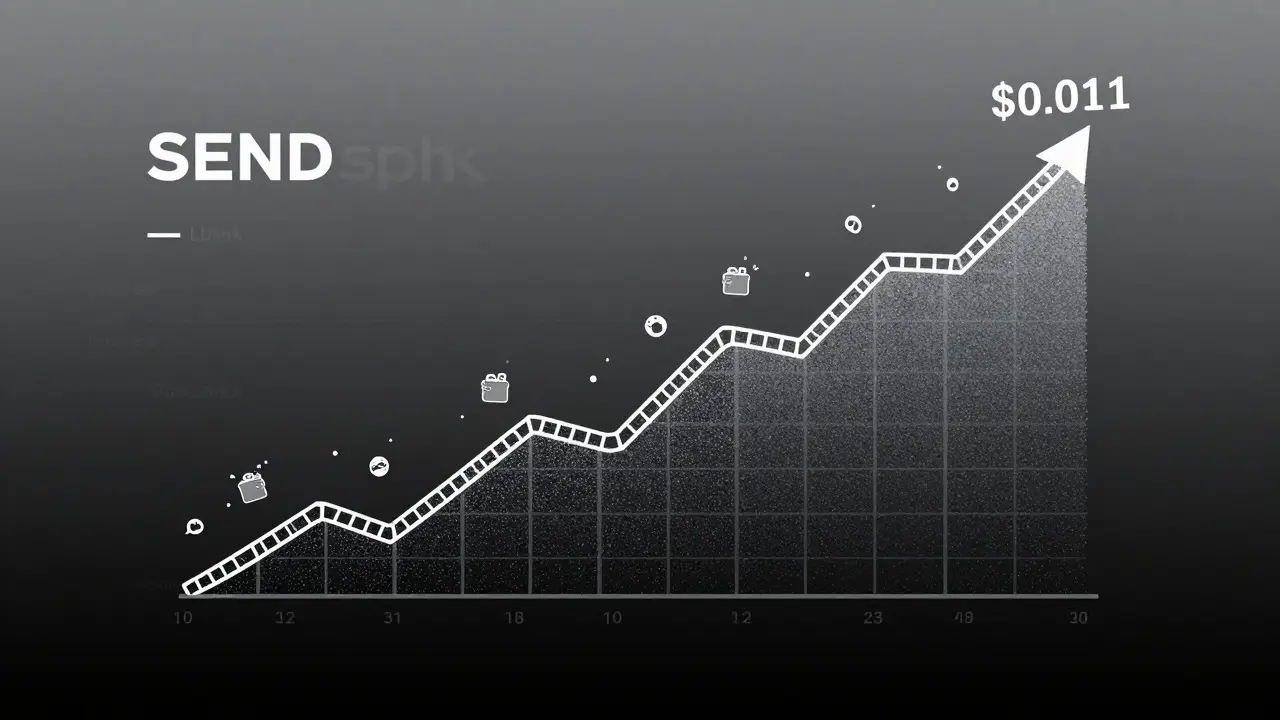
It launched sometime in late 2023 or early 2024. The all-time high was $0.1626 on December 21, 2024. That was a 15,000% gain from its starting price. Then it crashed. By January 2026, it was trading around $0.001047-a 94.5% drop from its peak. That kind of volatility isn’t unusual for micro-cap coins. But it’s a red flag if you’re looking for something stable or useful.
SEND Price and Market Data
SEND’s price is all over the place. CoinGecko says it’s $0.001047. Coinbase says $0.0081. CoinMarketCap matches CoinGecko but reports a much smaller market cap. Why? Because different exchanges have different liquidity. Some have more buyers, others have more sellers. And SEND trades on a handful of obscure platforms, not Coinbase or Binance.
Here’s what the data shows as of January 2026:
- Price: $0.001047 (CoinGecko)
- Market Cap: $8.99 million (CoinGecko) or $679,770 (CoinMarketCap)
- Total Supply: ~1 billion SEND tokens
- Circulating Supply: Reported as 500 million by CoinMarketCap, but 999 million by others
- All-Time Low: $0.001379 (November 2024)
- 24-Hour Volume: $195K-$289K
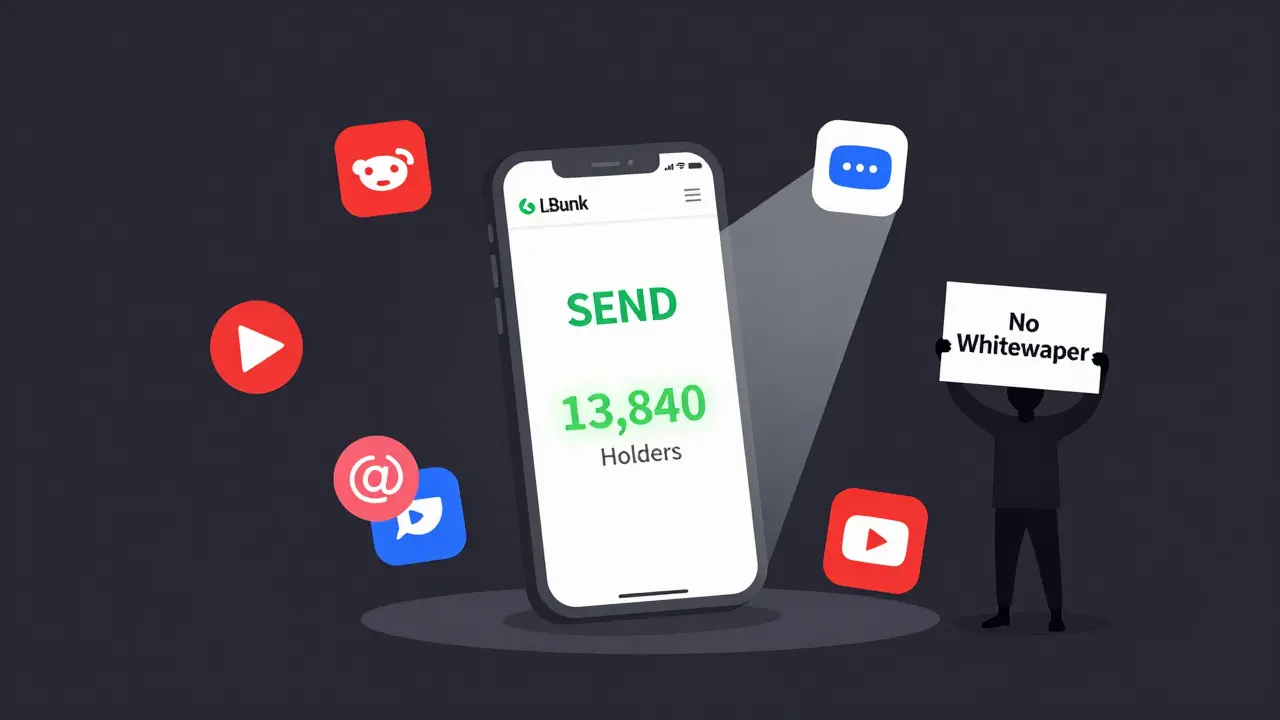
- Holders: ~13,840
The mismatch between circulating and total supply is odd. If half the tokens are locked up or unclaimed, that’s not disclosed. Transparency matters-even for small coins.
Where Can You Buy SEND?
You won’t find SEND on Coinbase, Kraken, or even Bybit’s main platform. It’s listed on smaller exchanges:
- LBank: Accounts for 64% of all SEND trading volume
- Poloniex: Second most active market
- Bybit: Offers SEND/USDT but with lower volume
To buy SEND, you need to:
- Create an account on LBank or Poloniex
- Verify your identity (KYC Level 1)
- Deposit USDT or SOL
- Trade it for SEND
No direct fiat on-ramps. No credit card purchases. You can’t just log in and buy SEND with USD. That’s a barrier for new users-and a sign it’s not meant for casual investors.
Is SEND Part of the Solana Ecosystem?
Yes, but not in a meaningful way.
Solana has over 1,200 tokens built on its chain. Most serve clear purposes: Raydium for trading, Serum for decentralized exchanges, Jupiter for swaps. SEND? It’s listed as part of the “Blinks Ecosystem,” but no one explains what Blinks is. No app. No dApp. No website. Just a token name and a Twitter account.
Compared to other Solana tokens, SEND is tiny. Raydium’s market cap is over $100 million. SEND’s is less than $10 million. It’s not even in the top 100 Solana tokens by value. Its only real advantage? Speed and low cost-thanks to Solana. But so do hundreds of other tokens.
Who’s Holding SEND?
There are about 13,840 wallets holding SEND. That’s more than some coins with 10x the market cap. But it’s still a tiny community. You won’t find Reddit threads, Discord servers with thousands, or YouTube breakdowns. There’s no public team. No developer updates. No blog posts.
The trading activity is mostly on Asian exchanges. That suggests regional interest, not global adoption. And there’s zero institutional coverage. No CoinDesk articles. No Cointelegraph analysis. No analyst ratings.
This isn’t a project with a community. It’s a token with a price chart-and a lot of people wondering if it’s a pump-and-dump.
Why the Big Price Swings?
SEND’s 94.5% drop from its peak wasn’t caused by a hack or scandal. It was caused by thin liquidity.
When only a few thousand people trade a token, a single large buy or sell can move the price 20% in minutes. That’s what happened in December 2024: a surge of buyers pushed it to $0.16. Then, as quickly as it rose, it collapsed.
Even now, the 24-hour trading volume is only about 42% of its market cap. For comparison, Bitcoin’s volume is 150%+ of its market cap. SEND’s liquidity is fragile. That’s why prices jump between exchanges. That’s why you see $0.001 on one site and $0.008 on another.
It’s not a bug. It’s a feature of micro-cap coins with no real utility.
Should You Invest in SEND?
If you’re looking for a long-term hold, SEND isn’t it. There’s no product. No team. No plan. It’s a speculative bet on a name and a chart.
But if you’re a short-term trader who understands micro-cap risk, SEND might offer volatility for quick plays. Its 7.5% weekly gain in January 2026 outperformed the broader market. That’s not nothing.
Here’s the reality check:
- Pros: Built on Solana (fast, cheap), high volatility for traders, low entry price
- Cons: No utility, no transparency, low liquidity, no team, no roadmap, only listed on minor exchanges
Only risk what you’re willing to lose. And if you do trade it, use a stop-loss. Don’t hold it in a wallet for years expecting it to “go to the moon.” It might not even survive the next bear market.
Final Thoughts
Sendcoin (SEND) is a crypto mystery. It exists. It trades. People make money on it. But no one knows why.
It’s not a scam-there’s no evidence of fraud. But it’s also not a project. It’s a token with a story that hasn’t been told. Until someone explains what the Blinks Ecosystem is, SEND remains a gamble dressed up as a coin.
If you’re curious, track it. Watch the volume. See if the price stabilizes. But don’t invest because it’s “cheap.” Invest because you understand what you’re buying. Right now, that’s the one thing no one can tell you.
22 Responses
This SEND coin is just a ghost story with a blockchain. No team, no whitepaper, no product-just a price chart that looks like a heart monitor after a caffeine overdose. Someone’s cleaning out wallets and calling it innovation.
i mean if you think about it this is kinda how crypto started right? like bitcoin had no use case either at first just a weird digital thing people traded. but sendcoin? its not even a weird thing its just... a placeholder. like a todo list item that got turned into a token. no one knows what blink is but somehow its worth 8 million? i dont get it but i also dont not get it if you know what i mean
Dont trade this shit unless you got money to burn and a death wish
I read this whole thing and I’m still not sure if SEND is a scam, a prototype, or someone’s inside joke. The fact that it’s on LBank and Poloniex but nowhere else tells me everything. It’s not a project-it’s a mood. And the mood is ‘let’s see how long we can make this chart dance before it collapses.’
I’ve been watching SEND for months and honestly I think it’s one of the most honest things in crypto right now. No fake promises. No ‘revolutionary tech.’ Just a token with a wild price and zero explanation. If you’re buying it, you’re not investing-you’re betting on chaos. And honestly? That’s kind of beautiful in a messed up way.
The fact that the circulating supply numbers are all over the place is the biggest red flag. If you can’t even agree on how many tokens exist, how can anyone trust the project? This isn’t decentralized finance-it’s decentralized confusion.
The market cap discrepancy between CoinGecko and CoinMarketCap is not an anomaly-it is a symptom of a deeper structural failure in transparency. The absence of a verified circulating supply, coupled with the lack of a publicly identifiable development team, renders any valuation speculative at best and manipulative at worst. One must approach this asset with the caution one would afford a sealed envelope with no return address.
This isn’t crypto. This is a psychological experiment disguised as an investment. People aren’t buying SEND for utility-they’re buying it because they think they’re smarter than the next sucker. And guess what? The sucker is always you when the volume drops below $200K and the whales vanish.
Solana’s ecosystem is a wild west, but SEND is the ghost town with a single neon sign that says ‘Blinks’ and no one knows what it means. It’s not even a meme coin-it’s a meme without the joke. The only thing this token has going for it is the fact that Solana’s base layer is fast. Everything else? Vapor.
America doesn’t need this garbage. If this was a Chinese or Russian project I’d be screaming about economic warfare. But no, it’s just some anonymous dev on LBank making people rich for a week then watching them cry. Pathetic.
People think they’re being clever buying tokens like this. But you’re not a pioneer. You’re a participant in a ritual of collective delusion. There’s no innovation here. Only greed dressed up as curiosity. And that’s not just irresponsible-it’s morally bankrupt.
I just want to say that if you’re thinking about dipping into SEND, please take a breath. Write down why you’re doing it. Is it because you believe in something? Or because you saw someone else make money? There’s no shame in walking away from something that doesn’t feel right. You don’t have to chase every shiny thing.
SEND is what happens when you let a 14 year old with a Discord server and too much free time make a crypto project. Blinks Ecosystem? More like Blink and you’ll miss it because it already crashed
This is a Fed operation. They need to kill crypto so they let these ghost coins rise so people lose money and then say ‘see? crypto is a scam!’ Then they push CBDCs. SEND is the bait. You’re the fish. I’m the guy who saw the hook before you even looked at the water 😈
I know who’s behind SEND. It’s the same people who ran the 2021 dogecoin pump. They use new names, new chains, new buzzwords. But the playbook is the same: hype fast, exit quietly, leave the small holders holding the bag. They’re already gone. The price drop isn’t a correction-it’s the cleanup.
i dont even know why im still checking this coin but i keep looking at the chart like its gonna say something different today. maybe it will. maybe it wont. either way i think im addicted to the mystery. like watching a movie where you never find out what the monster looks like. its kinda fun in a terrifying way
in india we have so many coins like this. no one knows what they do. but people still trade. because its easy. and cheap. and maybe one day it will go up. i dont care if its real or not. if it moves, i watch. thats all.
this coin is a joke but the volume is real so i dont know what to think. i bought 500k SEND for 50 bucks last week now its worth 65. i dont know why but i think i will keep it. maybe the blink thing is coming. maybe not. who cares
I’ve seen this movie before. The coin rises. The influencers post. The comments fill up with ‘TO THE MOON.’ Then silence. Then a 90% drop. SEND is just the 2026 version of PepeCoin. The only difference? This time, people are actually reading the fine print. Too bad they still buy it anyway.
The absence of a team does not inherently signify fraud-it may simply reflect a commitment to decentralization beyond the traditional model. However, the absence of communication, documentation, or even a symbolic gesture toward transparency renders even the most noble intentions meaningless. A token without a story is just data on a ledger. And data, without context, is noise.
Sendcoin? More like Sendcash to the next guy.
I just want to say that I’ve been thinking about this coin a lot lately, and I think it’s kind of beautiful in a weird way. Like, it’s not trying to be anything big or important-it’s just existing. And people are still trading it. Maybe that’s enough. Maybe the point isn’t what Blinks is, but that people still care enough to wonder. I don’t know if I’d buy it, but I can’t stop reading about it. It’s like a puzzle with no pieces. And somehow, that’s the most interesting part.