

Why do crypto prices jump up one day and crash the next? It’s not just hype. It’s not just rumors. There are real, measurable reasons why Bitcoin and other cryptocurrencies swing like a pendulum - sometimes 20%, 30%, even 50% in a matter of weeks. And if you’ve ever watched your portfolio go from green to red in hours, you’re not alone. The truth is, crypto markets are built differently from stocks, bonds, or even gold. They’re smaller, less liquid, and far more emotional. Let’s break down exactly why this happens.
Liquidity Is Thin - Even Small Trades Move Prices
Think of a market like a swimming pool. In traditional markets like the S&P 500, there are millions of people trading every second. The water is deep, and you can splash around without changing the tide. Crypto? It’s more like a kiddie pool. Even a single big buyer or seller can create a wave. In 2025, Bitcoin’s daily trading volume hovered around $25 billion on average. Compare that to Apple stock, which trades over $20 billion in a single day. That means Bitcoin’s entire market moves on roughly the same cash flow as one tech stock. When a hedge fund buys $500 million in Bitcoin, it’s not just a trade - it’s a seismic event. And because there aren’t enough sellers ready to absorb that demand, the price shoots up. The same thing happens in reverse. Sell a few million coins, and the price can drop just as fast. This is especially true for altcoins. Ethereum might trade $10 billion a day. But a coin with a $500 million market cap? A $2 million trade can move it 15%. That’s why small-cap cryptos often have 10x the volatility of Bitcoin. They’re not just risky - they’re fragile.Supply Is Fixed - Demand Fluctuates Wildly
Bitcoin has a hard cap: 21 million coins. Ever. No more. No less. That sounds like a good thing - scarcity drives value, right? But here’s the twist: when demand spikes, there’s no way to print more. No central bank can adjust supply to match demand. So when millions of new buyers flood in - whether from ETF inflows, memes, or FOMO - prices climb rapidly because there simply aren’t enough coins to go around. This was clear in early 2025. Bitcoin’s Stock-to-Flow ratio (a measure of scarcity) jumped from 97 to over 117. That means it was becoming rarer. Logically, the price should’ve soared. But in Q1 2025, Bitcoin fell from $104,700 to $76,500. Why? Because external forces - like regulatory fears or macroeconomic shifts - overwhelmed the scarcity signal. The market didn’t care about scarcity when investors were scared. Whales - people who hold thousands of BTC - make this even worse. If one whale sells 1,000 Bitcoin at once, and there aren’t enough buyers waiting, the price crashes. And because these moves are visible on public blockchains, others panic and sell too. It’s a chain reaction.Sentiment Drives More Than Data
Crypto isn’t priced by earnings reports or balance sheets. It’s priced by Twitter threads, Reddit posts, and TikTok videos. A single tweet from a well-known figure - like Elon Musk saying “Bitcoin is overvalued” - can trigger a 10% drop. A bullish YouTube video titled “Bitcoin to $200K in 2026?” can spark a buying frenzy. In October 2025, market sentiment tools showed “greed” at its highest level in over a year. People were talking about buying more, not selling. And guess what? Prices surged past $119,000. But greed doesn’t last. When fear returns - even slightly - that same crowd rushes to sell. It’s not rational. It’s emotional. Compare that to the stock market. When Tesla’s stock drops 5%, analysts look at quarterly revenue, supply chain issues, or competition. In crypto? It’s often just “everyone’s scared.” That’s why crypto moves faster than any other asset class. It’s not a market - it’s a mood.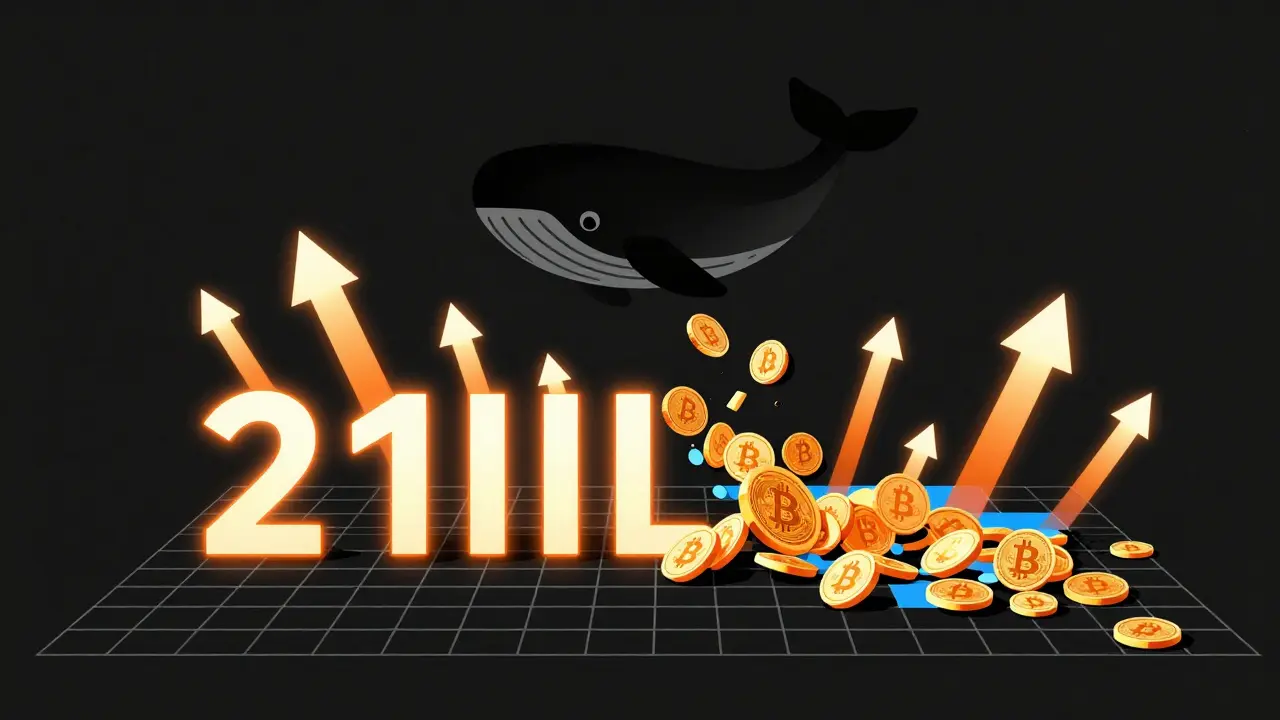
Macroeconomic Shocks Hit Harder
Crypto doesn’t live in a bubble. It lives in the same world as stocks, interest rates, and inflation. But because it’s so small, it reacts more violently. When the Federal Reserve raises interest rates, bonds and savings accounts become more attractive. People pull money out of risky assets - including crypto. In early 2025, despite Bitcoin’s increasing scarcity, prices dropped because global markets were nervous about inflation and job data. Investors didn’t care about Bitcoin’s supply model - they cared about their 401(k)s. On the flip side, when inflation spikes, some investors see Bitcoin as a hedge. In 2025, as the U.S. dollar weakened slightly, Bitcoin saw a 15% rally in just two weeks. It’s not because Bitcoin became “better.” It’s because people were scared of their money losing value. Crypto doesn’t have its own economy. It’s a mirror - and it reflects fear and hope faster than anything else.Institutional Money Brings Both Stability and Chaos
Institutions - hedge funds, asset managers, even pension funds - are now pouring billions into crypto. Bitcoin and Ethereum ETFs saw record inflows in July 2025, pushing the total market cap up by 13.3% in just one month. That sounds like good news. And it is - for long-term adoption. But here’s the catch: institutions don’t trade small amounts. They move billions at a time. When BlackRock or Fidelity enters the market, it doesn’t buy 100 Bitcoin. It buys 10,000. That’s enough to shift prices overnight. And when they exit? The same thing happens in reverse. One day, a fund decides to rebalance its portfolio. The next day, Bitcoin drops 8%. No news. No scandal. Just a quiet sell order from a giant. So institutions aren’t the saviors of crypto. They’re amplifiers. They make big moves bigger.Technical Triggers Make It Worse
Most traders don’t buy Bitcoin because they believe in decentralization. They buy it because the 50-day moving average turned up, or because it broke past $118,000. Algorithms are everywhere. And they’re programmed to react to the same signals. In early 2025, Bitcoin’s 50-day moving average dropped from $99,300 to $85,400. That told traders the trend was down. So they sold. Then, when it bounced back above $90,000, algorithms triggered buy orders. That pushed the price higher - which triggered more buys. It’s a feedback loop. And when a coin hits a “resistance level” - like $120,000 - traders who bought at $100,000 start taking profits. They don’t care if it’s “the next big thing.” They just want their money. That selling pressure can stall a rally overnight. These aren’t human decisions. They’re code. And code doesn’t feel fear. It just reacts. And when thousands of bots react at once? The market trembles.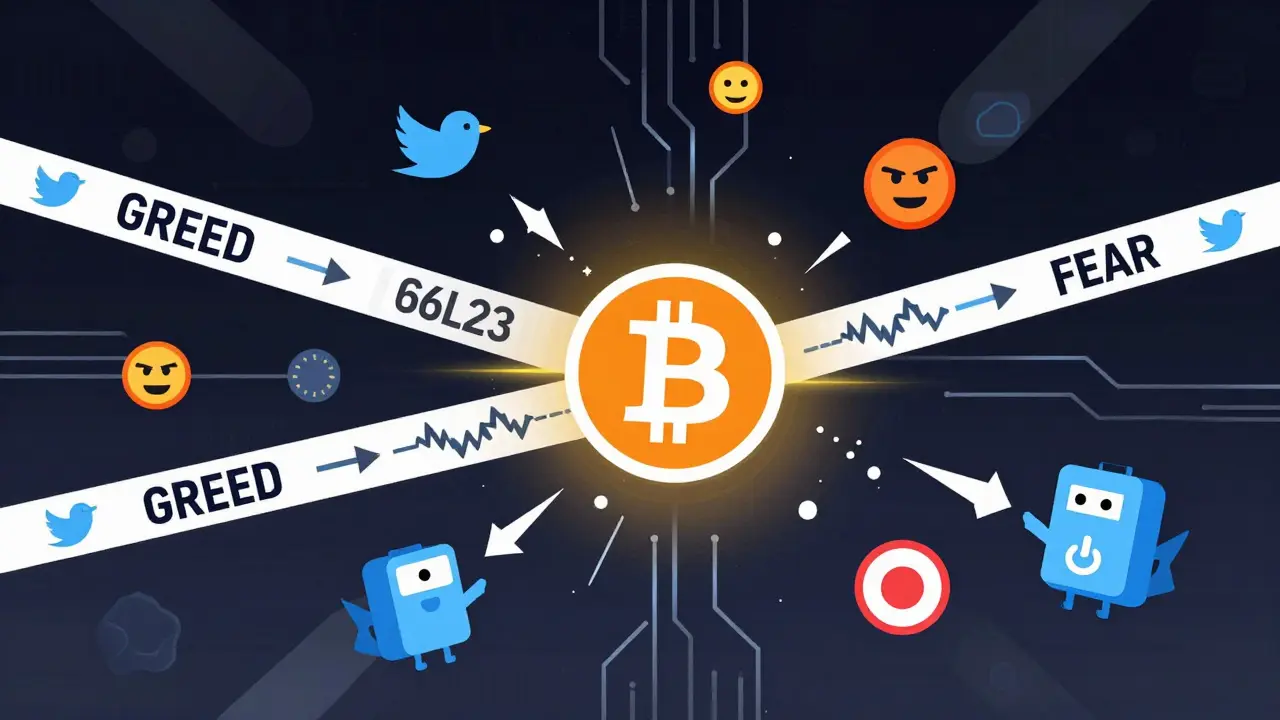
Regulation Can Change Everything in Minutes
No other asset class reacts so instantly to government news. A single tweet from the SEC saying “we’re investigating crypto exchanges” can wipe out $10 billion in market value. A new law in Japan or the EU approving a crypto ETF can spark a 20% rally. In Q1 2025, Bitcoin’s price dropped sharply even though its scarcity was rising. Why? Because regulators in the U.S. and U.K. were hinting at stricter rules for staking and mining. Markets panicked before the rules even came out. That’s how fragile crypto is. It’s not about fundamentals. It’s about what people think regulators will do. And because crypto is global, a policy shift in South Korea, Germany, or Brazil can ripple across the entire market. There’s no single regulator to calm things down. Just a bunch of governments talking - and markets guessing.Volatility Isn’t Going Away - But You Can Adapt
Will crypto get less volatile? Maybe. As more money flows in, liquidity will improve. More institutions will mean deeper markets. But the core drivers won’t vanish:- Fixed supply? Still there.
- Emotional traders? Still everywhere.
- Small market size? Still true.
- Regulatory uncertainty? Still growing.
20 Responses
Liquidity is thin? More like non-existent. You think $25B is a lot? Try comparing it to gold's $1T daily volume. This isn't a market, it's a casino with a blockchain tattoo. I've seen whales pump a coin then dump it before breakfast. No one's fooled anymore.
You say sentiment drives more than data? Bro, sentiment IS the data. You think Wall Street cares about earnings when TikTok trends move $20B in 48 hours? Crypto's not broken-it's evolved. The old rules don't apply anymore. Adapt or get left behind.
This is just a glorified blog post with bullet points. I've read this exact same analysis on CoinDesk in 2021. Nothing new. Nothing insightful. Just recycled talking points dressed up like original thought.
I appreciate how you laid this out. It's easy to feel overwhelmed when your portfolio swings like a pendulum. But understanding the mechanics-liquidity, supply, sentiment-makes it less scary. You're not alone. And you don't have to panic. Just stay grounded. You've got this.
Crypto volatility? Bro, you think Americans don't get it? In India we've seen rupee crash 30% in a week. This is child's play. Bitcoin is the only real hedge against fiat decay. Stop comparing it to stocks. It's not even in the same game. This is survival money.
The fundamental tension lies in the ontological dissonance between emergent decentralized value systems and entrenched institutional epistemologies. Liquidity metrics are reductive-they fail to account for the phenomenological weight of network effects. One must consider the Hegelian dialectic of fear and greed as a self-actualizing force.
I love how you broke this down. I've been holding since 2021 and honestly? I didn't realize how much whale activity and algorithmic trading were driving the swings. This makes so much sense now. I'm going to track liquidity pools and sentiment scores going forward. Thanks for the clarity.
Thank you for this comprehensive breakdown. It's easy to feel like you're losing your mind when your holdings fluctuate wildly. But understanding the mechanics behind the volatility brings peace. It's not random. It's not magic. It's just a system with predictable patterns. You're not crazy. The market is just loud.
You're all missing the point. It's not about liquidity or whales. It's about the fact that no one actually owns crypto. It's all just numbers on a screen. You think you're rich? You're not. You're just emotionally attached to a ledger. Wake up.
I'm from the Philippines. In my country, people use crypto because banks are unreliable. We don't care about ETFs or moving averages. We care about sending money home without paying 10% in fees. Your analysis is smart, but it's written for Wall Street. The real story is in the villages, not the boardrooms.
This is exactly why I started dollar-cost averaging. I don't try to time it. I just keep buying small amounts. The volatility still freaks me out sometimes, but knowing why it happens helps me stay calm. I'm not trying to get rich overnight. I'm trying to build something that lasts.
I've been in since 2017 and I still get goosebumps when BTC pumps. 🚀 But seriously, this breakdown is 🔥. Liquidity + sentiment + algorithms = perfect storm. I'm not scared anymore. I'm just watching. And yeah, I'm buying more on dips. Always have. Always will. 💪
Volatility? Yeah right. Its just the fed printing money and people scrambling for anything that isnt a bond. You overthink this way too much. Its just fear and greed. Always has been. Always will be.
They're not telling you the real reason. Crypto is being manipulated by the same banks that crashed the economy in 2008. They let it rise so they can short it later. This whole thing is a trap. They want you to buy at the top. Then they crash it and buy up the coins for pennies. Wake up.
Let’s go deeper. The volatility isn’t just a function of liquidity or sentiment-it’s a symptom of a civilization in transition. We’re witnessing the death rattle of centralized financial authority and the chaotic birth pangs of a decentralized, trustless, peer-to-peer economic paradigm. The swings? They’re not bugs. They’re the sound of old systems breaking. And yes, it hurts. But transformation always does. We’re not just trading coins. We’re rewriting the rules of value itself. The pain is the price of evolution.
I like how you said volatility is a feature, not a bug. That’s true. It’s what makes crypto feel alive. I used to hate the swings. Now I see them as signals. A drop isn’t failure. It’s a reset. A pump isn’t greed. It’s collective belief. I’m not trying to beat the market. I’m trying to understand it.
In India, crypto is becoming the new savings account. People don’t care about ETFs or moving averages. They care about inflation. They care about being able to send money to family without waiting 3 days. Crypto isn’t volatile because it’s broken. It’s volatile because it’s free. And freedom is messy.
Liquidity? Please. It's all about the whales. And the algorithms. And the Fed. And Elon. And the SEC. And TikTok. And memes. And FOMO. And fear. And greed. And the fact that 90% of traders are amateurs with no clue. It's chaos. Pure chaos. And it's beautiful. 🤖💸
This is gold. Seriously. I've been trading for 5 years and this is the clearest breakdown I've ever read. I'm saving this. I'm sharing it. I'm printing it. If you're new to crypto, read this 3 times. Then read it again. Then start DCAing. You'll thank me later.
I just want to say thank you for writing this. I've been so confused about why my portfolio keeps swinging. I thought I was doing something wrong. But now I see it's not me-it's the system. I'm not a bad investor. I'm just learning. And I'm going to keep going. One step at a time. I believe in this.