
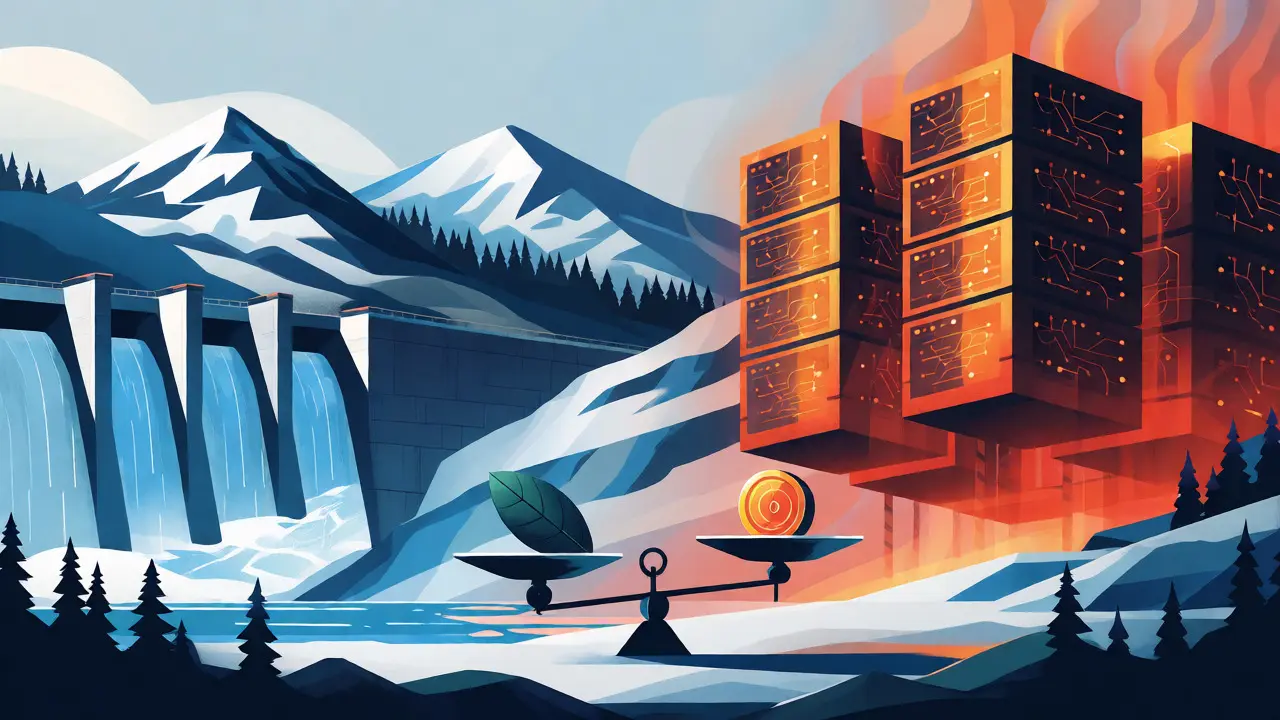
Imagine your country’s entire annual electricity consumption for households being dwarfed by the power needed to mine a single digital currency. That is roughly the scale of concern driving Sweden's recent regulatory crackdown on cryptocurrency mining operations. It isn’t just about hating technology; it’s about a nation with ambitious climate goals colliding head-on with an industry known for its massive appetite for power.
If you’ve been following crypto news, you might have noticed Sweden taking a harder line than most of Europe. While neighbors like Norway or Iceland welcome miners with open arms (and cheap geothermal or hydro power), Swedish regulators have raised alarms that could reshape how we think about blockchain sustainability. So, what exactly is happening in Stockholm, and why are they pushing for an EU-wide ban on certain types of mining?
The Core Conflict: Energy Use vs. Climate Goals
At the heart of this issue is the Proof-of-Work consensus mechanism used by Bitcoin. Unlike newer systems that require minimal energy, Proof-of-Work relies on solving complex mathematical puzzles to validate transactions. This process demands immense computational power, which translates directly into electricity consumption.
Sweden’s Financial Supervisory Authority (FI) and the Financial Stability Council (FSC) aren’t guessing here. They’ve crunched the numbers, and the results are stark. In 2023, officials Erik Thedéen and Cecilia Risinger pointed out that crypto assets at current market values release up to 120 million tonnes of CO2 annually. To put that in perspective, that’s equivalent to 100 million round-trip flights between Sweden and Thailand. For a country aiming to be one of the first fossil-free welfare states, those emissions are hard to ignore.
You might ask, "But doesn't Sweden use renewable energy?" Yes, they do. About 54% of their grid comes from hydroelectric power, 30% from nuclear, and 15% from wind. However, regulators argue that even renewable energy has an opportunity cost. The electricity used by miners could otherwise support electric vehicles, heat homes, or power other industries. The debate isn’t just about where the power comes from, but how much of it is being diverted to a sector many Swedes view as speculative.
From Legal Loophole to Regulatory Target
This wasn’t always the case. When China banned cryptocurrency mining in 2021, a lot of that heavy-duty hardware moved westward. Some of it landed in Sweden, attracted by cold climates that naturally cool servers and relatively stable grids. Between April and August 2022, electricity consumption for Bitcoin mining in Sweden skyrocketed by several hundred percent, hitting approximately 1 TWh annually. That’s enough to power 200,000 Swedish households.
The sudden surge caught regulators off guard. Initially, mining was largely unregulated under existing financial laws because it didn’t fit neatly into traditional banking categories. But as the footprint grew, so did the scrutiny. The FI began requiring detailed reporting on energy sources and consumption metrics. If you’re running a mining facility in Norrbotten County today, you can’t just plug in and start hashing; you need to prove your environmental impact aligns with national standards.
| Country | Regulatory Stance | Primary Energy Source | Mining Status |
|---|---|---|---|
| Sweden | Restrictive; pushed for EU ban | Hydro/Nuclear/Wind | Legal but heavily regulated |
| Norway | Permissive; low friction | Hydro | Hosts ~1.5% of global mining |
| Iceland | Welcoming | Geothermal/Hydro | Major hub for miners |
| Finland | Moderate; registration required | Nuclear/Wind/Biomass | Growing sector |
The Push for an EU-Wide Ban
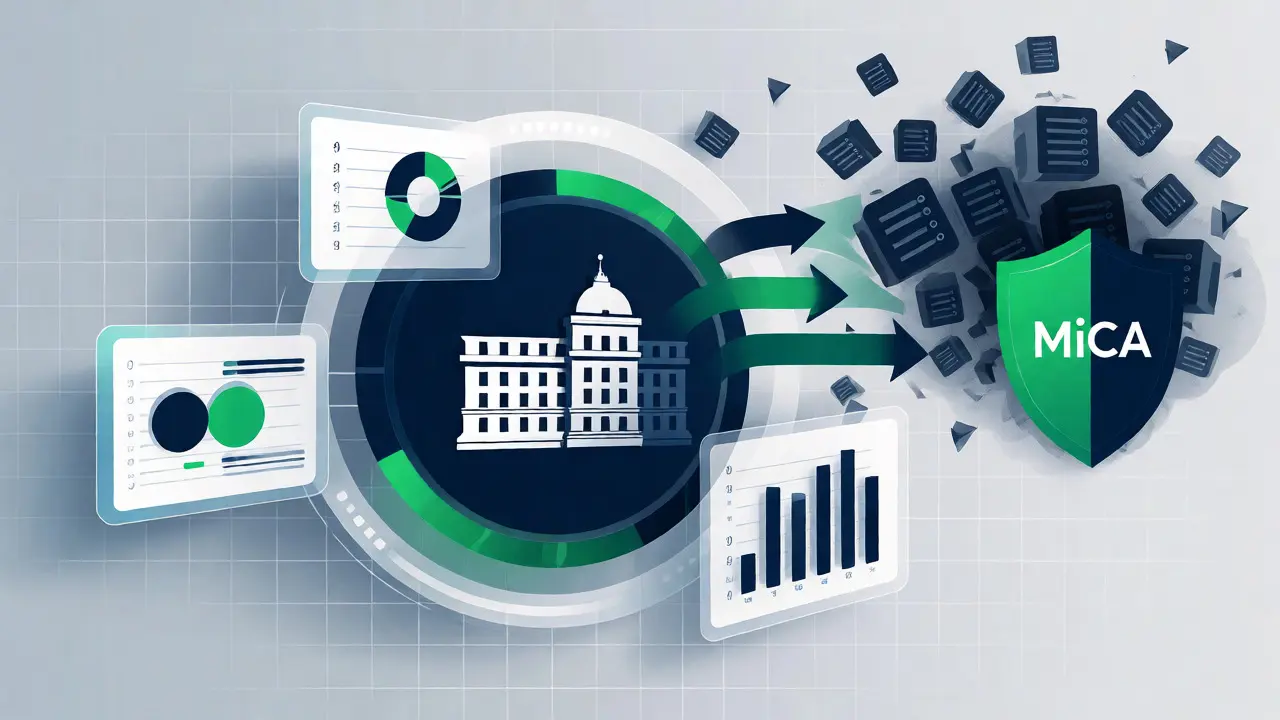
Sweden didn’t keep these concerns to itself. They lobbied hard for a broader European response. Their argument was simple: if only some countries restrict mining, the industry will just migrate to laxer jurisdictions, shifting the carbon burden rather than reducing it. This led to discussions around the Markets in Crypto-Assets (MiCA) regulation, the EU’s comprehensive framework for digital assets.
Sweden wanted MiCA to include an outright ban on Proof-of-Work mechanisms. Imagine that-a continent-wide prohibition on Bitcoin mining. It sounds extreme, and for many in the tech community, it was. Critics argued that banning a technology based on its current inefficiency ignores potential innovations. Would a ban stop people from using Bitcoin? Probably not. It would likely just move the servers to Texas or Kazakhstan, where regulations might be looser and energy mixes dirtier.
In the end, the EU compromised. MiCA, adopted across member states, recognizes the environmental impact of consensus mechanisms but stops short of banning them. Instead, it mandates strict disclosure requirements. White papers for new tokens must now detail their energy consumption and environmental footprint. Sweden initially opposed this softer approach, feeling it didn’t go far enough, but the compromise allowed the regulation to pass while keeping the door open for stricter national measures.
Industry Backlash and Adaptation
Not everyone agrees with Sweden’s tough stance. The Swedish Blockchain Association argues that financial-level regulation is more appropriate than physical bans. Christin Lindholm, the association’s CEO, stated in a Financial Times op-ed that regulating the product level allows for environmental considerations without killing the technological benefits of blockchain infrastructure.
There’s also a practical counter-argument regarding grid stability. Dr. Per Jansson, an energy researcher at KTH Royal Institute of Technology, points out that flexible mining operations can actually help balance the grid. During peak demand periods, miners can rapidly reduce their power consumption-sometimes within 15 minutes-to free up capacity for homes and hospitals. A pilot project in Boden Municipality demonstrated this capability, showing that miners aren’t just passive consumers; they can be active participants in energy management.
Despite these arguments, the business environment has tightened. Trustpilot reviews for Swedish crypto exchanges dropped from an average of 4.2 in 2022 to 2.8 by early 2025, citing difficult KYC processes and withdrawal limits. Many operators are voting with their feet. A survey by the Swedish Crypto Mining Association found that 68% of operational companies planned to relocate outside Sweden by 2026, with Norway and Germany being top destinations.

What This Means for Investors and Users
If you’re holding crypto or thinking about mining, Sweden’s experience offers valuable lessons. First, regulatory risk is real and location-specific. What works in Switzerland (ranked 3rd globally for crypto-friendliness) might not work in Sweden (ranked 47th). Second, the trend is moving toward transparency. Even if mining isn’t banned, you’ll likely face more paperwork. Expect quarterly sustainability reports detailing energy sources and consumption metrics.
For investors, the shift toward Proof-of-Stake mechanisms is accelerating. Ethereum’s transition away from Proof-of-Work reduced its energy consumption by 99.95%. Startups like EcoChain in Stockholm have pivoted entirely to Proof-of-Stake validation, maintaining profitability while slashing their carbon footprint. This suggests that future value may lie in efficient, eco-friendly chains rather than energy-intensive legacy systems.
Also, consider the niche opportunities. Sweden is investing in waste heat recovery projects. Miners generate significant heat, which can be captured and used for district heating systems. A pilot in Luleå achieved 65% heat recovery efficiency. If you’re looking for innovative angles, combining mining with local utility services might offer a path forward that satisfies both regulators and shareholders.
Looking Ahead: Nuance Over Bans
As of late 2025, Sweden seems to be softening its initial call for a total ban. The focus has shifted from prohibition to precision. The Crypto-Asset Environmental Transparency Act, implemented in January 2025, requires all mining operations above 0.5 MW to publicly disclose real-time energy data. This market-based approach aims to let consumers and businesses make informed choices rather than forcing a one-size-fits-all solution.
The government has allocated 200 million SEK ($18.4 million USD) for research into sustainable mining practices. This signals a recognition that while the environmental costs are high, the technology still holds promise if managed correctly. Industry analysts predict Sweden will evolve toward a 'Swiss model' of technology-neutral regulation by 2027, focusing on outcomes rather than specific technologies.
So, is Sweden anti-crypto? Not necessarily. They are pro-climate, and right now, they see a conflict between the two. As energy-efficient consensus mechanisms become more dominant, that conflict may fade. Until then, expect Sweden to remain a watchdog, ensuring that every kilowatt-hour spent on mining is accounted for.
Is Bitcoin mining illegal in Sweden?
No, Bitcoin mining is not illegal in Sweden. However, it is subject to strict regulations. Operators must register with the Swedish Financial Supervisory Authority (FI) and comply with environmental impact assessments. There have been proposals to ban it, especially at the EU level, but currently, it remains legal under specific conditions focused on energy transparency and sustainability.
Why does Sweden oppose Proof-of-Work mining?
Sweden opposes Proof-of-Work primarily due to its high energy consumption and associated carbon emissions. Regulators argue that the electricity used for mining competes with other critical uses like heating and transportation, contradicting Sweden's aggressive climate goals. They believe that even renewable energy has an opportunity cost that should be weighed against the speculative nature of crypto assets.
How much energy does Bitcoin mining consume compared to Sweden?
Globally, Bitcoin networks consume approximately 143 TWh per year, which exceeds the total annual electricity consumption of countries like Sweden (139 TWh) and Norway (123 TWh). Within Sweden specifically, mining consumption peaked at around 1 TWh annually, equivalent to the needs of 200,000 households, though projections suggest a decline as regulations tighten and technology shifts.
What is the MiCA regulation?
The Markets in Crypto-Assets (MiCA) regulation is the European Union's comprehensive legal framework for crypto-assets. It aims to harmonize rules across member states. Regarding mining, MiCA does not ban Proof-of-Work but requires mandatory disclosure of environmental impacts in white papers and sustainability reports, addressing concerns raised by countries like Sweden.
Are there alternatives to Proof-of-Work that are eco-friendly?
Yes, Proof-of-Stake (PoS) is the primary alternative. Ethereum’s switch to PoS reduced its energy consumption by 99.95%. Other mechanisms include Proof-of-Authority and Directed Acyclic Graphs (DAGs). These methods require significantly less computational power, making them more attractive to environmentally conscious regulators and investors.