
When you look at crypto in November 2025, a month where real-world crypto risks and regulatory shifts came into sharp focus. Also known as the period when scams turned violent and governments drew new lines, it revealed how fragile trust in crypto really is—and how much work is left to make it safe. This wasn’t just another month of price swings. It was the month when $10 billion in fraud from Myanmar’s Shwe Kokko region made headlines, when Norway shut down new mining data centers to protect its clean energy, and when Switzerland’s Crypto Valley kept drawing projects with clear laws and low taxes. These aren’t random events—they’re connected threads in a larger story about who controls crypto, who gets hurt, and who still believes in it.
Crypto scams, especially fake exchanges and phantom airdrops. Also known as ghost projects, they’re not disappearing—they’re getting more sophisticated. EXNCE didn’t exist. PolkaBridge’s airdrop was a mirage. RBT Rabbit Token had zero volume and no team. These weren’t mistakes. They were designed to trap people who trust CoinMarketCap listings as gospel. Meanwhile, real projects like BunnyPark and DES Space Drop were quietly building ecosystems, not promising free tokens. The lesson? If it sounds too easy, it’s either a scam or a trap. And if you’re chasing an airdrop, ask: Who’s behind it? What’s the utility? And why haven’t they launched yet? On the other side, blockchain regulation, a growing patchwork of global rules. Also known as compliance frameworks, they’re no longer optional. MiCA in Europe, the Crypto Travel Rule, and Iran’s rial-to-crypto ban show governments aren’t waiting. Crypto companies now need KYC, AML systems, and transaction monitoring just to stay open. Norway’s ban on new mining centers? That’s regulation by energy policy. Switzerland’s DLT Act? That’s regulation as a competitive advantage. This isn’t about stopping crypto—it’s about forcing it to grow up.
Blockchain validation, how networks stay secure without banks. Also known as Proof of Stake or validator duties, it’s the quiet engine behind Ethereum, Solana, and Cardano. Validators don’t just earn rewards—they face slashing if they misbehave. Solo staking is risky. Pooled staking is easier. But either way, you’re responsible for the network’s health. And that’s not something you can outsource to a meme coin. These concepts show up everywhere in November’s posts: from Byzantine Fault Tolerance keeping networks honest, to tokenized securities using smart contracts to unlock real estate for $500 investors, to Zaro Coin betting everything on a character brand instead of trading volume. This wasn’t a month of hype. It was a month of hard truths. You’ll find reviews of failed exchanges like Catalyx and COINZIX, deep dives into NFT metadata and legal token classifications, and even a guide to following whale trades without getting crushed. What ties it all together? Real crypto isn’t about getting rich quick. It’s about understanding systems, spotting lies, and choosing what’s real over what’s loud.
EXNCE crypto exchange doesn't exist - it's a scam. Learn how to spot fake exchanges, what real security looks like, and which trusted platforms to use instead in 2025.
Tycho Bramwell | Nov, 29 2025 Read More
Validators secure blockchain networks by staking crypto, verifying transactions, and participating in consensus. Learn their duties, requirements, risks like slashing, and how solo vs. pooled validation works in Ethereum, Solana, and Cardano.
Tycho Bramwell | Nov, 28 2025 Read More
Crypto companies in 2025 need robust compliance programs to meet global regulations like MiCA and the Crypto Travel Rule. Learn how KYC, AML, and transaction monitoring work, what they cost, and how to avoid costly mistakes.
Tycho Bramwell | Nov, 27 2025 Read More

Over $10 billion was stolen from Americans in 2024 through crypto scams run from Myanmar’s Shwe Kokko region. These operations use romance fraud and forced labor, protected by armed militias. U.S. sanctions have targeted key players, but the threat is growing.
Tycho Bramwell | Nov, 26 2025 Read More

The legal difference between utility and security tokens determines whether a blockchain project is seen as a product or an investment. Understand the Howey Test, SEC rules, and real-world cases to avoid regulatory traps in 2025.
Tycho Bramwell | Nov, 25 2025 Read More
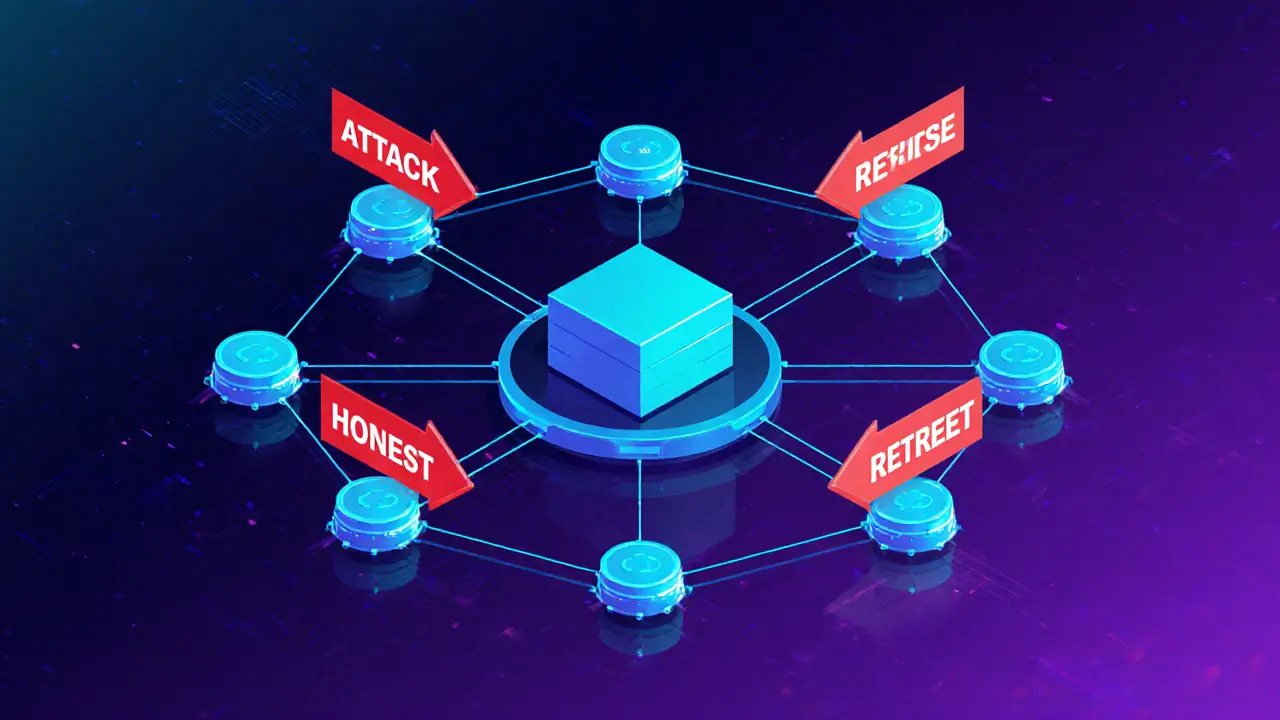
Byzantine Fault Tolerance keeps crypto networks secure by ensuring consensus even when some nodes are malicious. Learn how Bitcoin, Ethereum, Solana, and others use BFT in real-world applications to prevent fraud and maintain trust.
Tycho Bramwell | Nov, 24 2025 Read More

Mind Music's 2022 MND airdrop distributed 30 trillion tokens to 15,000 winners via CoinMarketCap, blending crypto incentives with real music releases. Learn how it worked, why it faded, and what it taught the industry.
Tycho Bramwell | Nov, 23 2025 Read More

BunnyPark (BP) isn't running a public airdrop yet, but its NFT SaaS platform for GameFi creators could trigger one soon. Learn how to qualify by building on the platform, not just holding tokens.
Tycho Bramwell | Nov, 22 2025 Read More

Tokenized securities use blockchain to turn real assets like real estate and stocks into digital tokens, making investing cheaper, faster, and open to everyone-even with just $500. Learn how they unlock liquidity, cut costs, and remove borders from finance.
Tycho Bramwell | Nov, 21 2025 Read More
In 2025, stablecoin-based crypto payments are cutting cross-border transfer costs by over 90% and settling in minutes-not days. Discover how they work, where they shine, and whether they’re right for you.
Tycho Bramwell | Nov, 20 2025 Read More
Norway banned new cryptocurrency mining data centers in autumn 2025 to protect its renewable energy for higher-priority industries. Existing mines can continue, but must register and face strict penalties for non-compliance.
Tycho Bramwell | Nov, 19 2025 Read More
Learn how to follow crypto whale trading strategies without falling for manipulative moves. Discover tools, patterns, and risk controls that separate real signals from noise in Bitcoin and Ethereum markets.
Tycho Bramwell | Nov, 17 2025 Read More