

Trading on Ethereum mainnet feels like paying a premium for luxury just to move money. Gas fees spike, transactions lag, and your profits vanish into thin air. That is why Aerodrome Finance is a decentralized exchange (DEX) and automated market maker (AMM) that serves as the primary liquidity hub on the Base blockchain. Launched by the team behind Velodrome Finance, Aerodrome has quickly become the go-to platform for traders who want speed, low costs, and serious yield opportunities without the headache of high network fees.
If you are looking at crypto exchanges in 2026, you might be wondering if Aerodrome is worth your attention. The short answer is yes, but only if you understand how it works. This isn't just another copy-paste Uniswap clone. It’s a sophisticated engine built specifically for the Base blockchain, which is Ethereum's Layer 2 scaling solution backed by Coinbase. With over $1.24 billion in total value locked (TVL), Aerodrome controls roughly half of all assets on Base. But does dominance translate to safety and profit for you? Let’s break down the mechanics, the risks, and whether this platform fits your trading strategy.
How Aerodrome Finance Works
To get the most out of Aerodrome, you need to understand its core architecture. Unlike traditional AMMs that spread liquidity across wide price ranges, Aerodrome uses concentrated liquidity pools. This means you can deposit your capital into specific price brackets where trading activity is most likely to happen. The result? Better capital efficiency and significantly reduced slippage for traders. If you are swapping large amounts of tokens, you won’t see your execution price drift away from the market rate as much as you would on older platforms.
The fee structure is another major draw. Trading fees range from 0.01% to 0.3%. Compare that to Uniswap, where standard tiers often sit higher, and you start to see why volume flows here. For active day traders, those fractions of a percent add up quickly. However, the real magic happens when you look at how the protocol incentivizes liquidity providers. This brings us to the heart of the ecosystem: the dual-token model.
Understanding veTokenomics: AERO vs. veAERO
This is the part that confuses new users, so pay close attention. Aerodrome operates on a system called veTokenomics, inspired by Curve Finance but tailored for the Base ecosystem. There are two distinct tokens involved:
- AERO: This is the native ERC-20 governance and reward token. You earn AERO by providing liquidity or by voting with veAERO. It’s the currency you trade, hold, and potentially sell.
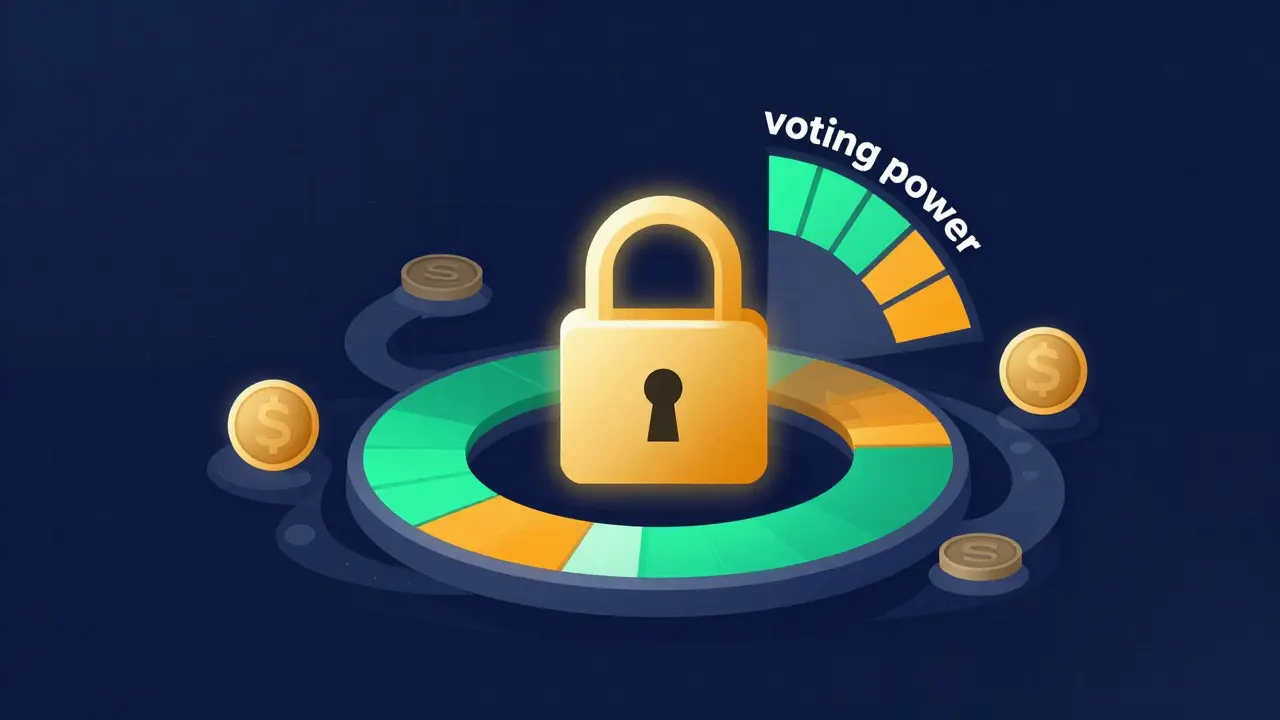
- veAERO: This is an ERC-721 non-fungible token (NFT). You don’t buy veAERO directly; you lock up your AERO tokens for a period ranging from 4 weeks to 4 years. The longer you lock, the more veAERO you receive.
Why does this matter? Because veAERO grants you voting power. Holders vote on which liquidity pools receive the majority of the AERO emissions. By directing rewards to specific pairs, voters effectively subsidize liquidity in those pools. This creates a virtuous cycle: better liquidity attracts more traders, which generates more fees, which makes the pool more attractive for future voters. It aligns the interests of traders, liquidity providers, and voters in a way that traditional DEXs simply don’t match.
If you are a passive investor, you might find this complex. But if you are willing to engage, the yields can be substantial. Just remember that locking your tokens means they are illiquid. You cannot withdraw them until your lock expires. That is a critical risk factor to consider before committing funds.
Aerodrome vs. Uniswap: The Real Comparison
You can’t talk about DEXs without mentioning Uniswap. It’s the giant in the room. So, how does Aerodrome stack up against it in 2026?
| Feature | Aerodrome Finance | Uniswap |
|---|---|---|
| Network | Base (Layer 2) | Ethereum Mainnet + Multiple L2s |
| Trading Fees | 0.01% - 0.3% | 0.05% - 1.0% (varies by tier) |
| Liquidity Incentives | High (AERO rewards via veTokenomics) | Low (No native token rewards for LPs) |
| Total Value Locked (TVL) | ~$1.24 Billion | ~$5.57 Billion |
| User Experience | Intuitive, but steep learning curve for veMechanism | Familiar, standardized interface |
| Best For | Yield farmers, Base ecosystem natives, low-fee traders | Broad market access, deep liquidity, institutional trust |
Uniswap wins on raw scale. Its TVL is nearly five times larger, and it supports a wider variety of blockchains. If you need to swap a niche altcoin that isn’t listed on Base, Uniswap is your friend. But Aerodrome wins on efficiency and rewards. On Base, gas fees are negligible, making small trades viable. Plus, the AERO incentives mean that providing liquidity isn’t just about earning trading fees; it’s also about stacking tokens that could appreciate in value.
The choice depends on your goal. Are you chasing maximum yield in a specific ecosystem? Go with Aerodrome. Do you want the deepest liquidity and broadest asset selection regardless of cost? Stick with Uniswap.
AERO Token Performance and Outlook
The price action of the AERO token tells a story of volatility and growth. Since its launch in August 2023 at around $0.37, AERO has seen significant swings. It struggled initially, trading below its opening price until early 2024. Then came the breakout. By April 2024, it hit $2.00, dipped, and eventually reached an all-time high of $2.30 in December 2024.
As we move through 2026, the narrative around AERO is shifting from speculative hype to fundamental utility. The integration of Coinbase’s Base network has brought retail users into the fold. More users mean more swaps, which means more fees generated for the protocol. According to data from March 2025, AERO ranked as the 121st most valuable cryptocurrency by market cap. While not a top-10 giant, it is firmly established in the mid-cap tier with strong backing.
Analysts have offered mixed predictions. Some forecast an average trading price of $1.00 for 2025, with potential peaks near $1.10. Others suggest European pricing might hover around €0.96 by year-end. These numbers depend heavily on broader market sentiment. If Bitcoin and Ethereum continue their bullish trends, Layer 2 solutions like Base-and by extension, Aerodrome-stand to benefit disproportionately.
Risks You Need to Know
No DeFi protocol is without risk. Before you bridge your ETH to Base and dive into Aerodrome, consider these factors:
- Smart Contract Risk: Like any code-based system, bugs can exist. Aerodrome is built on Velodrome V2 foundations, which have been battle-tested, but audits are never perfect. Always check the latest security reports.
- Impermanent Loss: Providing liquidity always carries the risk of impermanent loss. If the price of one token in a pair diverges significantly from the other, you may end up with less value than if you had just held the tokens separately. Concentrated liquidity amplifies this risk because your exposure is focused on a narrower price range.
- Lock-up Periods: Remember, veAERO requires locking AERO. If the price crashes while your tokens are locked, you cannot sell to cut losses. Liquidity is king in crypto; don’t sacrifice it unless you fully understand the trade-off.
- Regulatory Uncertainty: DeFi regulations are evolving rapidly. While Base has Coinbase’s institutional backing, regulatory crackdowns on token emissions or staking mechanisms could impact Aerodrome’s operations.

Who Should Use Aerodrome?
Aerodrome isn’t for everyone. If you are a complete beginner who wants to buy Bitcoin and forget about it, this platform is overkill. You don’t need a DEX for that. Aerodrome is designed for three specific types of users:
- Yield Farmers: Those who actively manage positions, vote on gauges, and chase high APYs will find Aerodrome’s incentive structure unmatched on Base.
- Active Traders: If you trade frequently, the low fees (0.01%) save you hundreds of dollars annually compared to Ethereum mainnet or even some other L2s.
- Base Ecosystem Believers: If you think Base will become the dominant consumer-facing Layer 2 due to Coinbase’s user base, Aerodrome is the best proxy investment for that thesis.
For casual users, the interface is clean and intuitive. Swapping tokens is straightforward. But engaging with the veTokenomics layer requires time and education. Don’t rush into locking tokens. Start by swapping, then provide liquidity in stable pairs to get comfortable with the mechanics.
Final Thoughts on Aerodrome Finance
Aerodrome Finance has carved out a dominant position on the Base blockchain. It combines the technical efficiency of concentrated liquidity with a powerful incentive model that keeps users engaged. While it lacks the sheer scale of Uniswap, it offers superior economics for those operating within the Base ecosystem.
The platform’s success is tied closely to the growth of Base. As Coinbase continues to onboard millions of retail users to its Layer 2, Aerodrome stands to capture a significant share of that activity. For now, it remains one of the most compelling DeFi protocols in the market, offering a blend of low-cost trading and high-yield opportunities.
Just remember: do your own research. Understand the risks of impermanent loss and token lock-ups. And never invest more than you can afford to lose. The crypto market moves fast, and what works today might change tomorrow.
Is Aerodrome Finance safe to use?
Aerodrome Finance is built on audited smart contracts derived from Velodrome V2, which has a proven track record. However, no DeFi protocol is 100% immune to hacks or bugs. Users should always enable wallet security features, verify contract addresses, and start with small amounts to test the waters. The platform itself is permissionless, meaning anyone can create pools, so diligence is key.
What is the difference between AERO and veAERO?
AERO is the tradable ERC-20 token used for governance rewards and liquidity incentives. veAERO is a non-tradable NFT obtained by locking AERO tokens for a set period. veAERO grants voting rights to direct emission rewards to specific liquidity pools, influencing where yield is generated.
Can I make money on Aerodrome without locking tokens?
Yes. You can earn trading fees by providing liquidity to pools without locking tokens for veAERO. However, you will miss out on the additional AERO emissions that go to voted pools. Locking tokens significantly boosts potential returns but reduces liquidity flexibility.
Why are fees on Aerodrome lower than on Uniswap?
Aerodrome operates on the Base blockchain, a Layer 2 solution with minimal gas fees. Additionally, its competitive fee structure (0.01%-0.3%) is designed to attract high-volume traders. Uniswap, primarily on Ethereum mainnet, faces higher network congestion and thus charges higher fees to cover transaction costs.
Is Aerodrome available on networks other than Base?
Currently, Aerodrome is exclusively deployed on the Base blockchain. This focus allows it to optimize performance and liquidity depth within a single ecosystem. Expanding to other chains is possible in the future but not part of its current core strategy.
15 Responses
Oh my gosh! I am SO excited to see this analysis!! It is absolutely fantastic how Aerodrome is dominating the Base ecosystem right now!! The veTokenomics model is truly a game-changer for liquidity providers, isn't it?! I have been locking my AERO tokens for weeks and the yields are just incredible!!! Everyone should really consider diving in because the potential for growth is immense!!!
Another base shill post. Typical.
Sure, Andrew. Keep your hands in your pockets while we actually build something. The fact that you can't see past the hype is more telling about your investment strategy than anything else. But hey, enjoy your zero-yield holdings.
I’ve been watching Aerodrome for a bit now and honestly, the low fees are the biggest draw for me. Gas on mainnet is just painful. I swapped some ETH to USDC on Base recently and barely noticed the cost. It feels like a relief compared to Ethereum. I’m not locking any tokens yet though, just doing simple swaps for now.
If you're just swapping, you're missing out on the real alpha here. The concentrated liquidity pools mean you get way better capital efficiency if you know what you're doing. For example, if you're providing liquidity on a stable pair like USDC/USDT, the impermanent loss risk is minimal, but you still earn those trading fees plus the AERO emissions. It’s a much smarter play than just holding spot.
:P The whole concept of veTokenomics is basically a pyramid scheme dressed up in fancy blockchain jargon :D You lock your tokens so you can't sell them, which creates artificial scarcity, while the protocol prints more tokens to reward the people who voted correctly :O It's all very clever marketing, but remember that when the music stops, everyone with locked tokens is stuck holding the bag :| The math doesn't lie, only the whitepapers do :)
I think it's important to look at the incentives objectively. While there is dilution, the voting mechanism aligns stakeholders. If you vote wisely, you can direct emissions to high-volume pairs which sustains the ecosystem. It's not inherently malicious, just complex. Many users find success by focusing on long-term locks rather than short-term gains.
You are all naive to trust these protocols blindly. Smart contract risk is real and audits are often paid for by the developers themselves. I lost money on Velodrome before this fork even happened. Do not put your life savings into a platform that relies on hope and hype. The regulatory environment is shifting and Coinbase could be forced to shut down features overnight. Wake up.
That is a very valid point Edie!! We should always prioritize security!! I personally keep my exposure limited to what I can afford to lose!! It is never too cautious to be careful!!
Boring article. Just another DEX review. Nothing new here.
It's detailed enough for beginners. I learned about the difference between AERO and veAERO from this. Thanks for sharing.
✨ The philosophy behind Aerodrome is fascinating! 🌟 It represents a shift towards community-driven liquidity governance! 🌱 By locking tokens, users are essentially casting votes for the future of the ecosystem! 🗳️ It’s not just about profit; it’s about stewardship! 🤝 The Base network brings a sense of stability and trust that is rare in DeFi! 🛡️ Let us embrace this new era of decentralized finance together! 🚀💖
From a technical standpoint, the integration with Base is seamless. The transaction speeds are noticeably faster than on Arbitrum or Optimism. I've tested several pairs and the slippage is negligible even for moderate sized trades. It is a solid infrastructure layer for traders.
Ugh, the volatility is exhausting! One day you're up, the next you're wondering why your lock-up period felt like a prison sentence! But then again, isn't that the thrill of it? The dance between risk and reward is so dramatic! I love the energy of the Base ecosystem, even if it makes my heart race! 😩❤️
The truth is, most people don't understand the mechanics. They just chase APY. That's why they fail. Only the wise lock their tokens and wait. The rest are just noise. :/