
Composability Risks and Cascading Failures
- Cascading failures occur when one broken component triggers a domino effect across interconnected systems.
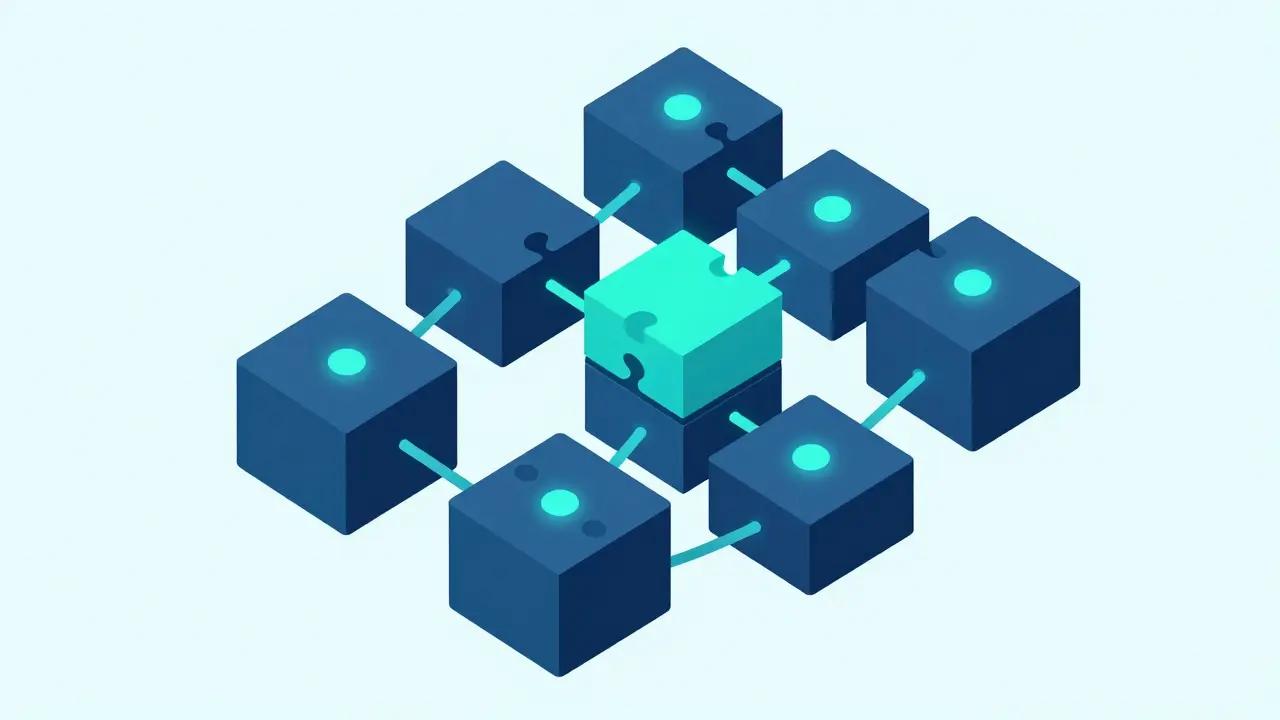
- Composability in blockchain means protocols snap together, creating massive efficiency but higher vulnerability.
- Financial contagion spreads faster in DeFi than traditional markets due to instant settlement layers.
- Circuit breakers and isolation techniques are essential defenses against total ecosystem collapse.
- System resilience requires design choices that prioritize failure containment over maximum capital efficiency.
Imagine a house of cards where every card holds up three others. In the world of digital finance built in 2026, this isn't a metaphor. It is the exact architecture of our infrastructure. We built systems that talk to each other freely. This openness fueled innovation, but it also created invisible threads connecting everything together. When one thread snaps, the tension transfers instantly to the next. Today, we talk about composability risks. We discuss how a failure in one protocol can drain liquidity from another, freeze transactions on an exchange, or crash borrowing rates across the network. Understanding this dynamic is no longer optional for builders or deep users.
The Double-Edged Sword of Modular Design
Modularity is the engine of modern development. You build one piece of software, and another developer uses it as a building block. In our sector, this concept defines DeFi Architecture. A lending protocol plugs into a yield aggregator, which feeds into a stablecoin issuer. This stacking creates incredible power. Users get complex products without writing code. Developers save time because they don't reinvent the wheel.
However, this connectivity comes with a hidden cost. Every connection represents a dependency. If Protocol A relies on the price feed from Oracle B, and Oracle B gets delayed, Protocol A might liquidate assets incorrectly. This is not an isolated glitch. Because Protocol A provides collateral to Protocol C, the error in A immediately threatens C. We call this composability risk. It is the potential for errors to propagate through the chain of connections.
In 2026, we see more layer-2 bridges and cross-chain messaging protocols than ever before. These tools promise seamless movement of assets. But each bridge acts as a pressure valve. If one fails under stress, the pressure redirects to its peers. The beauty of open-source integration becomes a vulnerability map. Attackers do not need to hack ten different protocols. They just need to find the weakest link in the dependency chain.
How Cascading Failures Unfold
These events rarely happen linearly. Think of water pressure in a dam. One small crack causes a leak. Water rushes out. The pressure shifts to adjacent sections. Suddenly, the whole wall buckles. In distributed systems, feedback loops create these vicious cycles. A service starts failing, so clients retry their requests. This extra traffic slows down the server further. Latency grows. Timeouts hit. The system stops functioning entirely.
We have seen this pattern in traditional cloud computing. The InfoQ analysis of past incidents shows how load spikes push latency above critical thresholds. When capacity cannot meet demand, the system enters overload. This same logic applies here. Imagine a flash loan attack targeting a stablecoin pool. If the algorithm rebalancing mechanism reacts too aggressively, it slashes prices on a DEX. That price drop triggers margin calls on a leveraged trading platform. Those forced sales crash the price even harder. The market moves 10% down in seconds. By the time anyone tries to fix it, the cascade has already consumed billions in value.
Network Topology and Weak Points
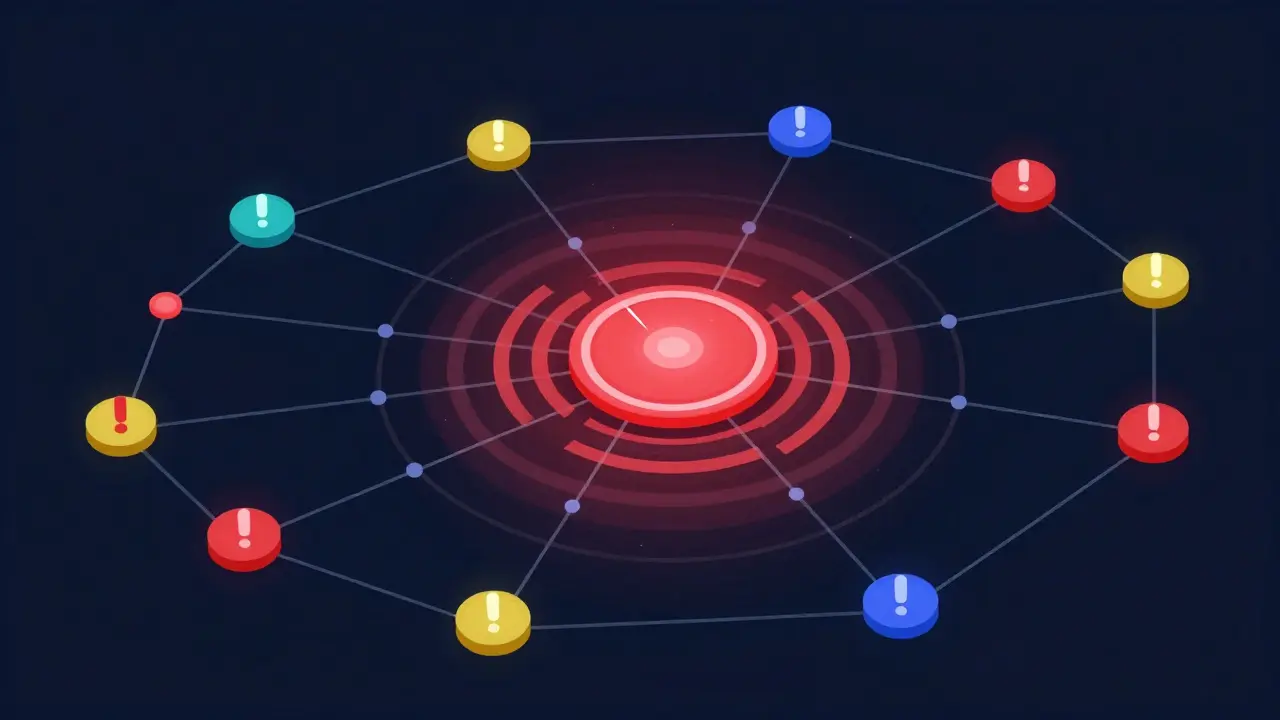
Not all nodes in the network hold equal weight. Some are hubs. These central points handle the most traffic or manage the largest amounts of capital. If you remove a random node, the network shrinks slightly. If you remove a hub, the network fractures. Research using mathematical models like the Motter-Lai framework highlights this reality. Nodes with high connectivity are the most dangerous failure points.
| Component Type | Risk Level | Failure Consequence | Mitigation Strategy |
|---|---|---|---|
| Core Lending Protocols | High | Liquidity Drain | Redundant Liquidity Sources |
| Price Oracles | Critical | False Liquidations | Aggregated Feeds |
| Cross-Chain Bridges | Severe | Frozen Assets | Circuit Breakers |
| Stablecoins | Systemic | Peg Loss | Audited Collateral |
Looking at the table above, you see why centralized components pose risks even in decentralized networks. A single bridge failure can lock funds moving between chains. A compromised oracle can bankrupt a market. This is why understanding topology matters. We need to map how information flows. Where does the data go? Who depends on it? We need to identify those "superconnectors" that could cause the most damage if they go offline.
Historically, infrastructure blackouts teach us this lesson well. The 2003 Italy blackout didn't just stop lights. It stopped trains, hospitals, and banking. Power grids depend on telecom, which depends on fuel supply. It is a web of dependencies. Our blockchain stack is similar. Smart contracts call libraries. Libraries verify signatures. Signatures validate state changes. State changes update tokens. Each layer relies on the integrity of the previous one.
Defensive Architectures for 2026
Can we fix this? Yes, but perfection is impossible. The goal is graceful degradation. When a part breaks, the rest keeps running. This requires implementing circuit breaker mechanisms. Think of these like safety fuses in electrical wiring. When current gets too high, the fuse blows. The machine stops, but the house doesn't burn down. In code, this means pausing functions automatically when abnormal behavior is detected.
Google’s Site Reliability Engineering practices offer a blueprint here. They suggest maintaining change logs to track modifications quickly during an incident. When a cascade starts, you need to know what changed recently. Did a deployment alter resource usage limits? Did a configuration update affect request profiles? Rolling back bad updates fast is the best way to stop the spread. Gradual rollout procedures also help. Instead of flipping the switch for everyone, update 1%, then 10%, then 100%. This lets you spot trouble before it hits the main population.
We also need to separate critical paths. Not all connections should be permanent. Sometimes, decoupling makes sense. A lending platform shouldn't rely solely on one liquidity provider for its entire health. Redundancy costs money. It reduces theoretical returns. But it buys insurance. If you lose capital in a crisis, the cost far exceeds the fee of redundancy. Design systems with capacity overhead. Run them at 50% utilization normally. When the surge hits, you have room to breathe.

The Human Element in Machine Systems
Sometimes, recovery needs humans. Systems operating near critical thresholds can get stuck in positive feedback loops. Machines cannot always resolve deadlocks. Automated responses sometimes make things worse by amplifying panic selling. Manual intervention allows for judgment. Pause the bot. Assess the situation. Communicate with users. This transparency builds trust. When users know you have a plan, they don't pull liquidity in blind panic. Clear rollback procedures empower teams to act decisively. Waiting too long allows the fire to grow. Moving too fast without a plan causes new damage.
Future Outlook and Emerging Trends
By late 2026, we expect AI agents to interact heavily with these protocols. These agents optimize for yield without human oversight. If an AI agent exploits a bug, it does so faster than any human attacker. Prediction models using machine learning will likely flag risks earlier. Real-time monitoring systems will watch transaction patterns for anomalies. We will move toward adaptive response mechanisms that reconfigure themselves when threats appear. However, the complexity of managing these systems grows daily. We must balance the benefits of composable flexibility against the requirement for absolute resilience. The future of this ecosystem depends on whether we prioritize robustness over speed.
Frequently Asked Questions
What exactly is composability in blockchain?
Composability refers to the ability of different applications or smart contracts to interact seamlessly with one another. In this context, protocols are like Lego bricks that can be stacked to build new financial products without permission.
How do cascading failures differ from standard bugs?
Standard bugs affect a single function or contract. Cascading failures start locally but spread through network dependencies, causing widespread systemic impact that is much larger than the original error.
Can users protect themselves from these risks?
Users can diversify exposure across different protocols rather than relying on one chain of contracts. Staying informed about major integrations helps avoid being caught in a dependency chain failure.
Why are circuit breakers important?
Circuit breakers temporarily halt trading or operations when volatility hits predefined limits. This prevents automated algorithms from reacting to false signals and exacerbating a market crash.
Is composability still viable despite these risks?
Yes, because the innovation benefits are massive. The industry simply needs to implement better safeguards, monitoring, and risk management standards to support safe interoperability.
26 Responses
The risk assessment here highlights critical vulnerabilities in how protocols interconnect today. We see clear dependencies that amplify single points of failure across the network infrastructure.
This entire architecture feels like walking on thin ice without a safety net underneath you! The potential for total system collapse is absolutely terrifying to watch unfold in real-time.
people always sleep walk into these disasters until the bridge burns down around them :/ i hate seeing folks ignore basic risk management principles so casually
the smart contracts logic fails because of oracle data feed errors which creates a feedback loop in the liquidity pools. its really concerning how much capiatl depends on faulty validation mechanisms right now. we neeed better isolation layers to stop the bleed.
Oh yes, another day another broken protocol claiming innovation while hiding systemic fragility beneath the marketing buzzwords. Truly delightful for those brave enough to lose everything.
I guess thats just how it goes when tech moves faster than safety checks can ever catch up. Everyone wants high yield so nobody thinks about the brakes till they slam hard.
Morality in finance demands strict adherence to safety standards before chasing profits indiscriminately. Ignoring structural weaknesses is fundamentally negligent behavior by developers everywhere.
We MUST prioritize resilience!! The ecosystem cannot survive without robust safeguards!!! Please consider redundancy essential for survival!!!! It is not optional anymore!!!!!
look at the chaos waiting to happen if one link snaps like a dry twig in winter storm weather conditions. builders need to step up game or get crushed by their own complexity soon.
Circuit breakers function well when designed correctly. They prevent further damage during volatile market events effectively.
You clearly don't understand how deep the rabbit hole goes. Your perspective is limited by your current knowledge base. Real power lies in controlling the nodes themselves.
That is actually quite true regarding node control structures. Decentralization helps but central points remain dangerous hubs.
I feel strongly that we need more open discussion about these risks. Community awareness saves money and builds trust for everyone involved.
Dramatic stuff indeed. Another crash coming soon and everyone acts surprised. Pathetic response from leaders always.
It is scary but learning makes us stronger together. We should support each other through these tough financial transitions calmly.
Liquidity fragmentation remains the primary vector for cascading liquidation events. Smart contract audit trails help identify dependency chains accurately.
hey guys did anyone notice how bridges fail often?? 🤔👀 its kinda wild how fast things go wrong sometimes tbh 😵💫
Stay positive folks! We learn from these mistakes and build better systems next time! Keep pushing forward! 💪✨
compliance is key.
agreed on the compiance part. the slippage issues are real in cross chain transfers. devs shoud fix it.
Most of you clearly lack intellectual capacity to grasp actual architectural flaws. Only the elite understand these complex dependency trees.
Your ignorance is astounding considering the public nature of these risks. You must educate yourself before contributing to the discourse.
When we consider the broader implications of modular design choices we see a pattern emerging across all digital asset platforms. The reliance on shared infrastructure creates invisible links that transmit stress rapidly through the ecosystem. Historical precedents in traditional banking show us that without separation barriers panic spreads uncontrollably. Automated trading bots exacerbate this speed by reacting to price signals within milliseconds. Humans struggle to intervene before the damage accumulates beyond repair. We must recognize that efficiency gains come with hidden volatility costs. Capital flows tend to concentrate in fewer protocols creating larger failure zones. Diversification strategies become less effective when correlation increases during crisis moments. Governance structures often lag behind technical developments leaving users vulnerable. Regulatory bodies are still trying to define jurisdiction over these decentralized networks. Code audits provide false confidence if external inputs remain unverified. Oracle manipulation remains a persistent threat vector for smart contracts globally. Redundant systems cost capital but buy survival insurance against catastrophic loss. Designing for failure requires accepting lower yields during normal operations voluntarily. We cannot continue prioritizing maximum theoretical returns over actual stability requirements. The social cost of collapsed protocols outweighs individual gains significantly. Future architecture should prioritize containment modules over seamless integration capabilities.
This comprehensive analysis provides necessary context for understanding systemic fragility. We should all review these findings carefully and adjust our strategies accordingly.
Fascinating perspective on the limitations of human intervention in automated markets. Truly sophisticated insight worthy of note. 🧐📈
The jargon heavy section was spot on regarding oracle feeds. We really need better monitoring tools before the next big cascade happens.