

For years, the narrative around cryptocurrency was simple: it was a lawless frontier where anonymity reigned supreme. If you wanted to move money without questions, you went on-chain. But that era ended decisively in 2019 when U.S. regulators-the Commodity Futures Trading Commission, Securities and Exchange Commission, and Financial Crimes Enforcement Network-issued a joint statement classifying crypto exchanges as financial institutions under the Bank Secrecy Act. Suddenly, digital asset platforms weren’t just tech companies; they were banks in all but name, subject to strict anti-money laundering (AML) rules.
Today, if you sign up for any major centralized exchange, you aren’t just creating an account. You are entering a highly monitored compliance ecosystem. The question isn’t whether crypto exchanges implement AML-they must-but how they do it without crushing user experience or breaking under the weight of global regulatory fragmentation. Let’s look at the machinery behind the scenes.
The Three Pillars of Crypto AML Compliance
At its core, every robust AML system rests on three pillars defined by the Financial Action Task Force (FATF), the international body setting global standards for combating money laundering and terrorist financing. These aren’t optional features; they are the structural integrity of the platform.
- Know Your Customer (KYC): This is the gatekeeper. It involves collecting and verifying identifying information to ensure users aren’t sanctioned individuals or from prohibited jurisdictions. It’s not just about uploading a passport; it’s about building a risk profile.
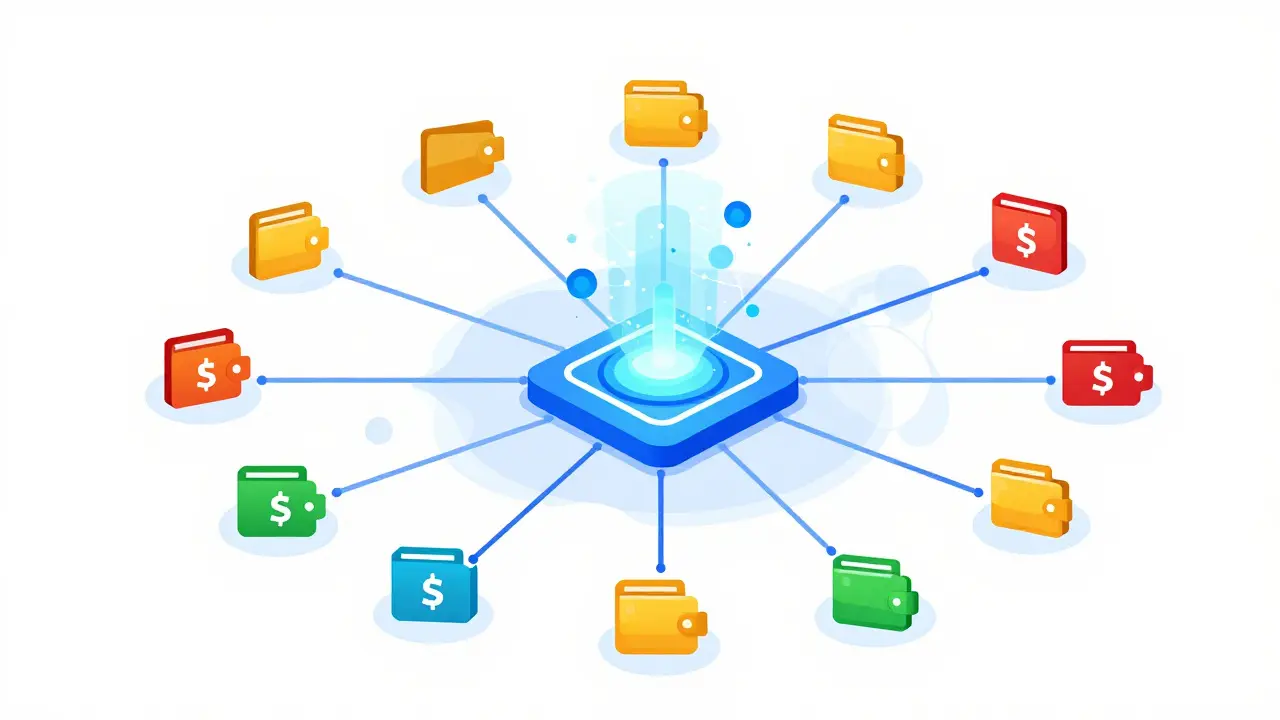
- Transaction Monitoring: Once you’re in, the watching begins. Centralized exchanges (CEXs) must monitor activity in real-time for patterns that suggest illicit behavior, such as structuring deposits to avoid reporting thresholds or rapid movement of funds through multiple wallets.
- Risk Response: When systems flag something suspicious, humans and algorithms step in. This includes direct customer outreach, updating records, and filing Suspicious Activity Reports (SARs) with enforcement bodies.
These pillars work together. KYC provides the baseline identity, monitoring detects deviations from normal behavior, and response mechanisms ensure accountability. Without one, the entire structure collapses.
Technical Implementation: Beyond Simple ID Checks
You might think KYC is just a selfie and a driver’s license. In reality, modern exchanges deploy sophisticated technology stacks to verify identity and assess risk. Customer Due Diligence (CDD) forms the foundation, using risk-based approaches to assign different verification levels based on user activity and jurisdiction.
Consider the tools involved:
- Biometric Authentication: Facial recognition and liveness detection prevent spoofing and synthetic identity fraud. It’s not enough to show a photo; the system must confirm you are physically present and alive.
- Sanctions and PEP Screening: Systems cross-reference users against global databases of sanctioned entities and Politically Exposed Persons (PEPs). A politician’s relative might trigger higher scrutiny than a regular citizen.
- Adverse Media Monitoring: AI scans news sources for negative associations involving customers or linked entities. If a user’s name appears in headlines about fraud, flags go up automatically.
- Phonetic and Linguistic Screening: Names change across borders. "Mohammed" might be spelled "Muhammad," "Mohamed," or "Mahmoud." Advanced screening accounts for transliterations and aliases to catch evasive actors.
This isn’t just bureaucracy. It’s defense. In 2021, a major derivatives exchange paid $100 million to settle violations related to insufficient AML policies. Three founders of another crypto company pleaded guilty to Bank Secrecy Act violations, paying $10 million each to avoid jail. These penalties underscore that cutting corners on technical implementation is financially suicidal.
Transaction Monitoring: The Spectrum of Control
Not all monitoring is created equal. Exchanges operate on a spectrum between extreme restriction and permissive oversight, depending on their risk appetite and regulatory requirements.
| Approach | Mechanism | Use Case | Limitations |
|---|---|---|---|
| Allow Lists | Only pre-approved wallet addresses can transact | Institutional clients, high-net-worth individuals | Poor user experience, limits liquidity |
| Deny Lists | Block transactions involving known illicit addresses | General retail users | Lagging indicator; doesn’t catch new scams |
| Pattern Analysis | Analyze frequency, amount, and counterparty relationships | Detecting mule accounts, dormant wallet activation | High false-positive rate, requires manual review |
For Bitcoin, exchanges often analyze Unspent Transaction Outputs (UTXOs) to see if funds have ever touched a tainted address. For stablecoins, which are more easily traced due to their pegged nature, interventions can happen at off-ramp points before fiat conversion. Intermediate systems use machine learning to identify anomalies-like a sudden spike in small transfers from unrelated accounts-that human analysts would miss.
Navigating Regulatory Fragmentation
If there’s one thing that keeps compliance officers awake at night, it’s the patchwork of global regulations. The European Union’s Fifth Anti-Money Laundering Directive (5AMLD) imposes stricter customer due diligence rules than some U.S. interpretations. Meanwhile, countries like Singapore and Japan have their own nuanced frameworks.
Exchanges can’t afford to build separate systems for each jurisdiction. Instead, they adopt a “highest common denominator” approach, implementing the strictest requirements globally to ensure compliance everywhere. This means dedicated teams fluent in both legal mandates and technical execution. They craft policies for data collection, verification, and ongoing monitoring, ensuring staff are trained on evolving legislation.
The challenge? Balancing compliance with usability. Too much friction drives users to unregulated offshore platforms. Too little invites regulatory wrath. Successful exchanges find the middle ground by automating routine checks while reserving human intervention for complex cases.

The Future of AML in Crypto
As the market matures, so does the threat landscape. Criminals adapt, using mixers, privacy coins, and decentralized finance (DeFi) protocols to obscure trails. In response, exchanges are investing in scalable infrastructure-flexible APIs, low-code tools, and dynamic risk scoring systems that adjust in real-time.
Blockchain analytics firms now offer chain-level tracing, helping exchanges track fund flows even after assets leave their platform. This extends the reach of AML beyond the exchange itself, into the broader ecosystem. However, this raises privacy concerns and questions about centralization. Can we maintain financial integrity without sacrificing the ethos of decentralization?
For now, the answer lies in transparency and cooperation. Regulators want visibility; users want freedom. Exchanges sit in the middle, building bridges between these worlds. The most resilient platforms will be those that integrate compliance seamlessly, making it invisible to legitimate users while acting as a formidable barrier to bad actors.
Key Takeaways
- Crypto exchanges are legally classified as financial institutions, subject to strict AML laws since 2019.
- AML compliance relies on three pillars: KYC, transaction monitoring, and risk response.
- Technical implementation includes biometrics, sanctions screening, and AI-driven pattern detection.
- Regulatory fragmentation forces exchanges to adopt global best practices, increasing operational complexity.
- Failure to comply results in massive fines and criminal charges, as seen in recent enforcement actions.
Why do crypto exchanges need AML compliance?
Because they are regulated as financial institutions. Laws like the Bank Secrecy Act require them to prevent money laundering and terrorist financing. Non-compliance leads to heavy fines, shutdowns, or criminal prosecution.
What happens if I fail KYC verification?
Your account may be restricted or closed. Exchanges must verify identities to meet legal obligations. Repeated failures could also trigger reports to authorities if suspected fraudulent activity is detected.
Can I trade anonymously on a major exchange?
No. Major centralized exchanges require full KYC. Anonymous trading is only possible on decentralized platforms or peer-to-peer networks, which carry higher risks and limited functionality.
How do exchanges detect money laundering?
Through automated transaction monitoring systems that analyze patterns like unusual deposit sizes, frequent transfers to high-risk jurisdictions, or connections to known illicit addresses. Human analysts review flagged activities for confirmation.
Is my personal data safe during KYC?
Reputable exchanges encrypt and store data securely, complying with privacy laws like GDPR. However, no system is immune to breaches. Always check the exchange’s security certifications and data handling policies before sharing sensitive info.
Do decentralized exchanges (DEXs) follow AML rules?
Currently, most DEXs operate without mandatory KYC. However, regulators are increasingly targeting developers and front-end providers. Expect tighter rules in the future, especially if interfaces facilitate fiat on-ramps.
What is a Suspicious Activity Report (SAR)?
A SAR is a formal document filed by exchanges with regulatory bodies when they suspect illegal activity. It includes details about the user, transactions, and reasons for suspicion. Filing a SAR does not accuse anyone of crime but aids investigations.